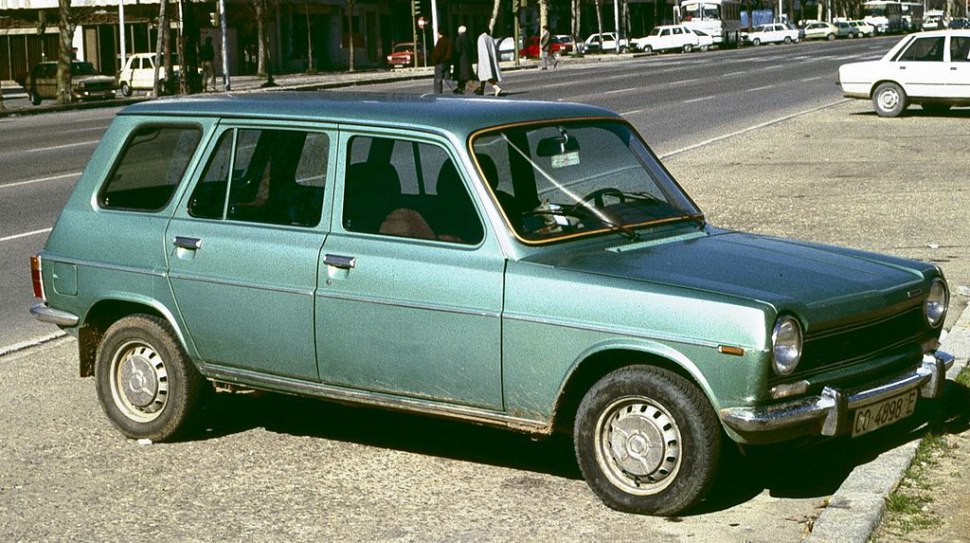
The Talbot Simca 1100 Break/Tourisme 1.1, produced between 1968 and 1972, represents a significant offering in the European compact car market. This station wagon, or estate as it was commonly known, was a practical and relatively affordable vehicle aimed at families and those needing versatile cargo space. It was part of the broader Simca 1100 range, a car notable for its innovative transverse engine layout and independent suspension – features typically found on more expensive vehicles at the time. The “Break” designation specifically denoted the station wagon body style, while “Tourisme” was a general marketing term indicating its suitability for everyday travel. The 1.1-liter engine variant, producing 56 horsepower, was a common choice, balancing fuel economy with adequate performance for its intended purpose. The car’s history is intertwined with the complex ownership and rebranding of Simca, ultimately leading to its absorption into the PSA Group (Peugeot Société Anonyme) and the brief use of the Talbot name.
The Talbot Simca 1100 Break/Tourisme: A European Family Vehicle
The Simca 1100, and by extension the 1100 Break/Tourisme, was primarily a European market vehicle. It wasn’t officially sold in the United States, due to differing automotive tastes and import regulations. Within Europe, it competed with vehicles like the Renault 12, Fiat 124, and the various British offerings from Austin and Morris. The 1100’s appeal lay in its combination of modern engineering, relatively spacious interior, and practical body styles. The Break/Tourisme version specifically addressed the growing demand for family cars capable of carrying both passengers and luggage or goods. It offered a compelling alternative to larger, more expensive estates. The car’s design, while not overtly stylish, was functional and reflected the prevailing trends of the late 1960s and early 1970s – a focus on practicality and affordability.
Origins and the Simca Brand
Simca (Société Industrielle de Montage d’Automobiles et de Cycles) had a fascinating history, beginning as a manufacturer of motorcycles and then diversifying into automobiles after World War II. Initially, Simca produced vehicles under license from Fiat, but gradually developed its own designs. The 1100 was a wholly Simca-designed vehicle, representing a significant step forward for the company. In 1968, Chrysler Europe acquired Simca, and the car was briefly marketed under the Chrysler brand before being rebranded as Talbot in 1978. The Talbot name was intended to represent a more upscale image, but ultimately the brand struggled and was discontinued in the early 1980s, with the Simca assets being fully integrated into Peugeot.
Engine & Performance
The Talbot Simca 1100 Break/Tourisme 1.1 was powered by a 1,118cc (68.5 cubic inch) inline-four cylinder, naturally aspirated gasoline engine. This engine produced 56 horsepower (42 kW) at 5,300 rpm, and approximately 69 lb-ft (94 Nm) of torque. While not a particularly powerful engine by modern standards, it was adequate for the car’s weight and intended use. The engine’s key feature was its transverse mounting, meaning it was positioned sideways in the engine bay, driving the front wheels. This configuration was relatively uncommon for cars of this era and contributed to the 1100’s compact size and improved interior space. The engine was paired with a four-speed manual transmission, although a three-speed automatic transmission was also available as an option. Performance figures were modest, with a top speed of around 87 mph (140 km/h) and acceleration from 0 to 60 mph taking approximately 16 seconds. Fuel economy was a strong point, averaging around 35-40 mpg, which was competitive for the time. The engine utilized a single carburetor and a relatively low compression ratio, prioritizing reliability and fuel efficiency over outright performance.
Design & Features
The Talbot Simca 1100 Break/Tourisme was a two-box station wagon, characterized by its practical and functional design. The body style offered a generous cargo area, accessible through a large rear tailgate. The interior was relatively simple but well-laid-out, with seating for five passengers. Features were modest by today’s standards, but included comfortable seating, a heater, and basic instrumentation. Safety features were limited, reflecting the standards of the late 1960s. Seatbelts were available, but often not standard equipment. The car’s suspension was a notable feature, utilizing independent suspension on all four wheels – a relatively sophisticated setup for a car in this price range. This contributed to a comfortable ride and good handling. Styling was understated, with clean lines and a functional aesthetic. The car’s exterior was typically finished in a range of solid colors, reflecting the design trends of the period. The Break/Tourisme version offered increased practicality compared to the standard saloon (sedan) model, making it a popular choice for families and those needing a versatile vehicle.
Technical Specifications
| Specification | Detail |
| Brand | Talbot Simca |
| Model | 1100 Break/Tourisme 1.1 |
| Generation | Simca 1100 |
| Body Type | Station Wagon (Estate) |
| Engine Type | Inline-Four, Naturally Aspirated |
| Engine Displacement | 1.1 Liters (1,118 cc / 68.5 cu in) |
| Power Output | 56 Hp (42 kW) @ 5,300 rpm |
| Torque Output | 69 lb-ft (94 Nm) |
| Fuel Type | Petrol (Gasoline) |
| Transmission | 4-Speed Manual (3-Speed Automatic Optional) |
| Drivetrain | Front-Wheel Drive |
| Top Speed | 87 mph (140 km/h) |
| 0-60 mph Acceleration | ~16 seconds |
| Fuel Economy | 35-40 mpg |
| Production Years | 1968 – 1972 |