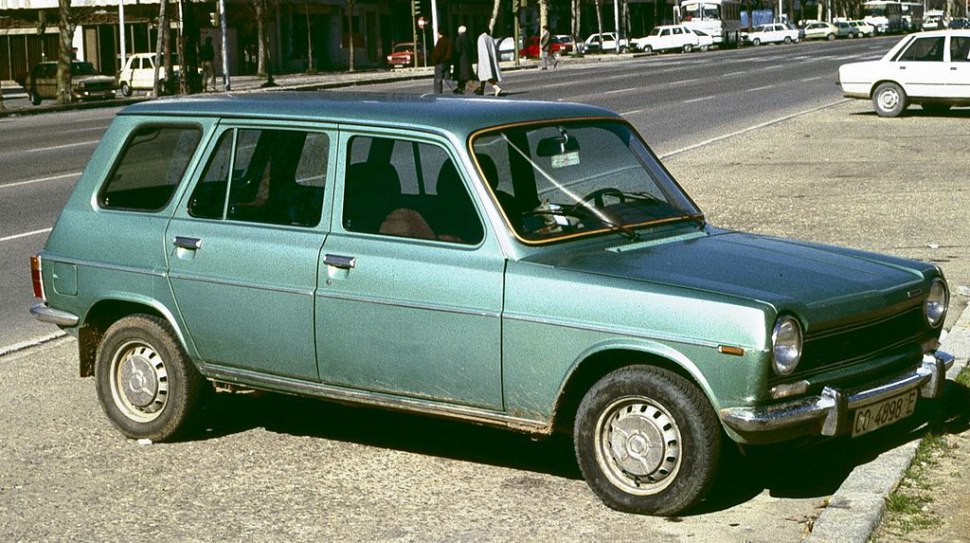
The Talbot Simca 1100 Break/Tourisme 1.1, produced between 1976 and 1979, represents a practical and economical offering from the short-lived Talbot marque. This station wagon, based on the Simca 1100, was aimed at the European family car market, providing a versatile and affordable vehicle for those needing additional cargo space. The 1100 series, originally developed by Simca before the Chrysler Europe takeover and subsequent rebranding as Talbot, was known for its innovative transverse engine layout and relatively compact dimensions. The Break/Tourisme variant, essentially the estate or station wagon version, expanded upon the standard 1100’s appeal by offering increased practicality without significantly compromising its nimble handling and fuel efficiency. While not officially sold in the United States, the 1100 Break provides a fascinating case study in European automotive engineering of the 1970s, demonstrating a focus on maximizing interior space and minimizing running costs.
The Talbot Simca 1100 Break/Tourisme: A European Family Vehicle
The Talbot Simca 1100 Break/Tourisme occupied a niche in the European market as a compact, affordable station wagon. Following Chrysler’s acquisition of Simca in 1970, the brand underwent a period of restructuring. In 1978, Chrysler Europe was sold to Peugeot S.A., leading to the creation of Talbot. The 1100, despite the changing ownership, remained a popular model, and the Break/Tourisme version catered to buyers who required the added versatility of a station wagon. It competed with other European estates like the Renault 12 Estate, the Ford Cortina Estate, and the Vauxhall/Opel Astra Estate, offering a blend of practicality, economy, and relatively modern engineering for its time. The car’s appeal lay in its ability to provide a reasonable amount of space for passengers and luggage in a package that was easy to maneuver in urban environments.
Origins and Market Positioning
The Simca 1100, and subsequently the Talbot Simca 1100, was conceived as a replacement for the Simca 1000. The design team, led by Italian engineer Dante Giacosa (previously of Fiat), aimed to create a small family car that was both spacious and efficient. The transverse engine layout, with the engine and gearbox mounted side-by-side, was a relatively novel feature for its time, allowing for a more compact engine compartment and maximizing cabin space. The Break/Tourisme version extended the rear of the body to create a larger cargo area, making it suitable for families, tradespeople, or anyone needing to transport bulky items. The car was primarily marketed in Europe, with significant sales in France, the United Kingdom, and other European countries. It was not designed or equipped for the American market, which favored larger vehicles with more powerful engines.
Engine & Performance
The Talbot Simca 1100 Break/Tourisme 1.1 was powered by a 1.1-liter, naturally aspirated inline-four cylinder gasoline engine. This engine produced 60 horsepower, which, while modest by modern standards, was adequate for the car’s weight and intended purpose. The engine featured a single overhead camshaft and a two-barrel carburetor. The transverse engine layout contributed to the car’s front-wheel-drive configuration. Performance was geared towards fuel efficiency rather than outright speed. Acceleration was leisurely, and the top speed was around 85-90 miles per hour. However, the car’s relatively light weight and well-tuned suspension provided decent handling and a comfortable ride. The four-speed manual gearbox was the standard transmission, offering precise shifts and contributing to the car’s overall driving experience. The engine’s simplicity and robust construction made it relatively reliable, although regular maintenance was essential to ensure optimal performance. The 1.1-liter engine was chosen for its balance of power, economy, and affordability, making the Break/Tourisme an attractive option for budget-conscious buyers.
Design & Features
The Talbot Simca 1100 Break/Tourisme featured a practical and functional design. The station wagon body style offered a generous cargo area, accessible through a large rear tailgate. The interior was designed with practicality in mind, with durable materials and a focus on maximizing space. The dashboard was relatively simple, with clearly labeled controls and a straightforward instrument cluster. Safety features were limited by the standards of the 1970s, but typically included seat belts and a collapsible steering column. The car’s suspension, consisting of independent front suspension and a torsion beam rear axle, provided a comfortable ride and decent handling. The exterior styling was typical of European cars of the era, with a boxy shape and relatively understated lines. The car’s compact dimensions made it easy to maneuver in tight spaces, and its relatively low weight contributed to its fuel efficiency. The Break/Tourisme variant distinguished itself from the standard 1100 saloon with its extended roofline and larger rear window, providing increased headroom and cargo capacity. While not luxurious, the Talbot Simca 1100 Break/Tourisme offered a comfortable and practical driving experience for its time.
Technical Specifications
| Brand | Talbot |
| Model | Simca |
| Generation | Simca 1100 Break/tourisme |
| Type (Engine) | 1.1 (60 Hp) |
| Start of production | 1976 |
| End of production | 1979 |
| Powertrain Architecture | Internal Combustion engine |
| Body type | Station wagon (estate) |
| Fuel Type | Petrol (Gasoline) |
| Power | 60 Hp |
| Engine aspiration | Naturally aspirated engine |