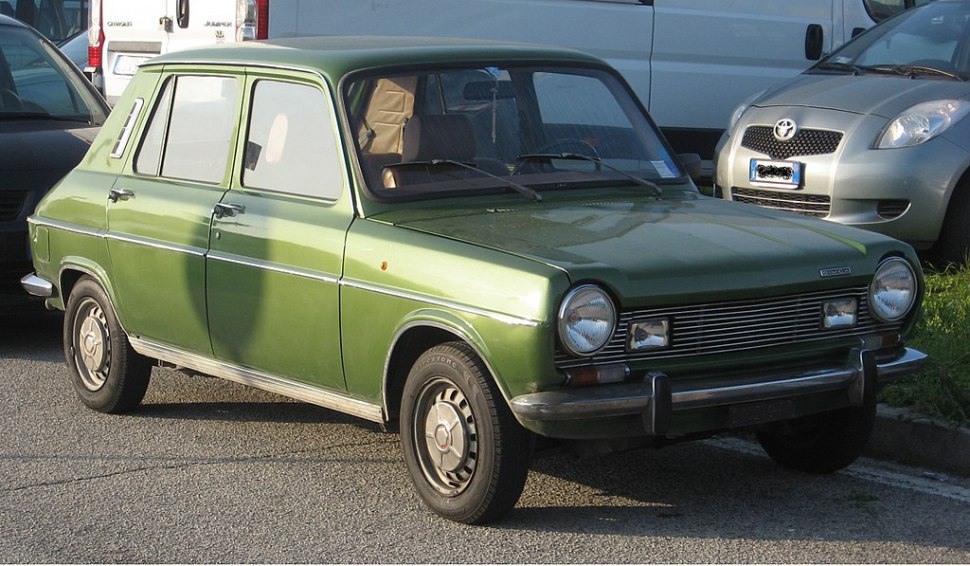
The Talbot Simca 1100 was a small family car produced between 1967 and 1980, initially by Simca, and later by Chrysler Europe (after Simca was acquired by Chrysler in 1970), and finally by Peugeot after the takeover of Chrysler Europe in 1978. The model underwent several iterations, but the hatchback version, specifically the 1.1 LE, LX, GLS, and ES models produced between 1976 and 1980, represents a significant refinement of the original design. This generation of the 1100 aimed to offer a practical and economical vehicle in a competitive European market, and while never officially sold in the United States, it was a popular choice for budget-conscious buyers in the UK and continental Europe. The 1100 was notable for its transverse engine and front-wheel drive layout, a relatively advanced configuration for its time, contributing to its spacious interior and nimble handling.
The Talbot Simca 1100: A European Compact
The Talbot Simca 1100, particularly the 1976-1980 hatchback variants, occupied the small family car segment in Europe. It competed with vehicles like the Ford Fiesta, Renault 5, and Fiat 127. The car’s appeal lay in its combination of affordability, practicality, and relatively modern engineering. The transition from Simca to Chrysler, and then to Peugeot, resulted in branding changes but the core design remained largely consistent throughout its production run. The 1.1-liter engine offered a balance between fuel economy and acceptable performance for everyday driving. The various trim levels – LE, LX, GLS, and ES – provided buyers with options ranging from basic transportation to more comfortable and well-equipped vehicles.
Origins and Market Position
The Simca 1100 originated as a replacement for the Simca 1000, aiming to provide a more modern and spacious vehicle. The hatchback body style, introduced later in the production cycle, significantly enhanced the car’s practicality. In the UK, the Simca 1100 gained a reputation for reliability and affordability, making it a popular choice for first-time car buyers and families. The car’s compact dimensions made it well-suited to navigating narrow European streets and parking in congested urban areas. The later Talbot branding reflected Chrysler Europe’s attempt to consolidate its various marques under a single identity.
Engine & Performance
The Talbot Simca 1100 1.1 LE, LX, GLS, and ES models were powered by a 1.1-liter, naturally aspirated inline-four cylinder gasoline engine. This engine produced 50 horsepower. While not a performance car by any means, the engine provided sufficient power for typical urban and highway driving in Europe. The engine’s relatively small displacement contributed to good fuel economy, a key selling point in the 1970s when fuel prices were rising. The engine was paired with a four-speed manual transmission, which was standard across the range. The front-wheel drive layout, combined with the car’s relatively light weight, resulted in decent handling characteristics. Acceleration was modest, but the 1100 was more than capable of keeping pace with traffic. The engine’s simplicity also meant that maintenance was relatively straightforward and inexpensive.
Powertrain Details
The 1.1-liter engine featured a single overhead camshaft and a two-barrel carburetor. The engine block was made of cast iron, while the cylinder head was made of aluminum. This combination of materials helped to keep the engine’s weight down. The engine’s compression ratio was approximately 8.8:1. The cooling system was a conventional water-cooled setup. The exhaust system was designed to meet the emissions standards of the time, although these standards were less stringent than those in place today. The front-wheel drive system utilized constant velocity joints to deliver power to the front wheels smoothly and efficiently.
Design & Features
The Talbot Simca 1100 hatchback featured a practical and functional design. The body style maximized interior space within a compact footprint. The car’s styling was relatively understated, reflecting the design trends of the 1970s. The front end featured a simple grille and rectangular headlights. The rear end featured a large hatchback door that provided easy access to the luggage compartment. Interior features varied depending on the trim level. The LE and LX models were fairly basic, while the GLS and ES models offered more luxurious appointments, such as cloth upholstery, a more comprehensive instrument panel, and optional features like a radio and heated rear window. Safety features were limited by the standards of the time, but all models were equipped with seat belts. The car’s suspension system consisted of independent front suspension and a twist-beam rear axle. This setup provided a comfortable ride and decent handling. The steering was rack and pinion, providing precise and responsive control.
Trim Levels and Interior Appointments
The LE model was the base trim level, offering essential features for affordable transportation. The LX added some additional comfort and convenience items, such as upgraded upholstery and a more comprehensive instrument panel. The GLS represented a step up in luxury, with features like cloth upholstery, a more refined interior trim, and optional extras like a radio. The ES was the top-of-the-range model, offering the most luxurious appointments and a comprehensive list of standard features. Interior space was a key strength of the 1100, particularly for a car of its size. The hatchback body style provided a versatile cargo area that could be expanded by folding down the rear seats.
Technical Specifications
| Brand | Talbot |
| Model | Simca 1100 |
| Generation | Simca 1100 Hatchback |
| Type (Engine) | 1.1 LE, LX, GLS, ES (50 Hp) |
| Start of production | 1976 |
| End of production | 1980 |
| Powertrain Architecture | Internal Combustion engine |
| Body type | Hatchback |
| Fuel Type | Petrol (Gasoline) |
| Power | 50 Hp |
| Engine aspiration | Naturally aspirated engine |