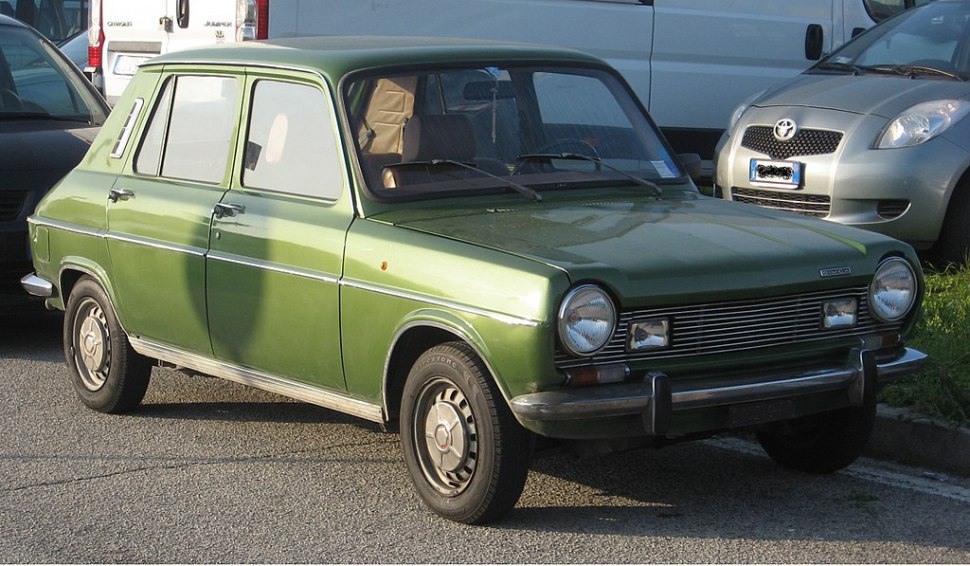
The Talbot Simca 1100 was a small family car produced between 1967 and 1980, initially by Simca, and later by Chrysler Europe and finally Talbot. This article focuses on the final iteration of the model, produced from 1976 to 1980, specifically the 1.1 LE, LX, GLS, and ES hatchback variants. The 1100 represented a significant departure for Simca, moving away from their traditionally rear-engined designs to a more conventional front-wheel-drive layout. While not officially sold in the United States, the Simca 1100, and subsequently the Talbot Simca 1100, was a popular and influential vehicle in Europe, known for its innovative design, spacious interior, and surprisingly capable handling. The 1976-1980 models represent a refinement of the original design, offering improved trim levels and features while retaining the core characteristics that made the 1100 a success.
The Talbot Simca 1100: A European Compact
The Talbot Simca 1100 occupied the small family car segment in Europe, competing with vehicles like the Renault 5, Peugeot 104, and Fiat 127. Its appeal lay in its practicality, affordability, and relatively modern engineering. The transition from Simca to Chrysler Europe, and then to Talbot, reflects the turbulent automotive industry landscape of the 1970s. Despite the changing ownership, the 1100 remained a consistent seller, benefiting from continuous improvements and a loyal customer base. The hatchback body style, becoming increasingly popular at the time, maximized interior space and usability, making it a practical choice for families.
Origins and Market Position
Simca, a French automaker with roots in Italy, had established a reputation for building reliable and affordable cars. The 1100 was intended to be a modern, forward-thinking vehicle that would appeal to a wider audience. The adoption of a transverse-mounted, front-wheel-drive layout was a key innovation, allowing for a more spacious cabin and improved handling characteristics. When Chrysler acquired Simca in 1970, the 1100 continued under the Chrysler banner, receiving further refinements. The final rebranding to Talbot in 1978, under Peugeot ownership, marked the end of the Simca name but the 1100 continued in production until 1980, albeit with dwindling sales as newer models were introduced.
Engine & Performance
The Talbot Simca 1100, in its 1976-1980 guise, was primarily powered by a 1.1-liter, naturally aspirated inline-four cylinder gasoline engine. This engine produced 58 horsepower. While not a performance car by any means, the 1100 offered adequate power for everyday driving. The engine’s relatively small displacement contributed to reasonable fuel economy, a significant consideration during the fuel crises of the 1970s. The engine was paired with a four-speed manual transmission, providing a direct and engaging driving experience. The front-wheel-drive configuration, combined with the relatively lightweight construction of the vehicle, resulted in surprisingly nimble handling. Acceleration was modest, but the 1100 was more than capable of keeping pace with traffic. The engine’s simplicity also meant that maintenance was relatively straightforward and affordable.
Powertrain Details
The 1.1-liter engine featured a single overhead camshaft and a two-barrel carburetor. This configuration was typical for engines of this era, balancing performance, fuel efficiency, and cost. The engine block was cast iron, providing durability, while the cylinder head was made of aluminum, helping to reduce weight. The engine’s design prioritized reliability and ease of maintenance over outright power. The four-speed manual transmission was a conventional design, offering smooth and precise gear changes. The front-wheel-drive system utilized constant-velocity joints, ensuring efficient power delivery to the front wheels. The suspension system consisted of independent front suspension with MacPherson struts and a twist-beam rear axle, providing a comfortable ride and predictable handling.
Design & Features
The Talbot Simca 1100 was a compact hatchback, characterized by its clean lines and functional design. The body style maximized interior space while maintaining a relatively small footprint. The 1976-1980 models featured a range of trim levels – LE, LX, GLS, and ES – each offering progressively more features and refinements. Interior appointments varied depending on the trim level, with the GLS and ES models offering more luxurious fabrics and features. Safety features, while limited by the standards of the time, included seat belts and a collapsible steering column. The dashboard layout was functional and straightforward, with clearly labeled controls. The 1100’s interior was surprisingly spacious for a car of its size, thanks to the efficient packaging afforded by the front-wheel-drive layout. Visibility was generally good, and the driving position was comfortable. The hatchback configuration provided easy access to the cargo area, making it a practical choice for families.
Trim Levels and Interior
The base LE model offered a basic level of equipment, while the LX added features such as a more comfortable interior and improved trim. The GLS model represented a step up in luxury, with features such as upgraded upholstery and additional chrome trim. The ES model was the top-of-the-line variant, offering the most comprehensive list of features, including alloy wheels and a more powerful engine option (in some markets). The interior materials were generally durable and well-made, although they were not as luxurious as those found in more expensive cars. The seats were comfortable and supportive, and the dashboard layout was logical and easy to use.
Technical Specifications
| Brand | Talbot |
| Model | Simca 1100 |
| Generation | Simca 1100 Hatchback |
| Type (Engine) | 1.1 LE, LX, GLS, ES (58 Hp) |
| Start of production | 1976 |
| End of production | 1980 |
| Powertrain Architecture | Internal Combustion engine |
| Body type | Hatchback |
| Fuel Type | Petrol (Gasoline) |
| Power | 58 Hp |
| Engine aspiration | Naturally aspirated engine |