
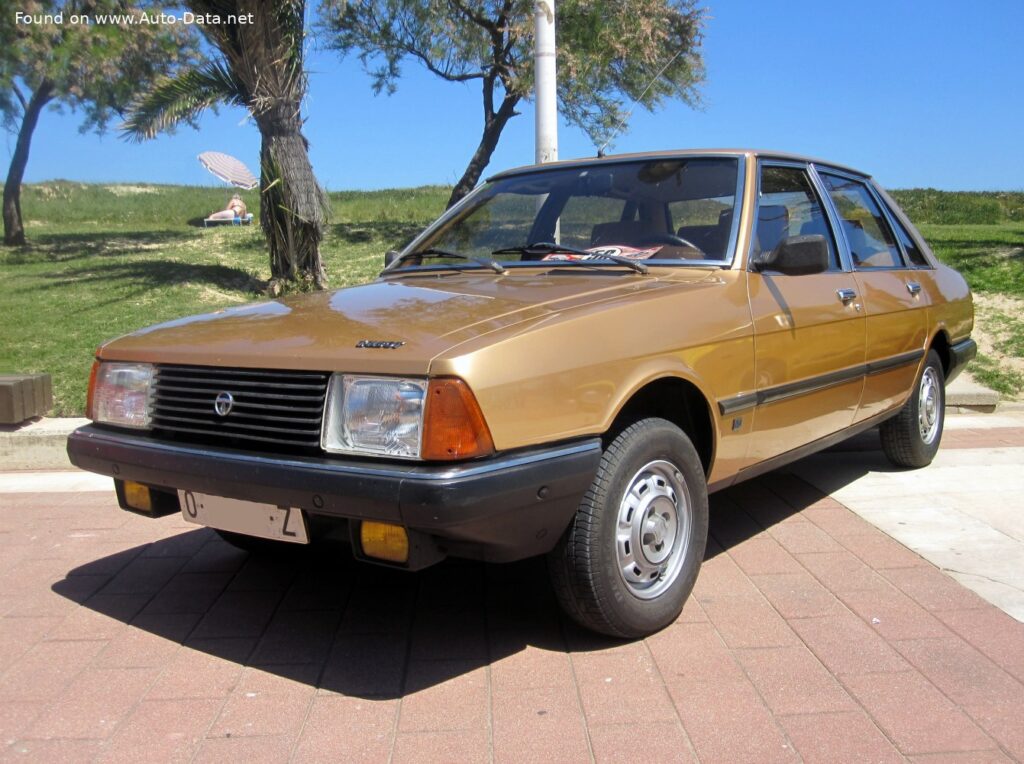
The Talbot Solara, specifically the facelifted version introduced in 1980, represents a somewhat obscure but significant chapter in the history of British automotive manufacturing. Born from the ashes of the Simca-Talbot merger, the Solara was essentially a rebadged and refined version of the Simca 1307/1509, itself a collaborative effort with Chrysler Europe. Positioned as a mid-size family sedan, the Solara aimed to offer a comfortable and practical alternative in a market dominated by British Leyland and Ford. While not a commercial success in the same vein as its competitors, the Solara is remembered for its relatively modern design for its time and its attempt to bridge the gap between British and French automotive philosophies. The 1.3-liter engine variant, producing 54 horsepower, was a mainstay of the Solara lineup, offering economical transportation for the average family.
The Talbot Solara: A Legacy of Collaboration
The story of the Talbot Solara is inextricably linked to the complex history of European automotive consolidation in the 1970s and 80s. Rooted in the Simca brand, which had been acquired by Chrysler Europe, the Solara emerged after Peugeot-Citroën (PSA) took control of Chrysler Europe in 1978. The resulting company was initially known as Talbot, a name resurrected from the historic British manufacturer. The Solara was intended to be a key model in Talbot’s lineup, offering a modern and competitive offering in the crowded European market. Unlike many British cars of the era, the Solara benefited from a relatively modern engineering base, thanks to the Simca 1307/1509’s origins. The 1980 facelift brought subtle styling updates, aiming to refresh the car’s appearance and appeal to a wider audience. However, despite these efforts, the Solara struggled to gain significant market share, and production ceased in 1986 as PSA rationalized its portfolio.
Engine & Performance
The 1.3-liter engine powering the Talbot Solara was a naturally aspirated, inline-four cylinder petrol (gasoline) engine. Producing 54 horsepower, it wasn’t designed for blistering performance, but rather for fuel efficiency and everyday usability. This engine was a carryover from the Simca lineage, known for its reliability and relatively simple design. The engine featured a single overhead camshaft and a two-barrel carburetor. Power was delivered to the front wheels via a four-speed manual gearbox, although a three-speed automatic transmission was also available as an option. Acceleration was modest, with a 0-60 mph time estimated to be around 14-16 seconds, and a top speed of approximately 90 mph. The focus was clearly on providing adequate power for typical commuting and family motoring, rather than outright speed. The engine’s relatively small displacement and simple design contributed to reasonable fuel economy for the time, making it an attractive option for budget-conscious buyers. While not a powerhouse, the 1.3-liter engine proved to be durable and capable of providing years of reliable service.
Design & Features
The Talbot Solara’s design was characterized by its clean lines and relatively modern aesthetic for the early 1980s. As a sedan, it offered a practical and spacious interior for a family of five. The 1980 facelift brought minor changes to the front and rear styling, including a revised grille and taillights, aiming to give the car a more contemporary look. Inside, the Solara featured a functional and straightforward dashboard layout. The interior materials were typical of the era, with cloth upholstery and plastic trim. Comfort features were relatively basic, but included features like reclining front seats and a heater/demister system. Safety features were limited by the standards of today, but included seat belts and a collapsible steering column. The Solara’s suspension was tuned for comfort, providing a relatively smooth ride over uneven road surfaces. The car’s handling was competent, but not particularly sporty. The Solara’s design reflected its intended purpose as a practical and affordable family car. It wasn’t intended to be a luxury vehicle or a performance machine, but rather a reliable and comfortable mode of transportation.
Compared to its British counterparts of the time, the Solara benefitted from a more modern construction and a generally higher build quality, a legacy of the Simca/Chrysler Europe engineering. The front-wheel-drive layout offered improved traction and handling compared to the rear-wheel-drive designs still common in British cars. The Solara’s spacious interior and comfortable ride made it a practical choice for families. However, its relatively low power output and somewhat bland styling limited its appeal to a wider audience. The car’s reputation for reliability was a positive attribute, but it was often overshadowed by the broader challenges facing the Talbot brand.
Technical Specifications
| Brand | Talbot |
| Model | Solara |
| Generation | Solara (facelift 1980) |
| Type (Engine) | 1.3 (54 Hp) |
| Start of production | 1980 |
| End of production | 1986 |
| Powertrain Architecture | Internal Combustion engine |
| Body type | Sedan |
| Fuel Type | Petrol (Gasoline) |
| Power | 54 Hp |
| Engine aspiration | Naturally aspirated engine |
The Talbot Solara, despite its relatively short production run and limited commercial success, remains a fascinating example of European automotive collaboration and adaptation. It represents a transitional period in the industry, as manufacturers grappled with economic challenges and the need to modernize their offerings. While it may not be a household name, the Solara deserves recognition for its contribution to the history of the automobile and its attempt to provide a practical and affordable transportation solution for families in the 1980s.
