
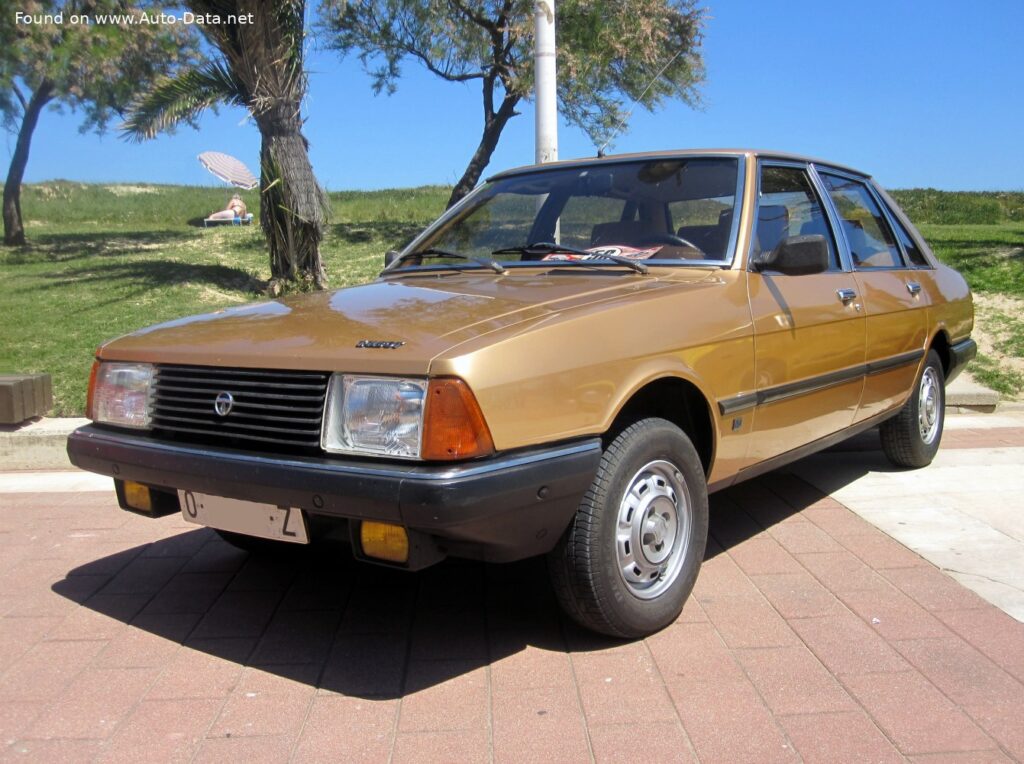
The Talbot Solara, specifically the facelifted 1980 model with the 1.6-liter engine producing 69 horsepower, represents a relatively short-lived but interesting chapter in the history of the British automotive industry. Produced between 1982 and 1984, the Solara was Talbot’s attempt to offer a conventionally styled, affordable sedan in a market increasingly dominated by hatchbacks and more modern designs. It was essentially a rebadged and slightly revised version of the Simca 1307/1501, itself a product of the complex corporate landscape of the 1970s and 80s involving Chrysler Europe and Peugeot-Simca. The Solara aimed to provide a comfortable and practical family car, but ultimately struggled to gain significant market share, contributing to the eventual demise of the Talbot brand.
The Talbot Solara: A Brief History
The Talbot name itself has a rich history, dating back to the early 20th century as a manufacturer of luxury cars. However, by the 1980s, the brand was a product of corporate restructuring. Chrysler Europe, which included the former Rootes Group (makers of Hillman, Singer, and Humber), was acquired by Peugeot-Simca in 1978. The resulting company was rebranded as Talbot. The Solara was introduced as a more traditional sedan alternative to the more angular and hatchback-focused Talbot Horizon and Rapide. The 1980 facelift brought subtle styling updates, aiming to modernize the appearance and appeal to a broader customer base. Despite these efforts, the Solara remained a niche player in a competitive market.
Origins and Market Positioning
The Talbot Solara was primarily marketed in the United Kingdom and other European countries. It didn’t see official sales in the United States. Its positioning was as a mid-size family sedan, competing with vehicles like the Ford Cortina, Vauxhall Cavalier (Opel Ascona), and Austin Ambassador. However, it lacked the brand recognition and established reputation of its rivals. The Solara’s appeal rested on its relatively affordable price, comfortable ride, and practical interior space. It was intended to be a sensible and reliable choice for families seeking a no-frills transportation solution.
Engine & Performance
The 1.6-liter engine powering the Talbot Solara was a naturally aspirated, inline-four cylinder unit. This engine produced 69 horsepower, which, while modest by modern standards, was considered adequate for the vehicle’s weight and intended purpose in the early 1980s. The engine featured a single overhead camshaft and a two-barrel carburetor. Performance was geared towards fuel economy and drivability rather than outright speed. Acceleration was leisurely, and the top speed was around 90 miles per hour. The engine was mated to either a four-speed manual transmission or a three-speed automatic transmission. The Solara’s suspension system consisted of MacPherson struts at the front and a twist-beam axle at the rear, providing a comfortable, if not particularly sporty, ride. Braking was handled by disc brakes at the front and drum brakes at the rear.
Powertrain Details
The 1.6-liter engine, while not a technological marvel, was known for its robustness and relative simplicity. It was a derivative of the Simca Type 315 engine family, which had been used in various Chrysler and Simca models for many years. The engine’s design prioritized reliability and ease of maintenance. The manual transmission offered a more engaging driving experience and slightly better fuel economy, while the automatic transmission provided added convenience. The Solara’s drivetrain was rear-wheel drive, a configuration that was becoming less common in the early 1980s as front-wheel drive gained popularity. This rear-wheel drive layout contributed to the car’s balanced handling characteristics.
Design & Features
The Talbot Solara’s design was conservative and traditional, reflecting its origins as a rebadged Simca. The body style was a three-box sedan with a distinctively angular front end and a relatively high roofline. The 1980 facelift brought minor styling changes, including a revised grille, updated headlights, and new trim details. The interior was functional and practical, with comfortable seating and a straightforward dashboard layout. Features were relatively basic, reflecting the car’s affordable price point. Standard equipment typically included cloth upholstery, a basic stereo system, and manual windows and door locks. Safety features were limited by the standards of the time, with seat belts being the primary safety device. The Solara offered a reasonably spacious interior for passengers and a decent-sized trunk for luggage. The car’s build quality was generally considered to be acceptable, although it didn’t quite match the standards of some of its Japanese rivals.
Interior and Practicality
The interior of the Solara was designed with practicality in mind. The seats were comfortable and supportive, and the dashboard layout was easy to understand. The car offered ample headroom and legroom for both front and rear passengers. The trunk was generously sized, making it suitable for family use. The Solara’s interior materials were durable and reasonably well-finished, although they weren’t particularly luxurious. The car’s overall design emphasized functionality and ease of use, rather than style or sophistication.
Technical Specifications
| Specification | Detail |
| Brand | Talbot |
| Model | Solara |
| Generation | Solara (facelift 1980) |
| Type (Engine) | 1.6 (69 Hp) |
| Start of production | 1982 |
| End of production | 1984 |
| Powertrain Architecture | Internal Combustion engine |
| Body type | Sedan |
| Fuel Type | Petrol (Gasoline) |
| Power | 69 Hp |
| Engine aspiration | Naturally aspirated engine |
The Talbot Solara, despite its limited success, remains a noteworthy vehicle in automotive history. It represents a transitional period in the British automotive industry, marked by corporate restructuring and changing consumer preferences. While it didn’t achieve widespread popularity, the Solara offered a practical and affordable transportation solution for those seeking a traditional sedan. Its legacy lies in its role as a final chapter in the Talbot story and a reminder of the complex forces that shaped the automotive landscape of the 1980s.
