
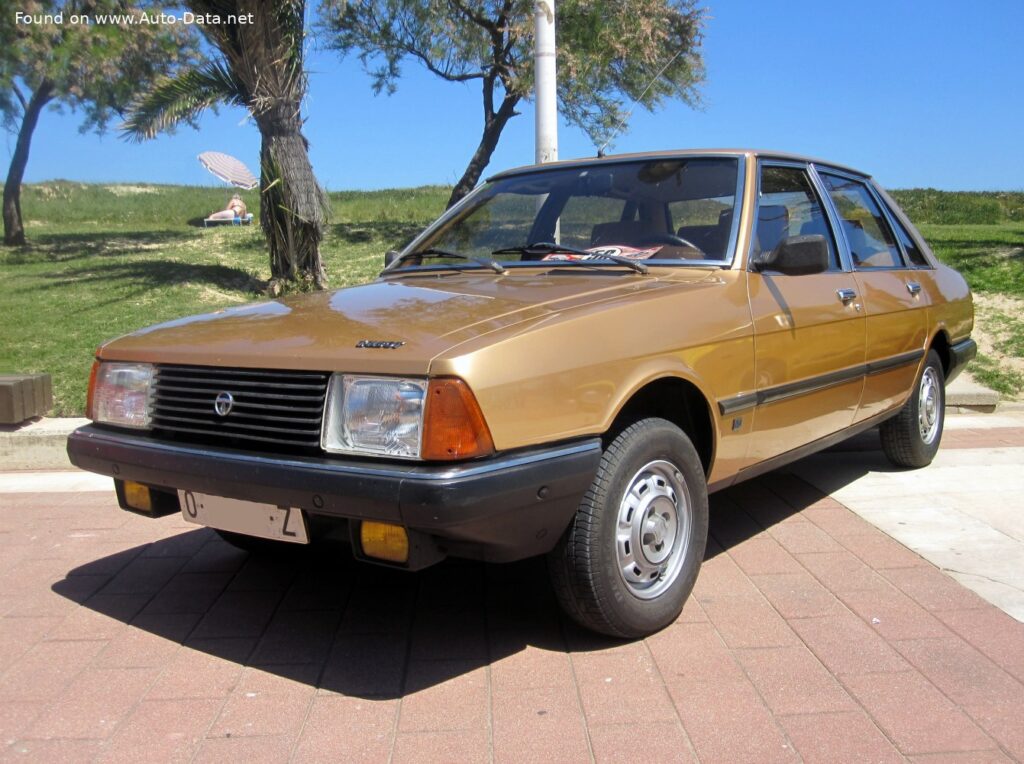
The Talbot Solara, specifically the facelifted 1980 model with the 1.6-liter engine producing 73 horsepower, represents a somewhat obscure chapter in the history of British automotive manufacturing. Produced between 1981 and 1984, the Solara was Talbot’s attempt to offer a conventionally styled, comfortable, and affordable sedan in a market increasingly dominated by European and Japanese imports. It was essentially a rebadged and slightly revised version of the Simca 1307/1501, itself a product of the complex corporate ownership involving Chrysler Europe and, ultimately, Peugeot-Citroën (PSA). The Solara never achieved significant sales success, particularly outside of its core European markets, and its short production run reflects the challenges faced by the Talbot brand during a period of economic uncertainty and shifting consumer preferences.
The Talbot Solara: A Brief History
The story of the Talbot Solara is inextricably linked to the tumultuous history of Chrysler Europe. In the 1970s, Chrysler acquired the British Rootes Group, which included brands like Hillman, Singer, and Talbot. The Simca 1307/1501, designed under Chrysler’s ownership, was a relatively modern and well-regarded vehicle. When Chrysler divested its European operations to Peugeot-Citroën in 1978, the brand was rebranded as Talbot. The Solara was introduced as a more traditional, three-box sedan derivative of the 1307/1501 hatchback, aimed at appealing to buyers who preferred a more conventional aesthetic. The 1980 facelift brought minor styling updates, intended to freshen the car’s appearance and boost sales, but ultimately, it wasn’t enough to secure the Solara’s long-term viability. The Talbot brand itself was discontinued in 1986, marking the end of a long line of British automotive heritage.
Engine & Performance
The 1.6-liter engine powering the Talbot Solara produced 73 horsepower. This naturally aspirated, inline-four engine was a relatively simple design, prioritizing reliability and fuel economy over outright performance. The engine featured a front, transverse mounting, a common configuration for front-wheel-drive vehicles of the era. While not particularly powerful by modern standards, the 73 horsepower output was adequate for comfortable cruising and everyday driving in the early 1980s. The Solara was equipped with a four-speed automatic transmission, offering ease of use but at the expense of some efficiency. Acceleration was modest, and the car was not designed for sporty driving. The focus was on providing a comfortable and practical transportation solution. Fuel type was gasoline (petrol), as was standard for European vehicles of the time. The engine’s design reflected the engineering philosophies of the 1970s, emphasizing durability and ease of maintenance.
Design & Features
The Talbot Solara’s design was deliberately conservative, aiming to appeal to a broad range of buyers who favored traditional sedan styling. The three-box configuration – distinct engine compartment, passenger cabin, and trunk – was a key element of its appeal. The 1980 facelift brought subtle changes to the front and rear fascias, including revised grilles and lighting. The interior was functional and reasonably well-equipped for its price point, offering seating for five passengers. Features were relatively basic compared to more modern vehicles, but included comfortable seating and a practical trunk. Safety features were limited by the standards of the time, consisting primarily of seatbelts. The Solara’s suspension was tuned for comfort, providing a relatively smooth ride over uneven road surfaces. The car’s overall design reflected a pragmatic approach, prioritizing practicality and affordability over cutting-edge styling or advanced technology. The body type was strictly a sedan, differentiating it from the hatchback version it was based on.
Technical Specifications
| Brand | Talbot |
| Model | Solara |
| Generation | Solara (facelift 1980) |
| Type (Engine) | 1.6 (73 Hp) |
| Start of production | 1981 |
| End of production | 1984 |
| Powertrain Architecture | Internal Combustion engine |
| Body type | Sedan |
| Seats | 5 |
| Fuel Type | Petrol (Gasoline) |
| Power | 73 Hp |
| Engine layout | Front, Transverse |
| Engine aspiration | Naturally aspirated engine |
| Number of gears | 4 |
| Type of gearbox | automatic transmission |
| Front brakes | Disc |
The Talbot Solara, despite its limited success, provides a fascinating glimpse into the complexities of the European automotive industry during the late 1970s and early 1980s. It represents a transitional period, bridging the gap between older, more traditional designs and the increasingly sophisticated and technologically advanced vehicles that would come to dominate the market. While it may not be a particularly well-known or highly sought-after classic car, the Solara serves as a reminder of a bygone era of British automotive manufacturing and the challenges faced by brands navigating a rapidly changing global landscape. Its reliance on proven technology and focus on practicality, while not enough to ensure its commercial success, reflect a pragmatic approach to automotive engineering that was characteristic of the time. The car’s story is a testament to the enduring appeal of the conventional sedan and the enduring legacy of the Simca 1307/1501 platform upon which it was based.
