
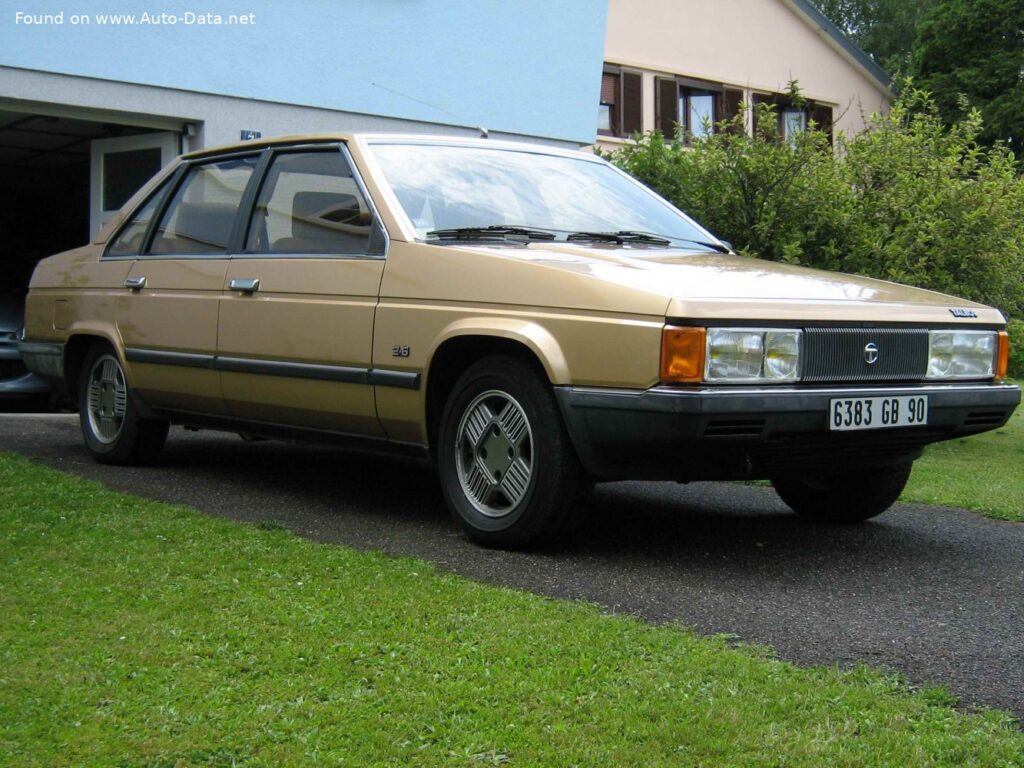
The Talbot Tagora was a large, executive sedan produced by the Simca-Talbot division of PSA (Peugeot Société Anonyme) between 1981 and 1987. Positioned above the Simca 1509 and intended to compete with vehicles like the Ford Granada, Opel Commodore, and Renault 20/30, the Tagora represented a significant attempt by PSA to establish a presence in the upper echelons of the European car market. While not a commercial success, the Tagora is notable for its relatively advanced engineering, particularly the 2.3-liter turbocharged diesel engine offered during the latter part of its production run. The car was primarily sold in Europe, and never officially exported to the United States. It was the last car to bear the Talbot name, a brand with a complex history rooted in both British and French automotive traditions.
Talbot Tagora 2.3 Turbo Diesel: A Detailed Overview
The 2.3 Turbo Diesel variant of the Talbot Tagora, introduced later in the model’s lifecycle, was a response to growing demand for fuel-efficient, long-distance vehicles. The early 1980s saw increasing fuel prices and a shift in consumer preferences towards diesel engines in Europe. The Tagora 2.3 Turbo Diesel aimed to provide a blend of performance and economy, appealing to drivers who frequently covered large distances. The turbocharger was crucial in boosting the power output of the diesel engine, addressing a common criticism of diesel engines of the time – a lack of power compared to their gasoline counterparts. This model represented a technological step forward for Talbot, showcasing their ability to adapt to changing market demands.
Origins and Market Positioning
The Talbot name itself has a rich history. Originally a British motor vehicle manufacturer, Talbot was acquired by Simca in 1959, becoming part of the Chrysler Europe group. When Chrysler Europe was sold to PSA in 1978, the brand was rebranded as Simca-Talbot. The Tagora was conceived as a flagship model to elevate the brand’s image and compete with established German and British executive cars. However, the Tagora suffered from a number of issues, including build quality concerns, a somewhat dated design compared to its rivals, and a lack of a strong dealer network. These factors contributed to relatively low sales figures throughout its production run. The car was intended to be a sophisticated and comfortable cruiser, offering a refined driving experience, but it struggled to gain traction in a competitive market.
Engine & Performance
The heart of the Tagora 2.3 Turbo Diesel is its 2.3-liter inline-four cylinder diesel engine, equipped with a turbocharger and indirect injection. This configuration allowed the engine to produce 80 horsepower. While this figure may seem modest by modern standards, it was a respectable output for a diesel engine of that era, and the turbocharger significantly improved torque delivery. The engine’s torque characteristics made it well-suited for long-distance highway driving, providing ample pulling power for overtaking and maintaining speed on inclines. The engine was paired with a four-speed manual transmission, which was the standard offering. The drivetrain was rear-wheel drive, a configuration common for executive sedans of the time, providing a balanced driving experience. Performance figures were not the Tagora’s strong suit; the focus was on fuel efficiency and durability. The turbocharger, however, did improve acceleration compared to naturally aspirated diesel versions of the Tagora.
Technological Features of the Powertrain
The use of a turbocharger on a diesel engine in the early 1980s was relatively advanced. It allowed for a smaller displacement engine to produce power comparable to larger, naturally aspirated units, while also improving fuel economy. The indirect injection system, while not as efficient as later direct injection technologies, contributed to smoother engine operation and reduced noise levels. The engine also featured a glow plug system, essential for starting diesel engines in cold weather. The engine management system, while rudimentary by today’s standards, controlled fuel injection timing and turbocharger boost pressure to optimize performance and emissions. The engine was designed for longevity and reliability, reflecting the expectations of buyers in the executive car segment.
Design & Features
The Talbot Tagora was a conventional three-box sedan, characterized by a relatively conservative and understated design. The styling was influenced by contemporary German and British designs, aiming for a sophisticated and elegant appearance. The car featured a spacious interior, designed to provide comfort for both driver and passengers. The interior trim was generally well-appointed, with comfortable seats and a functional dashboard layout. Safety features, while limited by the standards of the time, included seat belts and a reinforced passenger safety cell. The Tagora offered a reasonable amount of luggage space, making it suitable for long journeys. The car’s suspension was tuned for comfort, providing a smooth and compliant ride. The exterior styling was functional rather than flamboyant, prioritizing practicality and a sense of understated luxury. The Tagora’s design did not stand out dramatically from its competitors, which contributed to its lack of widespread appeal.
Interior Comfort and Practicality
The interior of the Tagora 2.3 Turbo Diesel was designed with long-distance comfort in mind. The seats were generously padded and offered good support. The dashboard layout was logical and easy to use, with clearly labeled controls. Features such as power steering and central locking were available, enhancing convenience. The car’s heating and ventilation system was effective, providing a comfortable cabin environment in all weather conditions. The Tagora’s interior was not particularly innovative, but it was well-built and functional. The car’s spaciousness was a key selling point, offering ample room for passengers and luggage. The overall impression was one of solid, dependable quality, rather than cutting-edge sophistication.
Technical Specifications
| Brand | Talbot |
| Model | Tagora |
| Generation | Tagora |
| Type (Engine) | 2.3 Turbo Diesel (80 Hp) |
| Start of production | 1981 |
| End of production | 1987 |
| Powertrain Architecture | Internal Combustion engine |
| Body type | Sedan |
| Fuel Type | Diesel |
| Power | 80 Hp |
| Engine aspiration | Turbocharger |
