
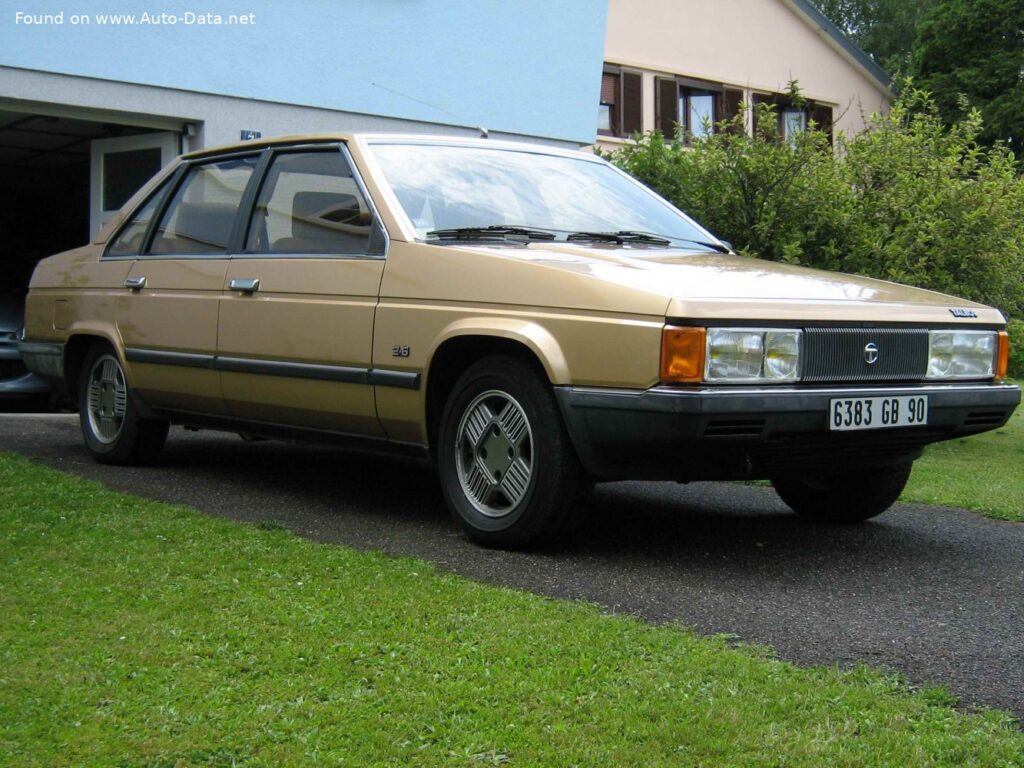
The Talbot Tagora was a large, executive sedan produced by the Simca-Talbot division of PSA (Peugeot Société Anonyme) between 1981 and 1983. Positioned as a competitor to vehicles like the Ford Granada, Opel Commodore, and Renault 20/30, the Tagora represented a significant attempt by PSA to establish a presence in the upper echelons of the European car market. It was the largest car ever produced by Simca-Talbot, and its relatively short production run and limited sales figures contribute to its relative obscurity today. The Tagora was primarily sold in Europe, particularly in France, the United Kingdom, and Germany, and was never officially offered for sale in the United States.
Talbot Tagora 2.6: An Overview
The Tagora was conceived as a replacement for the Simca 1100 TI and the Chrysler 180/200 models, inheriting design elements from both. PSA, having acquired Simca in 1978 and rebranded it as Simca-Talbot, aimed to create a vehicle that offered a blend of French comfort, British refinement (reflecting the former Rootes Group influence within the company), and Italian styling. The Tagora’s design was largely penned by Italian designer Filippo Sapino. The 2.6-liter version, producing 166 horsepower, was the top-of-the-line model, offering the best performance within the Tagora range. Despite its ambitions, the Tagora suffered from a number of issues, including build quality concerns, a lack of a diesel engine option (which was becoming increasingly popular in Europe at the time), and the lingering effects of the economic recession of the early 1980s. These factors contributed to its commercial failure and eventual discontinuation.
Origins and Market Positioning
The Talbot Tagora emerged from a period of restructuring within the PSA group. Following the acquisition of Simca and the remnants of the Rootes Group, PSA sought to rationalize its portfolio and create a more cohesive brand identity. The Tagora was intended to be the flagship model for the Talbot brand, representing a step up in terms of size, luxury, and technology compared to the existing Simca range. It aimed to appeal to buyers seeking a comfortable and well-equipped executive sedan, but it faced stiff competition from established rivals with stronger brand recognition and more extensive dealer networks. The car was intended to be a halo vehicle, boosting the overall image of the Talbot marque, but ultimately it failed to achieve this goal.
Engine & Performance
The Talbot Tagora 2.6 was powered by a 2.6-liter, naturally aspirated inline-four cylinder petrol (gasoline) engine. This engine, derived from the Volvo B27/B28 engine family (a result of Volvo’s previous ownership stake in Renault-Peugeot), was a robust and relatively sophisticated unit for its time. It featured a single overhead camshaft, two valves per cylinder, and a Bosch fuel injection system. The engine produced 166 horsepower at 5,800 rpm and 172 lb-ft of torque at 4,000 rpm. This output provided the Tagora 2.6 with respectable performance for a large sedan of the early 1980s, allowing it to achieve a top speed of approximately 137 mph (220 km/h) and accelerate from 0 to 60 mph (0 to 97 km/h) in around 9.5 seconds. Power was delivered to the rear wheels via a four-speed manual or a three-speed automatic transmission. The suspension system consisted of independent front suspension with MacPherson struts and a live axle with trailing arms at the rear. While the engine offered good performance, the Tagora’s relatively heavy weight (around 3,300 lbs or 1,500 kg) and less-than-optimal aerodynamics limited its overall agility.
Design & Features
The Talbot Tagora was a conventional three-box sedan with a relatively conservative design. Its styling was influenced by Italian design trends of the era, with clean lines, a squared-off profile, and a prominent grille. The interior was spacious and well-appointed, offering comfortable seating for five passengers. The dashboard featured a woodgrain trim and a comprehensive array of instrumentation, including a speedometer, tachometer, fuel gauge, coolant temperature gauge, and oil pressure gauge. Standard features included power steering, central locking, and electric windows. Higher-spec models were equipped with air conditioning, a sunroof, and a premium sound system. Safety features, while limited by the standards of today, included front disc brakes, rear drum brakes, and a reinforced passenger safety cell. The Tagora’s build quality, however, was often criticized, with reports of electrical issues and trim imperfections. The car’s design, while not particularly groundbreaking, was intended to convey a sense of understated elegance and sophistication. The large trunk offered ample luggage space, making the Tagora a practical choice for long-distance travel.
Interior Comfort and Technology
The Tagora’s interior prioritized comfort and practicality. The seats were generously padded and upholstered in durable fabrics. The dashboard layout was logical and easy to use, with all controls within easy reach of the driver. While not boasting cutting-edge technology by modern standards, the Tagora offered a reasonable level of equipment for its time, including a radio with cassette player, and optional air conditioning. The car’s sound insulation was relatively good, providing a quiet and refined driving experience. The steering wheel was adjustable for height and reach, allowing drivers to find a comfortable driving position.
Technical Specifications
| Brand | Talbot |
| Model | Tagora |
| Generation | Tagora |
| Engine Type | 2.6 (166 Hp) |
| Start of Production | 1981 |
| End of Production | 1983 |
| Powertrain Architecture | Internal Combustion Engine |
| Body Type | Sedan |
| Fuel Type | Petrol (Gasoline) |
| Power | 166 Hp |
| Engine Aspiration | Naturally Aspirated |
The Talbot Tagora 2.6, despite its initial promise, ultimately failed to achieve commercial success. Its short production run and limited sales figures have made it a relatively rare and sought-after vehicle among classic car enthusiasts. While it may not have left a lasting impact on the automotive world, the Tagora represents an interesting chapter in the history of PSA and a testament to the challenges of entering a competitive market segment. It remains a curious footnote in automotive history, a vehicle that aimed high but ultimately fell short of its ambitions.
