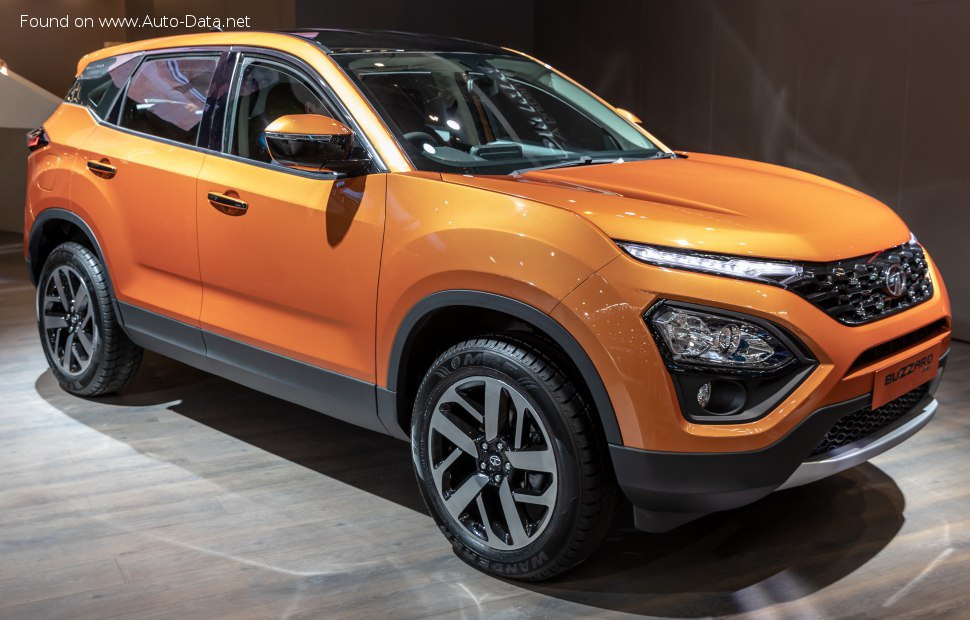
The Tata Harrier 2.0d (140 Hp) is a five-seater SUV produced by the Indian manufacturer Tata Motors. Introduced in October 2018 and continuing through February 2020, the Harrier represented a significant step forward for Tata in terms of design, features, and overall build quality. While not officially sold in the United States, the Harrier is a crucial model for Tata in the Indian market, positioned as a competitor to established SUVs like the Hyundai Creta and Mahindra XUV500. It’s built on the D8 platform, derived from Land Rover’s D8 architecture – a legacy of Tata’s ownership of Jaguar Land Rover. The Harrier aimed to offer a premium SUV experience at a relatively affordable price point, focusing on robust construction and a spacious interior.
The Tata Harrier 2.0d: A Detailed Overview
The Harrier’s development was heavily influenced by the Land Rover Discovery Sport, sharing its underlying platform. However, Tata Motors significantly localized production and adapted the vehicle to suit the specific needs and preferences of the Indian automotive market. The 2.0d designation refers to the 2.0-liter diesel engine, which was the sole powertrain option available during its production run. The vehicle was designed to offer a blend of comfort, practicality, and off-road capability, appealing to a broad range of buyers seeking a versatile family vehicle.
Engine & Performance
At the heart of the Tata Harrier 2.0d lies a 2.0-liter inline-four cylinder diesel engine, producing 140 horsepower at 3750 rpm and 350 Nm (258.15 lb.-ft.) of torque between 1750 and 2500 rpm. This engine utilizes a turbocharger and intercooler to enhance performance and efficiency. The power-to-weight ratio stands at 12 kg/Hp and 83.6 Hp/tonne, while the torque-to-weight ratio is 4.8 kg/Nm and 209 Nm/tonne. The engine employs a diesel commonrail fuel injection system for optimized combustion. The engine’s 1956 cm3 (119.36 cu. in.) displacement provides a good balance between power delivery and fuel economy, crucial considerations in the Indian market. The engine oil capacity is 5 liters (5.28 US qt | 4.4 UK qt), and the cooling system requires 7 liters (7.4 US qt | 6.16 UK qt) of coolant.
Design & Features
The Tata Harrier boasts a striking SUV design, characterized by its bold front grille, sculpted body lines, and muscular stance. The vehicle is a five-door SUV with seating for five passengers. Its dimensions – 4598 mm (181.02 in.) in length, 1894 mm (74.57 in.) in width, and 1706 mm (67.17 in.) in height – provide a spacious cabin and ample cargo capacity. The wheelbase measures 2741 mm (107.91 in.), contributing to a comfortable ride. Ground clearance is a generous 205 mm (8.07 in.), enhancing its ability to tackle varied road conditions. The interior features a well-appointed cabin with a focus on practicality and comfort. Standard features included air conditioning, power windows, and a basic audio system. Higher trim levels offered additional features such as a touchscreen infotainment system, rear parking sensors, and alloy wheels. Safety features included ABS (Anti-lock Braking System), a crucial safety element for the time. Trunk space ranges from a minimum of 425 liters (15.01 cu. ft.) to a maximum of 810 liters (28.6 cu. ft.) with the rear seats folded down.
Technical Specifications
| Specification | Value |
| Brand | Tata |
| Model | Harrier |
| Generation | Harrier |
| Type (Engine) | 2.0d (140 Hp) |
| Start of production | October, 2018 |
| End of production | February, 2020 |
| Powertrain Architecture | Internal Combustion engine |
| Body type | SUV |
| Seats | 5 |
| Doors | 5 |
| Fuel Type | Diesel |
| Emission standard | BS IV |
| Weight-to-power ratio | 12 kg/Hp |
| Weight-to-torque ratio | 4.8 kg/Nm |
| Power | 140 Hp @ 3750 rpm |
| Power per litre | 71.6 Hp/l |
| Torque | 350 Nm @ 1750-2500 rpm / 258.15 lb.-ft. @ 1750-2500 rpm |
| Engine layout | Front, Transverse |
| Engine displacement | 1956 cm3 / 119.36 cu. in. |
| Number of cylinders | 4 |
| Engine configuration | Inline |
| Number of valves per cylinder | 4 |
| Fuel injection system | Diesel Commonrail |
| Engine aspiration | Turbocharger, Intercooler |
| Engine oil capacity | 5 l / 5.28 US qt | 4.4 UK qt |
| Coolant | 7 l / 7.4 US qt | 6.16 UK qt |
| Kerb Weight | 1675 kg / 3692.74 lbs |
| Trunk (boot) space – minimum | 425 l / 15.01 cu. ft |
| Trunk (boot) space – maximum | 810 l / 28.6 cu. ft |
| Fuel tank capacity | 50 l / 13.21 US gal | 11 UK gal |
| Length | 4598 mm / 181.02 in |
| Width | 1894 mm / 74.57 in |
| Height | 1706 mm / 67.17 in |
| Wheelbase | 2741 mm / 107.91 in |
| Ride height (ground clearance) | 205 mm / 8.07 in |
| Drivetrain Architecture | Front wheel drive, Internal Combustion engine |
| Drive wheel | Front wheel drive |
| Number of gears and type of gearbox | 6 gears, manual transmission |
| Front suspension | Independent, type McPherson with coil spring and anti-roll bar |
| Rear suspension | Semi-independent, coil spring |
| Front brakes | Disc |
| Rear brakes | Drum |
| Assisting systems | ABS (Anti-lock braking system) |
| Tires size | 235/70 R16; 235/65 R17 |
| Wheel rims size | 16; 17 |
The Tata Harrier 2.0d, despite not being sold in the US market, represents an important development in Tata Motors’ ambition to become a significant player in the global automotive industry. Its blend of Land Rover-derived engineering, localized production, and competitive pricing made it a popular choice for Indian consumers seeking a capable and stylish SUV.