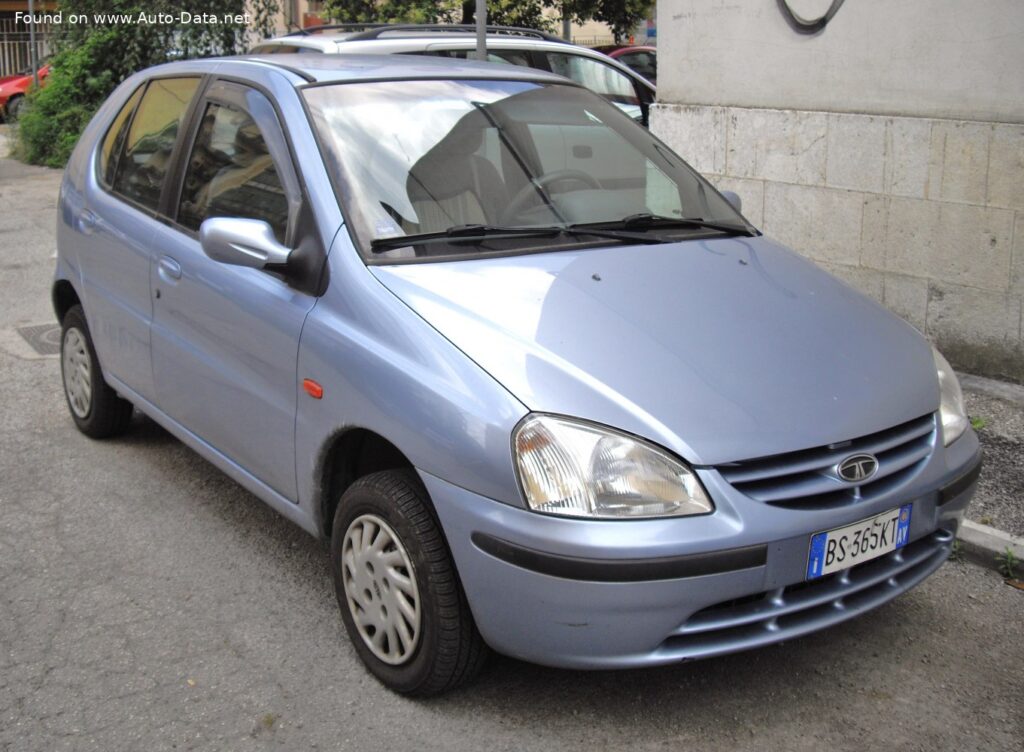
The Tata Indica 1.4, producing 60 horsepower, represents a pivotal moment in the history of Indian automotive manufacturing. Introduced in 1998 and continuing production until 2008, the Indica was Tata Motors’ first foray into creating a completely indigenous passenger car. Designed to offer a modern, affordable, and spacious alternative to existing offerings in the Indian market, the Indica quickly gained popularity and became a symbol of India’s growing automotive capabilities. While not officially sold in the United States, understanding the Indica is crucial to appreciating the evolution of the Indian auto industry and Tata’s subsequent global ambitions. This article details the specifications and significance of the 1.4-liter version of the original Indica.
The Tata Indica 1.4: A Landmark Vehicle
The original Tata Indica was a subcompact hatchback designed to appeal to a broad range of Indian consumers. It aimed to provide a comfortable and practical vehicle for families, while also being affordable enough for first-time car buyers. The 1.4-liter engine variant was a mainstay of the lineup, offering a balance between fuel efficiency and performance. The Indica’s design, while not groundbreaking, was modern for its time in India, and its spacious interior was a key selling point. It played a significant role in shifting perceptions of Indian-made cars, demonstrating that locally produced vehicles could compete with international brands in terms of quality and features.
Engine & Performance
The Tata Indica 1.4 was powered by a 1.4-liter (1405 cm3 or 85.74 cu. in.) inline four-cylinder petrol engine. This naturally aspirated engine produced 60 horsepower (42.7 Hp/l) at 5000 rpm and 105 Nm (77.44 lb.-ft.) of torque at 2500 rpm. The engine utilized a carburetor fuel injection system, a common technology for the era, and featured a compression ratio of 9:1. Power was delivered to the front wheels via a five-speed manual transmission. Performance figures included a 0-100 km/h (0-62 mph) acceleration time of 15 seconds and a top speed of 150 km/h (93.21 mph). The 0-60 mph time was calculated at 14.3 seconds. The weight-to-power ratio was 15.5 kg/Hp, and the weight-to-torque ratio was 8.9 kg/Nm, indicating a modest but adequate power-to-weight balance for its intended market.
Design & Features
The Tata Indica 1.4 was a five-door hatchback with a relatively simple, functional design. It offered seating for five passengers and a trunk space ranging from 215 liters (7.59 cu. ft.) with the rear seats up to 610 liters (21.54 cu. ft.) with the rear seats folded down. The vehicle’s dimensions were 3660 mm (144.09 in.) in length, 1625 mm (63.98 in.) in width, and 1485 mm (58.46 in.) in height, with a wheelbase of 2400 mm (94.49 in.). The Indica featured a front suspension utilizing coil springs and a rear suspension also employing coil springs. Braking was provided by disc brakes on the front wheels and drum brakes on the rear. An Anti-lock Braking System (ABS) was included as a safety feature, which was becoming increasingly common in the late 1990s and early 2000s. The steering system was a rack and pinion type, offering reasonable handling characteristics. The vehicle rode on 155/70 R13 tires.
Technical Specifications
| Brand | Tata |
| Model | Indica |
| Generation | Indica |
| Type (Engine) | 1.4 (60 Hp) |
| Start of production | 1998 |
| End of production | 2008 |
| Powertrain Architecture | Internal Combustion engine |
| Body type | Hatchback |
| Seats | 5 |
| Doors | 5 |
| Fuel consumption (urban) | 10 l/100 km (23.5 US mpg, 28.2 UK mpg, 10 km/l) |
| Fuel consumption (extra urban) | 6 l/100 km (39.2 US mpg, 47.1 UK mpg, 16.7 km/l) |
| Fuel Type | Petrol (Gasoline) |
| Acceleration 0 – 100 km/h | 15 sec |
| Acceleration 0 – 62 mph | 15 sec |
| Acceleration 0 – 60 mph | 14.3 sec |
| Maximum speed | 150 km/h (93.21 mph) |
| Weight-to-power ratio | 15.5 kg/Hp |
| Weight-to-torque ratio | 8.9 kg/Nm |
| Power | 60 Hp @ 5000 rpm |
| Power per litre | 42.7 Hp/l |
| Torque | 105 Nm @ 2500 rpm (77.44 lb.-ft. @ 2500 rpm) |
| Engine layout | Front, Transverse |
| Engine displacement | 1405 cm3 (85.74 cu. in.) |
| Number of cylinders | 4 |
| Engine configuration | Inline |
| Cylinder Bore | 75 mm (2.95 in.) |
| Piston Stroke | 79.5 mm (3.13 in.) |
| Compression ratio | 9:1 |
| Number of valves per cylinder | 2 |
| Fuel injection system | Carburettor |
| Engine aspiration | Naturally aspirated |
| Kerb Weight | 930 kg (2050.3 lbs.) |
| Max. weight | 1380 kg (3042.38 lbs.) |
| Max load | 450 kg (992.08 lbs.) |
| Trunk (boot) space – minimum | 215 l (7.59 cu. ft.) |
| Trunk (boot) space – maximum | 610 l (21.54 cu. ft.) |
| Fuel tank capacity | 37 l (9.77 US gal | 8.14 UK gal) |
| Length | 3660 mm (144.09 in.) |
| Width | 1625 mm (63.98 in.) |
| Height | 1485 mm (58.46 in.) |
| Wheelbase | 2400 mm (94.49 in.) |
| Front track | 1400 mm (55.12 in.) |
| Rear (Back) track | 1400 mm (55.12 in.) |
| Drivetrain Architecture | Front wheel drive |
| Drive wheel | Front wheel drive |
| Number of gears and type of gearbox | 5 gears, manual transmission |
| Front suspension | Coil spring |
| Rear suspension | Coil spring |
| Front brakes | Disc |
| Rear brakes | Drum |
| Assisting systems | ABS (Anti-lock braking system) |
| Steering type | Steering rack and pinion |
| Tires size | 155/70 R13 |
The Tata Indica 1.4 (60 Hp) was a significant vehicle for Tata Motors and the Indian automotive industry. It demonstrated the potential for indigenous car manufacturing and paved the way for Tata’s future models and global expansion. While not a performance car by any means, it provided a reliable and affordable transportation solution for a large segment of the Indian population, and its impact on the Indian automotive landscape is undeniable.