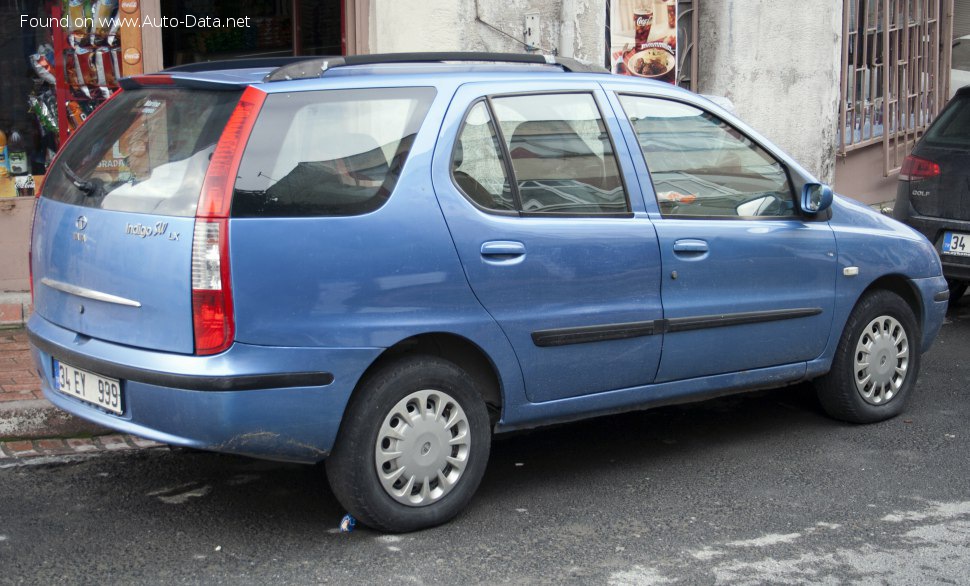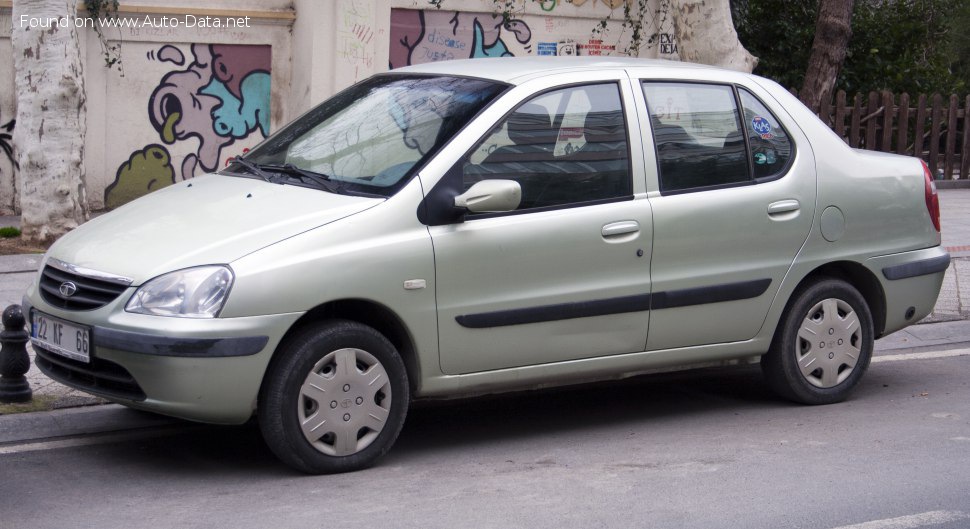
The Tata Indigo is a compact sedan produced by the Indian manufacturer Tata Motors from 2002 to 2009. Designed as a direct competitor to established models in the Indian market, the Indigo aimed to offer a more spacious and refined alternative to existing offerings, particularly in the entry-level and mid-range segments. While not officially sold in the United States, the Indigo represents a significant step in Tata Motors’ ambition to create globally competitive vehicles. This article focuses on the 1.4 TDI variant, a diesel-powered version that was popular in markets where fuel efficiency and cost-effectiveness were paramount.
The Tata Indigo 1.4 TDI: A Focus on Efficiency
The 1.4 TDI version of the Indigo was specifically engineered to appeal to buyers seeking a fuel-efficient and reliable sedan. Introduced as a diesel option, it provided a compelling alternative to gasoline-powered vehicles, especially in regions with higher diesel fuel availability and lower prices. The Indigo, in general, was a pivotal model for Tata, demonstrating the company’s growing capabilities in vehicle design and manufacturing. It was a key player in establishing Tata as a serious contender in the Indian automotive landscape, and later, as an expanding global brand.
Engine & Performance
The heart of the Indigo 1.4 TDI is a 1.4-liter inline-four cylinder diesel engine. This engine produces 71 horsepower at 4500 rpm and 135 Nm (99.57 lb.-ft.) of torque at 2000 rpm. While not a performance-oriented engine, it delivers adequate power for everyday driving conditions. The engine features a turbocharger with an intercooler, enhancing efficiency and providing a modest boost in power output. The engine utilizes a precombustion chamber injection system, a common technology for diesel engines of that era. Acceleration from 0 to 100 km/h (0-62 mph) takes approximately 14 seconds, and 0 to 60 mph is achieved in around 13.3 seconds. The Indigo 1.4 TDI has a maximum speed of 155 km/h (96.31 mph). Fuel economy is a strong point, achieving approximately 49 US mpg (58.9 UK mpg or 20.8 km/l) on the extra-urban cycle and 29.4 US mpg (35.3 UK mpg or 12.5 km/l) in urban driving conditions. The engine’s power-to-weight ratio is 15.4 kg/Hp, and the torque-to-weight ratio is 8.1 kg/Nm.
Design & Features
The Tata Indigo is a four-door, five-seat sedan with a traditional three-box design. Its styling was intended to be modern and appealing to a broad range of customers. The interior focused on providing a comfortable and spacious cabin, a key selling point in the Indian market. Features included basic amenities expected of a vehicle in its class, such as manual air conditioning, power steering, and cloth upholstery. Safety features were relatively basic by modern standards, reflecting the regulatory environment and price point of the vehicle at the time of its production. The Indigo’s trunk offers a minimum capacity of 450 liters (15.89 cu. ft.), providing ample space for luggage and cargo. The vehicle’s dimensions are 4150 mm (163.39 in.) in length, 1620 mm (63.78 in.) in width, and 1540 mm (60.63 in.) in height, with a wheelbase of 2450 mm (96.46 in.).
Technical Specifications
| Brand | Tata |
| Model | Indigo |
| Generation | Indigo |
| Type (Engine) | 1.4 TDI (71 Hp) |
| Start of production | 2002 |
| End of production | 2009 |
| Powertrain Architecture | Internal Combustion engine |
| Body type | Sedan |
| Seats | 5 |
| Doors | 4 |
| Fuel consumption (urban) | 8 l/100 km (29.4 US mpg) |
| Fuel consumption (extra urban) | 4.8 l/100 km (49 US mpg) |
| Fuel Type | Diesel |
| Acceleration 0 – 100 km/h | 14 sec |
| Acceleration 0 – 62 mph | 14 sec |
| Acceleration 0 – 60 mph | 13.3 sec |
| Maximum speed | 155 km/h (96.31 mph) |
| Emission standard | Euro 3 |
| Weight-to-power ratio | 15.4 kg/Hp |
| Weight-to-torque ratio | 8.1 kg/Nm |
| Power | 71 Hp @ 4500 rpm |
| Power per litre | 50.5 Hp/l |
| Torque | 135 Nm @ 2000 rpm (99.57 lb.-ft. @ 2000 rpm) |
| Engine layout | Front, Transverse |
| Engine displacement | 1405 cm3 (85.74 cu. in.) |
| Number of cylinders | 4 |
| Engine configuration | Inline |
| Cylinder Bore | 75 mm (2.95 in.) |
| Piston Stroke | 79.5 mm (3.13 in.) |
| Compression ratio | 22:1 |
| Number of valves per cylinder | 2 |
| Fuel injection system | Precombustion chamber injection |
| Engine aspiration | Turbocharger, Intercooler |
| Engine oil capacity | 5.5 l (5.81 US qt | 4.84 UK qt) |
| Coolant capacity | 6 l (6.34 US qt | 5.28 UK qt) |
| Kerb Weight | 1090 kg (2403.04 lbs.) |
| Max. weight | 1490 kg (3284.89 lbs.) |
| Max load | 400 kg (881.85 lbs.) |
| Trunk (boot) space | 450 l (15.89 cu. ft.) |
| Fuel tank capacity | 42 l (11.1 US gal | 9.24 UK gal) |
| Length | 4150 mm (163.39 in.) |
| Width | 1620 mm (63.78 in.) |
| Height | 1540 mm (60.63 in.) |
| Wheelbase | 2450 mm (96.46 in.) |
| Front track | 1400 mm (55.12 in.) |
| Rear track | 1380 mm (54.33 in.) |
| Drivetrain | Front wheel drive |
| Number of gears | 5 gears, manual transmission |
| Front suspension | Spring Strut |
| Rear suspension | Coil spring |
| Front brakes | Disc |
| Rear brakes | Drum |
| Steering type | Steering rack and pinion |
| Tires size | 175/65 R14 |
The Tata Indigo 1.4 TDI, while not a groundbreaking vehicle in terms of innovation, represented a significant achievement for Tata Motors. It provided a practical, affordable, and fuel-efficient option for buyers in emerging markets, contributing to the company’s growth and establishing its presence in the global automotive industry. Its focus on practicality and economy made it a popular choice for families and individuals seeking reliable transportation.