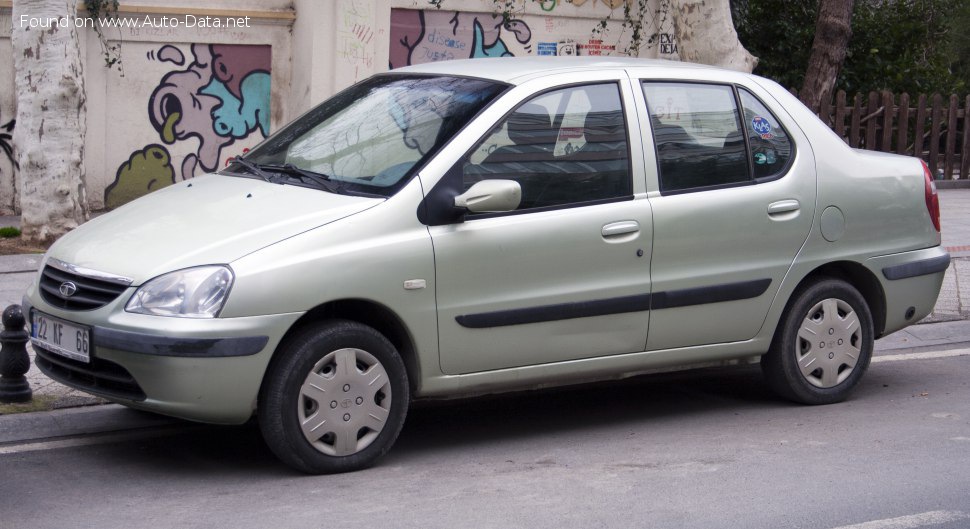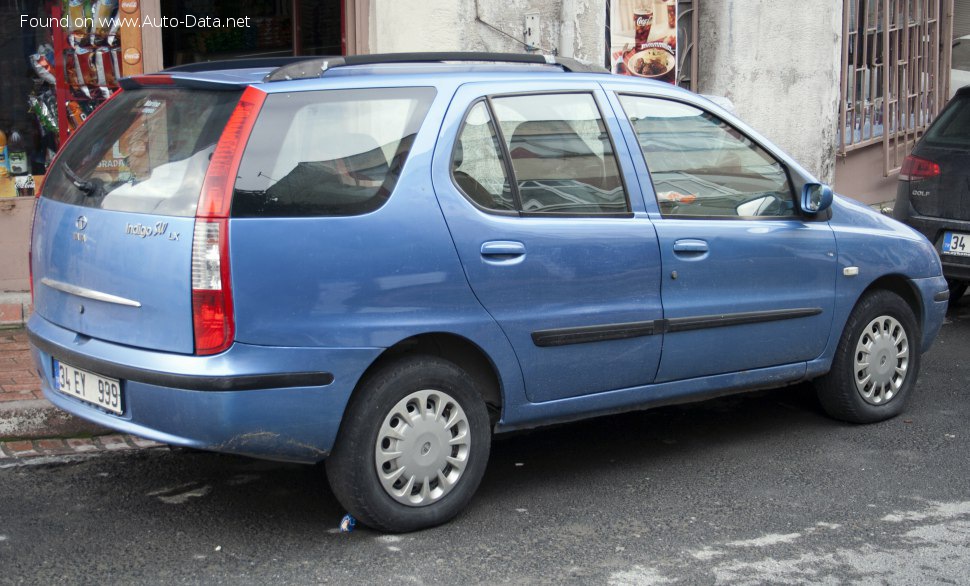
The Tata Indigo Marina 1.4 i (85 Hp) is a compact station wagon produced by the Indian manufacturer Tata Motors between 2006 and 2009. Positioned as an affordable and practical family vehicle, the Marina was a significant offering in the Indian automotive market, catering to buyers seeking a spacious and economical car. It represented Tata’s attempt to provide a domestically produced alternative to increasingly popular foreign models. While not officially sold in the United States, understanding the Indigo Marina provides insight into the evolving automotive landscape of a major emerging market and Tata’s early efforts to establish itself as a global automotive brand.
The Tata Indigo Marina: A Detailed Overview
The Indigo Marina was essentially a derivative of the Tata Indigo sedan, with the key difference being its extended rear section to create a station wagon (estate) body style. This modification significantly increased cargo capacity, making it a popular choice for families and those requiring a versatile vehicle for both passenger and load-carrying needs. The Marina aimed to bridge the gap between a traditional sedan and a more expensive multi-purpose vehicle (MPV), offering a compelling value proposition in a price-sensitive market.
Engine & Performance
The Indigo Marina 1.4 i was powered by a 1.4-liter inline four-cylinder petrol (gasoline) engine. This engine produced a maximum power output of 85 horsepower at 5500 rpm and 120 Nm (88.51 lb.-ft.) of torque at 3000 rpm. While not a performance-oriented vehicle, the engine provided adequate power for everyday driving conditions. The power-to-weight ratio of 12.8 kg/Hp (78 Hp/tonne) and torque-to-weight ratio of 9.1 kg/Nm (110.1 Nm/tonne) reflected its focus on practicality rather than outright speed. The engine featured a multi-port manifold fuel injection system and was naturally aspirated. The Marina’s top speed was rated at 160 km/h (99.42 mph). The engine’s 9:1 compression ratio was typical for the era, balancing performance and fuel efficiency. The drivetrain consisted of a front-wheel-drive configuration coupled with a 5-speed manual transmission, the standard offering for this model.
Design & Features
The Tata Indigo Marina adopted a traditional station wagon design, characterized by its elongated roofline and large rear cargo area. The vehicle offered seating for five passengers and featured five doors for easy access. Its dimensions – 4130 mm (162.6 in) in length, 1625 mm (63.98 in) in width, and 1575 mm (62.01 in) in height – positioned it within the compact car segment. The Marina’s interior was designed with practicality in mind, offering a reasonable level of comfort and functionality for its price point. Key features included a spacious trunk with a minimum capacity of 670 liters (23.66 cu. ft.) which could be expanded to 1370 liters (48.38 cu. ft.) with the rear seats folded down. Safety features were relatively basic by modern standards, reflecting the vehicle’s production period and target market. Standard equipment typically included front disc brakes and rear drum brakes, along with a steering rack and pinion system for responsive handling. The vehicle rode on 175/65 R14 tires. The focus was on providing a reliable and affordable mode of transportation rather than luxury or advanced technology.
Suspension and Handling
The Indigo Marina utilized a simple yet effective suspension setup. Both the front and rear suspensions employed a spring strut configuration. This setup provided a comfortable ride quality suitable for the often-challenging road conditions prevalent in India. The front track measured 1400 mm (55.12 in), while the rear track was slightly narrower at 1380 mm (54.33 in). The steering system was a steering rack and pinion, offering reasonable precision and feedback for the driver.
Technical Specifications
| General Information | |
| Brand | Tata |
| Model | Indigo |
| Generation | Indigo Marina |
| Type (Engine) | 1.4 i (85 Hp) |
| Start of production | 2006 |
| End of production | 2009 |
| Powertrain Architecture | Internal Combustion engine |
| Body type | Station wagon (estate) |
| Seats | 5 |
| Doors | 5 |
| Performance Specs | |
| Fuel Type | Petrol (Gasoline) |
| Maximum speed | 160 km/h (99.42 mph) |
| Weight-to-power ratio | 12.8 kg/Hp, 78 Hp/tonne |
| Weight-to-torque ratio | 9.1 kg/Nm, 110.1 Nm/tonne |
| Engine Specs | |
| Power | 85 Hp @ 5500 rpm |
| Power per litre | 60.5 Hp/l |
| Torque | 120 Nm @ 3000 rpm (88.51 lb.-ft. @ 3000 rpm) |
| Engine layout | Front, Transverse |
| Engine displacement | 1405 cm3 (85.74 cu. in.) |
| Number of cylinders | 4 |
| Engine configuration | Inline |
| Cylinder Bore | 75 mm (2.95 in.) |
| Piston Stroke | 79.5 mm (3.13 in.) |
| Compression ratio | 9:1 |
| Number of valves per cylinder | 2 |
| Fuel injection system | Multi-port manifold injection |
| Engine aspiration | Naturally aspirated engine |
| Space, Volume and Weights | |
| Kerb Weight | 1090 kg (2403.04 lbs.) |
| Trunk (boot) space – minimum | 670 l (23.66 cu. ft.) |
| Trunk (boot) space – maximum | 1370 l (48.38 cu. ft.) |
| Fuel tank capacity | 42 l (11.1 US gal | 9.24 UK gal) |
| Dimensions | |
| Length | 4130 mm (162.6 in.) |
| Width | 1625 mm (63.98 in.) |
| Height | 1575 mm (62.01 in.) |
| Wheelbase | 2450 mm (96.46 in.) |
| Front track | 1400 mm (55.12 in.) |
| Rear (Back) track | 1380 mm (54.33 in.) |
| Drivetrain, Brakes and Suspension Specs | |
| Drivetrain Architecture | ICE drives front wheels |
| Drive wheel | Front wheel drive |
| Number of gears and type of gearbox | 5 gears, manual transmission |
| Front suspension | Spring Strut |
| Rear suspension | Spring Strut |
| Front brakes | Disc |
| Rear brakes | Drum |
| Steering type | Steering rack and pinion |
| Tires size | 175/65 R14 |
The Tata Indigo Marina 1.4 i, while not a groundbreaking vehicle, played a role in the development of the Indian automotive industry. It offered a practical and affordable solution for families and individuals seeking a versatile vehicle, and it helped to establish Tata Motors as a significant player in the domestic market. Its legacy lies in its contribution to the accessibility of personal transportation in India and its representation of Tata’s early ambitions on the global stage.