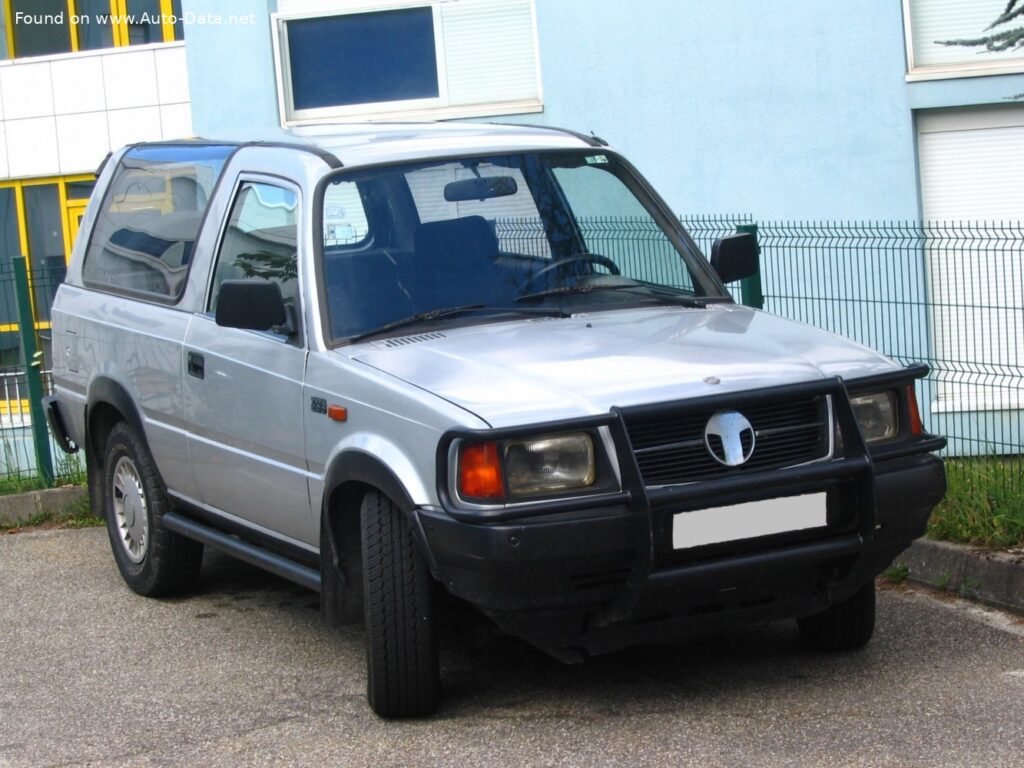
The Tata Sierra I 1.9 D (68 Hp) is a historically significant vehicle produced by the Indian manufacturer Tata Motors between 1991 and 2000. Representing a bold step for the Indian automotive industry, the Sierra was one of the first domestically designed and produced sport utility vehicles (SUVs) in India. While not officially sold in the United States, the Sierra holds a unique position as a pioneering vehicle that catered to the growing demand for rugged, capable vehicles in the Indian market, and influenced subsequent SUV designs within the country. It was a landmark vehicle for Tata, showcasing their ambition and engineering capabilities.
The Tata Sierra I: A Pioneer in the Indian SUV Market
The Sierra I emerged during a period when the Indian automotive landscape was largely dominated by a few manufacturers and limited model choices. Prior to the Sierra, SUVs were primarily imported or assembled from kits, making them inaccessible to most consumers. Tata Motors recognized a gap in the market for a robust, affordable, and domestically produced SUV. The Sierra aimed to fill this void, offering a vehicle capable of handling India’s diverse terrains and challenging road conditions. Its design, while influenced by the Mercedes-Benz G-Class, was distinctly Indian in its execution and affordability.
Engine & Performance
The Sierra I 1.9 D was powered by a 1.9-liter inline-four diesel engine, producing 68 horsepower at 4500 rpm and 118 Nm (87.03 lb.-ft.) of torque at 2500 rpm. This engine, while modest by modern standards, provided sufficient power and torque for its intended purpose – navigating rough roads and providing reliable transportation. The engine featured a precombustion chamber injection system and a naturally aspirated configuration. The power-to-weight ratio stood at 22.4 kg/Hp, and the torque-to-weight ratio was 12.9 kg/Nm. The vehicle’s top speed was limited to 105 km/h (65.24 mph). Fuel economy figures were 13 l/100 km (18.1 US mpg, 21.7 UK mpg, 7.7 km/l) in urban settings, 8 l/100 km (29.4 US mpg, 35.3 UK mpg, 12.5 km/l) on the open road, and 11 l/100 km (21.4 US mpg, 25.7 UK mpg, 9.1 km/l) combined. The engine’s longitudinal front-engine layout contributed to the vehicle’s balanced handling characteristics.
Design & Features
The Tata Sierra I was characterized by its distinctive three-door body style and boxy, utilitarian design. Its robust construction and high ground clearance made it well-suited for off-road driving. The vehicle seated five passengers, although rear passenger space was somewhat limited due to the compact dimensions. The Sierra featured a relatively simple interior, prioritizing functionality over luxury. Key features included a hydraulic steering system, disc brakes on the front wheels, and drum brakes on the rear. An Anti-lock Braking System (ABS) was included as a safety feature. The vehicle’s suspension comprised a double wishbone setup at the front and coil springs at the rear, providing a comfortable ride even on uneven surfaces. The Sierra’s 195/80 R15 S tires were chosen for their durability and all-terrain capabilities. The vehicle’s design, while somewhat spartan, was considered modern for its time in the Indian market.
Technical Specifications
| Brand | Tata |
| Model | Sierra |
| Generation | Sierra I |
| Engine Type | 1.9 D (68 Hp) |
| Production Years | 1991 – 2000 |
| Body Type | Off-road vehicle |
| Seats | 5 |
| Doors | 3 |
| Fuel Consumption (Urban) | 13 l/100 km (18.1 US mpg, 21.7 UK mpg) |
| Fuel Consumption (Extra Urban) | 8 l/100 km (29.4 US mpg, 35.3 UK mpg) |
| Fuel Consumption (Combined) | 11 l/100 km (21.4 US mpg, 25.7 UK mpg) |
| Fuel Type | Diesel |
| Maximum Speed | 105 km/h (65.24 mph) |
| Weight-to-Power Ratio | 22.4 kg/Hp |
| Weight-to-Torque Ratio | 12.9 kg/Nm |
| Power | 68 Hp @ 4500 rpm |
| Torque | 118 Nm @ 2500 rpm (87.03 lb.-ft. @ 2500 rpm) |
| Engine Layout | Front, Longitudinal |
| Engine Displacement | 1948 cm3 (118.87 cu. in.) |
| Number of Cylinders | 4 |
| Engine Configuration | Inline |
| Cylinder Bore | 83 mm (3.27 in.) |
| Piston Stroke | 90 mm (3.54 in.) |
| Compression Ratio | 22.5:1 |
| Valves per Cylinder | 2 |
| Fuel Injection System | Precombustion chamber injection |
| Engine Aspiration | Naturally aspirated |
| Valvetrain | OHC |
| Kerb Weight | 1520 kg (3351.03 lbs.) |
| Max. Weight | 2050 kg (4519.48 lbs.) |
| Max Load | 530 kg (1168.45 lbs.) |
| Fuel Tank Capacity | 50 l (13.21 US gal | 11 UK gal) |
| Length | 4410 mm (173.62 in.) |
| Width | 1710 mm (67.32 in.) |
| Height | 1770 mm (69.69 in.) |
| Wheelbase | 2400 mm (94.49 in.) |
| Drivetrain | Rear wheel drive |
| Gearbox | 5 gears, manual transmission |
| Front Suspension | Double wishbone |
| Rear Suspension | Coil spring |
| Front Brakes | Disc |
| Rear Brakes | Drum |
| Assisting Systems | ABS (Anti-lock braking system) |
| Power Steering | Hydraulic Steering |
| Tire Size | 195/80 R15 S |
The Tata Sierra I, despite its relatively simple mechanicals, played a crucial role in shaping the Indian SUV market. It demonstrated that a capable and affordable SUV could be designed and manufactured domestically, paving the way for future generations of Indian SUVs. While it may not have achieved widespread recognition outside of India, the Sierra remains a beloved and iconic vehicle for many Indian automotive enthusiasts, representing a pivotal moment in the country’s automotive history.