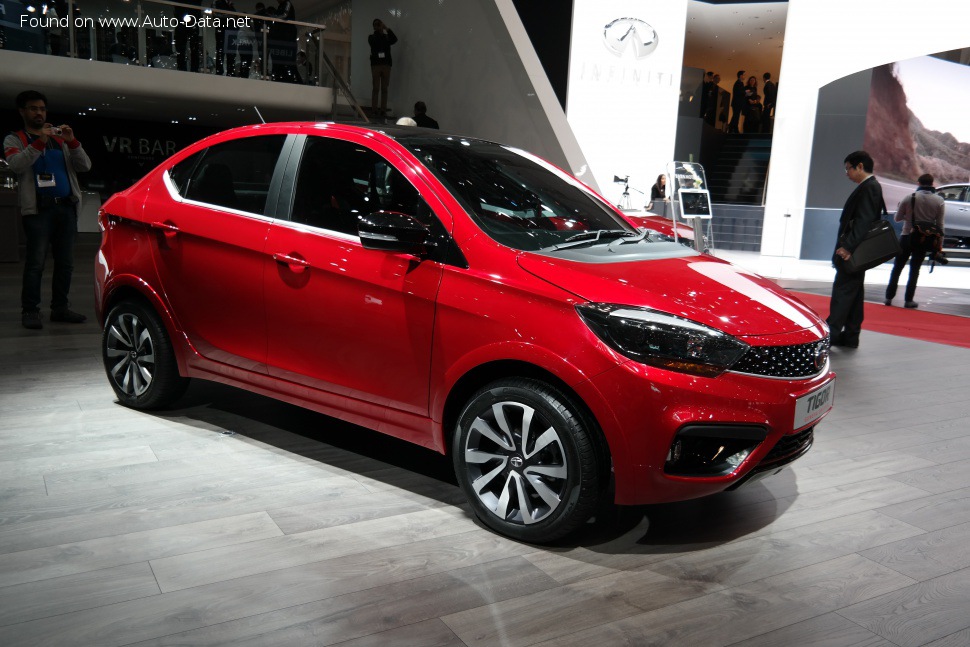
The Tata Tigor EV 26 kWh (75 Hp) is an all-electric subcompact sedan produced by the Indian manufacturer Tata Motors. Introduced in January 2020 as part of the Tigor facelift, this variant represented Tata’s continued commitment to expanding its electric vehicle offerings in the Indian market. It’s positioned as the entry-level electric vehicle in the Tigor lineup, offering a more affordable and accessible option compared to potential higher-range or performance-focused variants. The Tigor EV is based on the Tigor platform, a derivative of Tata’s X05 platform, and aims to provide a practical and eco-friendly transportation solution for urban commuters.
Powertrain & Engine Architecture
The Tigor EV 26 kWh (75 Hp) utilizes a fully Battery Electric Vehicle (BEV) powertrain. At its heart is a 26 kWh Lithium-ion battery pack located under the floor of the vehicle, providing energy to a single electric motor. This motor, a synchronous type, is mounted transversely on the front axle and drives the front wheels. The electric motor produces a peak power output of 75 horsepower (Hp) and 170 Nm (125.39 lb.-ft.) of torque. The system power and torque are identical to the motor output, indicating a direct drive configuration. The single-speed automatic transmission simplifies operation, offering a seamless driving experience without the need for gear changes. The battery management system (BMS) plays a crucial role in optimizing battery performance, longevity, and safety, monitoring parameters such as voltage, current, and temperature.
Charging Capabilities
The Tigor EV supports both AC and DC fast charging. AC charging, using a standard wall outlet or a dedicated AC charger, allows for a full charge in approximately 8-9 hours. DC fast charging, utilizing a compatible DC fast charger, can replenish the battery from 0% to 80% in around 60 minutes, providing a significant convenience for longer journeys. The charging port location is not publicly specified in available documentation.
Driving Characteristics
The Tigor EV 26 kWh (75 Hp) delivers a driving experience focused on efficiency and ease of use. With 75 hp and 170 Nm of torque, acceleration is adequate for city driving, though not particularly brisk. The instant torque delivery characteristic of electric motors provides responsive acceleration from a standstill. The single-speed automatic transmission ensures smooth and linear power delivery. The vehicle is geared towards providing a comfortable and quiet ride, minimizing noise and vibration compared to internal combustion engine vehicles. The relatively low center of gravity, due to the underfloor battery pack, contributes to improved stability and handling. While not a performance-oriented vehicle, the Tigor EV offers a practical and enjoyable driving experience for daily commutes and urban transportation.
Equipment & Trim Levels
The Tigor EV 26 kWh (75 Hp) typically comes equipped with a range of standard features designed to enhance comfort, convenience, and safety. These include air conditioning, power windows, central locking, and an audio system. Specific trim levels may offer additional features such as a touchscreen infotainment system with smartphone connectivity, digital instrument cluster, and keyless entry. Interior upholstery is generally fabric, with options for different color schemes. Safety features typically include Anti-lock Braking System (ABS), airbags, and rear parking sensors. Optional extras may include alloy wheels, fog lamps, and a rear defogger. The interior dashboard configuration is typical of subcompact sedans, prioritizing functionality and ease of use.
Chassis & Braking
The Tigor EV utilizes a McPherson strut independent suspension system at the front, providing a comfortable ride and responsive handling. The rear suspension employs a torsion beam setup, offering a balance between ride comfort and space efficiency. The braking system features disc brakes on the front wheels and drum brakes on the rear wheels. The Anti-lock Braking System (ABS) enhances braking performance and stability, particularly in emergency situations. The steering system is an electric power steering rack and pinion, providing light and precise steering control. The vehicle is equipped with 175/65 R14 tires mounted on 14-inch wheel rims.
Market Reception & Comparison
The Tata Tigor EV 26 kWh (75 Hp) has been generally well-received in the Indian market as an affordable and practical electric vehicle option. Critics have praised its comfortable ride, ease of driving, and relatively long range for its price point. Compared to other trims in the Tigor lineup (which primarily consist of gasoline-powered variants), the EV offers a significantly different driving experience, prioritizing quietness, smoothness, and zero emissions. Fuel economy, naturally, is a key advantage of the EV, with significantly lower running costs compared to gasoline vehicles. Reliability has been generally positive, with the electric powertrain proving to be relatively robust. However, some reviews have noted the limited power output and acceleration compared to higher-performance gasoline variants. Compared to other electric vehicles in the Indian market, the Tigor EV offers a competitive price and range, making it an attractive option for budget-conscious buyers.
Technical Specifications
| Brand | Tata |
| Model | Tigor |
| Generation | Tigor (facelift 2020) |
| Type (Engine) | EV 26 kWh (75 Hp) |
| Start of production | January, 2020 |
| Powertrain Architecture | BEV (Electric Vehicle) |
| Body type | Sedan |
| Seats | 5 |
| Doors | 4 |
| Fuel Type | Electricity |
| Gross battery capacity | 26 kWh |
| Battery technology | Lithium-ion (Li-Ion) |
| Battery location | Below the floor |
| All-electric range | 315 km (195.73 mi) |
| Electric motor power | 75 Hp |
| Electric motor Torque | 170 Nm (125.39 lb.-ft.) |
| Electric motor location | Front axle, Transverse |
| Electric motor type | Synchronous |
| System power | 75 Hp |
| System torque | 170 Nm (125.39 lb.-ft.) |
| Trunk (boot) space – minimum | 316 l (11.16 cu. ft.) |
| Length | 3993 mm (157.2 in.) |
| Width | 1677 mm (66.02 in.) |
| Height | 1532 mm (60.31 in.) |
| Wheelbase | 2450 mm (96.46 in.) |
| Minimum turning circle (turning diameter) | 10.2 m (33.46 ft.) |
| Drivetrain Architecture | One electric motor drives the front wheels. |
| Drive wheel | Front wheel drive |
| Number of gears and type of gearbox | 1 gears, automatic transmission |
| Front suspension | Coil spring, Independent type McPherson |
| Rear suspension | Torsion |
| Front brakes | Disc |
| Rear brakes | Drum |
| Assisting systems | ABS (Anti-lock braking system) |
| Steering type | Steering rack and pinion |
| Power steering | Electric Steering |
| Tires size | 175/65 R14 |
| Wheel rims size | 14 |
Legacy
The Tata Tigor EV 26 kWh (75 Hp) played a significant role in popularizing electric vehicles in the Indian market. Its affordability and practicality made it accessible to a wider range of consumers, contributing to the growth of the EV segment. While newer and more advanced electric vehicles have since been introduced, the Tigor EV remains a popular choice in the used car market, offering a reliable and cost-effective transportation solution. The powertrain, while not the most powerful available, has proven to be relatively durable and requires minimal maintenance compared to internal combustion engines. The Tigor EV’s success paved the way for Tata Motors to further expand its EV portfolio, solidifying its position as a leading electric vehicle manufacturer in India.