
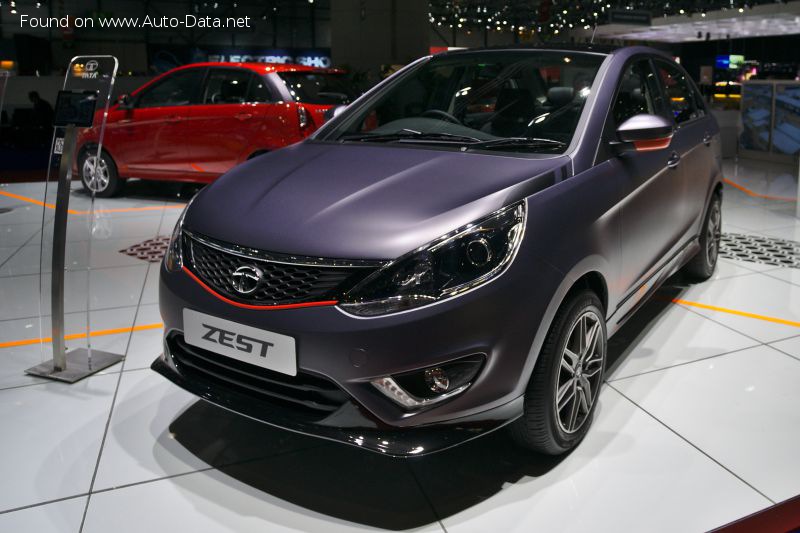
The Tata Zest 1.3 d (75 Hp) is a subcompact sedan produced by the Indian manufacturer Tata Motors from 2014 onwards. It represented a significant step forward for Tata in terms of design, features, and overall refinement, aiming to compete with established players in the increasingly competitive Indian automotive market. This particular variant, powered by a 1.3-liter diesel engine producing 75 horsepower, served as an entry-level offering within the Zest lineup, positioned below the more powerful petrol variants. The Zest was built on a modified version of the Fiat Grande Punto platform, known internally as the X1 platform, and was a key model in Tata’s strategy to revitalize its brand image.
Powertrain & Engine Architecture
The heart of the Tata Zest 1.3 d is a 1.3-liter inline-four cylinder diesel engine, sourced from Fiat and designated as a Multijet engine. This engine, known for its fuel efficiency and relatively refined operation, is a turbocharged diesel featuring a common rail direct injection system. The engine code is typically associated with Fiat’s engine family. The engine displaces 1248 cm³ (76.16 cubic inches) and produces a maximum power output of 75 hp (56 kW) at 4000 rpm, and a peak torque of 190 Nm (140.14 lb-ft) between 1750 and 3000 rpm. The turbocharger, coupled with an intercooler, helps to boost power and improve combustion efficiency. The engine utilizes a Double Overhead Camshaft (DOHC) valvetrain with four valves per cylinder, contributing to its improved breathing and performance. The engine oil capacity is 4 liters (4.23 US quarts or 3.52 UK quarts), and the recommended coolant capacity is 7.5 liters (7.93 US quarts or 6.6 UK quarts). The Zest 1.3 d was exclusively offered with a 5-speed manual transmission, designed to maximize fuel economy and provide adequate performance for everyday driving.
Fuel Injection and Turbocharging
The common rail direct injection system is a crucial component of the engine’s efficiency. It allows for precise control over fuel delivery, optimizing combustion and reducing emissions. The turbocharger, a variable geometry turbocharger in some later iterations, forces more air into the engine cylinders, increasing power output without significantly increasing engine size. The intercooler cools the compressed air from the turbocharger, further enhancing density and improving combustion efficiency.
Driving Characteristics
The Tata Zest 1.3 d, with its 75 hp output and 5-speed manual transmission, offered a driving experience geared towards fuel efficiency and practicality rather than outright performance. Acceleration from 0 to 100 km/h (0-62 mph) took approximately 15 seconds, and 0 to 60 mph was achieved in around 14.3 seconds. The top speed was limited to 158 km/h (98.18 mph). The engine’s torque delivery, peaking at 190 Nm, provided adequate pulling power for city driving and highway cruising, although overtaking maneuvers required careful planning. The gear ratios were tuned to prioritize fuel economy, with taller gearing in higher gears. Compared to the petrol variants of the Zest, the 1.3 d offered significantly better fuel economy but lacked the responsiveness and higher top speed of the gasoline engines. The manual transmission provided drivers with greater control over the engine’s power delivery, allowing them to optimize performance based on driving conditions.
Equipment & Trim Levels
The Tata Zest 1.3 d was typically offered in several trim levels, ranging from base models to more fully equipped variants. Standard features generally included air conditioning, power steering, and basic safety equipment such as airbags. Higher trim levels added features like alloy wheels, a touchscreen infotainment system with Bluetooth connectivity, steering-mounted audio controls, and rear parking sensors. Interior upholstery was typically cloth, with a focus on durability and practicality. The dashboard layout was relatively simple and functional, with a focus on ease of use. Optional extras included a more advanced infotainment system with navigation, automatic climate control, and a rear defogger. The Zest aimed to provide a good balance of features for its price point, appealing to budget-conscious buyers who still desired a modern and well-equipped vehicle.
Chassis & Braking
The Tata Zest featured an independent McPherson strut suspension system at the front, providing a comfortable ride and decent handling characteristics. The rear suspension utilized a semi-independent coil spring setup, which was a cost-effective solution that offered reasonable ride quality. The front brakes were disc brakes, providing adequate stopping power, while the rear brakes were drum brakes, a common feature in this segment to reduce costs. The steering system was an electric power steering (EPS) system, offering light and easy steering feel, particularly useful in urban driving conditions. The Zest rode on 175/65 R14 tires mounted on 14-inch steel or alloy wheels. The vehicle’s curb weight of 1152 kg (2539.73 lbs) contributed to its relatively nimble handling.
Market Reception & Comparison
The Tata Zest 1.3 d was generally well-received by critics and consumers alike, particularly for its fuel efficiency and value for money. It offered a compelling alternative to established competitors like the Maruti Suzuki Swift Dzire and the Honda Amaze. The diesel engine was praised for its refinement and fuel economy, achieving a combined fuel consumption of 4.4 l/100 km (53.5 US mpg or 64.2 UK mpg). However, some critics noted that the engine lacked the outright performance of some of its rivals. In terms of reliability, the Zest proved to be a reasonably reliable vehicle, although some owners reported minor issues with the electrical system. Compared to the petrol variants of the Zest, the 1.3 d offered significantly better fuel economy, making it a popular choice for drivers who covered long distances. The Zest’s spacious interior and comfortable ride also contributed to its positive market reception.
Technical Specifications
| Body Type | Sedan, 4 Doors, 5 Seats |
| Fuel Economy (Combined) | 4.4 l/100 km (53.5 US mpg, 64.2 UK mpg, 22.7 km/l) |
| Maximum Speed | 158 km/h (98.18 mph) |
| 0-100 km/h | 15 sec |
| 0-60 mph | 14.3 sec |
| Power | 75 Hp @ 4000 rpm |
| Torque | 190 Nm @ 1750-3000 rpm (140.14 lb.-ft.) |
| Engine Layout | Front, Transverse |
| Engine Displacement | 1248 cm³ (76.16 cu. in.) |
| Number of Cylinders | 4, Inline |
| Fuel Injection System | Diesel Commonrail |
| Engine Aspiration | Turbocharger, Intercooler |
| Engine Oil Capacity | 4 l (4.23 US qt, 3.52 UK qt) |
| Coolant Capacity | 7.5 l (7.93 US qt, 6.6 UK qt) |
| Kerb Weight | 1152 kg (2539.73 lbs) |
| Trunk Space (Maximum) | 390 l (13.77 cu. ft.) |
| Fuel Tank Capacity | 44 l (11.62 US gal, 9.68 UK gal) |
| Length | 3995 mm (157.28 in) |
| Width | 1706 mm (67.17 in) |
| Height | 1570 mm (61.81 in) |
| Wheelbase | 2470 mm (97.24 in) |
| Ride Height (Ground Clearance) | 165 mm (6.5 in) |
| Number of Gears & Gearbox Type | 5 gears, manual transmission |
Legacy
The Tata Zest 1.3 d, while no longer in production, remains a popular choice in the used car market, particularly for buyers seeking an affordable and fuel-efficient sedan. The Fiat-sourced Multijet engine has proven to be relatively durable and reliable, although regular maintenance is essential to ensure long-term performance. The Zest’s relatively simple mechanical design makes it easier and cheaper to repair compared to more complex modern vehicles. The model played a crucial role in establishing Tata Motors as a serious contender in the Indian automotive market, paving the way for future models like the Tiago and Nexon. The Zest 1.3 d continues to be appreciated for its practicality, fuel economy, and value for money, making it a viable option for budget-conscious car buyers.
