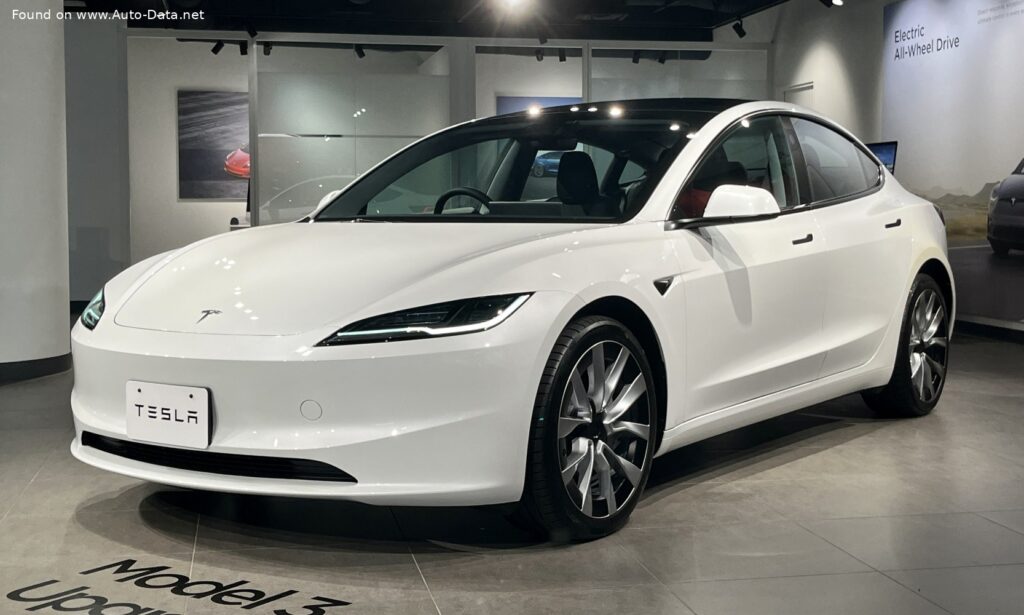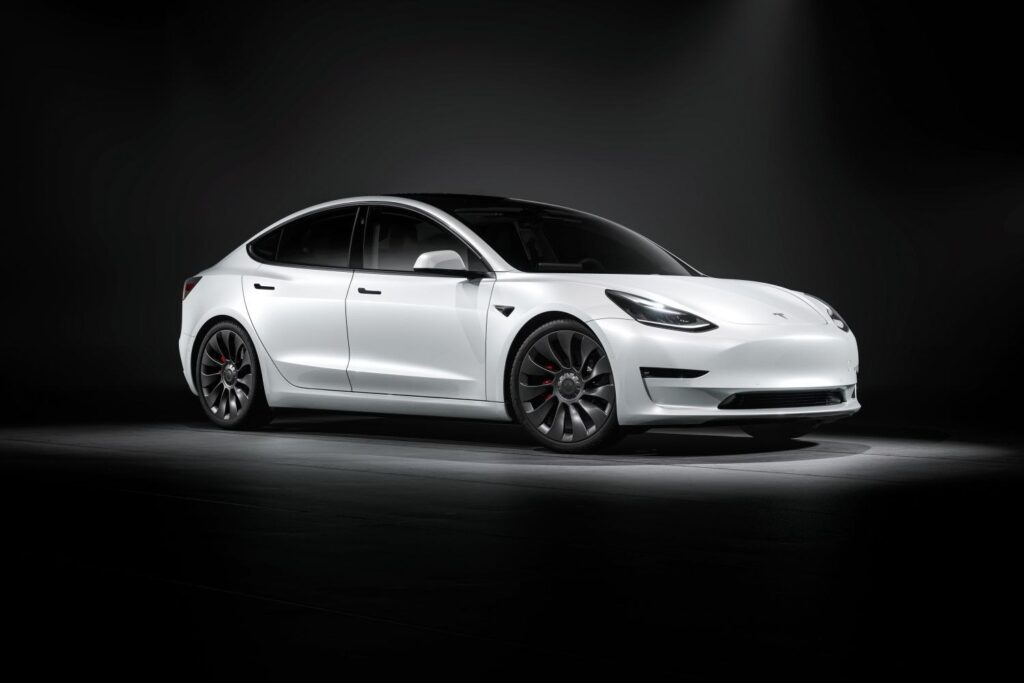
The Tesla Model 3, launched in 2017, quickly became a pivotal vehicle in the widespread adoption of electric vehicles. The 2020 facelift, particularly the Performance variant with its 80.5 kWh battery pack, represented a significant evolution of the original design, enhancing both performance and efficiency. Positioned within the compact executive car segment, the Model 3 aimed to deliver a premium electric experience at a more accessible price point than its larger sibling, the Model S. The Performance trim specifically targeted drivers seeking exhilarating acceleration and dynamic handling, solidifying Tesla’s reputation for innovative electric powertrains.
Tesla Model 3 (Facelift 2020) Performance: An Overview
The 2020 Model 3 Performance is characterized by its dual-motor all-wheel-drive (AWD) system, delivering impressive power and traction. This iteration of the Model 3 incorporated numerous refinements over the initial release, including updated battery chemistry, improved thermal management, and subtle design changes. Production ran from October 2020 through 2023, establishing it as a key model in Tesla’s lineup during a period of rapid growth and technological advancement. The vehicle’s focus on over-the-air software updates also allowed for continuous improvement and the addition of new features throughout its production run.
Engine & Performance
The heart of the Model 3 Performance lies in its dual-motor, all-electric powertrain. The system combines a front motor producing 215 horsepower and 240 Nm (177 lb-ft) of torque with a rear motor generating 298 horsepower and 420 Nm (309.78 lb-ft) of torque. Combined, these motors deliver a total system output of 513 horsepower and 660 Nm (486.79 lb-ft) of torque. This potent combination enables blistering acceleration, achieving 0-60 mph in just 3.1 seconds and 0-100 km/h in 3.3 seconds. The top speed is electronically limited to 162.18 mph (261 km/h). The powertrain architecture is a Battery Electric Vehicle (BEV), utilizing a 360V system. The weight-to-power ratio of 3.8 kg/Hp and a weight-to-torque ratio of 2.9 kg/Nm further contribute to the car’s responsive and engaging driving experience. The single-speed automatic transmission ensures seamless power delivery.
Design & Features
The Tesla Model 3 (facelift 2020) adopts a sleek, minimalist fastback sedan body style, prioritizing aerodynamic efficiency. Its clean lines and lack of traditional grilles contribute to a modern aesthetic. The interior is equally minimalist, dominated by a large central touchscreen that controls nearly all vehicle functions. The five-seat configuration provides comfortable accommodation for passengers. Key features of the Performance model include upgraded brakes (ventilated discs, 355x25mm front, 335x20mm rear) for enhanced stopping power, a performance suspension with coil springs and a transverse stabilizer, and unique exterior styling cues. Safety features are comprehensive, including ABS (Anti-lock braking system) and a suite of advanced driver-assistance systems (ADAS) such as Autopilot. The 649-liter (22.92 cu. ft.) trunk offers practical cargo space. The vehicle’s low ride height of 140 mm (5.51 in) and relatively tight turning circle of 11.6 m (38.06 ft) contribute to its agility in urban environments.
Technical Specifications
| Brand | Tesla |
| Model | Model 3 |
| Generation | Model 3 (facelift 2020) |
| Type (Engine) | Performance 80.5 kWh (513 Hp) Dual Motor AWD |
| Start of production | October, 2020 |
| End of production | 2023 |
| Powertrain Architecture | BEV (Electric Vehicle) |
| Body type | Sedan, Fastback |
| Seats | 5 |
| Doors | 4 |
| Fuel Type | Electricity |
| Acceleration 0 – 100 km/h | 3.3 sec |
| Acceleration 0 – 62 mph | 3.3 sec |
| Acceleration 0 – 60 mph | 3.1 sec |
| Maximum speed | 162.18 mph (261 km/h) |
| Weight-to-power ratio | 3.8 kg/Hp, 266.1 Hp/tonne |
| Weight-to-torque ratio | 2.9 kg/Nm, 342.3 Nm/tonne |
| Gross battery capacity | 80.5 kWh |
| Net (usable) battery capacity | 75 kWh |
| Battery voltage | 360 V |
| Battery technology | Lithium nickel manganese cobalt oxides (Li-NMC) |
| Battery location | Below the floor |
| All-electric range (WLTP) | 567 km (352.32 mi) |
| All-electric range | 507 km (315.04 mi) |
| Average Energy consumption (WLTP) | 16.5 kWh/100 km (26.55 kWh/100 mi) |
| MPGe | 127 |
| km/kWh | 6.1 |
| mi/kWh | 3.8 |
| Kerb Weight | 1928 kg (4250.51 lbs) |
| Max. weight | 2301 kg (5072.84 lbs) |
| Max load | 373 kg (822.32 lbs) |
| Trunk (boot) space – minimum | 649 l (22.92 cu. ft) |
| Length | 4694 mm (184.8 in) |
| Width | 1849 mm (72.8 in) |
| Width with mirrors folded | 1933 mm (76.1 in) |
| Width including mirrors | 2088 mm (82.2 in) |
| Height | 1443 mm (56.81 in) |
| Wheelbase | 2875 mm (113.19 in) |
| Front track | 1580 mm (62.2 in) |
| Rear (Back) track | 1580 mm (62.2 in) |
| Front overhang | 841 mm (33.11 in) |
| Rear overhang | 978 mm (38.5 in) |
| Ride height (ground clearance) | 140 mm (5.51 in) |
| Minimum turning circle (turning diameter) | 11.6 m (38.06 ft) |
| Drivetrain Architecture | One electric motor drives the front wheels, one electric motor drives the rear wheels. |
| Drive wheel | All wheel drive (4×4) |
| Number of gears and type of gearbox | 1 gears, automatic transmission |
| Front suspension | Coil spring, Double wishbone, Transverse stabilizer |
| Rear suspension | Independent multi-link suspension, Coil spring |
| Front brakes | Ventilated discs, 355×25 mm |
| Rear brakes | Ventilated discs, 335×20 mm |
| Assisting systems | ABS (Anti-lock braking system) |
| Steering type | Steering rack and pinion |
| Power steering | Electric Steering |
| Tires size | 235/35 R20 |
| Wheel rims size | 9J x 20 |
The Tesla Model 3 Performance (2020 facelift) represents a significant step forward in electric vehicle technology, offering a compelling combination of performance, range, and practicality. Its impact on the automotive industry is undeniable, accelerating the transition towards sustainable transportation and setting a new benchmark for electric vehicle performance.