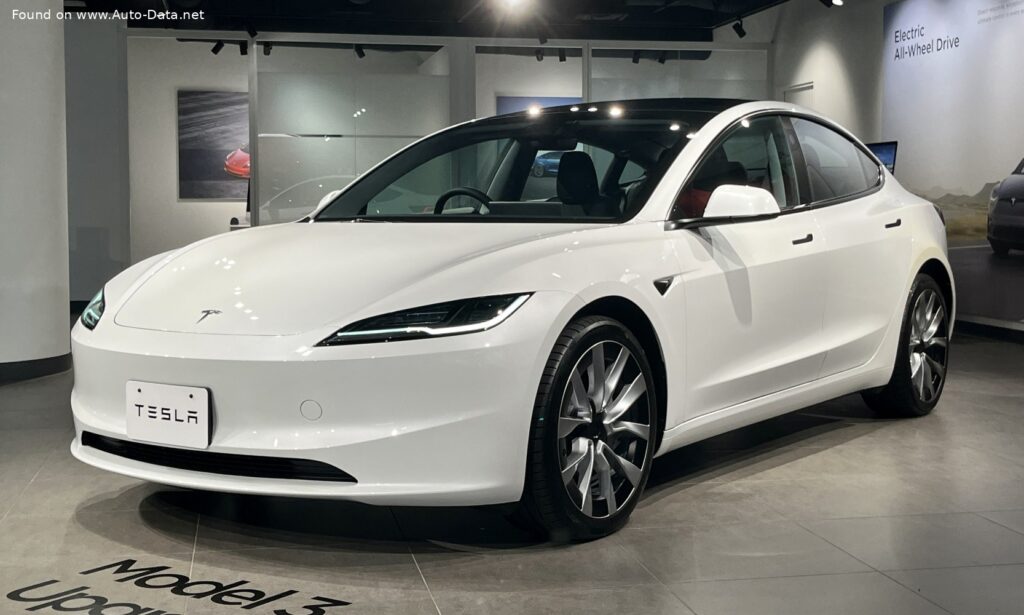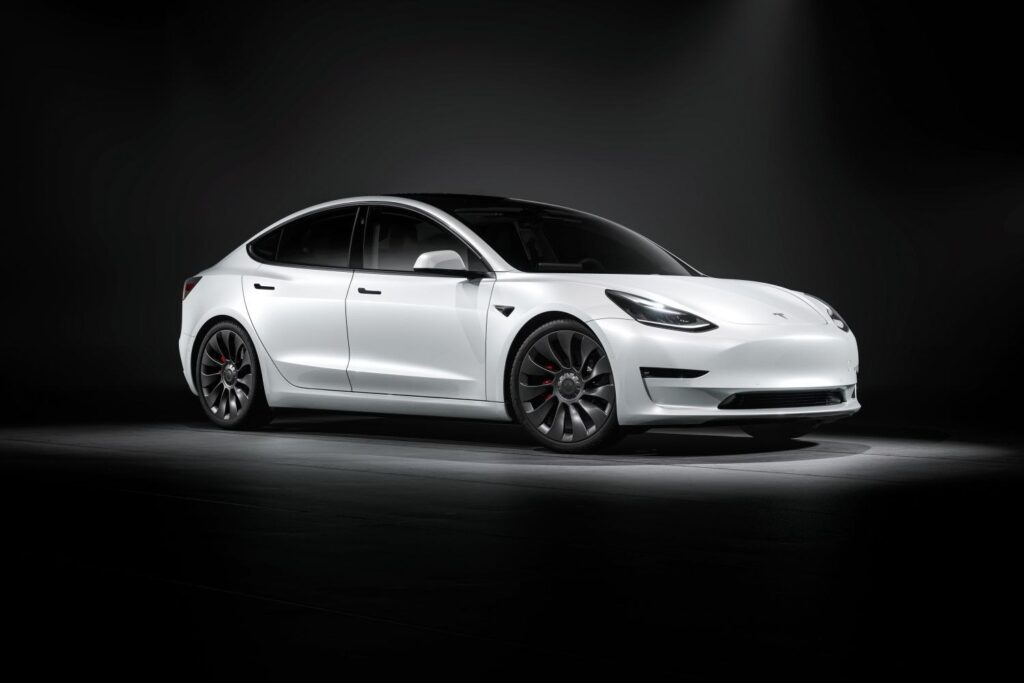
The Tesla Model 3, launched in 2017, quickly became a pivotal vehicle in the widespread adoption of electric vehicles. The 2020 facelift, specifically the Standard Plus variant with its 54 kWh battery pack, represented a significant refinement of the original design, offering increased range, improved performance, and enhanced features. Positioned in the compact executive car segment, the Model 3 aimed to deliver a premium electric experience at a more accessible price point than its larger sibling, the Model S. This version of the Model 3 was produced from October 2020 to November 2021 and played a crucial role in solidifying Tesla’s position as a leader in the EV market.
Tesla Model 3 (Facelift 2020) Standard Plus: An Overview
The Standard Plus model, equipped with a 54 kWh battery, served as the entry point into the Model 3 lineup during the 2020-2021 production run. It offered a compelling balance of performance, range, and affordability, making it a popular choice for consumers transitioning to electric mobility. The facelift brought subtle but important changes to the vehicle, including revised styling cues, upgraded interior materials, and improvements to the powertrain for enhanced efficiency. The Model 3’s success is largely attributed to its minimalist design, advanced technology, and over-the-air software updates, which continuously improve the vehicle’s functionality and features.
Engine & Performance
The Tesla Model 3 Standard Plus is powered by a single electric motor located on the rear axle, delivering 325 horsepower at 5525 rpm and 420 Nm (309.78 lb.-ft.) of torque available from 325 to 5200 rpm. This configuration provides rear-wheel drive and utilizes a single-speed automatic transmission. The powertrain architecture is a Battery Electric Vehicle (BEV), relying entirely on electricity for propulsion. Acceleration from 0 to 60 mph is achieved in 5.3 seconds, 0-62 mph in 5.6 seconds, and 0-100 km/h also in 5.6 seconds. The vehicle boasts a maximum speed of 225 km/h (139.81 mph). The weight-to-power ratio is 5.1 kg/Hp, equating to 196.4 Hp/tonne, while the weight-to-torque ratio is 3.9 kg/Nm, or 253.8 Nm/tonne. The 54 kWh Lithium iron phosphate (LiFePO4) battery provides a WLTP-rated all-electric range of 448 km (278.37 mi) and a real-world range of approximately 421 km (261.6 mi).
Design & Features
The 2020 Model 3 retains the sleek, minimalist aesthetic of the original, characterized by its fastback sedan body style and clean lines. The vehicle seats five passengers across two rows and features four doors for convenient access. Key design elements include a panoramic glass roof, flush door handles, and aerodynamic wheels. Inside, the Model 3 is defined by its minimalist dashboard dominated by a large central touchscreen display that controls most vehicle functions. The 2020 facelift brought subtle improvements to interior materials and build quality. Safety features are comprehensive, including ABS (Anti-lock braking system), and a suite of advanced driver-assistance systems (ADAS) such as Autopilot, which provides features like adaptive cruise control and lane keeping assist. Trunk space is a practical 649 liters (22.92 cu. ft.).
Technical Specifications
| Brand | Tesla |
| Model | Model 3 |
| Generation | Model 3 (facelift 2020) |
| Type (Engine) | Standard Plus 54 kWh (325 Hp) |
| Start of production | October, 2020 |
| End of production | November, 2021 |
| Powertrain Architecture | BEV (Electric Vehicle) |
| Body type | Sedan, Fastback |
| Seats | 5 |
| Doors | 4 |
| Fuel Type | Electricity |
| Acceleration 0 – 100 km/h | 5.6 sec |
| Acceleration 0 – 62 mph | 5.6 sec |
| Acceleration 0 – 60 mph | 5.3 sec |
| Maximum speed | 225 km/h (139.81 mph) |
| Weight-to-power ratio | 5.1 kg/Hp, 196.4 Hp/tonne |
| Weight-to-torque ratio | 3.9 kg/Nm, 253.8 Nm/tonne |
| Gross battery capacity | 54 kWh |
| Battery technology | Lithium iron phosphate (LiFePO4) |
| All-electric range (WLTP) | 448 km (278.37 mi) |
| All-electric range | 421 km (261.6 mi) |
| Electric motor power | 325 Hp @ 5525 rpm |
| Electric motor Torque | 420 Nm @ 325-5200 rpm (309.78 lb.-ft. @ 325-5200 rpm) |
| Electric motor location | Rear axle, Transverse |
| System power | 325 Hp @ 5525 rpm |
| System torque | 420 Nm @ 325-5200 rpm (309.78 lb.-ft. @ 325-5200 rpm) |
| Kerb Weight | 1655 kg (3648.65 lbs) |
| Max. weight | 2060 kg (4541.52 lbs) |
| Max load | 405 kg (892.87 lbs) |
| Trunk (boot) space – minimum | 649 l (22.92 cu. ft) |
| Length | 4694 mm (184.8 in) |
| Width | 1849 mm (72.8 in) |
| Width with mirrors folded | 1933 mm (76.1 in) |
| Width including mirrors | 2088 mm (82.2 in) |
| Height | 1443 mm (56.81 in) |
| Wheelbase | 2875 mm (113.19 in) |
| Front track | 1580 mm (62.2 in) |
| Rear (Back) track | 1580 mm (62.2 in) |
| Front overhang | 841 mm (33.11 in) |
| Rear overhang | 978 mm (38.5 in) |
| Ride height (ground clearance) | 140 mm (5.51 in) |
| Minimum turning circle (turning diameter) | 11.6 m (38.06 ft) |
| Drivetrain Architecture | One electric motor drives the rear wheels |
| Drive wheel | Rear wheel drive |
| Number of gears and type of gearbox | 1 gears, automatic transmission |
| Front suspension | Coil spring, Double wishbone, Transverse stabilizer |
| Rear suspension | Independent multi-link suspension, Coil spring |
| Front brakes | Ventilated discs, 320×25 mm |
| Rear brakes | Ventilated discs, 335×20 mm |
| Assisting systems | ABS (Anti-lock braking system) |
| Steering type | Steering rack and pinion |
| Power steering | Electric Steering |
| Tires size | 235/45 R18; 235/40 R19 |
| Wheel rims size | 8.5J x 18; 8.5J x 19 |
The Tesla Model 3 Standard Plus (2020-2021) represents a significant step forward in electric vehicle technology, offering a compelling combination of performance, range, and features. Its impact on the automotive industry is undeniable, accelerating the transition towards sustainable transportation and setting a new standard for electric vehicle design and functionality.