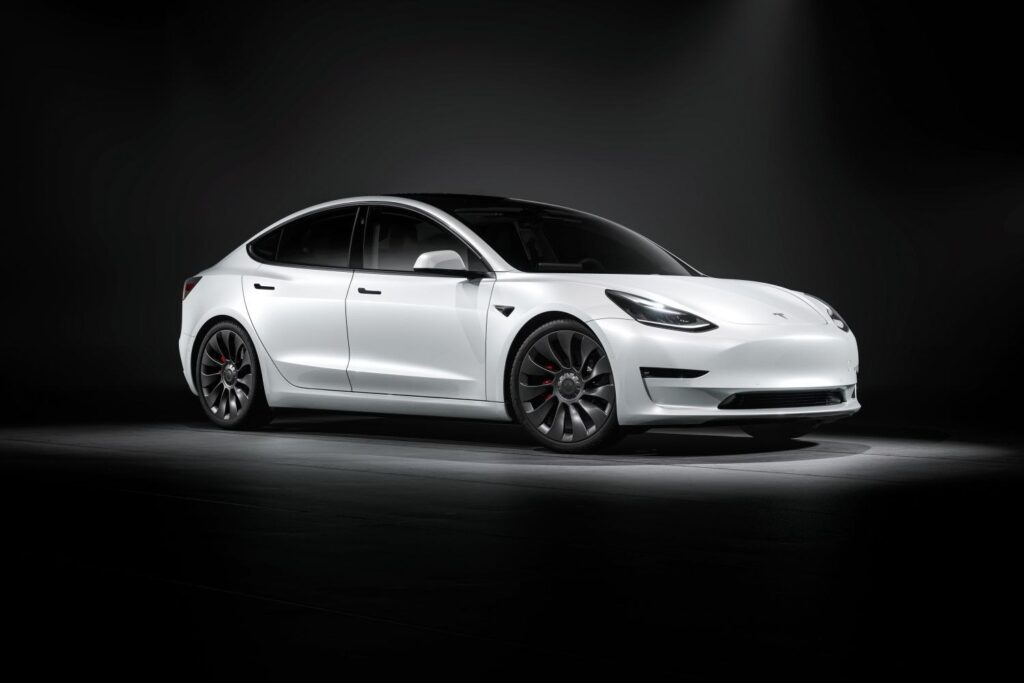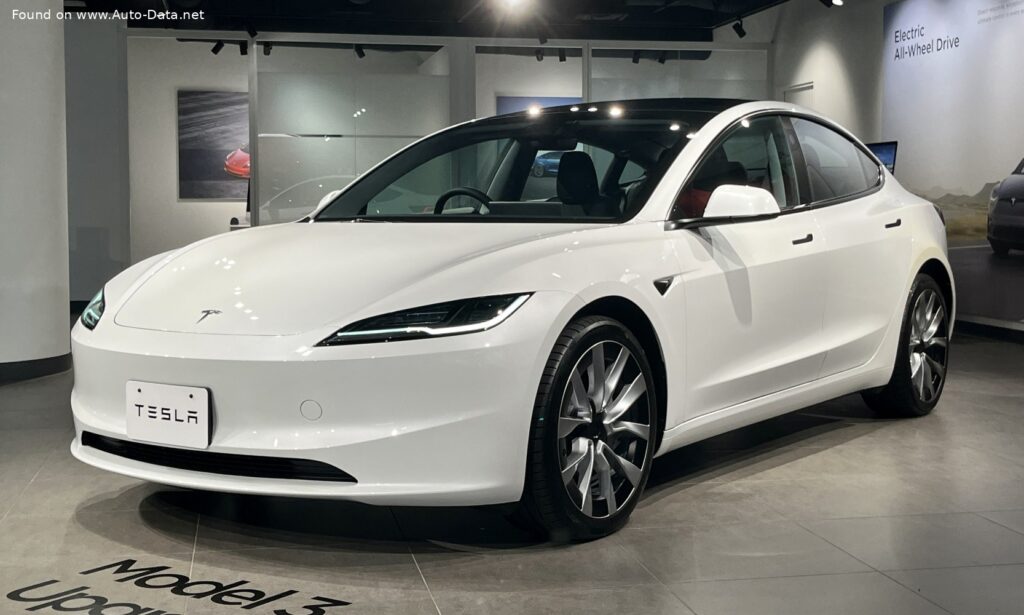
The Tesla Model 3 Highland, a significantly updated version of Tesla’s popular electric sedan, represents the company’s ongoing commitment to refining its core product. Introduced for the 2024 model year, the “Highland” designation (primarily used in European markets) denotes a comprehensive facelift encompassing exterior styling, interior design, and technological enhancements. Positioned within the compact executive car segment, the Model 3 competes with vehicles like the BMW i4, Polestar 2, and Hyundai Ioniq 6. The Long Range variant, equipped with a 79 kWh battery, balances performance and extended driving range, making it a key offering in Tesla’s lineup. Production began in October 2024, with an anticipated run through October 2025.
Tesla Model 3 (Highland) Long Range: An Overview
The Model 3 Highland builds upon the foundation established by the original Model 3, addressing earlier criticisms regarding build quality and interior refinement. The facelift focuses on improving the overall driving experience, increasing efficiency, and enhancing the vehicle’s aesthetic appeal. While Tesla’s core philosophy of direct sales and over-the-air software updates remains unchanged, the Highland represents a maturation of the Model 3 platform. The Long Range trim specifically targets drivers prioritizing longer journeys and a blend of performance and practicality.
Engine & Performance
The Tesla Model 3 Highland Long Range is powered by a single rear-mounted electric motor, delivering 320 horsepower and 450 Nm (331.9 lb.-ft.) of torque. This powertrain configuration provides brisk acceleration, achieving 0-60 mph in 4.9 seconds and 0-100 km/h in 5.2 seconds. The vehicle boasts a top speed of 201 km/h (124.9 mph). The 79 kWh lithium-nickel-manganese-cobalt oxide (Li-NMC) battery pack, positioned beneath the floor, provides a usable capacity of 79 kWh and operates at 355V. The weight-to-power ratio is 5.5 kg/Hp, or 183.2 Hp/tonne, and the weight-to-torque ratio is 3.9 kg/Nm, or 257.6 Nm/tonne. The Long Range model achieves a WLTP-rated all-electric range of 640-702 km (397.68 – 436.2 miles), with an average energy consumption of 13.6 kWh/100 km (21.89 kWh/100 miles), equating to 154 MPGe and a range of 7.4 km/kWh (4.6 mi/kWh). The single-speed automatic transmission ensures seamless power delivery.
Design & Features
The Model 3 Highland maintains the sleek, fastback sedan profile of its predecessor but incorporates significant design revisions. The front fascia is notably different, featuring redesigned headlights and a more streamlined bumper. Aerodynamic efficiency has been improved through subtle changes to the bodywork. The interior has undergone a substantial overhaul, with a focus on premium materials and a simplified dashboard layout. A key feature is the replacement of the traditional instrument cluster with a larger, centrally-mounted touchscreen display, consolidating most vehicle controls. The cabin offers seating for five passengers and provides 594 liters (20.98 cu. ft.) of trunk space. Safety features are comprehensive, including ABS (Anti-lock braking system) and a suite of advanced driver-assistance systems (ADAS) – though specific ADAS features vary by region and software updates. The vehicle’s dimensions are 4720 mm (185.83 in.) in length, 1850 mm (72.83 in.) in width, and 1441 mm (56.73 in.) in height, with a wheelbase of 2875 mm (113.19 in.).
Technical Specifications
| Brand | Tesla |
| Model | Model 3 |
| Generation | Model 3 (Highland, facelift 2023) |
| Type (Engine) | Long Range 79 kWh (320 Hp) |
| Start of production | October, 2024 |
| End of production | October, 2025 |
| Powertrain Architecture | BEV (Electric Vehicle) |
| Body type | Sedan, Fastback |
| Seats | 5 |
| Doors | 4 |
| Fuel Type | Electricity |
| Acceleration 0 – 100 km/h | 5.2 sec |
| Acceleration 0 – 62 mph | 5.2 sec |
| Acceleration 0 – 60 mph | 4.9 sec |
| Maximum speed | 201 km/h (124.9 mph) |
| Weight-to-power ratio | 5.5 kg/Hp, 183.2 Hp/tonne |
| Weight-to-torque ratio | 3.9 kg/Nm, 257.6 Nm/tonne |
| Net (usable) battery capacity | 79 kWh |
| Battery voltage | 355 V |
| Battery technology | Lithium nickel manganese cobalt oxides (Li-NMC) |
| Battery weight | 456 kg (1005.31 lbs.) |
| Battery location | Below the floor |
| All-electric range (WLTP) | 640-702 km (397.68 – 436.2 mi) |
| Average Energy consumption (WLTP) | 13.6 kWh/100 km (21.89 kWh/100 mi) |
| Charging ports | Log in to see. |
| Electric motor | 1 |
| Electric motor power | 320 Hp |
| Electric motor Torque | 450 Nm (331.9 lb.-ft.) |
| Electric motor model/code | 3D7 |
| Electric motor location | Rear axle, Transverse |
| Electric motor type | Synchronous |
| System power | 320 Hp |
| System torque | 450 Nm (331.9 lb.-ft.) |
| Kerb Weight | 1747 kg (3851.48 lbs.) |
| Max. weight | 2149 kg (4737.73 lbs.) |
| Max load | 402 kg (886.26 lbs.) |
| Trunk (boot) space – minimum | 594 l (20.98 cu. ft.) |
| Length | 4720 mm (185.83 in.) |
| Width | 1850 mm (72.83 in.) |
| Width with mirrors folded | 1933 mm (76.1 in.) |
| Width including mirrors | 2089 mm (82.24 in.) |
| Height | 1441 mm (56.73 in.) |
| Wheelbase | 2875 mm (113.19 in.) |
| Front track | 1584 mm (62.36 in.) |
| Rear (Back) track | 1584 mm (62.36 in.) |
| Front overhang | 868 mm (34.17 in.) |
| Rear overhang | 977 mm (38.46 in.) |
| Ride height (ground clearance) | 138 mm (5.43 in.) |
| Minimum turning circle (turning diameter) | 11.7 m (38.39 ft.) |
| Drivetrain Architecture | One electric motor drives the rear wheels. |
| Drive wheel | Rear wheel drive |
| Number of gears and type of gearbox | 1 gears, automatic transmission |
| Front suspension | Coil spring, Double wishbone, Transverse stabilizer |
| Rear suspension | Independent multi-link spring suspension with stabilizer |
| Front brakes | Ventilated discs, 320×25 mm |
| Rear brakes | Ventilated discs, 335×20 mm |
| Assisting systems | ABS (Anti-lock braking system) |
| Steering type | Steering rack and pinion |
| Power steering | Electric Steering |
| Tires size | 235/45 R18; 235/40 R19 |
| Wheel rims size | 8.5J x 18; 8.5J x 19 |