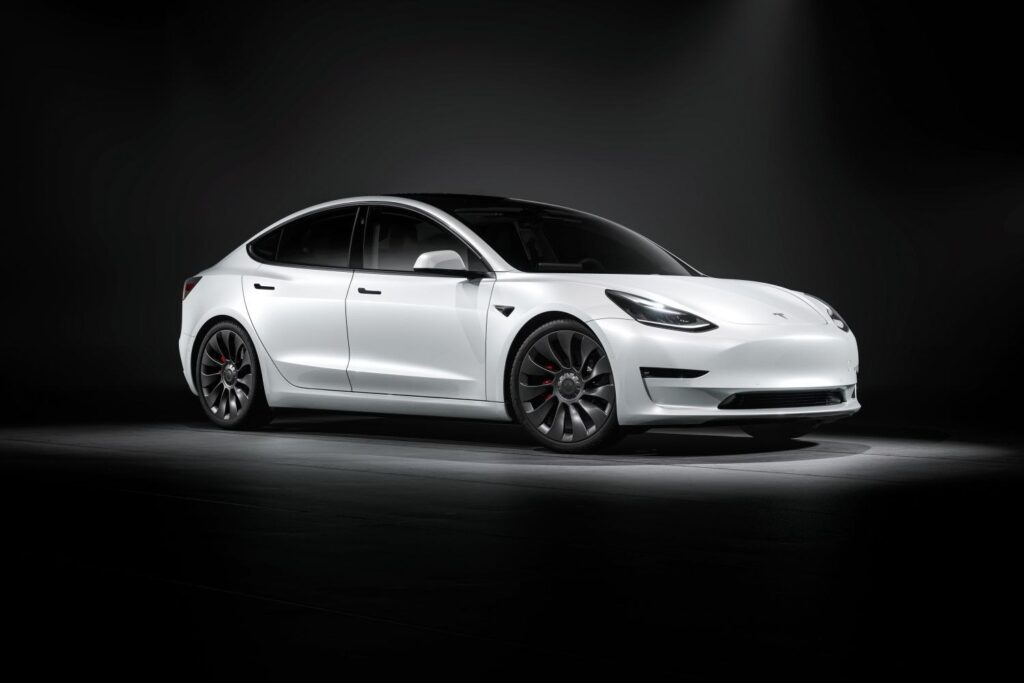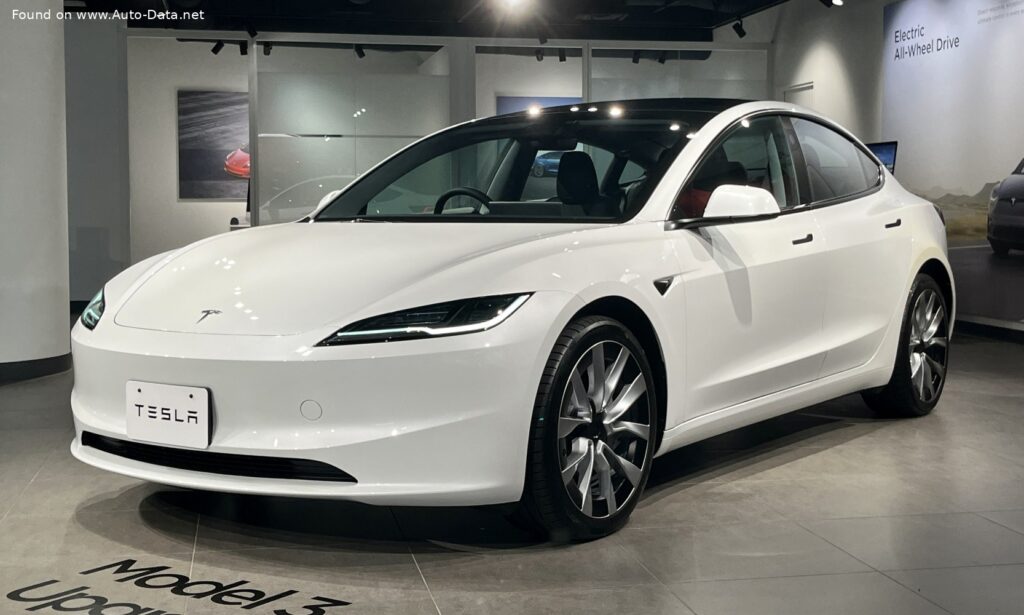
The Tesla Model 3 Highland, a significantly updated version of Tesla’s popular electric sedan, represents the company’s ongoing commitment to refining its core product. Introduced for the 2024 model year (with production commencing in late 2025), the Highland refresh focuses on enhancing interior quality, improving aerodynamics, and increasing real-world range. Positioned in the competitive compact executive car segment, the Model 3 aims to deliver a compelling blend of performance, technology, and efficiency. The Premium Long Range variant, detailed here, builds upon the standard Model 3 with a larger battery pack and dual-motor all-wheel drive, offering extended range and quicker acceleration.
Tesla Model 3 (Highland) Premium Long Range: An Overview
The Model 3 Highland isn’t a ground-up redesign, but rather a comprehensive facelift. Tesla has addressed many of the criticisms leveled at the original Model 3, particularly regarding build quality and interior refinement. The Highland update includes revised exterior styling, a dramatically redesigned interior, and improvements to the vehicle’s suspension and noise insulation. The Premium Long Range trim level specifically targets buyers seeking a balance between performance and long-distance usability, making it a key variant in Tesla’s lineup.
Engine & Performance
The Premium Long Range Model 3 Highland is powered by a dual-motor all-wheel drive (AWD) powertrain. Unlike some other electric vehicles that utilize a single motor, Tesla employs separate motors for the front and rear axles, providing enhanced traction and control. The front motor, an asynchronous type designated 3D3, produces 215 horsepower. The rear motor, a synchronous type coded 4D2, delivers a more substantial 283 horsepower. Combined, these motors generate a system output of 440 horsepower and 493 Newton-meters (363.62 lb.-ft.) of torque. This results in brisk acceleration, with a 0-60 mph time of approximately 4.2 seconds and a 0-100 km/h time of 4.4 seconds. The vehicle boasts a maximum speed of 201 km/h (124.9 mph). The powertrain’s efficiency is notable, with a weight-to-power ratio of 4.1 kg/Hp and a weight-to-torque ratio of 3.7 kg/Nm.
Design & Features
The Model 3 Highland maintains the sleek, fastback sedan profile of its predecessor, but with subtle yet impactful design changes. The front fascia has been redesigned with new headlights and a revised bumper, improving aerodynamic efficiency. The rear features updated taillights and a redesigned trunk lid. Inside, the Highland boasts a significantly upgraded interior. The most prominent change is the removal of stalks for controlling turn signals and gear selection, replaced by capacitive buttons on the steering wheel. The infotainment system has been enhanced, and the cabin materials have been upgraded to provide a more premium feel. The vehicle offers seating for five passengers and features a trunk with a minimum capacity of 594 liters (20.98 cubic feet). Safety features include ABS (Anti-lock Braking System) and a comprehensive suite of driver-assistance technologies, typical of Tesla vehicles.
Technology and Efficiency
At the heart of the Model 3 Highland Premium Long Range is its 84.7 kWh lithium nickel manganese cobalt oxides (Li-NMC) battery pack, positioned beneath the floor to optimize weight distribution. This battery provides a usable capacity of 84.7 kWh and operates at a voltage of 355V. The battery’s weight is 448 kg (987.67 lbs.). Tesla estimates a WLTP (Worldwide Harmonised Light Vehicle Test Procedure) range of 660 km (410.1 miles) on a full charge. Energy consumption is rated at 14.3 kWh per 100 km (23.01 kWh per 100 miles), translating to 146 MPGe (miles per gallon equivalent) and a range of 7 km/kWh (4.3 miles/kWh). The vehicle supports fast charging via compatible charging ports (details not provided in the source data).
Technical Specifications
| Brand | Tesla |
| Model | Model 3 |
| Generation | Model 3 (Highland, facelift 2023) |
| Type | Premium Long Range 84.7 kWh (440 Hp) Dual Motor AWD |
| Start of production | October, 2025 |
| Powertrain Architecture | BEV (Electric Vehicle) |
| Body type | Sedan, Fastback |
| Seats | 5 |
| Doors | 4 |
| Fuel Type | Electricity |
| Acceleration 0 – 100 km/h | 4.4 sec |
| Acceleration 0 – 62 mph | 4.4 sec |
| Acceleration 0 – 60 mph | 4.2 sec |
| Maximum speed | 201 km/h (124.9 mph) |
| Weight-to-power ratio | 4.1 kg/Hp |
| Weight-to-torque ratio | 3.7 kg/Nm |
| Net (usable) battery capacity | 84.7 kWh |
| Battery voltage | 355 V |
| Battery technology | Lithium nickel manganese cobalt oxides (Li-NMC) |
| Battery weight | 448 kg (987.67 lbs.) |
| Battery location | Below the floor |
| All-electric range (WLTP) | 660 km (410.1 mi) |
| Average Energy consumption (WLTP) | 14.3 kWh/100 km (23.01 kWh/100 mi) |
| Electric motor 1 Power | 215 Hp |
| Electric motor 1 Model/Code | 3D3 |
| Electric motor 1 Location | Front axle, Transverse |
| Electric motor 1 Type | Asynchronous |
| Electric motor 2 Power | 283 Hp |
| Electric motor 2 Model/Code | 4D2 |
| Electric motor 2 Location | Rear axle, Transverse |
| Electric motor 2 Type | Synchronous |
| System power | 440 Hp |
| System torque | 493 Nm (363.62 lb.-ft.) |
| Kerb Weight | 1824 kg (4021.23 lbs.) |
| Max. weight | 2232 kg (4920.72 lbs.) |
| Max load | 408 kg (899.49 lbs.) |
| Trunk (boot) space – minimum | 594 l (20.98 cu. ft.) |
| Max. roof load | 68 kg (149.91 lbs.) |
| Permitted trailer load with brakes (12%) | 1000 kg (2204.62 lbs.) |
| Permitted trailer load without brakes | 750 kg (1653.47 lbs.) |
| Permitted towbar download | 100 kg (220.46 lbs.) |
| Length | 4720 mm (185.83 in.) |
| Width | 1850 mm (72.83 in.) |
| Width with mirrors folded | 1933 mm (76.1 in.) |
| Width including mirrors | 2089 mm (82.24 in.) |
| Height | 1441 mm (56.73 in.) |
| Wheelbase | 2875 mm (113.19 in.) |
| Front track | 1584 mm (62.36 in.) |
| Rear (Back) track | 1584 mm (62.36 in.) |
| Front overhang | 868 mm (34.17 in.) |
| Rear overhang | 977 mm (38.46 in.) |
| Ride height (ground clearance) | 138 mm (5.43 in.) |
| Minimum turning circle (turning diameter) | 11.7 m (38.39 ft.) |
| Drivetrain Architecture | One electric motor drives the front wheels, one electric motor drives the rear wheels. |
| Drive wheel | All wheel drive (4×4) |
| Number of gears and type of gearbox | 1 gears, automatic transmission |
| Front suspension | Coil spring, Double wishbone, Transverse stabilizer |
| Rear suspension | Independent multi-link spring suspension with stabilizer |
| Front brakes | Ventilated discs, 320×25 mm |
| Rear brakes | Ventilated discs, 335×20 mm |
| Steering type | Steering rack and pinion |
| Power steering | Electric Steering |
| Tires size | 235/45 R18; 235/40 R19 |
| Wheel rims size | 8.5J x 18; 8.5J x 19 |