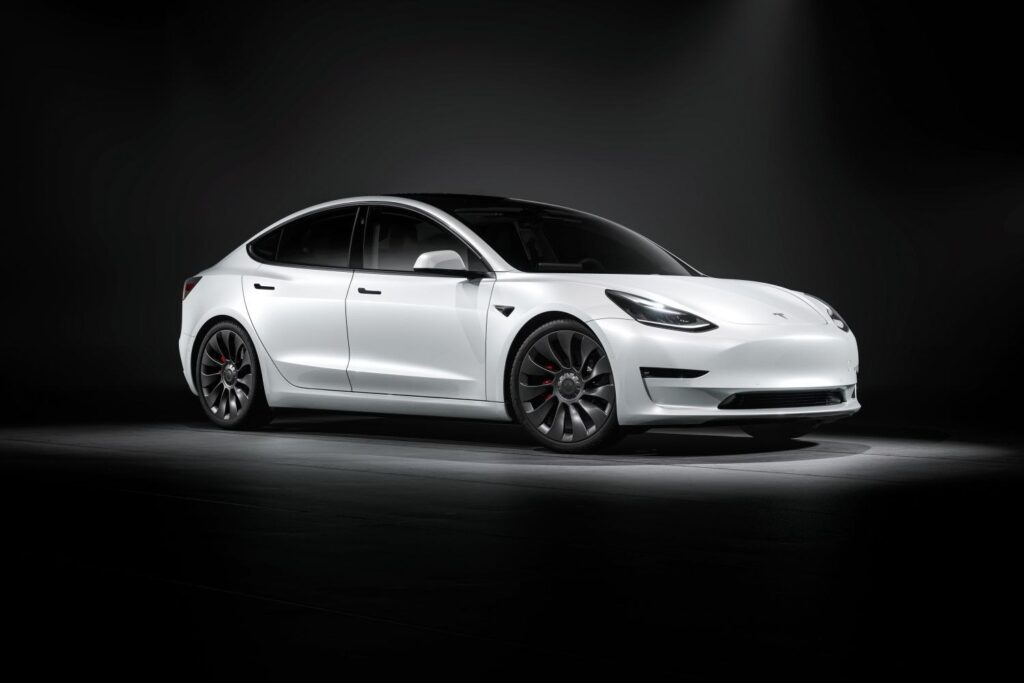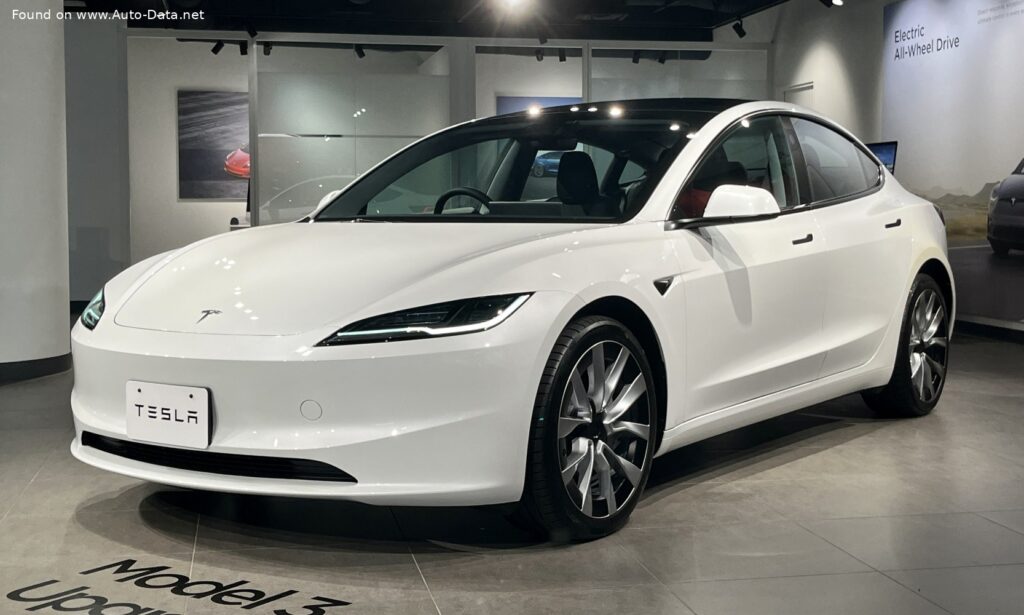
The Tesla Model 3 Highland, a significantly updated version of Tesla’s popular electric sedan, represents the company’s ongoing commitment to refining its core product. Introduced for the 2025 model year, the “Highland” designation refers to a comprehensive facelift encompassing exterior styling, interior enhancements, and technological upgrades. This iteration of the Model 3 aims to improve upon the original’s already compelling combination of performance, range, and minimalist design. The Standard 62.5 kWh variant, producing 283 horsepower, serves as the entry point to the Model 3 lineup, offering a balance of affordability and capability within the competitive electric vehicle market.
Tesla Model 3 (Highland) Standard 62.5 kWh: An Overview
Positioned within the compact executive car segment, the Tesla Model 3 Highland competes with vehicles like the BMW i4, Polestar 2, and Hyundai Ioniq 6. The Highland update focuses on enhancing the overall driving experience and addressing some of the criticisms leveled at the original Model 3, particularly regarding interior quality and ride comfort. While Tesla initially disrupted the automotive industry with its direct-to-consumer sales model and focus on electric propulsion, the Highland version demonstrates a maturation of the brand, incorporating more traditional automotive refinement alongside its innovative technology.
Engine & Performance
The Standard 62.5 kWh Model 3 Highland is powered by a single electric motor driving the rear wheels. This configuration delivers a maximum output of 283 horsepower and 420 Nm (309.78 lb.-ft.) of torque. Acceleration from 0 to 60 mph is achieved in 5.8 seconds, while 0-62 mph and 0-100 km/h take 6.1 seconds each. The vehicle boasts a top speed of 201 km/h (124.9 mph). The powertrain utilizes a single-speed automatic transmission, characteristic of most electric vehicles, providing seamless and instant torque delivery. The weight-to-power ratio stands at 6.2 kg/Hp, and the weight-to-torque ratio is 4.2 kg/Nm, contributing to its responsive driving characteristics. The 62.5 kWh lithium iron phosphate (LiFePO4) battery pack is located beneath the floor, providing a low center of gravity and contributing to the car’s handling stability.
Design & Features
The Model 3 Highland maintains the sleek, fastback sedan profile of its predecessor but incorporates significant design revisions. The front fascia has been redesigned with new headlights and a revised bumper, improving aerodynamic efficiency and visual appeal. The rear end also receives updates, including new taillights and a redesigned trunk lid. Inside, the Highland boasts a more premium and refined cabin. The most notable change is the replacement of the traditional instrument cluster with a larger, more integrated touchscreen display. The steering wheel has also been updated, and the materials used throughout the interior have been improved, addressing previous criticisms of build quality. Standard features include a five-seat configuration, four doors, and a trunk offering 594 liters (20.98 cu. ft.) of storage space. Safety features are comprehensive, including ABS (Anti-lock braking system) and a suite of advanced driver-assistance systems (ADAS), though specific ADAS features may vary depending on the software version and optional packages.
Technical Specifications
| Brand | Tesla |
| Model | Model 3 |
| Generation | Model 3 (Highland, facelift 2023) |
| Type (Engine) | Standard 62.5 kWh (283 Hp) |
| Start of production | May, 2025 |
| Powertrain Architecture | BEV (Electric Vehicle) |
| Body type | Sedan, Fastback |
| Seats | 5 |
| Doors | 4 |
| Fuel Type | Electricity |
| Acceleration 0 – 100 km/h | 6.1 sec |
| Acceleration 0 – 62 mph | 6.1 sec |
| Acceleration 0 – 60 mph | 5.8 sec |
| Maximum speed | 201 km/h (124.9 mph) |
| Weight-to-power ratio | 6.2 kg/Hp |
| Weight-to-torque ratio | 4.2 kg/Nm |
| Net (usable) battery capacity | 62.5 kWh |
| Battery voltage | 345 V |
| Battery technology | Lithium iron phosphate (LiFePO4) |
| Battery weight | 475 kg (1047.2 lbs.) |
| Battery location | Below the floor |
| All-electric range (WLTP) | 520-534 km (323.11 – 331.81 mi) |
| Average Energy consumption (WLTP) | 13-13.8 kWh/100 km |
| MPGe | 161 – 152 |
| km/kWh | 7.7 – 7.2 |
| mi/kWh | 4.8 – 4.5 |
| Electric motor | 1 |
| Electric motor power | 283 Hp |
| Electric motor Torque | 420 Nm (309.78 lb.-ft.) |
| Electric motor location | Rear axle, Transverse |
| Electric motor type | Synchronous |
| System power | 283 Hp |
| System torque | 420 Nm (309.78 lb.-ft.) |
| Kerb Weight | 1761-1772 kg (3882.34 – 3906.59 lbs.) |
| Max. weight | 2149 kg (4737.73 lbs.) |
| Max load | 377-388 kg (831.14 – 855.39 lbs.) |
| Trunk (boot) space – minimum | 594 l (20.98 cu. ft.) |
| Max. roof load | 68 kg (149.91 lbs.) |
| Permitted trailer load with brakes (12%) | 1000 kg (2204.62 lbs.) |
| Permitted trailer load without brakes | 750 kg (1653.47 lbs.) |
| Permitted towbar download | 100 kg (220.46 lbs.) |
| Length | 4720 mm (185.83 in.) |
| Width | 1850 mm (72.83 in.) |
| Width with mirrors folded | 1933 mm (76.1 in.) |
| Width including mirrors | 2089 mm (82.24 in.) |
| Height | 1440 mm (56.69 in.) |
| Wheelbase | 2875 mm (113.19 in.) |
| Front track | 1584 mm (62.36 in.) |
| Rear (Back) track | 1584 mm (62.36 in.) |
| Front overhang | 868 mm (34.17 in.) |
| Rear overhang | 977 mm (38.46 in.) |
| Ride height (ground clearance) | 138 mm (5.43 in.) |
| Drag coefficient (Cd) | 0.219 |
| Minimum turning circle (turning diameter) | 11.7 m (38.39 ft.) |
| Drivetrain Architecture | One electric motor drives the rear wheels. |
| Drive wheel | Rear wheel drive |
| Number of gears and type of gearbox | 1 gears, automatic transmission |
| Front suspension | Coil spring, Double wishbone, Transverse stabilizer |
| Rear suspension | Independent multi-link spring suspension with stabilizer |
| Front brakes | Ventilated discs, 320×25 mm |
| Rear brakes | Ventilated discs, 335×20 mm |
| Steering type | Steering rack and pinion |
| Power steering | Electric Steering |
| Tires size | 235/45 R18; 235/40 R19 |
| Wheel rims size | 8.5J x 18; 8.5J x 19 |
The Tesla Model 3 Highland Standard 62.5 kWh represents a significant evolution of Tesla’s best-selling model. By addressing previous shortcomings and incorporating the latest technology, Tesla aims to maintain its position as a leader in the rapidly expanding electric vehicle market. The Highland’s combination of performance, range, and updated features makes it a compelling option for consumers seeking a stylish, efficient, and technologically advanced electric sedan.