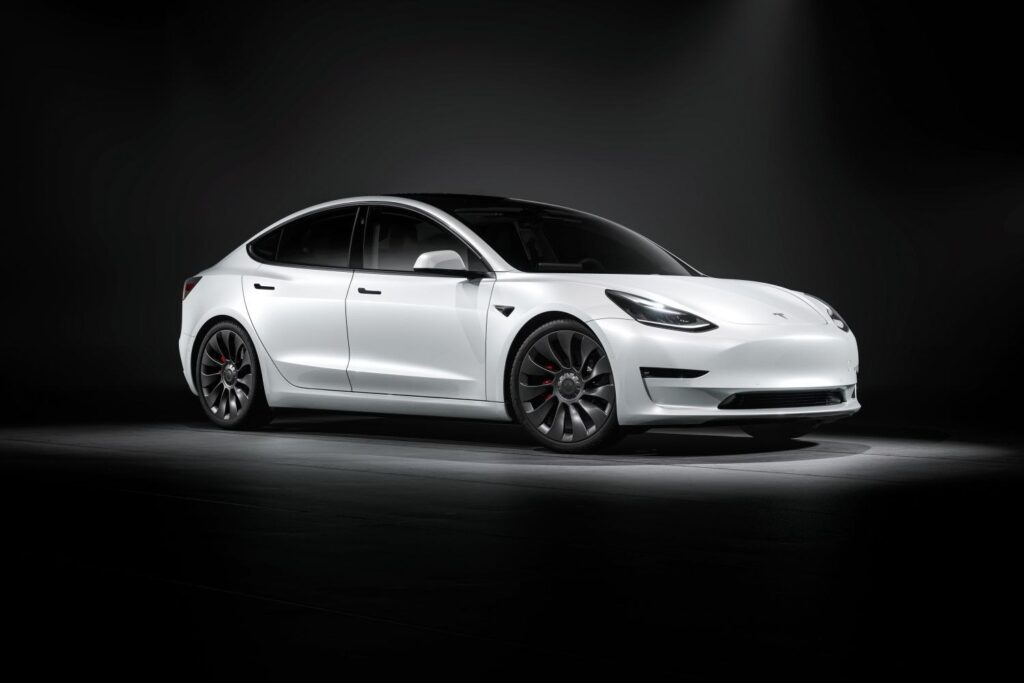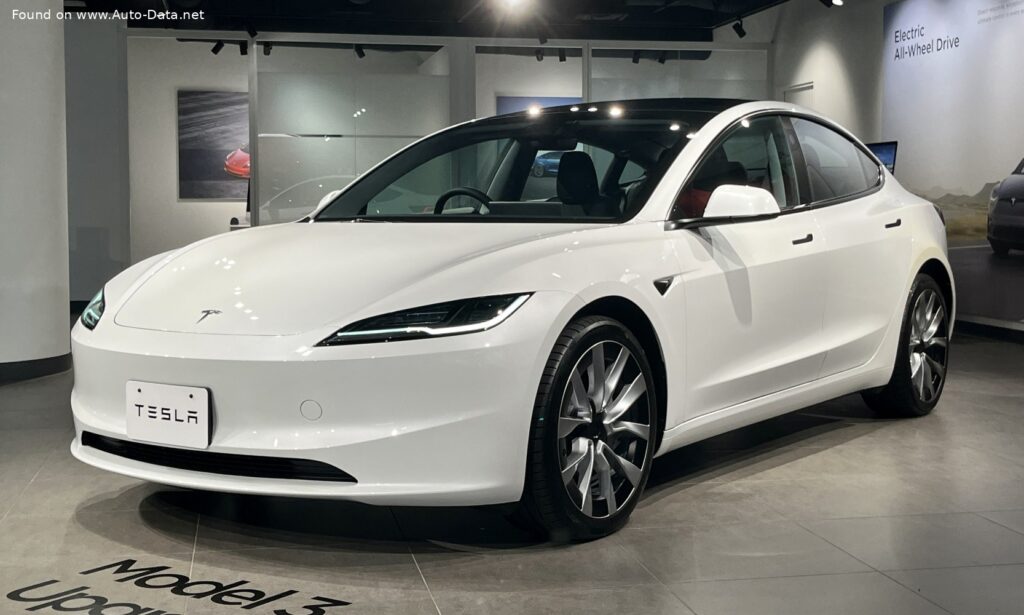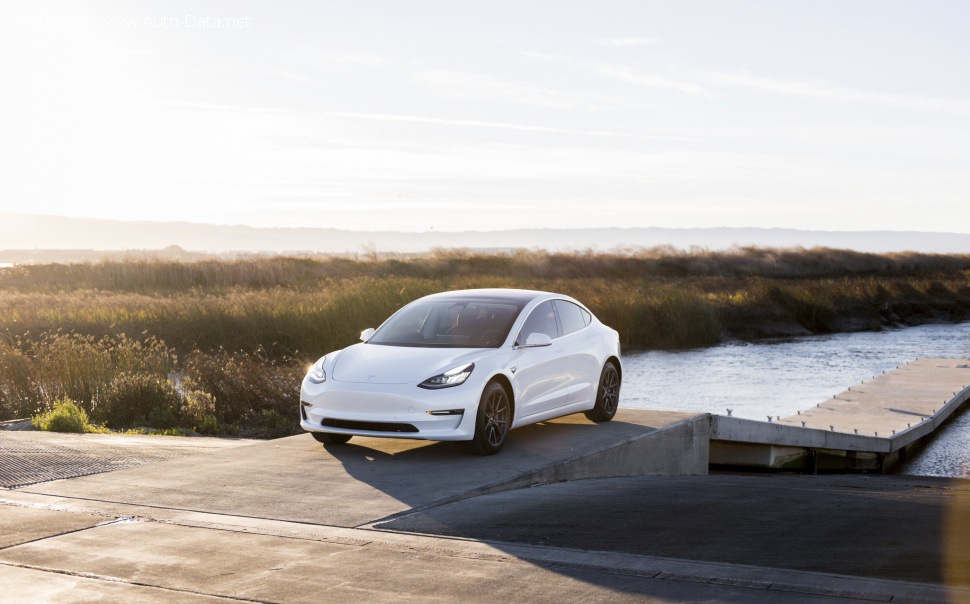
The Tesla Model 3 Long Range 75 kWh, produced from 2017 to 2019, represents a pivotal moment in the widespread adoption of electric vehicles. As Tesla’s first mass-market sedan, the Model 3 aimed to bring electric car technology and performance to a broader audience. Positioned in the compact executive car segment, it quickly became a sales leader, challenging established automotive manufacturers and accelerating the transition towards sustainable transportation. This version, the Long Range, offered an extended driving range compared to the standard Model 3, making it particularly appealing to drivers concerned about range anxiety.
Tesla Model 3 Long Range 75 kWh: An Overview
The Model 3 was designed from the ground up as an all-electric vehicle, eschewing the internal combustion engine entirely. Its sleek, minimalist design and focus on technology set it apart from traditional automobiles. The Long Range variant, equipped with a 75 kWh battery pack, delivered a significant increase in range and performance, solidifying Tesla’s position as a leader in the EV market. The vehicle’s production spanned a relatively short period, as Tesla continuously refined and updated the Model 3 platform, introducing new battery chemistries and features.
Engine & Performance
The Tesla Model 3 Long Range 75 kWh is powered by a single rear-mounted electric motor producing 287 horsepower and 450 Nm (331.9 lb.-ft.) of torque. This configuration provides brisk acceleration, achieving 0-60 mph in approximately 5.1 seconds and 0-100 km/h in 5.3 seconds. The vehicle boasts a top speed of 225 km/h (139.81 mph). The powertrain architecture is a Battery Electric Vehicle (BEV), meaning it relies solely on electricity stored in the battery pack for propulsion. The single-speed automatic transmission delivers seamless power delivery. The weight-to-power ratio of 6.1 kg/Hp and a weight-to-torque ratio of 3.9 kg/Nm contribute to its responsive driving characteristics. Energy consumption is rated at 15 kWh/100 km (24.14 kWh/100 mi), translating to 140 MPGe (miles per gallon equivalent) and a range of 6.7 km/kWh (4.1 mi/kWh). WLTP testing showed an average energy consumption of 12.3 kWh/100 km (19.79 kWh/100 mi), 170 MPGe, 8.1 km/kWh (5.1 mi/kWh) and a range of 600 km (372.82 mi). Real-world range typically falls around 499 km (310.06 mi).
Design & Features
The Model 3 features a distinctive fastback sedan body style with a minimalist exterior design. Its aerodynamic profile, evidenced by a drag coefficient of just 0.23, contributes to its efficiency and range. The interior is equally minimalist, dominated by a large central touchscreen that controls most vehicle functions. The vehicle seats five passengers and offers 425 liters (15.01 cu. ft.) of trunk space. Safety features were a key focus, including standard Autopilot functionality, which provides advanced driver-assistance systems like automatic emergency braking and lane keeping assist. The battery pack is located beneath the floor, contributing to a low center of gravity and improved handling. The Model 3’s design prioritized simplicity, functionality, and a modern aesthetic, reflecting Tesla’s broader design philosophy. The vehicle measures 4694 mm (184.8 in.) in length, 1849 mm (72.8 in.) in width, and 1443 mm (56.81 in.) in height, with a wheelbase of 2875 mm (113.19 in.).
Technical Specifications
| Brand | Tesla |
| Model | Model 3 |
| Generation | Model 3 |
| Type (Engine) | Long Range 75 kWh (287 Hp) |
| Start of production | 2017 |
| End of production | 2019 |
| Powertrain Architecture | BEV (Electric Vehicle) |
| Body type | Sedan, Fastback |
| Seats | 5 |
| Doors | 4 |
| Fuel Type | Electricity |
| Acceleration 0 – 100 km/h | 5.3 sec |
| Acceleration 0 – 62 mph | 5.3 sec |
| Acceleration 0 – 60 mph | 5.1 sec |
| Maximum speed | 225 km/h (139.81 mph) |
| Weight-to-power ratio | 6.1 kg/Hp |
| Weight-to-torque ratio | 3.9 kg/Nm |
| Gross battery capacity | 75 kWh |
| Battery voltage | 360 V |
| Battery technology | Lithium-ion (Li-Ion) |
| Battery location | Below the floor |
| All-electric range (WLTP) | 600 km (372.82 mi) |
| All-electric range | 499 km (310.06 mi) |
| Average Energy consumption (WLTP) | 12.3 kWh/100 km (19.79 kWh/100 mi) |
| Average Energy consumption | 15 kWh/100 km (24.14 kWh/100 mi) |
| Electric motor power | 287 Hp |
| Electric motor Torque | 450 Nm (331.9 lb.-ft.) |
| Electric motor location | Rear axle, Transverse |
| System power | 287 Hp |
| System torque | 450 Nm (331.9 lb.-ft.) |
| Kerb Weight | 1741 kg (3838.25 lbs.) |
| Max. weight | 2178 kg (4801.67 lbs.) |
| Max load | 437 kg (963.42 lbs.) |
| Trunk (boot) space – minimum | 425 l (15.01 cu. ft.) |
| Length | 4694 mm (184.8 in.) |
| Width | 1849 mm (72.8 in.) |
| Width with mirrors folded | 1933 mm (76.1 in.) |
| Width including mirrors | 2088 mm (82.2 in.) |
| Height | 1443 mm (56.81 in.) |
| Wheelbase | 2875 mm (113.19 in.) |
| Front track | 1580 mm (62.2 in.) |
| Rear (Back) track | 1580 mm (62.2 in.) |
| Front overhang | 841 mm (33.11 in.) |
| Rear overhang | 978 mm (38.5 in.) |
| Ride height (ground clearance) | 140 mm (5.51 in.) |
| Drag coefficient (Cd) | 0.23 |
| Minimum turning circle (turning diameter) | 11.8 m (38.71 ft.) |
| Drivetrain Architecture | One electric motor drives the rear wheels. |
| Drive wheel | Rear wheel drive |
| Number of gears and type of gearbox | 1 gears, automatic transmission |
| Front suspension | Coil spring, Double wishbone, Transverse stabilizer |
| Rear suspension | Independent multi-link suspension, Coil spring |
| Front brakes | Ventilated discs, 320×25 mm |
| Rear brakes | Ventilated discs, 335×20 mm |
| Assisting systems | ABS (Anti-lock braking system) |
| Steering type | Steering rack and pinion |
| Power steering | Electric Steering |
| Tires size | 235/45 R18; 235/40 R19; 235/35 R20; 245/35 R20 |
| Wheel rims size | 8.5J x 18; 8.5J x 19; 8.5J x 20 |
The Tesla Model 3 Long Range 75 kWh was a landmark vehicle, demonstrating the viability and appeal of electric vehicles to a wider audience. Its combination of performance, range, and technology helped to establish Tesla as a dominant force in the automotive industry and paved the way for the widespread adoption of electric cars.