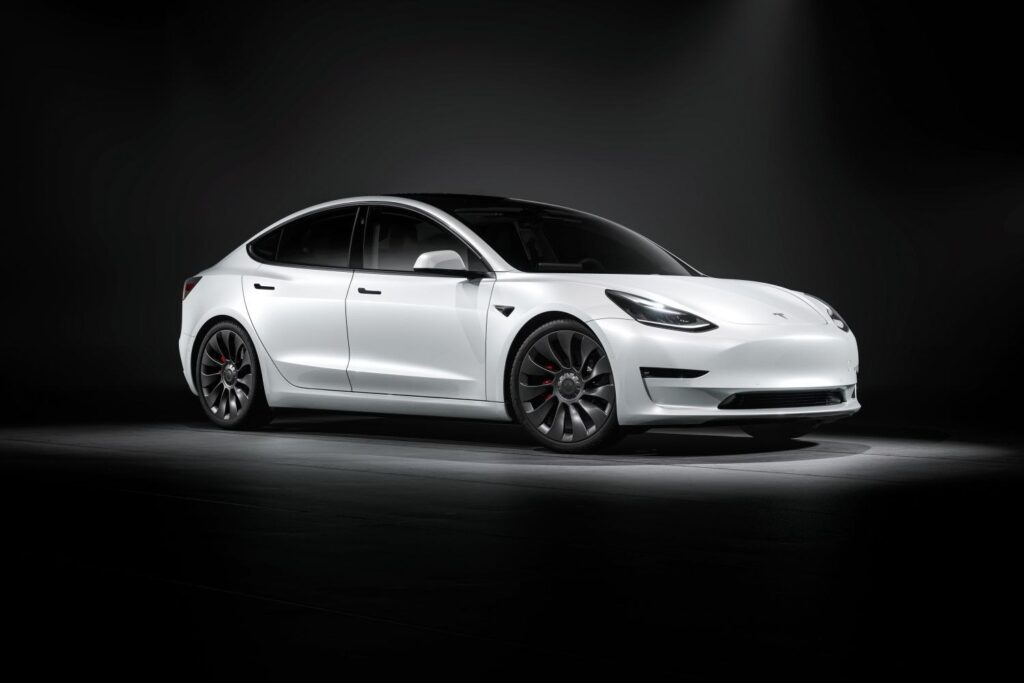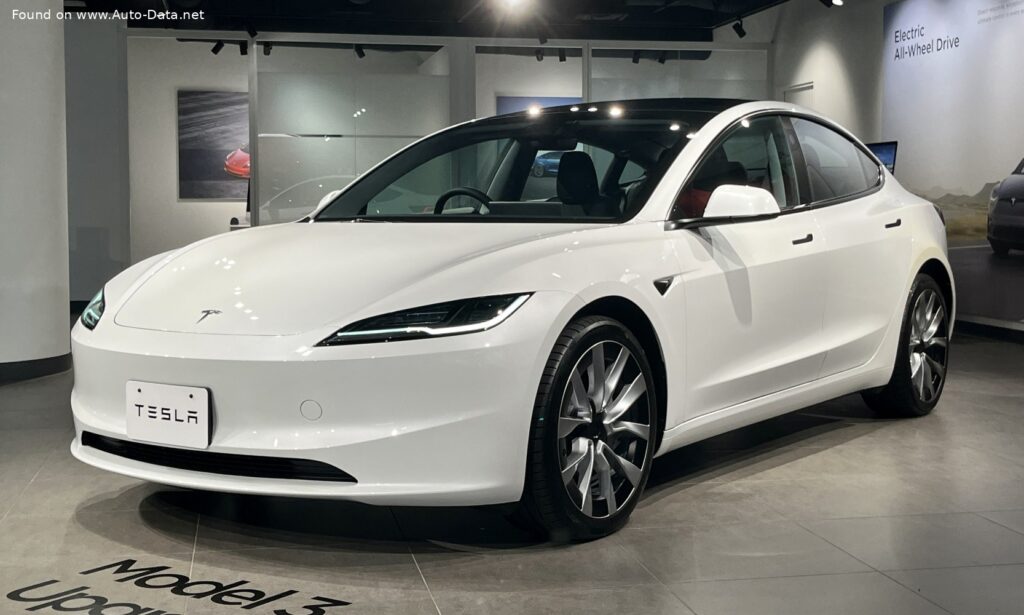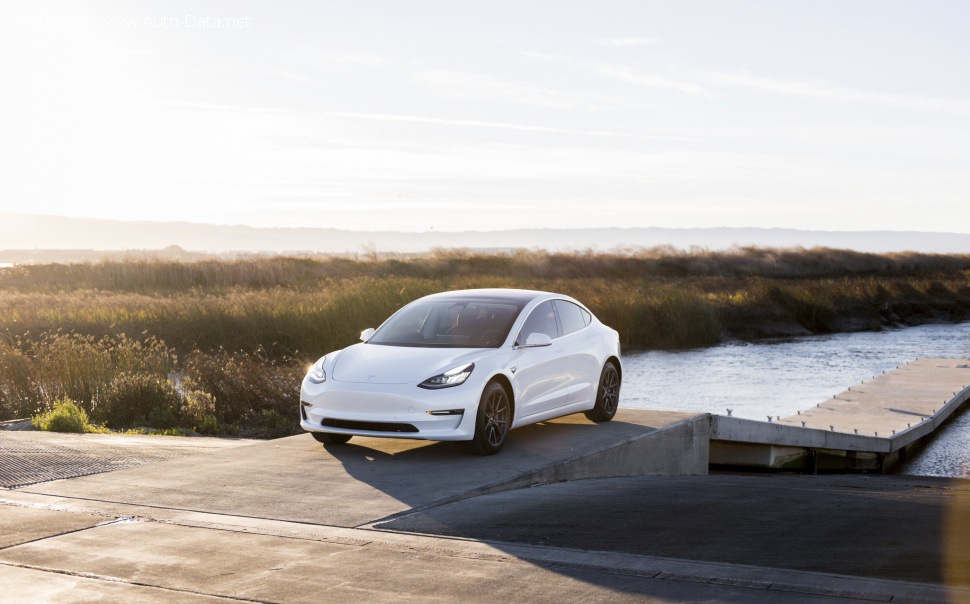
The Tesla Model 3 Long Range, produced from February 2019 to 2020, represents a pivotal moment in the widespread adoption of electric vehicles. Positioned within the compact executive car segment, the Model 3 aimed to bring Tesla’s innovative technology and long-range capabilities to a broader audience. This variant, equipped with an 80.5 kWh battery pack and dual-motor all-wheel drive, quickly became a popular choice for those seeking a practical and high-performing electric sedan. It solidified Tesla’s position as a leader in the burgeoning EV market and set a new benchmark for range and efficiency.
Tesla Model 3 Long Range: A Detailed Overview
The Model 3 Long Range was a key component of Tesla’s strategy to democratize electric vehicle ownership. Unlike earlier Tesla models that catered to a luxury market, the Model 3 was designed for mass production and affordability (relative to other EVs at the time). The Long Range trim specifically addressed range anxiety, a major concern for potential EV buyers, by offering a substantial driving range on a single charge. Its dual-motor configuration provided enhanced performance and all-weather capability through all-wheel drive.
Engine & Performance
The Tesla Model 3 Long Range utilizes a Battery Electric Vehicle (BEV) powertrain, meaning it is powered solely by electricity stored in its 80.5 kWh battery pack. It employs two independent electric motors – one driving the front wheels and one driving the rear wheels – creating a dual-motor all-wheel drive system. The front motor produces 165 horsepower and 163 Nm (120.22 lb.-ft.) of torque, while the rear motor generates 276 horsepower and 330 Nm (243.4 lb.-ft.) of torque. Combined, these motors deliver a total system output of 441 horsepower. This configuration allows for brisk acceleration, achieving 0-60 mph in approximately 4.4 seconds, and a 0-100 km/h time of 4.6 seconds. The vehicle boasts a maximum speed of 233 km/h (144.78 mph). The weight-to-power ratio is a commendable 3.9 kg/Hp, or 255.5 Hp/tonne, contributing to its responsive handling.
Design & Features
The Model 3 features a sleek, minimalist design characterized by its fastback sedan profile and clean lines. Its body type is classified as both a sedan and a fastback, offering a blend of practicality and aerodynamic efficiency. The vehicle accommodates five passengers across two rows of seating and has four doors. A key design element is the panoramic glass roof, which enhances the sense of spaciousness within the cabin.
Beyond its aesthetics, the Model 3 Long Range was packed with advanced technology. The centerpiece is the large, centrally-mounted touchscreen that controls nearly all vehicle functions, eliminating traditional buttons and knobs. Tesla’s Autopilot system, a suite of advanced driver-assistance features, was standard, providing features like adaptive cruise control and lane keeping assist. Safety was also a priority, with a robust suite of passive and active safety systems. The trunk offers 425 liters (15.01 cubic feet) of storage space, providing ample room for luggage and cargo. The vehicle’s design prioritized aerodynamic efficiency, contributing to its impressive range.
Technical Specifications
| Brand | Tesla |
| Model | Model 3 |
| Generation | Model 3 |
| Type (Engine) | Long Range 80.5 kWh (441 Hp) Dual Motor AWD |
| Start of production | February, 2019 |
| End of production | 2020 |
| Powertrain Architecture | BEV (Electric Vehicle) |
| Body type | Sedan, Fastback |
| Seats | 5 |
| Doors | 4 |
| Fuel Type | Electricity |
| Acceleration 0 – 100 km/h | 4.6 sec |
| Acceleration 0 – 62 mph | 4.6 sec |
| Acceleration 0 – 60 mph | 4.4 sec |
| Maximum speed | 233 km/h (144.78 mph) |
| Weight-to-power ratio | 3.9 kg/Hp, 255.5 Hp/tonne |
| Gross battery capacity | 80.5 kWh |
| All-electric range | 560 km (347.97 mi) |
| Electric motor 1 Power | 165 Hp @ 8275 rpm |
| Electric motor 1 Torque | 163 Nm @ 125-6375 rpm (120.22 lb.-ft. @ 125-6375 rpm) |
| Electric motor 1 Location | Front axle, Transverse |
| Electric motor 2 Power | 276 Hp @ 6700 rpm |
| Electric motor 2 Torque | 330 Nm @ 325-5500 rpm (243.4 lb.-ft. @ 325-5500 rpm) |
| Electric motor 2 Location | Rear axle, Transverse |
| System power | 441 Hp |
| Kerb Weight | 1726 kg (3805.18 lbs) |
| Max. weight | 2180 kg (4806.08 lbs) |
| Max load | 454 kg (1000.9 lbs) |
| Trunk (boot) space – minimum | 425 l (15.01 cu. ft.) |
| Length | 4694 mm (184.8 in) |
| Width | 1849 mm (72.8 in) |
| Width with mirrors folded | 1933 mm (76.1 in) |
| Width including mirrors | 2088 mm (82.2 in) |
| Height | 1443 mm (56.81 in) |
| Wheelbase | 2875 mm (113.19 in) |
| Front track | 1580 mm (62.2 in) |
| Rear (Back) track | 1580 mm (62.2 in) |
| Front overhang | 841 mm (33.11 in) |
| Rear overhang | 978 mm (38.5 in) |
| Ride height (ground clearance) | 140 mm (5.51 in) |
| Minimum turning circle (turning diameter) | 11.8 m (38.71 ft) |
| Drivetrain Architecture | One electric motor drives the front wheels, one electric motor drives the rear wheels |
| Drive wheel | All wheel drive (4×4) |
| Number of gears and type of gearbox | 1 gears, automatic transmission |
| Front suspension | Double wishbone |
| Rear suspension | Independent multi-link suspension |
| Front brakes | Ventilated discs, 320×25 mm |
| Rear brakes | Ventilated discs, 335×20 mm |
| Assisting systems | ABS (Anti-lock braking system) |
| Steering type | Steering rack and pinion |
| Power steering | Electric Steering |
| Tires size | P235/45 R18; P235/40 R19; P235/35 R20; 245/35 ZR20 |
| Wheel rims size | 8.5J x 18; 8.5J x 19; 8.5J x 20 |
The Tesla Model 3 Long Range was a significant step forward in electric vehicle technology and design. Its combination of long range, strong performance, and advanced features helped to accelerate the transition to sustainable transportation. While production of this specific configuration ended in 2020, its legacy continues to influence the development of electric vehicles today.