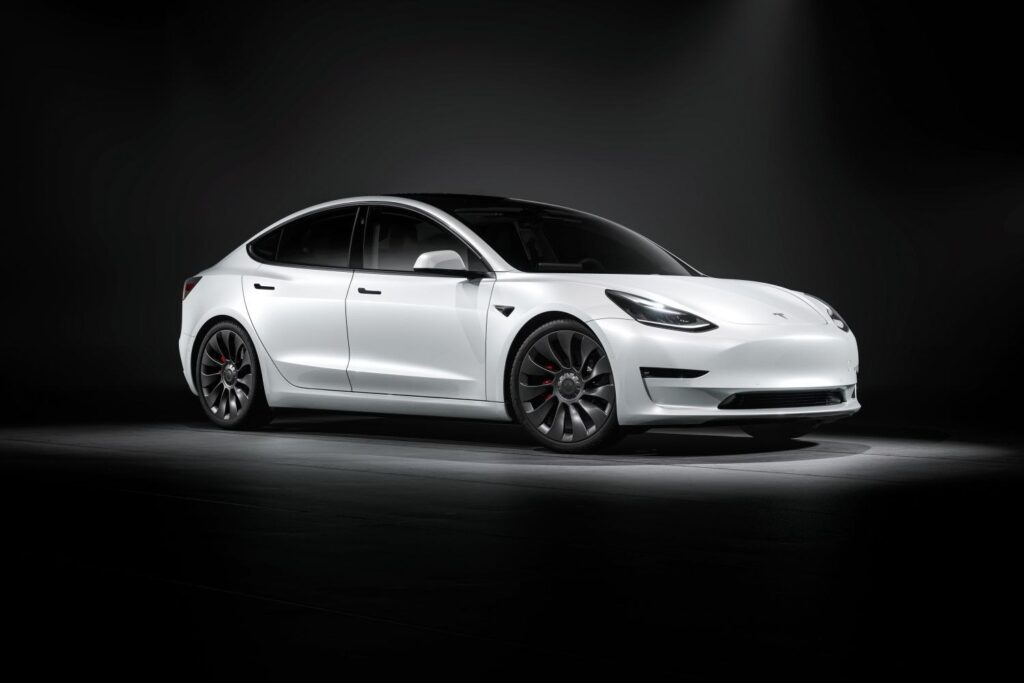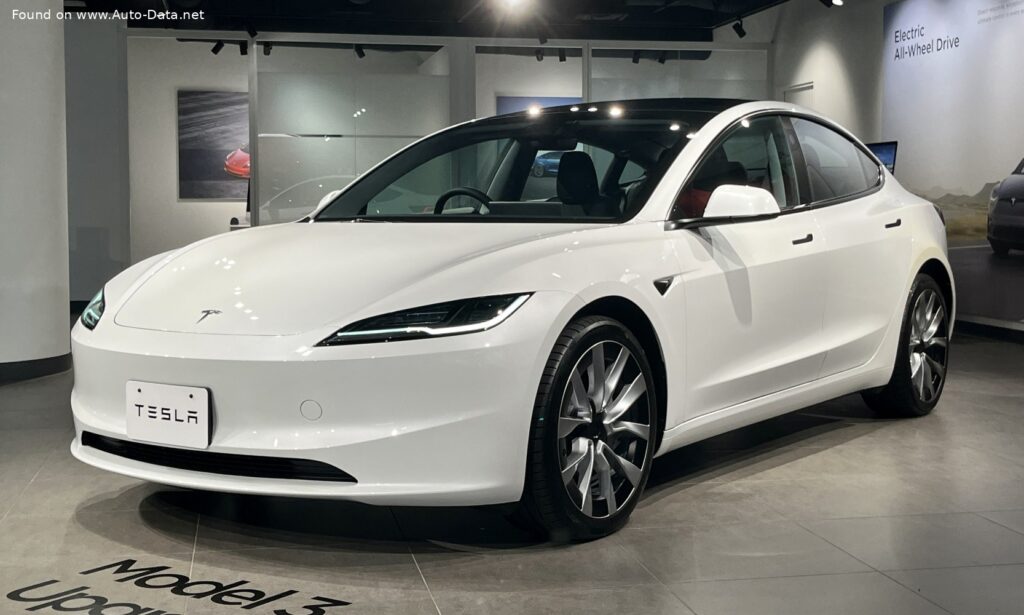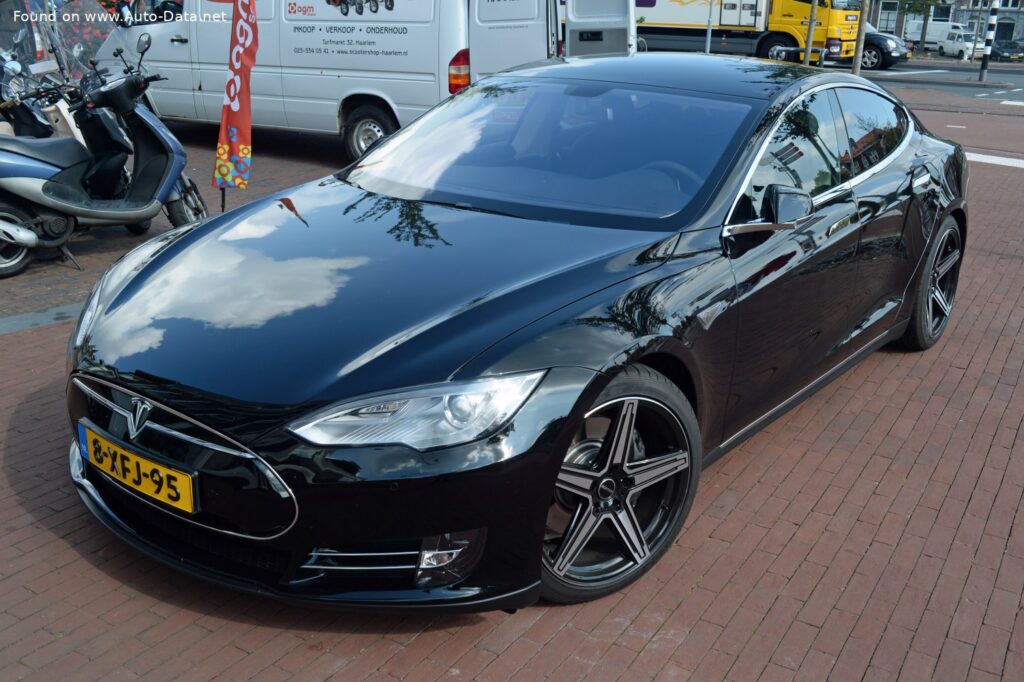
The Tesla Model S 70, produced from July 2015 to April 2016, represents an important iteration in the development of Tesla’s flagship sedan. Positioned within the premium large car segment, the Model S 70 aimed to broaden the appeal of electric vehicles by offering a balance of performance, range, and practicality. It served as a stepping stone between the initial Model S variants and the later, more powerful and long-range versions. This liftback sedan, notable for its five doors and seating for up to seven passengers, played a crucial role in establishing Tesla as a serious contender in the automotive industry and demonstrating the viability of all-electric propulsion.
Tesla Model S 70: A Detailed Overview
The Model S 70 distinguished itself through its 70 kWh battery pack, delivering a competitive range for the time. It was a key model in Tesla’s strategy to offer varying levels of performance and range to cater to a wider customer base. While not the highest-performing variant, the Model S 70 provided a compelling combination of acceleration, handling, and efficiency, solidifying Tesla’s reputation for innovative automotive technology.
Engine & Performance
The Tesla Model S 70 is powered by a single electric motor located on the rear axle, delivering 315 horsepower and 441 Nm (325.26 lb.-ft.) of torque. This powertrain configuration results in rear-wheel drive. The single-speed automatic transmission provides seamless acceleration. Performance figures include a 0-60 mph time of 5.5 seconds and a 0-62 mph (0-100 km/h) time of 5.8 seconds. The vehicle achieves a maximum speed of 139.81 mph (225 km/h). The weight-to-power ratio is 6.6 kg/Hp, or 152.5 Hp/tonne, and the weight-to-torque ratio is 4.7 kg/Nm, or 213.5 Nm/tonne. The Model S 70 achieves an all-electric range of 233.01 miles (375 km) based on the New European Driving Cycle (NEDC) standard. Energy consumption is rated at 16.6 kWh per 100 km (26.72 kWh per 100 miles), equating to 126 MPGe and a range of 6 km/kWh (3.7 mi/kWh).
Design & Features
The Tesla Model S 70 features a distinctive liftback body style, offering a spacious and versatile interior. The five-door configuration provides easy access to both front and rear seats, while the optional seven-seat configuration adds flexibility for families. The interior is characterized by a minimalist design dominated by a large central touchscreen display that controls most vehicle functions. Key features include a panoramic glass roof, premium interior materials, and advanced safety technologies. The battery pack is located beneath the floor, contributing to a low center of gravity and enhancing handling stability. The vehicle’s aerodynamic design, evidenced by a drag coefficient of 0.24, contributes to its efficiency and range. Trunk space is substantial, ranging from 26.31 cu. ft. (745 l) with the rear seats up to 58.09 cu. ft. (1645 l) with the rear seats folded down. The suspension system utilizes double wishbones at the front and an independent multi-link setup at the rear, both incorporating air suspension and a transverse stabilizer for a comfortable ride and precise handling.
Safety and Technology
The Model S 70 incorporated several advanced safety features for its time, including ABS (Anti-lock Braking System). The vehicle’s low center of gravity, due to the battery placement, inherently contributes to stability. The large touchscreen interface provides access to various driver-assistance systems and vehicle settings. The electric powertrain itself contributes to safety by eliminating tailpipe emissions and reducing noise pollution. The vehicle’s regenerative braking system also enhances safety by providing additional stopping power and reducing brake wear.
Technical Specifications
| Brand | Tesla |
| Model | Model S |
| Generation | Model S |
| Type (Engine) | 70 70 kWh (315 Hp) |
| Start of production | July, 2015 |
| End of production | April, 2016 |
| Powertrain Architecture | BEV (Electric Vehicle) |
| Body type | Liftback |
| Seats | 7 |
| Doors | 5 |
| Fuel Type | Electricity |
| Acceleration 0 – 100 km/h | 5.8 sec |
| Acceleration 0 – 62 mph | 5.8 sec |
| Acceleration 0 – 60 mph | 5.5 sec |
| Maximum speed | 225 km/h (139.81 mph) |
| Weight-to-power ratio | 6.6 kg/Hp, 152.5 Hp/tonne |
| Weight-to-torque ratio | 4.7 kg/Nm, 213.5 Nm/tonne |
| Gross battery capacity | 70 kWh |
| Battery voltage | 302 V |
| Battery technology | Lithium-ion (Li-Ion) |
| Battery location | Below the floor |
| All-electric range (NEDC) | 375 km (233.01 mi) |
| Average Energy consumption (NEDC) | 16.6 kWh/100 km (26.72 kWh/100 mi) |
| Electric motor power | 315 Hp |
| Electric motor Torque | 441 Nm (325.26 lb.-ft.) |
| Electric motor location | Rear axle, Transverse |
| System power | 315 Hp |
| System torque | 441 Nm (325.26 lb.-ft.) |
| Kerb Weight | 2066 kg (4554.75 lbs.) |
| Max. weight | 2590 kg (5709.97 lbs.) |
| Max load | 524 kg (1155.22 lbs.) |
| Trunk (boot) space – minimum | 745 l (26.31 cu. ft.) |
| Trunk (boot) space – maximum | 1645 l (58.09 cu. ft.) |
| Max. roof load | 75 kg (165.35 lbs.) |
| Length | 4970 mm (195.67 in.) |
| Width | 1964 mm (77.32 in.) |
| Width including mirrors | 2189 mm (86.18 in.) |
| Height | 1445 mm (56.89 in.) |
| Wheelbase | 2960 mm (116.54 in.) |
| Front track | 1662 mm (65.43 in.) |
| Rear (Back) track | 1700 mm (66.93 in.) |
| Front overhang | 929 mm (36.57 in.) |
| Rear overhang | 1080 mm (42.52 in.) |
| Ride height (ground clearance) | 119-163 mm (4.69 – 6.42 in.) |
| Drag coefficient (Cd) | 0.24 |
| Minimum turning circle (turning diameter) | 12.4 m (40.68 ft.) |
| Drivetrain Architecture | One electric motor drives the rear wheels. |
| Drive wheel | Rear wheel drive |
| Number of gears and type of gearbox | 1 gears, automatic transmission |
| Front suspension | Double wishbone, Transverse stabilizer, Air suspension |
| Rear suspension | Independent multi-link suspension, Air suspension, Transverse stabilizer |
| Front brakes | Ventilated discs, 355×32 mm |
| Rear brakes | Ventilated discs, 365×28 mm |
| Assisting systems | ABS (Anti-lock braking system) |
| Steering type | Steering rack and pinion |
| Power steering | Electric Steering |
| Tires size | Front wheel tires: 245/45 R19; 245/35 R21Rear wheel tires: 245/45 R19; 265/35 R21 |
| Wheel rims size | Front wheel rims: 8J x 19; 8.5J x 21Rear wheel rims: 8J x 19; 9J x 21 |