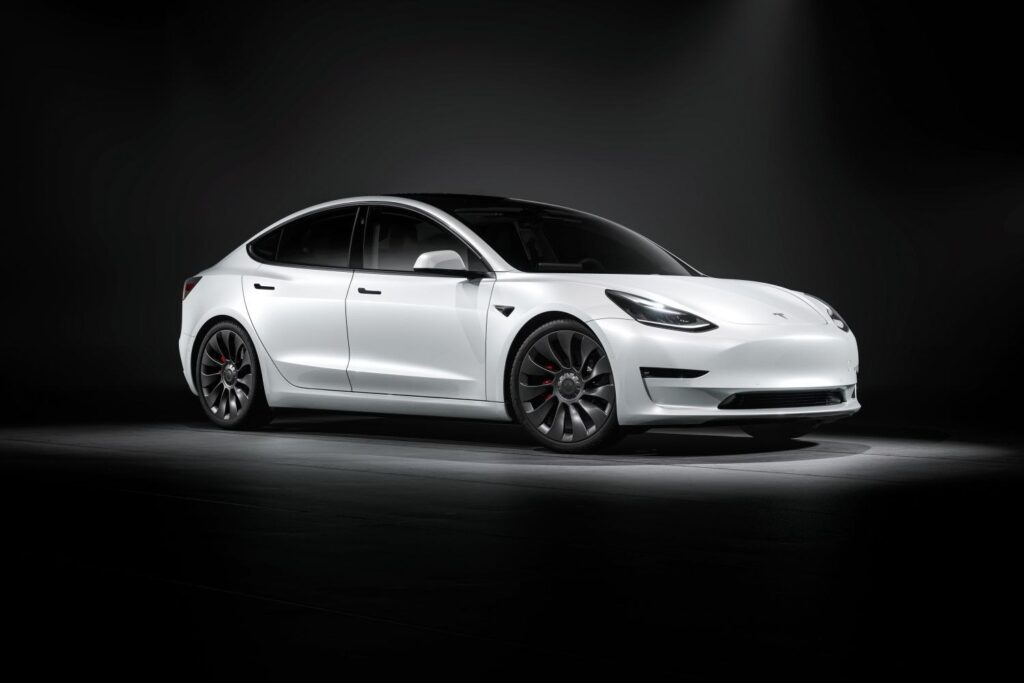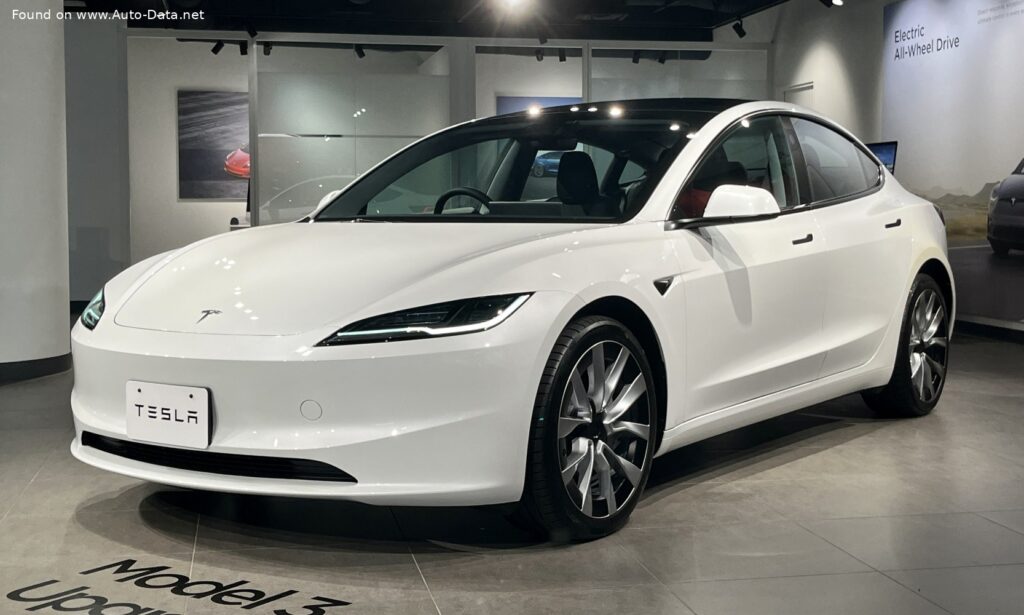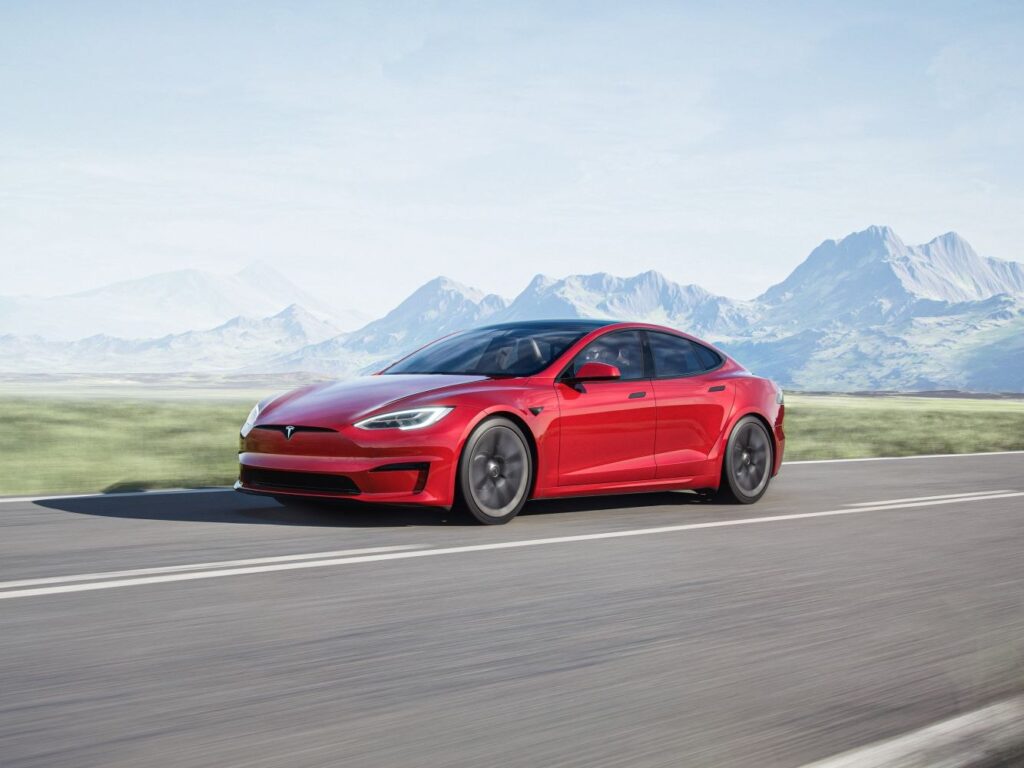
The Tesla Model S Plaid, introduced with the 2021 facelift, represents a significant leap forward in electric vehicle performance and technology. Positioned in the premium large car segment, the Model S Plaid aims to deliver not only zero-emission motoring but also supercar-rivaling acceleration and range. This iteration of the Model S builds upon the foundation laid by the original, which debuted in 2012, and has become a benchmark for electric sedans globally. The “Plaid” designation signifies the highest performance variant, boasting a tri-motor all-wheel-drive system and a substantial 1020 horsepower output.
Tesla Model S Plaid: A Performance Revolution
The 2021 facelift brought with it a revised exterior and interior design, focusing on refinement and a more modern aesthetic. However, the core of the Plaid model lies in its powertrain. Tesla’s commitment to continuous improvement is evident in the Plaid’s advancements, particularly in battery technology and motor design. The Model S Plaid isn’t just about straight-line speed; it’s about demonstrating the potential of electric vehicles to outperform traditional internal combustion engine cars in multiple areas.
Engine & Performance
The Tesla Model S Plaid utilizes a tri-motor all-wheel-drive (AWD) configuration. Unlike many other electric vehicles with a single or dual-motor setup, the Plaid employs three independent electric motors – one powering the front axle and two powering the rear axle. Each motor delivers substantial power: 427 horsepower from the front motor, and 420 horsepower from each of the rear motors, culminating in a combined system output of 1020 horsepower. This configuration allows for precise torque vectoring, enhancing both acceleration and handling. The powertrain is coupled with a single-speed automatic transmission, typical of electric vehicles. The result is astonishing performance figures: a 0-60 mph acceleration time of just 1.99 seconds, and a 0-100 km/h time of 2.1 seconds. The vehicle achieves a maximum speed of 200.08 mph (322 km/h). The weight-to-power ratio is an impressive 2.1 kg/Hp, or 471.8 Hp/tonne.
Design & Features
The Model S Plaid retains the liftback body style, offering a blend of sedan practicality and hatchback versatility. It seats five passengers and features five doors for easy access. The 2021 facelift brought a more streamlined exterior design, with subtle changes to the front and rear fascias. Inside, the Model S Plaid features a minimalist cabin dominated by a large central touchscreen display that controls most vehicle functions. The steering wheel adopts a yoke design, a controversial but distinctive feature. Safety features are comprehensive, including ABS (Anti-lock Braking System) and a suite of advanced driver-assistance systems (ADAS) such as Autopilot. The vehicle’s low center of gravity, thanks to the battery pack located beneath the floor, contributes to its stable handling. Trunk space is generous, offering 25.04 cubic feet with the rear seats up and expanding to 61.41 cubic feet with the seats folded down. Air suspension is standard, providing a comfortable ride and adjustable ride height.
Technical Specifications
| Brand | Tesla |
| Model | Model S |
| Generation | Model S (facelift 2021) |
| Type (Engine) | Plaid 100 kWh (1020 Hp) Tri Motor AWD |
| Start of production | September, 2021 |
| Powertrain Architecture | BEV (Electric Vehicle) |
| Body type | Liftback |
| Seats | 5 |
| Doors | 5 |
| Fuel Type | Electricity |
| Acceleration 0 – 100 km/h | 2.1 sec |
| Acceleration 0 – 62 mph | 2.1 sec |
| Acceleration 0 – 60 mph | 1.99 sec |
| Maximum speed | 200.08 mph (322 km/h) |
| Weight-to-power ratio | 2.1 kg/Hp, 471.8 Hp/tonne |
| Gross battery capacity | 100 kWh |
| Battery voltage | 407 V |
| Battery technology | Lithium-ion (Li-Ion) |
| Battery location | Below the floor |
| All-electric range (WLTP) | 395.81 mi (637 km) |
| All-electric range (EPA) | 347.97 mi (560 km) |
| Average Energy consumption (WLTP) | 18.7 kWh/100 km (30.09 kWh/100 mi, 112 MPGe, 5.3 km/kWh, 3.3 mi/kWh) |
| Average Energy consumption (EPA) | 20.5 kWh/100 km (32.99 kWh/100 mi, 102 MPGe, 4.9 km/kWh, 3 mi/kWh) |
| Electric motor 1 power | 427 Hp |
| Electric motor 1 location | Front axle, Transverse |
| Electric motor 2 power | 420 Hp |
| Electric motor 2 location | Rear axle, Transverse |
| Electric motor 3 power | 420 Hp |
| Electric motor 3 location | Rear axle, Transverse |
| System power | 1020 Hp |
| Kerb Weight | 4766.39 – 4828.12 lbs. (2162-2190 kg) |
| Trunk (boot) space – minimum | 25.04 cu. ft. (709 l) |
| Trunk (boot) space – maximum | 61.41 cu. ft. (1739 l) |
| Max. roof load | 165.35 lbs. (75 kg) |
| Length | 197.68 in. (5021 mm) |
| Width | 78.23 in. (1987 mm) |
| Width including mirrors | 86.18 in. (2189 mm) |
| Height | 56.34 in. (1431 mm) |
| Wheelbase | 116.54 in. (2960 mm) |
| Front track | 66.54 in. (1690 mm) |
| Rear (Back) track | 66.54 in. (1690 mm) |
| Front overhang | 37.83 in. (961 mm) |
| Rear overhang | 43.31 in. (1100 mm) |
| Ride height (ground clearance) | 4.61 – 6.22 in. (117-158 mm) |
| Drag coefficient (Cd) | 0.208 |
| Minimum turning circle (turning diameter) | 40.35 ft. (12.3 m) |
| Drivetrain Architecture | Two electric motors drive the rear wheels, one electric motor drives the front wheels. |
| Drive wheel | All wheel drive (4×4) |
| Number of gears and type of gearbox | 1 gears, automatic transmission |
| Front suspension | Double wishbone, Transverse stabilizer, Air suspension |
| Rear suspension | Independent multi-link suspension, Air suspension, Transverse stabilizer |
| Front brakes | Ventilated discs, 380×32 mm |
| Rear brakes | Ventilated discs, 365×28 mm |
| Steering type | Steering rack and pinion |
| Power steering | Electric Steering |
| Tires size | Front wheel tires: 255/45 R19; 265/35 R21Rear wheel tires: 285/40 R19; 295/30 R21 |
| Wheel rims size | Front wheel rims: 9.5J x 19; 9.5J x 21Rear wheel rims: 10.5J x 19; 10.5J x 21 |
The Tesla Model S Plaid represents a pivotal moment in the automotive industry, demonstrating that electric vehicles can deliver performance and luxury without compromise. Its innovative powertrain, advanced technology, and impressive range have set a new standard for electric sedans and continue to push the boundaries of what’s possible in the world of electric mobility.