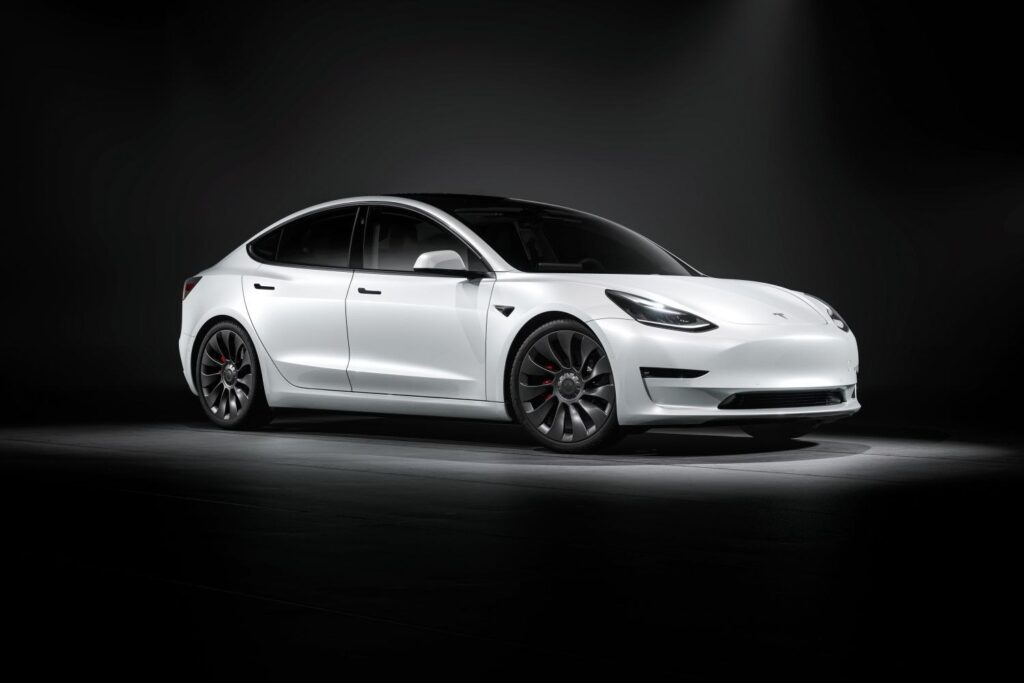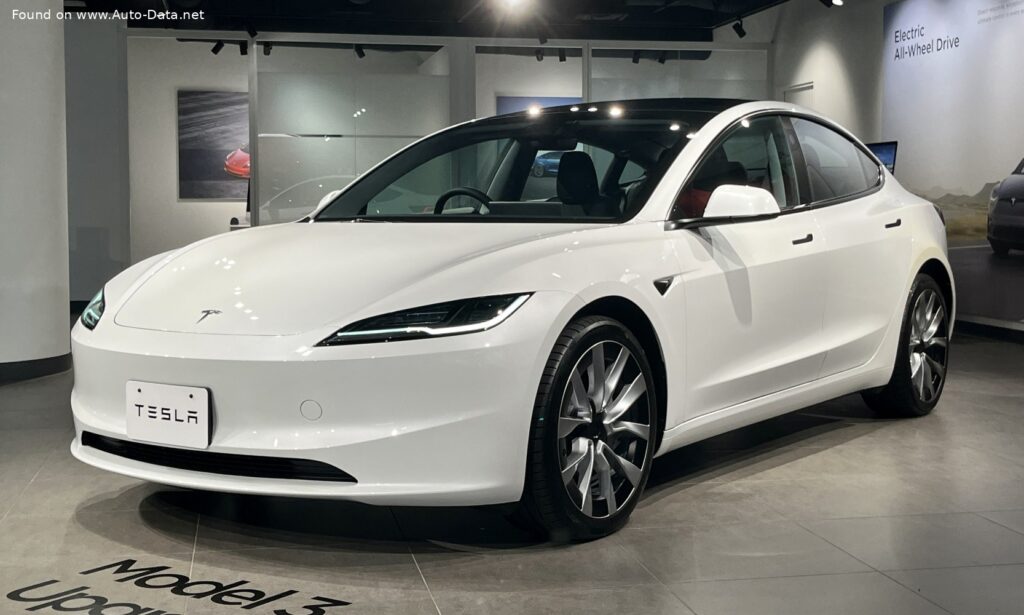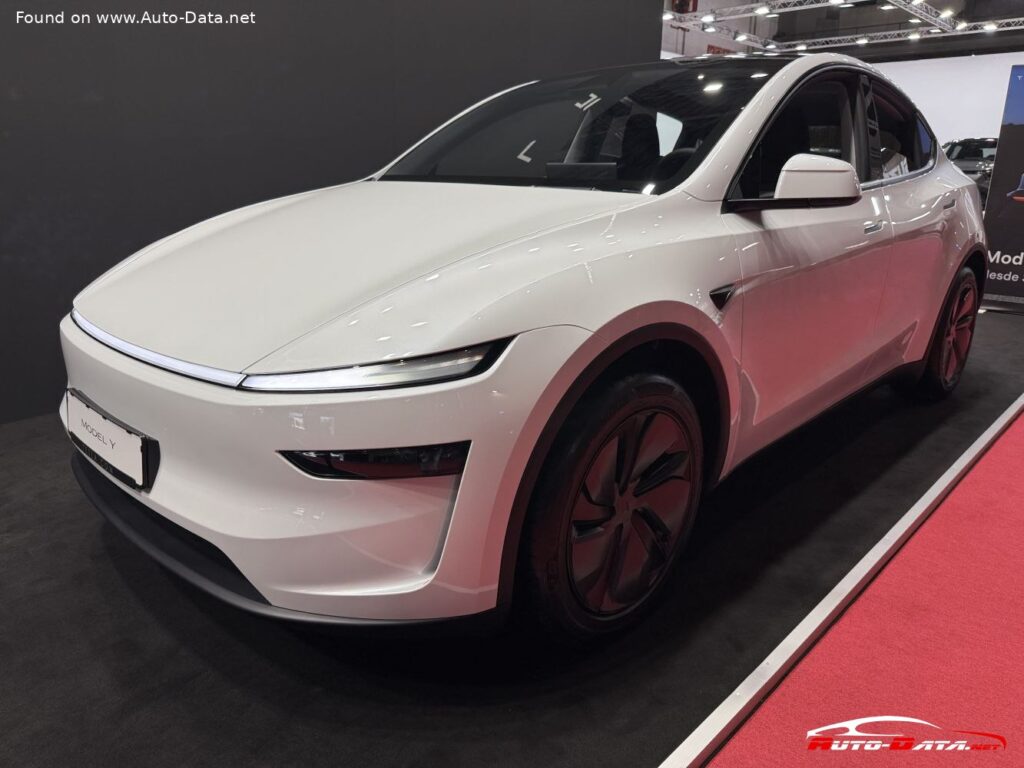
The Tesla Model Y, particularly the Juniper facelift introduced in 2025, represents a significant evolution in the increasingly competitive electric SUV market. Positioned as a compact crossover SUV, the Model Y aims to deliver the performance and technology associated with the Tesla brand in a more accessible and practical package than the larger Model X. The Performance variant, equipped with an 84.7 kWh battery and dual-motor all-wheel drive (AWD) system, is designed for drivers prioritizing acceleration and dynamic handling. This iteration builds upon the established Model Y platform, incorporating design refinements and technological upgrades to enhance its appeal and efficiency.
Tesla Model Y (Juniper, Facelift 2025) Performance: An Overview
The 2025 Model Y Juniper represents a mid-cycle refresh for Tesla’s popular electric crossover. While maintaining the core design language of the original Model Y, the facelift incorporates subtle yet impactful changes to the exterior and interior, focusing on aerodynamics, ride comfort, and overall refinement. The Performance trim, with its dual-motor setup and increased power output, continues to be a key offering for enthusiasts seeking a high-performance electric vehicle. Production commenced in August 2025, and the vehicle is primarily targeted towards markets where Tesla has established a strong presence, including North America, Europe, and Asia.
Engine & Performance
The 2025 Model Y Performance utilizes a dual-motor, all-wheel drive (AWD) powertrain. The front axle is driven by an asynchronous electric motor producing 215 horsepower, while the rear axle features a synchronous motor generating 412 horsepower. Combined, these motors deliver a system output of 460 horsepower and 660 Nm (486.79 lb.-ft.) of torque. This configuration enables impressive acceleration figures, with a 0-60 mph time of just 3.3 seconds and a 0-100 km/h time of 3.5 seconds. The vehicle boasts a maximum speed of 250 km/h (155.34 mph). The powertrain architecture is a Battery Electric Vehicle (BEV), relying entirely on electricity for propulsion. The 84.7 kWh lithium-nickel-manganese-cobalt oxide (Li-NMC) battery pack is positioned beneath the floor, contributing to a low center of gravity and improved handling. The weight-to-power ratio stands at 4.4 kg/Hp, and the weight-to-torque ratio is 3.1 kg/Nm.
Design & Features
The Tesla Model Y Juniper maintains the sleek, minimalist aesthetic characteristic of Tesla vehicles. As a compact crossover SUV with five seats and five doors, it offers a blend of practicality and style. The exterior design features subtle aerodynamic enhancements aimed at improving efficiency. The interior is dominated by a large central touchscreen display that controls most vehicle functions, minimizing physical buttons. Key features include Tesla’s Autopilot driver-assistance system, over-the-air software updates, and a spacious cargo area. The trunk offers a minimum capacity of 822 liters (29.03 cu. ft.) expanding to 2138 liters (75.5 cu. ft.) with the rear seats folded down. Safety features are comprehensive, including ABS (Anti-lock braking system) and a suite of active safety technologies designed to prevent collisions. The vehicle’s ride height (ground clearance) is 151 mm (5.94 in.).
Technical Specifications
| Brand | Tesla |
| Model | Model Y |
| Generation | Model Y (Juniper, facelift 2025) |
| Type (Engine) | Performance 84.7 kWh (460 Hp) Dual Motor AWD |
| Start of production | August, 2025 |
| Powertrain Architecture | BEV (Electric Vehicle) |
| Body type | SUV, Crossover |
| Seats | 5 |
| Doors | 5 |
| Fuel Type | Electricity |
| Acceleration 0 – 100 km/h | 3.5 sec |
| Acceleration 0 – 62 mph | 3.5 sec |
| Acceleration 0 – 60 mph | 3.3 sec |
| Maximum speed | 250 km/h (155.34 mph) |
| Weight-to-power ratio | 4.4 kg/Hp |
| Weight-to-torque ratio | 3.1 kg/Nm |
| Net (usable) battery capacity | 84.7 kWh |
| Battery voltage | 355 V |
| Battery technology | Lithium nickel manganese cobalt oxides (Li-NMC) |
| Battery weight | 448 kg (987.67 lbs.) |
| Battery location | Below the floor |
| All-electric range (WLTP) | 580 km (360.4 mi) |
| Average Energy consumption (WLTP) | 16.2 kWh/100 km (26.07 kWh/100 mi) |
| Electric motor 1 power | 215 Hp |
| Electric motor 1 model/code | 3D3 |
| Electric motor 1 location | Front axle, Transverse |
| Electric motor 1 type | Asynchronous |
| Electric motor 2 power | 412 Hp |
| Electric motor 2 model/code | 4D3 |
| Electric motor 2 location | Rear axle, Transverse |
| Electric motor 2 type | Synchronous |
| System power | 460 Hp |
| System torque | 660 Nm (486.79 lb.-ft.) |
| Kerb Weight | 2033 kg (4482 lbs.) |
| Max. weight | 2543 kg (5606.36 lbs.) |
| Max load | 510 kg (1124.36 lbs.) |
| Trunk (boot) space – minimum | 822 l (29.03 cu. ft.) |
| Trunk (boot) space – maximum | 2138 l (75.5 cu. ft.) |
| Max. roof load | 75 kg (165.35 lbs.) |
| Permitted trailer load with brakes (12%) | 1600 kg (3527.4 lbs.) |
| Permitted trailer load without brakes | 750 kg (1653.47 lbs.) |
| Permitted towbar download | 100 kg (220.46 lbs.) |
| Length | 4796 mm (188.82 in.) |
| Width | 1920 mm (75.59 in.) |
| Width with mirrors folded | 1982 mm (78.03 in.) |
| Width including mirrors | 2129 mm (83.82 in.) |
| Height | 1611 mm (63.43 in.) |
| Wheelbase | 2890 mm (113.78 in.) |
| Front track | 1636 mm (64.41 in.) |
| Rear (Back) track | 1622 mm (63.86 in.) |
| Front overhang | 895 mm (35.24 in.) |
| Rear overhang | 1011 mm (39.8 in.) |
| Ride height (ground clearance) | 151 mm (5.94 in.) |
| Minimum turning circle (turning diameter) | 12.13 m (39.8 ft.) |
| Drivetrain Architecture | One electric motor drives the front wheels, one electric motor drives the rear wheels. |
| Drive wheel | All wheel drive (4×4) |
| Number of gears and type of gearbox | 1 gears, automatic transmission |
| Front suspension | Coil spring, Double wishbone, Transverse stabilizer |
| Rear suspension | Independent multi-link spring suspension with stabilizer |
| Front brakes | Ventilated discs, 355×25 mm |
| Rear brakes | Ventilated discs, 355×20 mm |
| Steering type | Steering rack and pinion |
| Power steering | Electric Steering |
| Tires size | Front wheel tires: 255/35 R21Rear wheel tires: 275/35 R21 |
| Wheel rims size | Front wheel rims: 9.5J x 21Rear wheel rims: 10.5J x 21 |