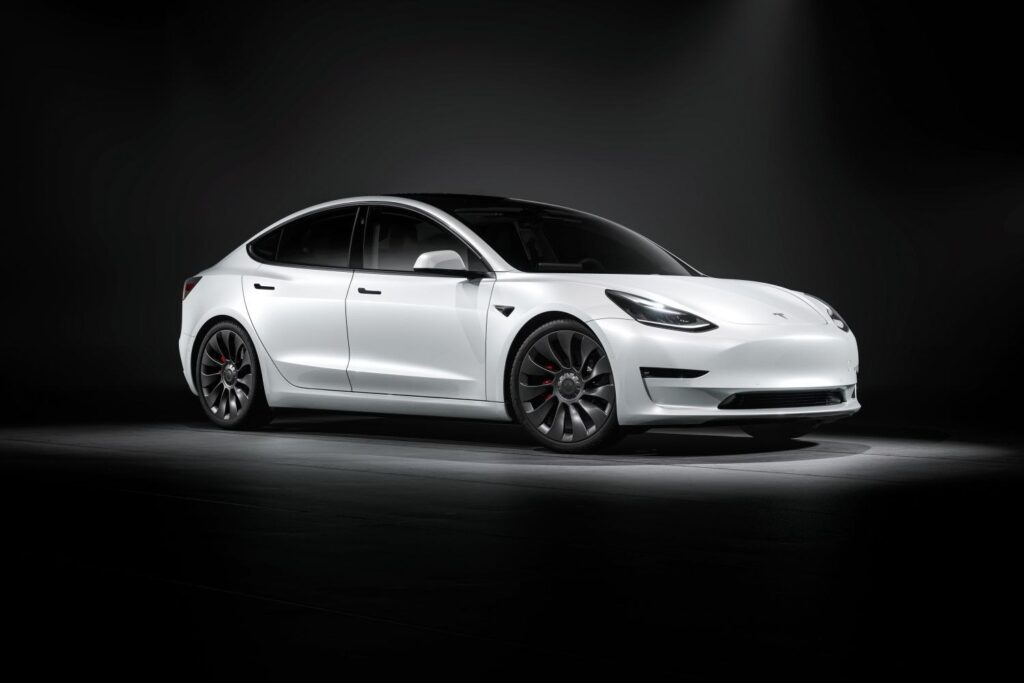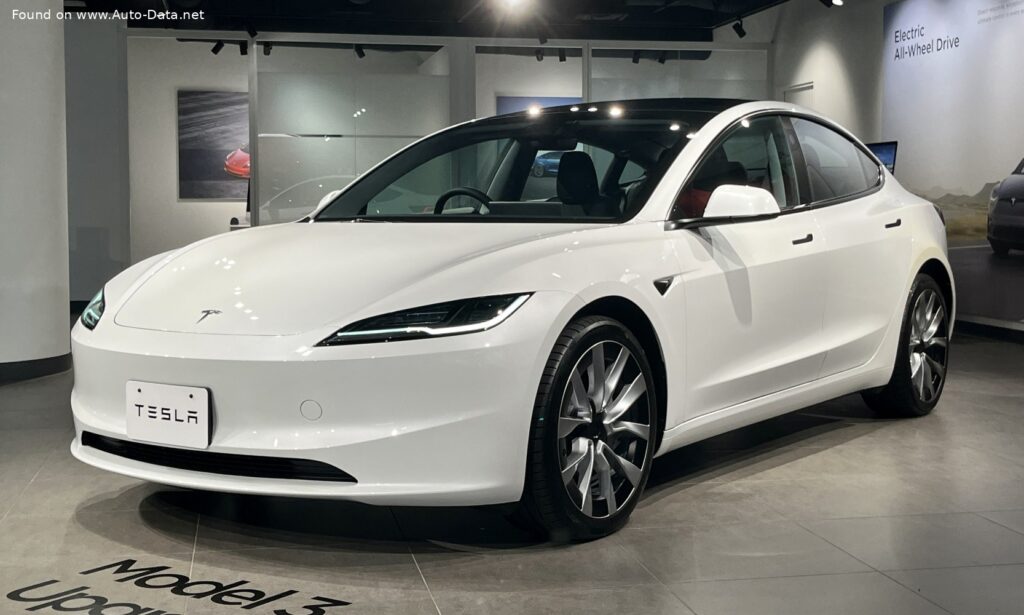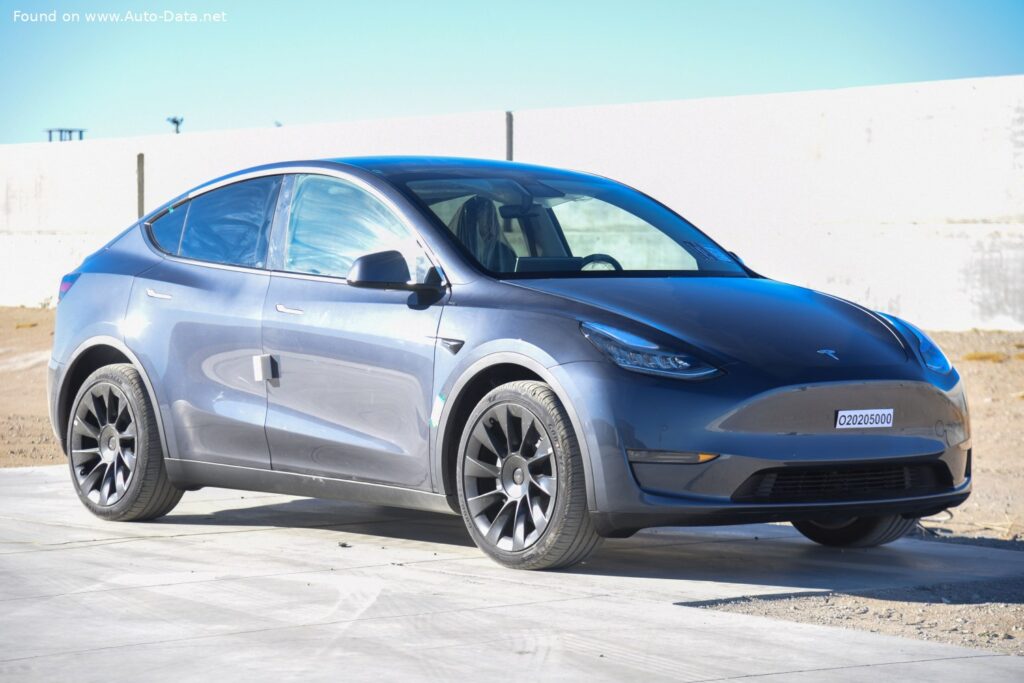
The Tesla Model Y Long Range, introduced in March 2020, represents a pivotal offering in Tesla’s expanding lineup. Positioned as a compact SUV crossover, the Model Y builds upon the success of the Model 3, offering increased practicality, passenger space, and cargo capacity while retaining the core tenets of Tesla’s electric vehicle technology. This particular variant, equipped with a 75 kWh battery pack and dual-motor all-wheel drive (AWD) system, delivers a balance of performance, range, and efficiency, making it a popular choice in the rapidly growing electric vehicle market. Production of this specific configuration continued through 2025, establishing it as a significant model within Tesla’s early production years.
Tesla Model Y Long Range: An Overview
The Model Y Long Range is designed to appeal to a broad audience seeking a versatile and environmentally conscious vehicle. It directly competes with other compact luxury SUVs, but distinguishes itself through its fully electric powertrain, advanced technology features, and Tesla’s Supercharger network. The vehicle’s design prioritizes aerodynamic efficiency, contributing to its impressive range and performance. The Model Y’s success is also tied to Tesla’s brand image and its commitment to innovation in the automotive industry.
Engine & Performance
The Model Y Long Range utilizes a dual-motor, all-wheel drive (AWD) powertrain. This configuration employs two independent electric motors – one driving the front axle and one driving the rear axle. The front motor produces 200 horsepower, while the rear motor generates 275 horsepower, resulting in a combined system output of 351 horsepower. This power is delivered instantly, providing brisk acceleration. The system generates 527 Nm (388.7 lb.-ft.) of torque. Acceleration from 0 to 100 km/h (0-62 mph) takes approximately 5 seconds, and 0 to 60 mph is achieved in 4.8 seconds. The vehicle has a maximum speed of 217 km/h (134.84 mph). The weight-to-power ratio is 5.6 kg/Hp, or 177.4 Hp/tonne, and the weight-to-torque ratio is 3.8 kg/Nm, or 266.3 Nm/tonne. The powertrain architecture is a Battery Electric Vehicle (BEV), relying solely on electricity for propulsion.
Design & Features
The Tesla Model Y is a five-door SUV crossover, typically seating five passengers, with an optional seven-seat configuration available. Its exterior design emphasizes aerodynamic efficiency, featuring a sleek profile and a sloping roofline. The interior is minimalist and modern, dominated by a large central touchscreen that controls most vehicle functions. Key features include Tesla’s Autopilot system, over-the-air software updates, and access to the Tesla Supercharger network. Safety features are comprehensive, including automatic emergency braking, lane departure warning, and collision avoidance assist. The vehicle’s spacious interior and generous cargo capacity (854-2041 liters / 30.16-72.08 cu. ft.) contribute to its practicality. The battery pack is located beneath the floor, contributing to a low center of gravity and improved handling.
Technical Specifications
| Brand | Tesla |
| Model | Model Y |
| Generation | Model Y |
| Type (Engine) | Long Range 75 kWh (351 Hp) Dual Motor AWD |
| Start of production | March, 2020 |
| End of production | 2025 |
| Powertrain Architecture | BEV (Electric Vehicle) |
| Body type | SUV, Crossover |
| Seats | 5-7 |
| Doors | 5 |
| Fuel Type | Electricity |
| Acceleration 0 – 100 km/h | 5 sec |
| Acceleration 0 – 62 mph | 5 sec |
| Acceleration 0 – 60 mph | 4.8 sec |
| Maximum speed | 217 km/h (134.84 mph) |
| Weight-to-power ratio | 5.6 kg/Hp, 177.4 Hp/tonne |
| Weight-to-torque ratio | 3.8 kg/Nm, 266.3 Nm/tonne |
| Gross battery capacity | 75 kWh |
| Net (usable) battery capacity | 70 kWh |
| Battery voltage | 360 V |
| Battery technology | Lithium-ion (Li-Ion) |
| Battery location | Below the floor |
| All-electric range (WLTP) | 507 km (315.04 mi) |
| All-electric range | 525 km (326.22 mi) |
| Average Energy consumption (WLTP) | 16.9 kWh/100 km (27.2 kWh/100 mi) |
| MPGe | 124 |
| km/kWh | 5.9 |
| mi/kWh | 3.7 |
| Electric motor 1 power | 200 Hp |
| Electric motor 1 location | Front axle, Transverse |
| Electric motor 2 power | 275 Hp |
| Electric motor 2 location | Rear axle, Transverse |
| System power | 351 Hp |
| System torque | 527 Nm (388.7 lb.-ft.) |
| Kerb Weight | 1979 kg (4362.95 lbs.) |
| Max. weight | 2405 kg (5302.12 lbs.) |
| Max load | 426 kg (939.17 lbs.) |
| Trunk (boot) space – minimum | 854 l (30.16 cu. ft.) |
| Trunk (boot) space – maximum | 2041 l (72.08 cu. ft.) |
| Permitted trailer load with brakes (12%) | 1588 kg (3500.94 lbs.) |
| Permitted trailer load without brakes | 750 kg (1653.47 lbs.) |
| Length | 4750 mm (187.01 in.) |
| Width | 1920 mm (75.59 in.) |
| Width with mirrors folded | 1978 mm (77.87 in.) |
| Width including mirrors | 2129 mm (83.82 in.) |
| Height | 1624 mm (63.94 in.) |
| Wheelbase | 2890 mm (113.78 in.) |
| Front track | 1636 mm (64.41 in.) |
| Rear (Back) track | 1636 mm (64.41 in.) |
| Front overhang | 874 mm (34.41 in.) |
| Rear overhang | 986 mm (38.82 in.) |
| Ride height (ground clearance) | 167 mm (6.57 in.) |
| Drag coefficient (Cd) | 0.23 |
| Minimum turning circle (turning diameter) | 12.1 m (39.7 ft.) |
| Drivetrain Architecture | One electric motor drives the front wheels, one electric motor drives the rear wheels. |
| Drive wheel | All wheel drive (4×4) |
| Number of gears and type of gearbox | 1 gears, automatic transmission |
| Front suspension | Coil spring, Double wishbone, Transverse stabilizer |
| Rear suspension | Independent multi-link suspension, Coil spring |
| Front brakes | Ventilated discs, 355×25 mm |
| Rear brakes | Ventilated discs, 335×20 mm |
| Assisting systems | ABS (Anti-lock braking system) |
| Steering type | Steering rack and pinion |
| Power steering | Electric Steering |
| Tires size | 255/45 R19; 255/40 R20 |
| Wheel rims size | 9.5J x 19; 9.5J x 20 |