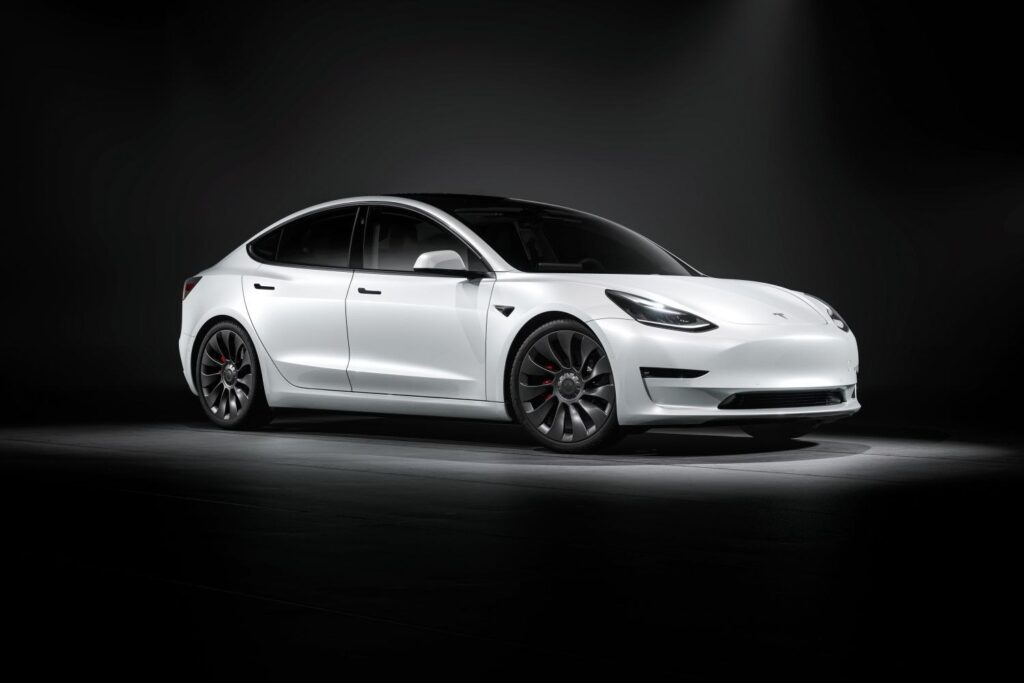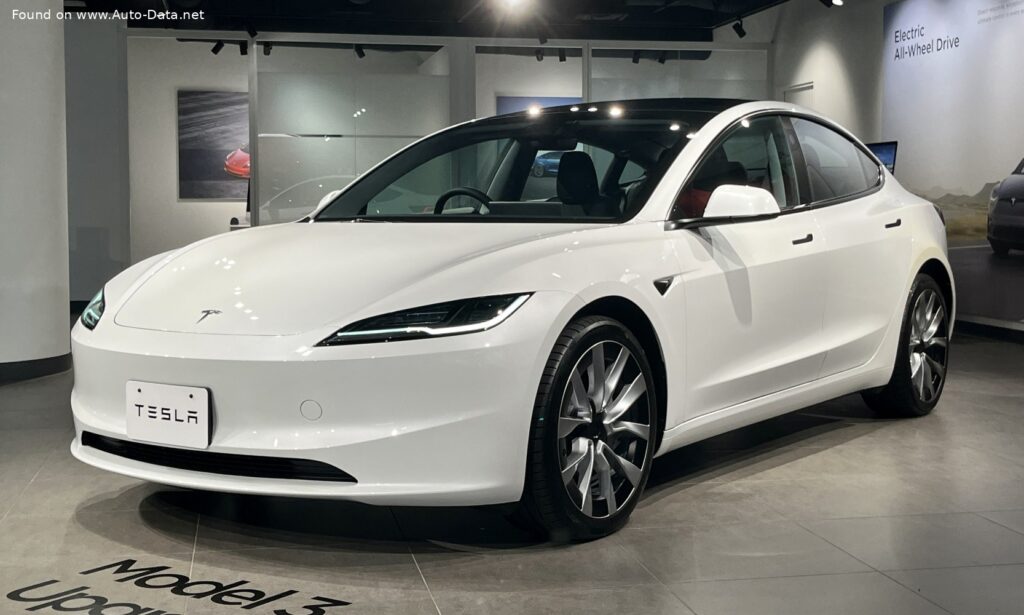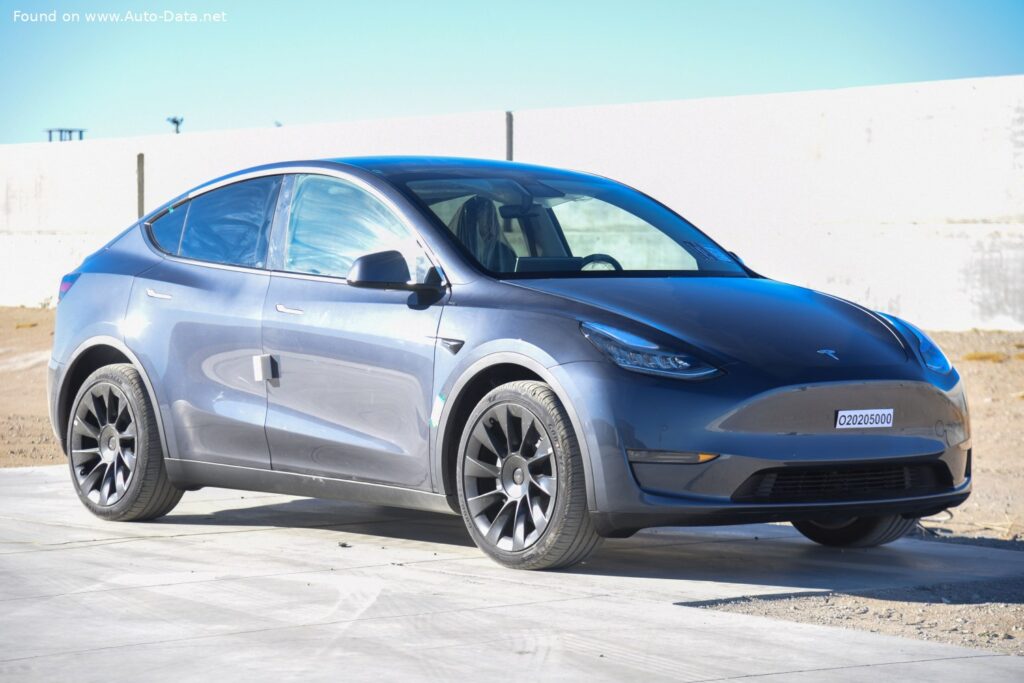
The Tesla Model Y Long Range, equipped with a 78.1 kWh battery and producing 347 horsepower, represents a significant offering in the increasingly competitive electric SUV market. Introduced in April 2024 and continuing through February 2025, this iteration of the Model Y aims to balance performance, range, and practicality for consumers seeking a fully electric crossover. As Tesla’s second mass-market vehicle, the Model Y builds upon the success of the Model 3, offering a higher ride height, increased cargo space, and optional seven-seat configuration, catering to a broader range of lifestyles. The Long Range variant specifically targets drivers prioritizing extended driving range and quicker acceleration.
Tesla Model Y Long Range: An Overview
The Tesla Model Y is a compact SUV/Crossover manufactured by Tesla, Inc. It slots into the premium segment, competing with vehicles like the Audi Q4 e-tron, BMW iX3, and Ford Mustang Mach-E. The Model Y is built on Tesla’s dedicated electric vehicle platform, leveraging the company’s expertise in battery technology, electric motors, and autonomous driving features. The Long Range version, detailed here, is positioned as a mid-tier offering within the Model Y lineup, providing a compelling combination of range and performance. It is primarily sold in North America, Europe, and Asia, with production occurring in Tesla’s Gigafactories in the United States, China, and Germany.
Engine & Performance
The Model Y Long Range utilizes a fully electric powertrain, eliminating the need for a traditional internal combustion engine. It features a single rear-mounted synchronous electric motor, delivering 347 horsepower. This motor is powered by a 78.1 kWh gross battery capacity, with 75 kWh of usable capacity. The battery pack, utilizing Lithium Nickel Manganese Cobalt Oxide (Li-NMC) chemistry, is located beneath the vehicle floor, contributing to a low center of gravity and improved handling. Acceleration from 0 to 60 mph is achieved in approximately 5.6 seconds, while 0-62 mph and 0-100 km/h take 5.9 seconds. The vehicle boasts a maximum speed of 134.84 mph (217 km/h). The weight-to-power ratio is 5.6 kg/Hp, or 177.1 Hp/tonne, indicating a respectable power-to-weight balance. Energy consumption is rated at 14.9-15.5 kWh per 100 km (23.98-24.94 kWh per 100 miles), translating to an efficiency of 141-135 MPGe and a range of 6.7-6.5 km/kWh (4.2-4 mi/kWh). The WLTP-rated all-electric range is between 565 and 600 km (351.07 – 372.82 miles).
Design & Features
The Tesla Model Y is a five-door SUV/Crossover with seating for five passengers. Its exterior design shares many similarities with the Model 3 sedan, but with a taller roofline and a more spacious rear cargo area. The vehicle’s aerodynamic profile, evidenced by its drag coefficient of 0.23, contributes to its efficiency and range. Key features include a minimalist interior dominated by a large central touchscreen display that controls most vehicle functions. Tesla’s Autopilot system, offering advanced driver-assistance features such as adaptive cruise control and lane keeping assist, is standard. The Model Y also benefits from over-the-air software updates, continuously improving its functionality and adding new features. Safety features are comprehensive, including ABS, and a robust structural design. The vehicle offers 854 liters (30.16 cu. ft.) of trunk space with the rear seats up, expanding to 2158 liters (76.21 cu. ft.) with the seats folded down. It has a maximum roof load capacity of 75 kg (165.35 lbs) and can tow up to 1600 kg (3527.4 lbs) with brakes.
Technical Specifications
| Brand | Tesla |
| Model | Model Y |
| Generation | Model Y |
| Type (Engine) | Long Range 78.1 kWh (347 Hp) |
| Start of production | April, 2024 |
| End of production | February, 2025 |
| Powertrain Architecture | BEV (Electric Vehicle) |
| Body type | SUV, Crossover |
| Seats | 5 |
| Doors | 5 |
| Fuel Type | Electricity |
| Acceleration 0 – 100 km/h | 5.9 sec |
| Acceleration 0 – 62 mph | 5.9 sec |
| Acceleration 0 – 60 mph | 5.6 sec |
| Maximum speed | 217 km/h (134.84 mph) |
| Weight-to-power ratio | 5.6 kg/Hp, 177.1 Hp/tonne |
| Gross battery capacity | 78.1 kWh |
| Net (usable) battery capacity | 75 kWh |
| Battery technology | Lithium nickel manganese cobalt oxides (Li-NMC) |
| Battery location | Below the floor |
| All-electric range (WLTP) | 565-600 km (351.07 – 372.82 mi) |
| Average Energy consumption (WLTP) | 14.9-15.5 kWh/100 km (23.98 – 24.94 kWh/100 mi) |
| Electric motor | 1 |
| Electric motor power | 347 Hp |
| Electric motor model/code | 4D5 |
| Electric motor location | Rear axle, Transverse |
| Electric motor type | Synchronous |
| System power | 347 Hp |
| Kerb Weight | 1959 kg (4318.86 lbs.) |
| Max. weight | 2619 kg (5773.91 lbs.) |
| Max load | 660 kg (1455.05 lbs.) |
| Trunk (boot) space – minimum | 854 l (30.16 cu. ft.) |
| Trunk (boot) space – maximum | 2158 l (76.21 cu. ft.) |
| Max. roof load | 75 kg (165.35 lbs.) |
| Permitted trailer load with brakes (12%) | 1600 kg (3527.4 lbs.) |
| Permitted trailer load without brakes | 750 kg (1653.47 lbs.) |
| Permitted towbar download | 100 kg (220.46 lbs.) |
| Length | 4751 mm (187.05 in.) |
| Width | 1921 mm (75.63 in.) |
| Width with mirrors folded | 1978 mm (77.87 in.) |
| Width including mirrors | 2129 mm (83.82 in.) |
| Height | 1624 mm (63.94 in.) |
| Wheelbase | 2890 mm (113.78 in.) |
| Front track | 1636 mm (64.41 in.) |
| Rear (Back) track | 1636 mm (64.41 in.) |
| Front overhang | 875 mm (34.45 in.) |
| Rear overhang | 986 mm (38.82 in.) |
| Ride height (ground clearance) | 172 mm (6.77 in.) |
| Drag coefficient (Cd) | 0.23 |
| Minimum turning circle (turning diameter) | 12.13 m (39.8 ft.) |
| Drivetrain Architecture | One electric motor drives the rear wheels. |
| Drive wheel | Rear wheel drive |
| Number of gears and type of gearbox | 1 gears, automatic transmission |
| Front suspension | Coil spring, Double wishbone, Transverse stabilizer |
| Rear suspension | Independent multi-link suspension, Coil spring |
| Front brakes | Ventilated discs, 355×25 mm |
| Rear brakes | Ventilated discs, 335×20 mm |
| Assisting systems | ABS (Anti-lock braking system) |
| Steering type | Steering rack and pinion |
| Power steering | Electric Steering |
| Tires size | 255/45 R19; 255/40 R20 |
| Wheel rims size | 9.5J x 19; 9.5J x 20 |