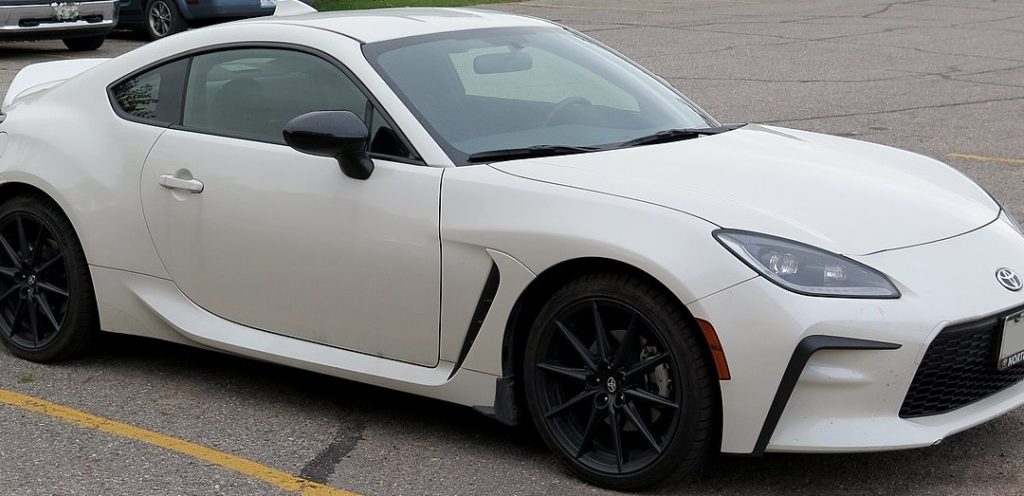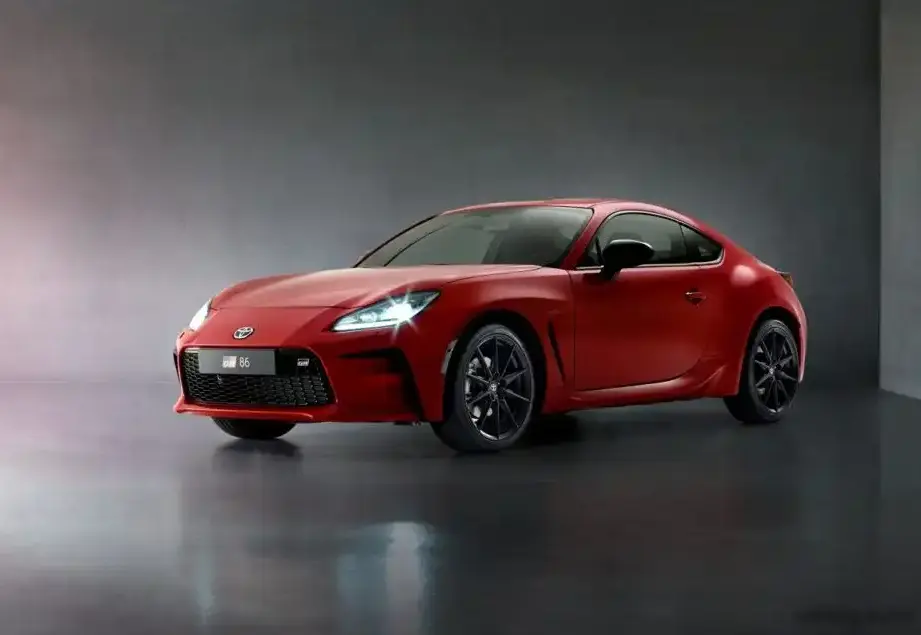
The Toyota 86 II GR 2.4 D-4S Automatic, produced from April 2021 onwards, represents the second generation of Toyota’s rear-wheel-drive sports coupe. This iteration, part of the ZN8 chassis code, builds upon the original 86/Scion FR-S/Subaru BRZ platform, addressing many criticisms of the first generation with a significantly larger engine and revised chassis. Positioned as a mid-range offering within the 86 lineup, the 2.4L automatic model aimed to provide a balance between performance and accessibility, appealing to drivers seeking a sporty experience without the involvement of a manual transmission. It serves as a direct competitor to vehicles like the Mazda MX-5 Miata and Subaru BRZ, offering a unique blend of handling and affordability in the sports car segment.
Technical Specifications
| Brand | Toyota |
| Model | 86 |
| Generation | 86 II |
| Type (Engine) | GR 2.4 D-4S (235 Hp) Automatic |
| Start of production | April, 2021 |
| Powertrain Architecture | Internal Combustion engine |
| Body type | Coupe |
| Seats | 4 |
| Doors | 2 |
| Fuel consumption (urban) | 11.2 l/100 km (21 US mpg, 25.2 UK mpg, 8.9 km/l) |
| Fuel consumption (extra urban) | 7.6 l/100 km (30.9 US mpg, 37.2 UK mpg, 13.2 km/l) |
| Fuel consumption (combined) | 9.4 l/100 km (25 US mpg, 30.1 UK mpg, 10.6 km/l) |
| Fuel Type | Petrol (Gasoline) |
| Acceleration 0 – 60 mph | 6.6 sec |
| Maximum speed | 216 km/h (134.22 mph) |
| Weight-to-power ratio | 5.5 kg/Hp, 181.7 Hp/tonne |
| Weight-to-torque ratio | 5.2 kg/Nm, 193.3 Nm/tonne |
| Power | 235 Hp @ 7000 rpm |
| Power per litre | 98.4 Hp/l |
| Torque | 250 Nm @ 3700 rpm (184.39 lb.-ft. @ 3700 rpm) |
| Maximum engine speed | 7400 rpm |
| Engine layout | Front, Longitudinal |
| Engine Model/Code | FA24 |
| Engine displacement | 2387 cm3 (145.66 cu. in.) |
| Number of cylinders | 4 |
| Engine configuration | Boxer |
| Cylinder Bore | 94 mm (3.7 in.) |
| Piston Stroke | 86 mm (3.39 in.) |
| Compression ratio | 12.5:1 |
| Number of valves per cylinder | 4 |
| Fuel injection system | Direct injection |
| Engine aspiration | Naturally aspirated engine |
| Valvetrain | DOHC |
| Engine oil capacity | 5 l (5.28 US qt | 4.4 UK qt) |
| Coolant | 7.7 l (8.14 US qt | 6.78 UK qt) |
| Kerb Weight | 1293-1301 kg (2850.58 – 2868.21 lbs.) |
| Max. weight | 1700 kg (3747.86 lbs.) |
| Max load | 399-407 kg (879.64 – 897.28 lbs.) |
| Trunk (boot) space – minimum | 177 l (6.25 cu. ft.) |
| Fuel tank capacity | 50 l (13.21 US gal | 11 UK gal) |
| Length | 4265 mm (167.91 in.) |
| Width | 1775 mm (69.88 in.) |
| Height | 1310 mm (51.57 in.) |
| Wheelbase | 2575 mm (101.38 in.) |
| Front track | 1520 mm (59.84 in.) |
| Rear (Back) track | 1550 mm (61.02 in.) |
| Ride height (ground clearance) | 130 mm (5.12 in.) |
| Drag coefficient (Cd) | 0.276 |
| Minimum turning circle (turning diameter) | 10.8 m (35.43 ft.) |
| Drivetrain Architecture | Rear wheel drive |
| Number of gears and type of gearbox | 6 gears, automatic transmission |
| Front suspension | Independent type McPherson, Transverse stabilizer |
| Rear suspension | Double wishbone, Transverse stabilizer |
| Front brakes | Ventilated discs, 294 mm |
| Rear brakes | Disc, 290 mm |
| Assisting systems | ABS (Anti-lock braking system) |
| Steering type | Steering rack and pinion |
| Power steering | Electric Steering |
| Tires size | 215/40 R18 |
| Wheel rims size | 7.5J x 18 |
Powertrain & Engine Architecture
The heart of the 86 II GR 2.4 D-4S Automatic is the FA24 2.4-liter naturally aspirated boxer-four engine. This engine represents a significant upgrade over the 2.0-liter FA20 found in the first-generation 86, addressing complaints about a lack of low-end torque. The “D-4S” designation refers to Toyota’s Direct-injection 4-valve with Continuous Variable Valve Timing – Intelligent system. This system combines direct and port fuel injection, optimizing combustion efficiency and power delivery across the rev range. The engine utilizes a dual overhead camshaft (DOHC) valvetrain with four valves per cylinder. The six-speed automatic transmission is a conventional torque-converter type, tuned for smooth shifts and reasonable efficiency. While not a dual-clutch transmission, it offers paddle shifters for manual control.
Driving Characteristics
The 2.4-liter engine and automatic transmission combination delivers a noticeable improvement in drivability compared to the earlier 2.0-liter models. The increased displacement and optimized fuel injection provide a broader torque curve, making the car more responsive in everyday driving situations. While the automatic transmission doesn’t offer the same level of engagement as a manual, it provides smooth and predictable shifts. The gear ratios are tuned to balance acceleration and fuel economy. Compared to the manual transmission version, the automatic sacrifices some driver involvement but gains in ease of use, particularly in congested traffic. Acceleration from 0-60 mph is achieved in approximately 6.6 seconds, a respectable figure for a rear-wheel-drive sports coupe in this price range.
Equipment & Trim Levels
The 86 II GR 2.4 D-4S Automatic typically came equipped with standard features such as LED headlights, a 7-inch touchscreen infotainment system with Apple CarPlay and Android Auto compatibility, a rearview camera, and automatic climate control. Interior upholstery consisted of cloth or synthetic leather, depending on optional packages. Available options included a premium audio system, heated front seats, and keyless entry. The automatic variant often included additional driver-assistance features as standard, such as automatic emergency braking and lane departure warning.
Chassis & Braking
The 86 II retains the fundamental chassis layout of the first generation – a lightweight, rear-wheel-drive platform with a MacPherson strut front suspension and a double-wishbone rear suspension. The suspension tuning was revised to complement the increased power of the 2.4-liter engine, providing improved stability and handling. Braking duties are handled by ventilated discs at the front and solid discs at the rear. Anti-lock braking system (ABS) is standard. The relatively low curb weight (around 2850-2868 lbs) contributes to the car’s agile handling characteristics.
Market Reception & Comparison
The 86 II GR 2.4 D-4S Automatic was generally well-received by automotive critics. The larger engine was praised for its improved performance and responsiveness. However, some reviewers noted that the automatic transmission, while competent, didn’t fully exploit the engine’s potential. Compared to the manual transmission version, the automatic offered slightly lower fuel economy. Against competitors like the Mazda MX-5 Miata, the 86 offered a more practical 2+2 seating configuration, but the Miata was often lauded for its more engaging driving experience. The Subaru BRZ, mechanically identical to the 86, offered a similar driving experience but often differed in styling and trim levels.
Legacy
The FA24 engine, paired with the six-speed automatic transmission, has proven to be a reliable powertrain. Early reports suggest good long-term durability, although regular maintenance is crucial. On the used car market, the 86 II GR 2.4 D-4S Automatic holds its value reasonably well, particularly well-maintained examples with low mileage. Its combination of sporty handling, affordability, and practicality makes it an attractive option for enthusiasts seeking a fun-to-drive coupe. The 86 II represents a significant step forward for the model, addressing many of the shortcomings of the original and solidifying its position as a compelling choice in the sports car segment.