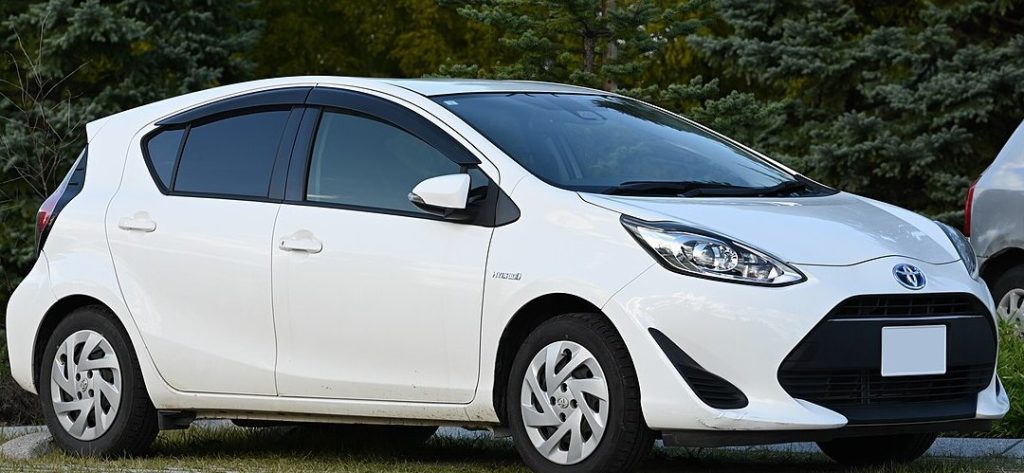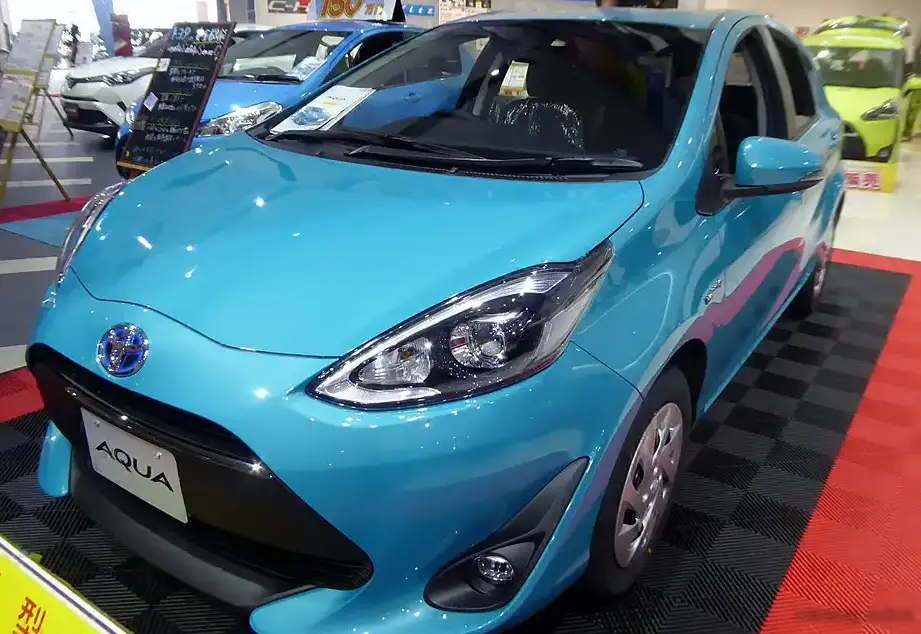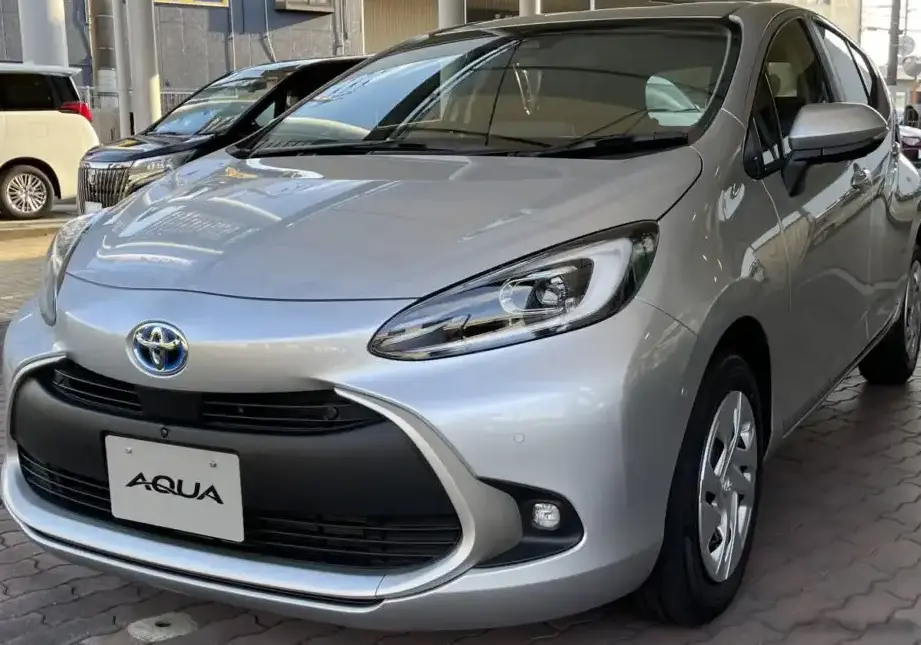
The Toyota Aqua Crossover, specifically the facelifted first generation produced from 2017 to July 2021, represented Toyota’s entry into the increasingly competitive subcompact hybrid hatchback segment. This variant, equipped with the 1.5-liter engine producing 74 horsepower and paired with an e-CVT transmission, was primarily marketed in Japan and other Asia-Pacific markets. It aimed to provide fuel-efficient and practical transportation for urban drivers, capitalizing on Toyota’s established hybrid technology. The Aqua Crossover offered a slightly more rugged aesthetic than the standard Aqua, with minor body cladding and a raised ride height, appealing to buyers seeking a versatile and economical vehicle.
Technical Specifications
| Brand | Toyota |
| Model | Aqua |
| Generation | Aqua Crossover I (facelift 2017) |
| Type (Engine) | 1.5 (74 Hp) e-CVT |
| Start of production | 2017 |
| End of production | July, 2021 |
| Powertrain Architecture | FHEV (Full Hybrid Electric Vehicle) |
| Body type | Hatchback |
| Seats | 5 |
| Doors | 5 |
| Fuel consumption (combined) | 2.9 l/100 km (81.1 US mpg, 97.4 UK mpg, 34.5 km/l) |
| Fuel Type | Petrol (Gasoline) |
| Weight-to-power ratio | 14.9 kg/Hp, 67.3 Hp/tonne |
| Weight-to-torque ratio | 9.9 kg/Nm, 100.9 Nm/tonne |
| Battery technology | Nickel-metal hydride (NiMH) |
| Electric motor power | 61 Hp |
| Electric motor Torque | 169 Nm (124.65 lb.-ft.) |
| Electric motor model/code | 1LM |
| Electric motor type | Synchronous |
| Power | 74 Hp @ 4800 rpm |
| Power per litre | 49.5 Hp/l |
| Torque | 111 Nm @ 3600-4400 rpm (81.87 lb.-ft. @ 3600-4400 rpm) |
| Engine layout | Front, Transverse |
| Engine Model/Code | 1NZ-FXE |
| Engine displacement | 1496 cm3 (91.29 cu. in.) |
| Number of cylinders | 4 |
| Engine configuration | Inline |
| Cylinder Bore | 75 mm (2.95 in.) |
| Piston Stroke | 84.7 mm (3.33 in.) |
| Number of valves per cylinder | 4 |
| Fuel injection system | Multi-port manifold injection |
| Engine aspiration | Naturally aspirated engine |
| Valvetrain | VVT |
| Engine oil capacity | 3.7 l (3.91 US qt | 3.26 UK qt) |
| Coolant | 4.5 l (4.76 US qt | 3.96 UK qt) |
| Kerb Weight | 1100 kg (2425.08 lbs.) |
| Max. weight | 1375 kg (3031.36 lbs.) |
| Max load | 275 kg (606.27 lbs.) |
| Fuel tank capacity | 36 l (9.51 US gal | 7.92 UK gal) |
| Length | 4060 mm (159.84 in.) |
| Width | 1715 mm (67.52 in.) |
| Height | 1500 mm (59.06 in.) |
| Wheelbase | 2550 mm (100.39 in.) |
| Front track | 1465 mm (57.68 in.) |
| Rear (Back) track | 1460 mm (57.48 in.) |
| Ride height (ground clearance) | 170 mm (6.69 in.) |
| Minimum turning circle (turning diameter) | 10.8 m (35.43 ft.) |
| Drivetrain Architecture | Front wheel drive. FHEV. ICE and electric motor drive front wheels. |
| Number of gears and type of gearbox | automatic transmission e-CVT |
| Front suspension | Independent type McPherson |
| Rear suspension | Torsion |
| Front brakes | Ventilated discs |
| Rear brakes | Drum |
| Assisting systems | ABS (Anti-lock braking system) |
| Steering type | Steering rack and pinion |
| Power steering | Electric Steering |
| Tires size | 185/60 R15 |
| Wheel rims size | 5.5J x 15 |
Powertrain & Engine Architecture
The heart of the Aqua Crossover 1.5 is the 1NZ-FXE 1.5-liter inline-four cylinder engine. This engine is part of Toyota’s NZ engine family, known for its reliability and fuel efficiency. It utilizes a multi-port fuel injection system and Variable Valve Timing (VVT) to optimize performance and economy. The engine operates on the Atkinson cycle, which prioritizes efficiency over outright power, making it ideal for hybrid applications. The e-CVT (electronic Continuously Variable Transmission) is a key component of the hybrid system. Unlike traditional CVTs with belts and pulleys, Toyota’s e-CVT uses a power-split device to seamlessly blend power from the gasoline engine and the electric motor. This system eliminates fixed gear ratios, providing a smooth and efficient driving experience. The electric motor, designated 1LM, contributes 61 horsepower and 169 Nm of torque, supplementing the gasoline engine, particularly during acceleration and low-speed driving.
Driving Characteristics
The 74 horsepower output and e-CVT pairing in the Aqua Crossover results in a focus on fuel economy rather than spirited performance. Acceleration is adequate for city driving, but highway merging and overtaking require careful planning. The e-CVT provides a smooth, linear power delivery, lacking the distinct gear changes of a traditional automatic transmission. Compared to higher-output versions of the Aqua (which were not widely available in the Crossover trim), this variant offers a more relaxed driving experience. The e-CVT is programmed to prioritize efficiency, often keeping the engine at lower RPMs, which can sometimes feel sluggish. The weight of the hybrid components does impact handling, making it less agile than some competitors, but the suspension provides a comfortable ride on most road surfaces.
Equipment & Trim Levels
The Aqua Crossover 1.5 typically came with a reasonable level of standard equipment. Interior features generally included air conditioning, power windows, power door locks, and a basic audio system with USB connectivity. Upholstery was typically cloth, with a focus on durability rather than luxury. Higher trim levels, when available, added features such as alloy wheels, a touchscreen infotainment system, and a rearview camera. Optional extras included navigation systems, upgraded audio, and various cosmetic enhancements. Safety features such as ABS and airbags were standard across all trims.
Chassis & Braking
The Aqua Crossover utilizes a front-wheel-drive layout with an independent McPherson strut suspension in the front and a torsion beam suspension in the rear. This setup provides a good balance of ride comfort and handling for a vehicle in this class. The front brakes are ventilated discs, providing adequate stopping power, while the rear brakes are drums, a cost-saving measure common in this segment. The electric power steering offers light and easy steering, making it ideal for maneuvering in tight urban environments. The relatively lightweight construction of the vehicle contributes to its fuel efficiency and helps to offset the weight of the hybrid system.
Market Reception & Comparison
The Toyota Aqua Crossover 1.5 was generally well-received by critics for its exceptional fuel economy and practicality. However, its modest performance was often cited as a drawback. Compared to other subcompact hatchbacks, the Aqua Crossover stood out for its hybrid powertrain and Toyota’s reputation for reliability. Its fuel economy of 2.9 l/100 km was significantly better than most gasoline-powered competitors. However, the higher purchase price of the hybrid system was a consideration for some buyers. Compared to other Aqua trims, the 1.5L e-CVT offered a balance between affordability and efficiency, making it a popular choice for budget-conscious buyers.
Legacy
The Toyota Aqua Crossover 1.5, and the Aqua line in general, has proven to be a reliable and durable vehicle. The 1NZ-FXE engine and e-CVT transmission are known for their longevity, with many examples exceeding 200,000 kilometers with minimal issues. The hybrid system components, particularly the nickel-metal hydride battery, have also demonstrated good reliability. On the used car market, the Aqua Crossover 1.5 remains a popular choice for buyers seeking a fuel-efficient and affordable vehicle. Its reputation for reliability and low running costs continues to make it a compelling option in the subcompact hatchback segment. The Aqua helped solidify Toyota’s position as a leader in hybrid technology and paved the way for future generations of hybrid vehicles.