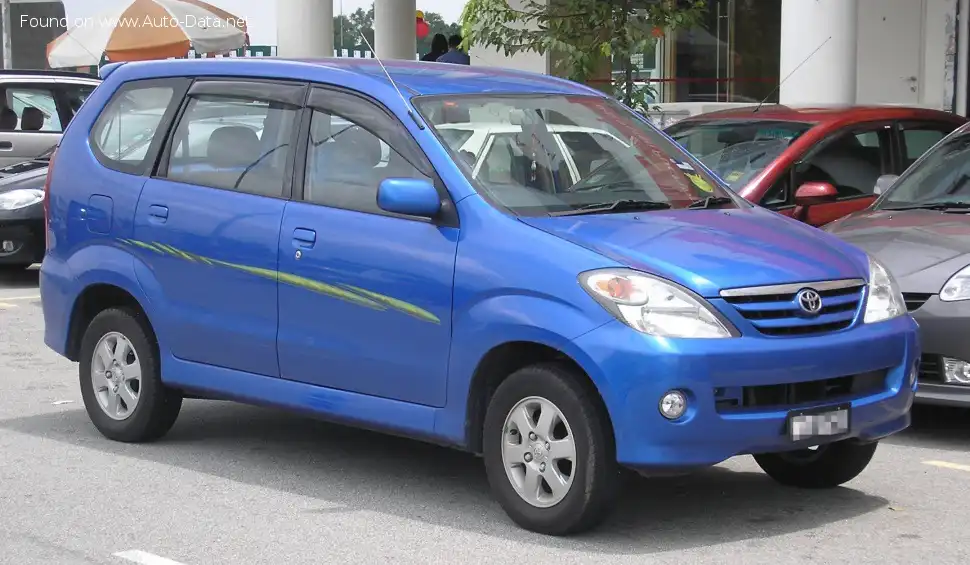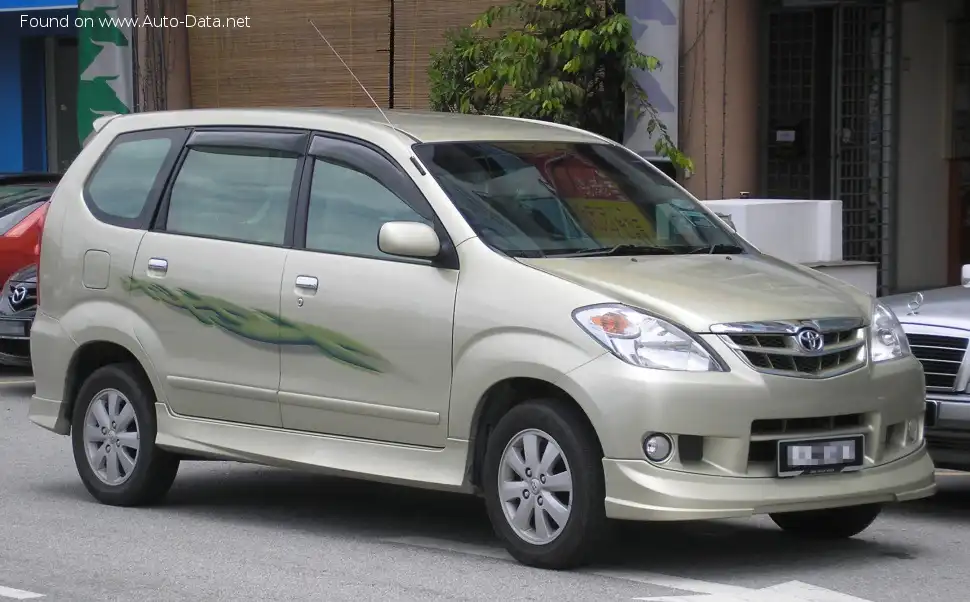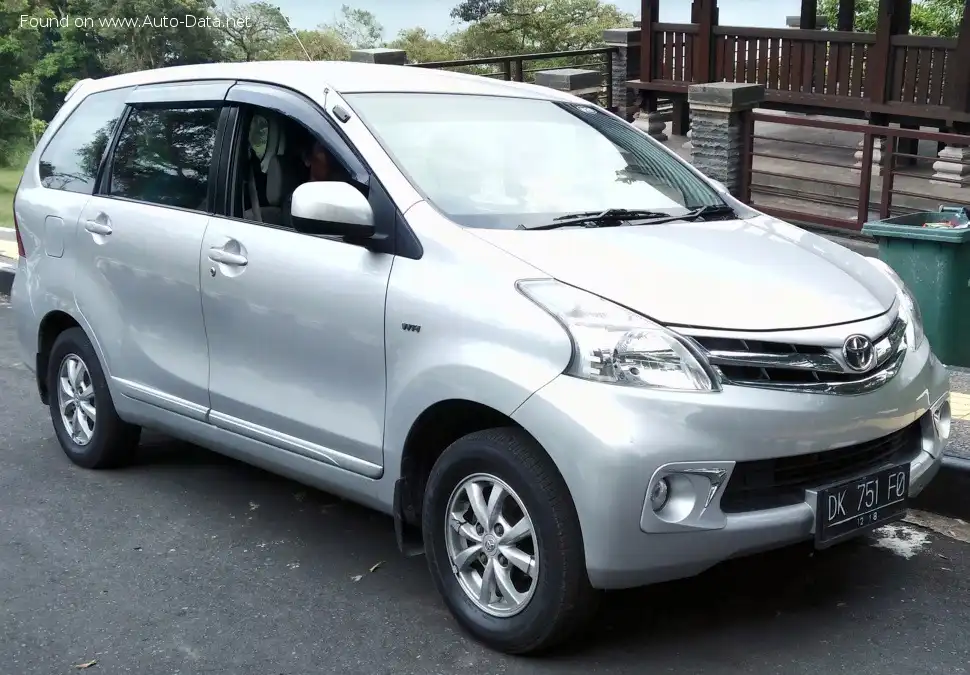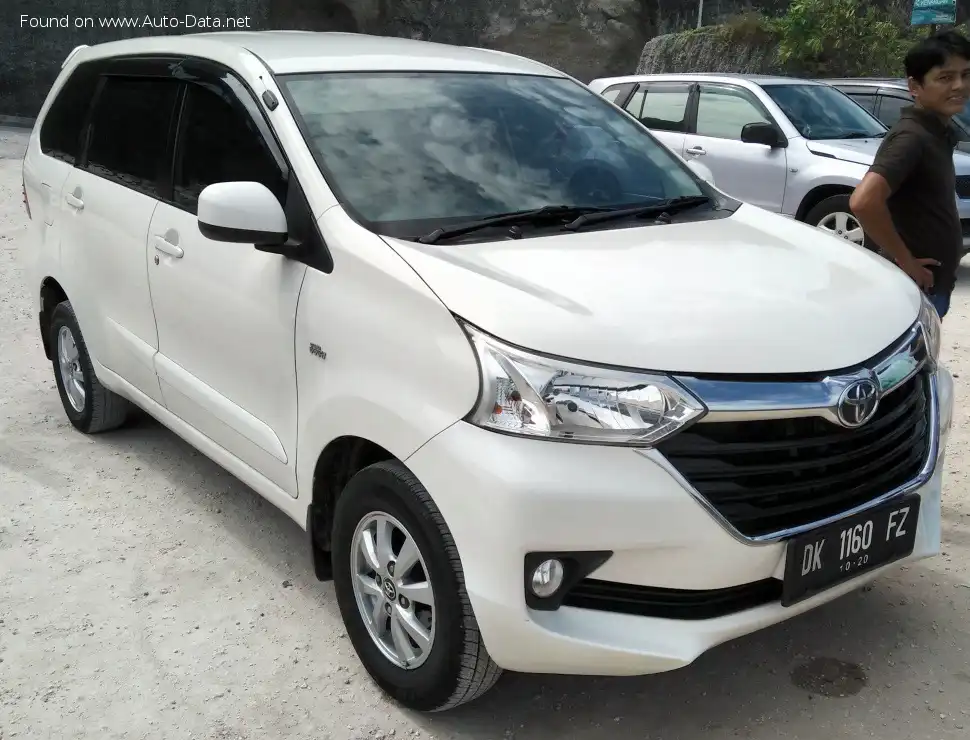
The Toyota Avanza II, specifically the 1.3-liter (97 hp) variant produced from 2015 to 2018, represents a significant iteration of Toyota’s entry-level Multi-Purpose Vehicle (MPV) aimed primarily at the Southeast Asian market. This facelifted version of the second-generation Avanza (introduced in 2006) offered a practical and affordable seven-seater option for families, capitalizing on the growing demand for versatile vehicles in developing economies. Positioned as the base model within the Avanza II range, the 1.3L trim focused on providing essential transportation at a competitive price point, prioritizing fuel efficiency and practicality over outright performance. It served as a stepping stone into the Avanza lineup, with higher trims offering larger engines and additional features.
Technical Specifications
| Brand | Toyota |
| Model | Avanza |
| Generation | Avanza II (facelift 2015) |
| Type (Engine) | 1.3 (97 Hp) |
| Start of production | 2015 |
| End of production | 2018 |
| Powertrain Architecture | Internal Combustion engine |
| Body type | MPV |
| Seats | 7 |
| Doors | 5 |
| Fuel Type | Petrol (Gasoline) |
| Weight-to-power ratio | 11.7 kg/Hp, 85.5 Hp/tonne |
| Weight-to-torque ratio | 9.4 kg/Nm, 106.6 Nm/tonne |
| Power | 97 Hp @ 6000 rpm |
| Power per litre | 73 Hp/l |
| Torque | 121 Nm @ 4200 rpm, 89.25 lb.-ft. @ 4200 rpm |
| Engine layout | Front, Longitudinal |
| Engine Model/Code | 1NR-VE |
| Engine displacement | 1329 cm3, 81.1 cu. in. |
| Number of cylinders | 4 |
| Engine configuration | Inline |
| Number of valves per cylinder | 4 |
| Fuel injection system | Multi-port manifold injection |
| Engine aspiration | Naturally aspirated engine |
| Valvetrain | DOHC, D-VVT-i |
| Engine oil capacity | 3.5 l, 3.7 US qt | 3.08 UK qt |
| Coolant | 5.1 l, 5.39 US qt | 4.49 UK qt |
| Kerb Weight | 1135 kg, 2502.25 lbs |
| Fuel tank capacity | 45 l, 11.89 US gal | 9.9 UK gal |
| Length | 4190 mm, 164.96 in |
| Width | 1660 mm, 65.35 in |
| Height | 1695 mm, 66.73 in |
| Wheelbase | 2655 mm, 104.53 in |
| Front track | 1425 mm, 56.1 in |
| Rear (Back) track | 1435 mm, 56.5 in |
| Minimum turning circle (turning diameter) | 9.4 m, 30.84 ft |
| Drivetrain Architecture | The Internal combustion engine (ICE) drives the rear wheels of the vehicle. |
| Drive wheel | Rear wheel drive |
| Number of gears and type of gearbox | 5 gears, manual transmission |
| Front suspension | Independent, type McPherson with coil spring and anti-roll bar |
| Rear suspension | Independent multi-link spring suspension with stabilizer |
| Front brakes | Ventilated discs |
| Rear brakes | Drum |
| Assisting systems | ABS (Anti-lock braking system) |
| Steering type | Steering rack and pinion |
| Power steering | Electric Steering |
| Tires size | 185/70 R14 |
| Wheel rims size | 14 |
Powertrain & Engine Architecture
The heart of the Avanza II 1.3 is the 1NR-VE engine, a 1.3-liter inline-four cylinder gasoline engine. This engine is part of Toyota’s NR engine family, known for its reliability and fuel efficiency. The 1NR-VE utilizes a multi-port fuel injection system, delivering fuel directly into the intake ports, and features a Double Overhead Camshaft (DOHC) valvetrain with Toyota’s Variable Valve Timing-intelligent (VVT-i) technology. VVT-i optimizes valve timing based on engine speed and load, improving both performance and fuel economy. The engine produces 97 horsepower at 6000 rpm and 121 Nm (89.25 lb-ft) of torque at 4200 rpm. The engine is longitudinally mounted, driving the rear wheels. The transmission is a 5-speed manual, chosen for its simplicity and cost-effectiveness in this entry-level trim.
Driving Characteristics
The 1.3L Avanza, with its modest power output, prioritizes fuel efficiency and ease of driving over sporty performance. Acceleration is adequate for city driving and highway merging requires planning. The 5-speed manual transmission allows for reasonable control over the engine’s power band, but the relatively long gear ratios are geared towards maximizing fuel economy rather than quick acceleration. Compared to the 1.5L variants, the 1.3L feels noticeably less powerful, especially when fully loaded with passengers and cargo. The rear-wheel-drive configuration provides a unique driving experience, offering a different feel compared to front-wheel-drive MPVs. However, it also means a less spacious interior due to the rear axle components.
Equipment & Trim Levels
The 1.3L Avanza typically came with a basic level of equipment. Standard features generally included air conditioning, power steering, and basic audio system. Interior upholstery was typically cloth, and the dashboard featured a functional but simple design. Optional extras, depending on the market, could include power windows, central locking, and upgraded audio systems. Safety features were also basic, typically including ABS (Anti-lock Braking System) and dual front airbags. The trim level focused on providing essential features for a family vehicle at an affordable price.
Chassis & Braking
The Avanza II utilizes a body-on-frame construction, contributing to its durability and ability to handle rough road conditions. The front suspension consists of an independent McPherson strut setup with coil springs and an anti-roll bar, while the rear suspension employs an independent multi-link system with a stabilizer bar. Braking duties are handled by ventilated discs at the front and drum brakes at the rear. The braking system, while adequate for normal driving conditions, is not as powerful as those found in higher-trim Avanza models or other MPVs with all-disc brakes. The rear-wheel-drive layout and relatively simple suspension setup prioritize robustness and affordability over sophisticated handling.
Market Reception & Comparison
The Avanza II 1.3L was generally well-received in its target markets as a practical and affordable MPV. Critics praised its spacious interior, fuel efficiency, and reliability. However, the engine’s lack of power was a common criticism, particularly when the vehicle was fully loaded. Compared to the 1.5L Avanza variants, the 1.3L offered a more economical option, but at the expense of performance. Against competitors like the Mitsubishi Xpander or Honda Mobilio, the Avanza 1.3L often stood out for its lower price point and Toyota’s reputation for reliability. Fuel economy figures typically ranged from 6.2 to 7.0 liters per 100 kilometers (38 to 42 mpg) depending on driving conditions.
Legacy
The Toyota Avanza II 1.3L has proven to be a durable and reliable vehicle, maintaining a strong presence in the used car market. The 1NR-VE engine is known for its longevity and relatively low maintenance costs. Common issues are typically related to wear and tear on suspension components and brake systems, but major engine failures are relatively rare. The Avanza II 1.3L remains a popular choice for budget-conscious buyers seeking a practical and spacious MPV, particularly in regions where affordability and reliability are paramount. Its simple design and robust construction contribute to its continued appeal in the used car market.