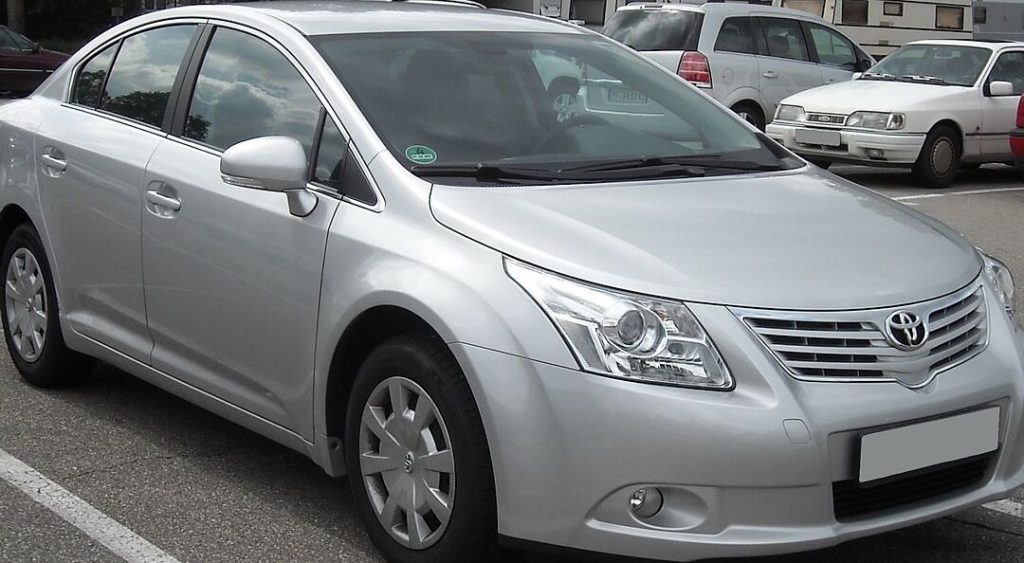
The Toyota Avensis Hatch (T22) 2.0 D-4D, producing 110 horsepower, was a key variant in Toyota’s European lineup from 1999 to 2003. Positioned as a practical and fuel-efficient option, it catered to buyers seeking a comfortable and reliable family hatchback. This model represented Toyota’s continued expansion into the European market, offering a compelling alternative to established European brands. The T22 generation Avensis, available as both a sedan and hatchback, aimed to provide a blend of Japanese reliability with European styling and driving characteristics. This particular 2.0 D-4D engine and transmission combination occupied a mid-range position within the Avensis Hatchback portfolio, offering a balance between performance and economy.
Technical Specifications
| Brand | Toyota |
| Model | Avensis |
| Generation | Avensis Hatch (T22) |
| Type (Engine) | 2.0 D-4D (110 Hp) |
| Start of production | 1999 |
| End of production | 2003 |
| Powertrain Architecture | Internal Combustion engine |
| Body type | Hatchback |
| Seats | 5 |
| Doors | 5 |
| Fuel consumption (urban) | 8.5 l/100 km (27.7 US mpg) |
| Fuel consumption (extra urban) | 5.4 l/100 km (43.6 US mpg) |
| Fuel Type | Diesel |
| Acceleration 0 – 100 km/h | 11.4 sec |
| Acceleration 0 – 62 mph | 11.4 sec |
| Acceleration 0 – 60 mph | 10.8 sec |
| Maximum speed | 195 km/h (121.17 mph) |
| Weight-to-power ratio | 12.4 kg/Hp |
| Weight-to-torque ratio | 5.4 kg/Nm |
| Power | 110 Hp @ 4000 rpm |
| Torque | 250 Nm @ 2000 rpm (184.39 lb.-ft. @ 2000 rpm) |
| Engine layout | Front, Transverse |
| Engine Model/Code | 1CD-FTV |
| Engine displacement | 1995 cm3 (121.74 cu. in.) |
| Number of cylinders | 4 |
| Engine configuration | Inline |
| Cylinder Bore | 82.2 mm (3.24 in.) |
| Piston Stroke | 94 mm (3.7 in.) |
| Compression ratio | 18.6:1 |
| Number of valves per cylinder | 4 |
| Fuel injection system | Diesel Commonrail |
| Engine aspiration | Turbocharger |
| Valvetrain | OHC |
| Engine oil capacity | 6.4 l (6.76 US qt | 5.63 UK qt) |
| Coolant capacity | 6.9 l (7.29 US qt | 6.07 UK qt) |
| Kerb Weight | 1360 kg (2998.29 lbs.) |
| Max. weight | 1830 kg (4034.46 lbs.) |
| Max load | 470 kg (1036.17 lbs.) |
| Trunk (boot) space – minimum | 510 l (18.01 cu. ft.) |
| Fuel tank capacity | 60 l (15.85 US gal | 13.2 UK gal) |
| Length | 4490 mm (176.77 in.) |
| Width | 1710 mm (67.32 in.) |
| Height | 1425 mm (56.1 in.) |
| Wheelbase | 2630 mm (103.54 in.) |
| Front track | 1480 mm (58.27 in.) |
| Rear track | 1450 mm (57.09 in.) |
| Drivetrain Architecture | Front wheel drive |
| Number of gears | 5 |
| Gearbox type | Manual transmission |
| Front suspension | Spring Strut |
| Rear suspension | Coil spring |
| Front brakes | Ventilated discs |
| Rear brakes | Drum |
| Assisting systems | ABS (Anti-lock braking system) |
| Steering type | Steering rack and pinion |
| Power steering | Hydraulic Steering |
| Tires size | 195/60 R15 |
INTRODUCTION
The Toyota Avensis Hatch (T22) 2.0 D-4D 110 hp model, produced between 1999 and 2003, was a significant offering in Toyota’s European range. Built on the T22 platform, it aimed to provide a practical, reliable, and fuel-efficient hatchback option for families and individuals. The 2.0 D-4D engine was a key component of Toyota’s diesel strategy, offering a balance between performance and economy. This variant was designed to appeal to buyers who prioritized fuel efficiency and low running costs without sacrificing too much in terms of driving comfort and practicality. It competed directly with other mainstream European hatchbacks like the Ford Focus, Vauxhall/Opel Astra, and Volkswagen Golf.
Powertrain & Engine Architecture
The heart of this Avensis variant is the 1CD-FTV 2.0-liter inline-four cylinder diesel engine. This engine utilizes a common rail direct injection system, a technology that significantly improved fuel efficiency and reduced emissions compared to older diesel designs. The 1CD-FTV engine is a turbocharged engine, providing increased power output and torque. The turbocharger helps to overcome the inherent limitations of diesel engines, delivering a more responsive driving experience. The engine features an overhead camshaft (OHC) valvetrain, operating four valves per cylinder. The 110 horsepower output is achieved at 4000 rpm, while the peak torque of 250 Nm (184 lb-ft) is available from just 2000 rpm, providing good low-end grunt for everyday driving. The engine is transversely mounted in the front of the vehicle. The transmission is a five-speed manual gearbox, chosen for its efficiency and simplicity.
Driving Characteristics
The 2.0 D-4D 110 hp Avensis Hatchback offered a comfortable and refined driving experience, prioritizing fuel economy over outright performance. Acceleration from 0-60 mph took around 10.8 seconds, and the top speed was approximately 121 mph. While not particularly sporty, the engine provided sufficient power for everyday driving and overtaking maneuvers. The five-speed manual transmission was well-matched to the engine’s characteristics, offering smooth gear changes and a reasonable spread of ratios. Compared to higher-output versions of the Avensis, such as those with more powerful gasoline engines, this variant felt less eager to rev, but it compensated with significantly better fuel economy. The torque-rich diesel engine made it particularly well-suited to carrying passengers and luggage, providing a relaxed and effortless cruising experience.
Equipment & Trim Levels
The 2.0 D-4D variant typically came with a reasonable level of standard equipment. Features included central locking, electric front windows, power steering, and an ABS anti-lock braking system. Interior upholstery was typically cloth, with a functional and durable design. Dashboard configuration was straightforward and user-friendly. Optional extras available for this trim level included air conditioning, alloy wheels, a CD player, and upgraded interior trim. Higher trim levels offered additional features such as automatic climate control, leather upholstery, and a sunroof. The overall focus was on providing a practical and well-equipped vehicle at a competitive price point.
Chassis & Braking
The Avensis Hatchback utilized a front-wheel-drive layout with a MacPherson strut front suspension and a coil spring rear suspension. This suspension setup provided a comfortable ride quality, absorbing bumps and imperfections in the road surface effectively. The front brakes were ventilated discs, offering good stopping power, while the rear brakes were drums. This configuration was typical for vehicles in this weight class during the early 2000s. The steering was a rack and pinion system with hydraulic power assistance, providing precise and responsive steering feel. The chassis was designed to provide a stable and predictable handling experience, prioritizing comfort and safety over sporty handling characteristics.
Market Reception & Comparison
The Toyota Avensis 2.0 D-4D 110 hp received generally positive reviews from automotive critics. It was praised for its fuel efficiency, reliability, and comfortable ride. However, some critics noted that the engine lacked the refinement and performance of some of its competitors. Compared to the gasoline-powered Avensis variants, the 2.0 D-4D offered significantly better fuel economy, making it a popular choice for high-mileage drivers. Compared to other diesel-powered hatchbacks in its class, the Avensis offered a competitive combination of performance, economy, and reliability. The Avensis was often seen as a more sensible and practical alternative to some of the more sporty and stylish hatchbacks on the market.
Legacy
The 1CD-FTV engine, found in this Avensis variant, proved to be a durable and reliable unit. While diesel engines are generally known for their longevity, the 1CD-FTV has a particularly good reputation for reliability. Today, used examples of the Avensis Hatchback 2.0 D-4D are still relatively common, and well-maintained examples can offer a cost-effective and reliable mode of transportation. Common issues are typically related to age and mileage, such as wear and tear on suspension components and potential issues with the turbocharger. However, the engine itself is generally considered to be robust and capable of covering high mileages with proper maintenance. The Avensis Hatchback 2.0 D-4D remains a testament to Toyota’s commitment to building reliable and practical vehicles.