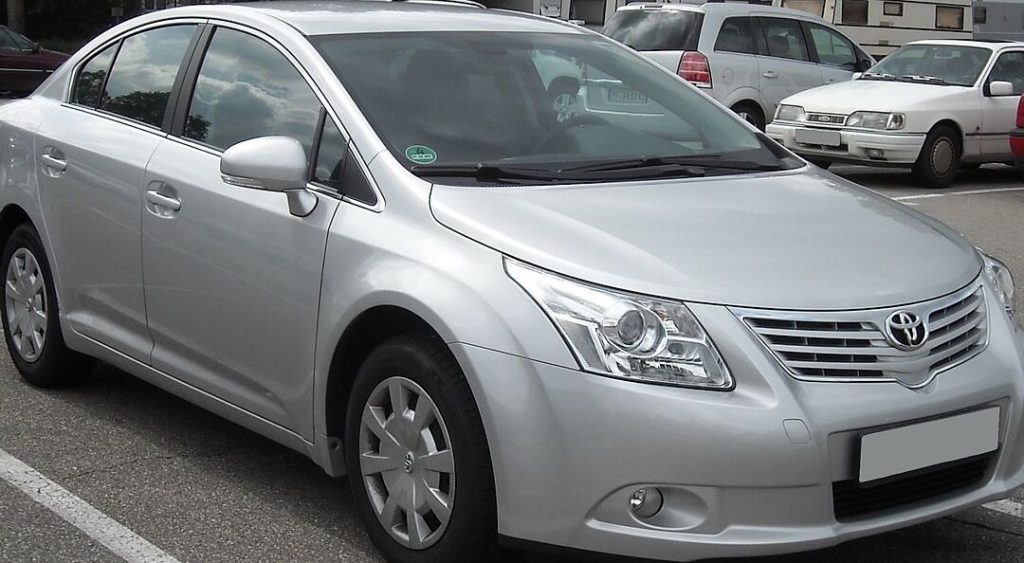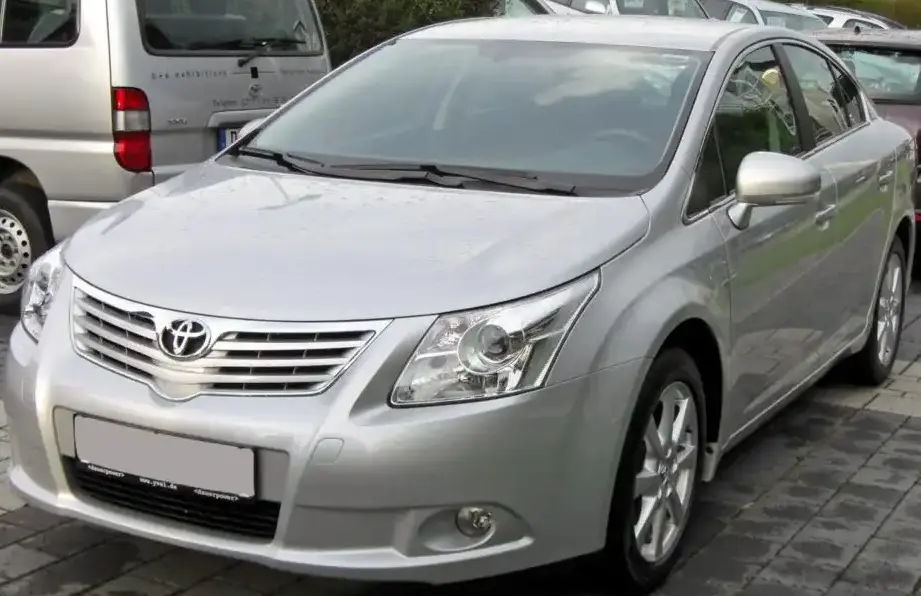
The Toyota Avensis III 2.0 D-4D (126 hp) was a diesel-powered variant of the third-generation Avensis, produced between 2009 and 2011. Positioned as a mid-range offering within the Avensis lineup, it aimed to balance fuel efficiency with reasonable performance for European markets. The Avensis III, built on the Toyota K platform, represented a significant step forward in terms of refinement and technology compared to its predecessors. This particular engine and transmission combination was popular for drivers seeking lower running costs without sacrificing practicality and comfort.
Technical Specifications
| Brand | Toyota |
| Model | Avensis |
| Generation | Avensis III |
| Type (Engine) | 2.0 D-4D (126 Hp) |
| Start of production | 2009 |
| End of production | 2011 |
| Powertrain Architecture | Internal Combustion engine |
| Body type | Sedan |
| Seats | 5 |
| Doors | 4 |
| Fuel consumption (urban) | 6.5-6.6 l/100 km (36.2 – 35.6 US mpg, 43.5 – 42.8 UK mpg, 15.4 – 15.2 km/l) |
| Fuel consumption (extra urban) | 4.2-4.3 l/100 km (56 – 54.7 US mpg, 67.3 – 65.7 UK mpg, 23.8 – 23.3 km/l) |
| Fuel consumption (combined) | 5.1 l/100 km (46.1 US mpg, 55.4 UK mpg, 19.6 km/l) |
| CO2 emissions | 134-135 g/km |
| Fuel Type | Diesel |
| Acceleration 0 – 100 km/h | 9.7 sec |
| Acceleration 0 – 62 mph | 9.7 sec |
| Acceleration 0 – 60 mph | 9.2 sec |
| Maximum speed | 200 km/h (124.27 mph) |
| Emission standard | Euro 5 |
| Weight-to-power ratio | 11.8 kg/Hp, 84.6 Hp/tonne |
| Weight-to-torque ratio | 4.8 kg/Nm, 208.1 Nm/tonne |
| Power | 126 Hp @ 3600 rpm |
| Power per litre | 63.1 Hp/l |
| Torque | 310 Nm @ 1800-2400 rpm (228.64 lb.-ft. @ 1800-2400 rpm) |
| Engine layout | Front, Transverse |
| Engine Model/Code | 1AD-FTV |
| Engine displacement | 1998 cm3 (121.93 cu. in.) |
| Number of cylinders | 4 |
| Engine configuration | Inline |
| Cylinder Bore | 86 mm (3.39 in.) |
| Piston Stroke | 86 mm (3.39 in.) |
| Compression ratio | 15.8:1 |
| Number of valves per cylinder | 4 |
| Fuel injection system | Diesel Commonrail |
| Engine aspiration | Turbocharger, Intercooler |
| Valvetrain | DOHC |
| Engine oil capacity | 5.9 l (6.23 US qt | 5.19 UK qt) |
| Coolant | 7.4 l (7.82 US qt | 6.51 UK qt) |
| Kerb Weight | 1490 kg (3284.89 lbs.) |
| Max. weight | 2100 kg (4629.71 lbs.) |
| Max load | 610 kg (1344.82 lbs.) |
| Trunk (boot) space – minimum | 509 l (17.98 cu. ft.) |
| Fuel tank capacity | 60 l (15.85 US gal | 13.2 UK gal) |
| Permitted trailer load with brakes (12%) | 1600 kg (3527.4 lbs.) |
| Permitted trailer load without brakes | 500 kg (1102.31 lbs.) |
| Length | 4695 mm (184.84 in.) |
| Width | 1810 mm (71.26 in.) |
| Height | 1480 mm (58.27 in.) |
| Wheelbase | 2700 mm (106.3 in.) |
| Front track | 1550-1560 mm (61.02 – 61.42 in.) |
| Rear (Back) track | 1550-1560 mm (61.02 – 61.42 in.) |
| Front overhang | 965 mm (37.99 in.) |
| Rear overhang | 1030 mm (40.55 in.) |
| Drag coefficient (Cd) | 0.28 |
| Minimum turning circle (turning diameter) | 10.8 m (35.43 ft.) |
| Drivetrain Architecture | The Internal combustion engine (ICE) drives the front wheels of the vehicle. |
| Drive wheel | Front wheel drive |
| Number of gears and type of gearbox | 6 gears, manual transmission |
| Front suspension | Independent type McPherson |
| Rear suspension | Double wishbone |
| Front brakes | Ventilated discs, 295×26 mm |
| Rear brakes | Disc, 290×11 mm |
| Assisting systems | ABS (Anti-lock braking system) |
| Steering type | Steering rack and pinion |
| Power steering | Electric Steering |
| Tires size | 205/60 R16; 215/55 R17; 225/45 R18 |
| Wheel rims size | 6.5J x 16; 7J x 17; 7.5J x 18 |
INTRODUCTION
The Toyota Avensis III 2.0 D-4D (126 hp) was a key model in Toyota’s European lineup, designed to appeal to fleet buyers and private customers alike. Introduced in 2009 as part of the Avensis III range (T270 platform), it offered a compelling blend of fuel economy, practicality, and Toyota’s renowned reliability. This variant was particularly popular in countries where diesel engines were favored due to tax incentives and lower fuel costs. The Avensis aimed to compete with established rivals like the Ford Mondeo, Vauxhall/Opel Vectra, and Volkswagen Passat, offering a more refined and dependable alternative.
Powertrain & Engine Architecture
The heart of the Avensis 2.0 D-4D was the 1AD-FTV engine, a 1998cc inline-four cylinder diesel. This engine utilized a common-rail direct injection system, delivering fuel at extremely high pressure for improved combustion efficiency and reduced emissions. A turbocharger with an intercooler further enhanced performance, providing increased power and torque. The engine featured a double overhead camshaft (DOHC) valvetrain with four valves per cylinder, optimizing gas flow. The 1AD-FTV was designed to meet stringent Euro 5 emission standards, incorporating a diesel particulate filter (DPF) to trap soot particles. The engine was transversely mounted in the front of the vehicle. The 6-speed manual transmission was the standard offering, providing smooth gear changes and contributing to the car’s overall efficiency.
Driving Characteristics
The 126 hp output and 310 Nm of torque provided adequate performance for everyday driving. Acceleration from 0-60 mph took around 9.2 seconds, and the car had a top speed of 200 km/h (124 mph). While not a particularly sporty vehicle, the 2.0 D-4D offered sufficient power for overtaking and cruising on motorways. The manual transmission allowed for precise control, but the gear ratios were tuned more for fuel economy than outright acceleration. Compared to higher-powered Avensis variants, such as those with the 2.2 D-CAT engine, the 2.0 D-4D felt less responsive, particularly at higher speeds. However, it offered a more relaxed and economical driving experience, making it ideal for long journeys.
Equipment & Trim Levels
The Avensis 2.0 D-4D typically came with a good level of standard equipment. Base models included air conditioning, electric front windows, a CD player, and ABS brakes. Higher trim levels, such as the T3 or T4, added features like alloy wheels, climate control, a multi-function steering wheel, and upgraded upholstery. Optional extras included satellite navigation, leather seats, and a sunroof. Interior materials were generally of good quality, and the cabin was well-built and comfortable. The dashboard layout was functional and easy to use, with clear instrumentation.
Chassis & Braking
The Avensis III featured independent McPherson strut suspension at the front and a double wishbone suspension at the rear, providing a comfortable and controlled ride. The suspension was tuned to prioritize comfort over sporty handling. Front brakes were ventilated discs, while rear brakes were solid discs. ABS (Anti-lock Braking System) was standard, enhancing safety during emergency braking. The car’s weight of approximately 1490 kg contributed to its stable handling characteristics. Stabilizer bars were fitted to both the front and rear axles to reduce body roll.
Market Reception & Comparison
The Avensis 2.0 D-4D was generally well-received by critics, who praised its fuel efficiency, reliability, and comfortable ride. However, some reviewers noted that the engine lacked the refinement and performance of some of its rivals. Compared to the petrol-powered Avensis variants, the 2.0 D-4D offered significantly better fuel economy, making it a more cost-effective option for high-mileage drivers. Against competitors like the Ford Mondeo and Volkswagen Passat, the Avensis stood out for its dependability and lower running costs, although it may have lacked the same level of driving excitement.
Legacy
The 1AD-FTV engine, while generally reliable, is known to require regular maintenance, particularly regarding the DPF. Proper servicing and the use of high-quality diesel fuel are crucial to prevent issues. Today, the Avensis III 2.0 D-4D can be found on the used car market at affordable prices. It remains a practical and dependable choice for buyers seeking a comfortable and economical family car. Its reputation for reliability continues to make it a popular option, and parts availability is generally good. However, potential buyers should be aware of the potential costs associated with DPF maintenance and ensure that the car has been properly serviced throughout its life.