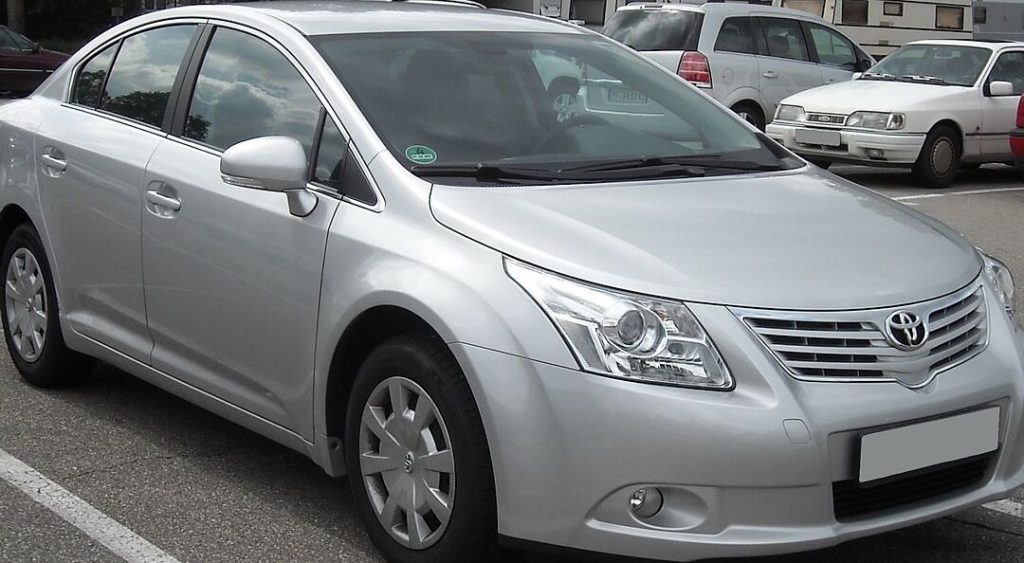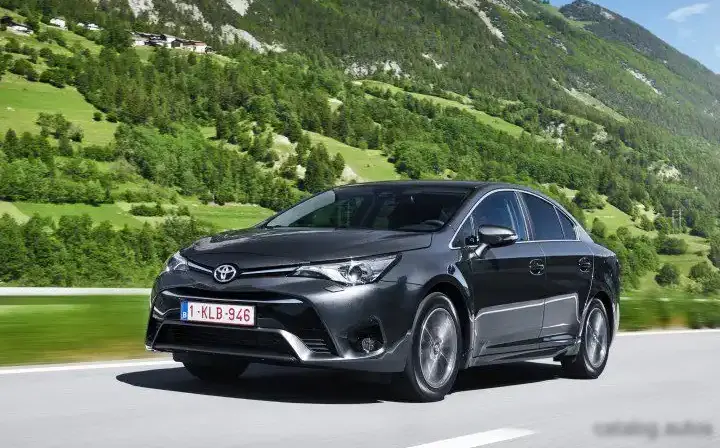
The Toyota Avensis III (facelift, introduced in 2015) 2.0 Valvematic (152 hp) Multidrive S represents a mid-cycle refresh of Toyota’s D-segment offering, aimed primarily at the European market. Positioned as a comfortable and reliable family sedan, this variant occupied a middle ground in the Avensis lineup, offering a balance between performance, fuel efficiency, and affordability. Production of this specific configuration ran from 2015 to 2018, building upon the foundation of the T270 platform (also known as the Avensis III). The Multidrive S transmission, Toyota’s continuously variable transmission (CVT), was a key feature differentiating it from manual transmission options and higher-performance trims.
Technical Specifications
| Brand | Toyota |
| Model | Avensis |
| Generation | Avensis III (facelift 2015) |
| Type (Engine) | 2.0 Valvematic (152 Hp) Multidrive S |
| Start of production | 2015 |
| End of production | 2018 |
| Powertrain Architecture | Internal Combustion engine |
| Body type | Sedan |
| Seats | 5 |
| Doors | 4 |
| Fuel consumption (urban) | 8.4 l/100 km (28 US mpg, 33.6 UK mpg, 11.9 km/l) |
| Fuel consumption (extra urban) | 5 l/100 km (47 US mpg, 56.5 UK mpg, 20 km/l) |
| Fuel consumption (combined) | 6.2 l/100 km (37.9 US mpg, 45.6 UK mpg, 16.1 km/l) |
| CO2 emissions | 144 g/km |
| Fuel Type | Petrol (Gasoline) |
| Acceleration 0 – 100 km/h | 10 sec |
| Acceleration 0 – 62 mph | 10 sec |
| Acceleration 0 – 60 mph | 9.5 sec |
| Maximum speed | 205 km/h (127.38 mph) |
| Emission standard | Euro 6 W |
| Power | 152 Hp @ 6200 rpm |
| Power per litre | 76.5 Hp/l |
| Torque | 196 Nm @ 4000 rpm (144.56 lb.-ft. @ 4000 rpm) |
| Engine layout | Front, Transverse |
| Engine Model/Code | 3ZR-FAE |
| Engine displacement | 1987 cm3 (121.25 cu. in.) |
| Number of cylinders | 4 |
| Engine configuration | Inline |
| Cylinder Bore | 80.5 mm (3.17 in.) |
| Piston Stroke | 97.6 mm (3.84 in.) |
| Compression ratio | 10.5:1 |
| Number of valves per cylinder | 4 |
| Fuel injection system | Multi-port manifold injection |
| Engine aspiration | Naturally aspirated engine |
| Valvetrain | DOHC |
| Engine oil capacity | 4.2 l (4.44 US qt | 3.7 UK qt) |
| Coolant capacity | 6.2 l (6.55 US qt | 5.46 UK qt) |
| Max. weight | 2050 kg (4519.48 lbs.) |
| Trunk (boot) space – minimum | 509 l (17.98 cu. ft.) |
| Trunk (boot) space – maximum | 1609 l (56.82 cu. ft.) |
| Fuel tank capacity | 60 l (15.85 US gal | 13.2 UK gal) |
| Permitted trailer load with brakes (12%) | 1800 kg (3968.32 lbs.) |
| Permitted trailer load without brakes | 500 kg (1102.31 lbs.) |
| Length | 4710 mm (185.43 in.) |
| Width | 1810 mm (71.26 in.) |
| Height | 1480 mm (58.27 in.) |
| Wheelbase | 2700 mm (106.3 in.) |
| Drag coefficient (Cd) | 0.28 |
| Minimum turning circle | 10.8 m (35.43 ft.) |
| Drivetrain Architecture | ICE, Front Wheel Drive |
| Front suspension | Independent, McPherson with coil spring and anti-roll bar |
| Rear suspension | Double wishbone |
| Front brakes | Ventilated discs |
| Rear brakes | Disc |
| Assisting systems | ABS |
| Steering type | Steering rack and pinion |
Powertrain & Engine Architecture
The heart of this Avensis variant is the 3ZR-FAE 2.0-liter inline-four engine. This engine utilizes Toyota’s Valvematic technology, a continuously variable valve lift system. Valvematic allows for precise control of intake valve timing and lift, optimizing engine performance and fuel efficiency across a wider range of engine speeds. Unlike traditional VVT-i systems that primarily adjust valve timing, Valvematic directly alters the valve lift, resulting in improved combustion efficiency and reduced pumping losses. The engine employs multi-port fuel injection and a compression ratio of 10.5:1. Paired with the engine is Toyota’s Multidrive S, a CVT that simulates stepped gear changes for a more conventional driving feel. The Multidrive S features a six-speed ‘manual’ mode, allowing drivers some control over the gear ratios, though it’s primarily designed for smooth, seamless acceleration.
Driving Characteristics
The 152 hp and 196 Nm (144.56 lb-ft) of torque delivered by the 2.0 Valvematic engine, when coupled with the Multidrive S transmission, provides adequate, but not exhilarating, performance. Acceleration from 0-60 mph takes approximately 9.5 seconds, and 0-100 km/h is achieved in 10 seconds. The CVT prioritizes smooth acceleration and fuel economy over outright speed. The simulated gear changes in ‘manual’ mode offer a degree of driver engagement, but the transmission lacks the responsiveness of a traditional automatic or dual-clutch transmission. Compared to the more powerful 2.5-liter engine option available in some Avensis models, this 2.0L variant feels less potent, particularly during overtaking maneuvers. However, it offers significantly better fuel economy and a more relaxed driving experience. Compared to diesel variants, the petrol engine is quieter and smoother, but lacks the low-end torque of the diesel.
Equipment & Trim Levels
The 2.0 Valvematic Multidrive S trim typically included a generous level of standard equipment. Features commonly found in this variant include air conditioning, power windows and mirrors, a touchscreen infotainment system with Bluetooth connectivity, and alloy wheels. Higher trim levels offered upgrades such as leather upholstery, a sunroof, parking sensors, and a more advanced navigation system. Interior upholstery was typically cloth, with options for partial leather. The dashboard layout was functional and well-built, prioritizing ergonomics and ease of use. Safety features such as ABS, traction control, and multiple airbags were standard across the Avensis range.
Chassis & Braking
The Avensis III utilized a McPherson strut front suspension and a double wishbone rear suspension, providing a comfortable and controlled ride. The suspension was tuned for comfort rather than sporty handling. Front brakes were ventilated discs, while rear brakes were solid discs. ABS (Anti-lock Braking System) was standard, enhancing braking performance and stability. Stabilizer bars were fitted to both the front and rear axles to reduce body roll during cornering. The chassis was designed to provide a balance between ride comfort and handling, making it suitable for long-distance cruising and everyday driving.
Market Reception & Comparison
The Avensis III, including the 2.0 Valvematic Multidrive S variant, was generally well-received by automotive critics for its reliability, comfort, and spacious interior. However, it was often criticized for its somewhat bland styling and lack of driving excitement compared to rivals like the Ford Mondeo and Volkswagen Passat. The Multidrive S transmission was praised for its smoothness and fuel efficiency, but some reviewers found it lacking in responsiveness. Fuel economy figures of around 37.9 US mpg (combined) were competitive for its class. Reliability was a key strength of the Avensis, with owners reporting few major issues. Compared to the diesel variants, the petrol engine offered lower maintenance costs and a quieter driving experience, but at the expense of fuel economy and low-end torque.
Legacy
The Toyota Avensis III 2.0 Valvematic Multidrive S has proven to be a reliable and durable vehicle, maintaining a good reputation in the used car market. The 3ZR-FAE engine, while not known for exceptional performance, is generally considered to be a robust and long-lasting unit. The Multidrive S transmission, if properly maintained (regular fluid changes are crucial), can provide years of trouble-free operation. Today, these Avensis models represent a sensible and affordable option for buyers seeking a comfortable, reliable, and fuel-efficient family sedan. Parts availability remains good, and maintenance costs are relatively low, making it a practical choice for budget-conscious buyers.