The Toyota Corolla X (E140, E150): A Global Compact Standard
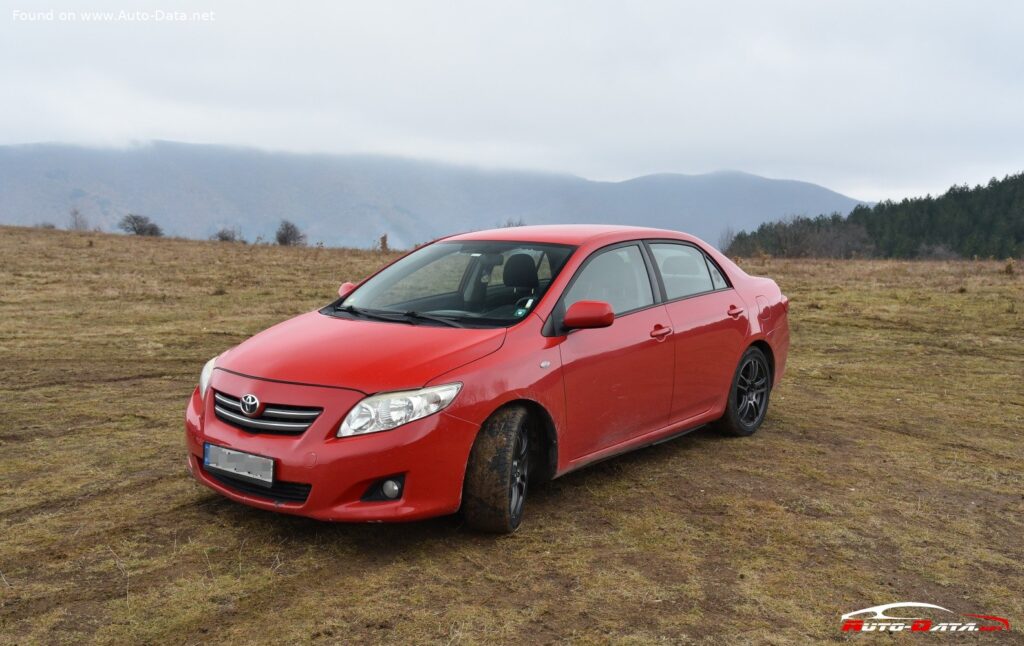
The Toyota Corolla X, spanning the E140 and E150 chassis codes, represents the tenth generation of one of the world’s most enduring and best-selling automotive nameplates. Produced from 2006 to 2012, this iteration continued the Corolla’s legacy of reliability, practicality, and efficiency. While the Corolla is a ubiquitous presence in the United States, often seen with gasoline powertrains, the Toyota Corolla X (E140, E150) with the 1.4 D-4D (90 Hp) engine was specifically tailored for international markets, particularly in Europe and Asia, where diesel engines held a significant market share due to their superior fuel economy and torque characteristics. This variant positioned the Corolla as a highly economical and dependable compact sedan, adhering to the stringent Euro 4 emissions standards of its time.
Designed as a four-door sedan with seating for five, this generation of the Corolla aimed to provide comfortable and straightforward transportation. Its introduction marked a period when compact cars were increasingly expected to offer a blend of comfort, safety, and modern features, even in more utilitarian diesel configurations. The 1.4 D-4D model, in particular, emphasized low running costs and a smooth, if not overtly powerful, driving experience, making it a popular choice for families and fleet operators alike in its target markets.
Powertrain and Efficiency
At the heart of this specific Toyota Corolla X (E140, E150) variant is the 1ND-TV 1.4-liter D-4D diesel engine. This inline four-cylinder unit, with an engine displacement of 1364 cm³ (83.24 cu. in.), was engineered for impressive fuel efficiency. It produced a modest yet effective 90 horsepower at 3800 rpm, paired with a robust 140.14 lb.-ft. of torque available across a wide band from 1800 to 3000 rpm. This torque delivery was crucial for everyday driving, providing sufficient pulling power for city traffic and highway cruising, especially considering the vehicle’s compact dimensions and curb weight of 2899.08 lbs.
The engine’s design incorporated a common rail direct fuel injection system, a turbocharger, and an intercooler, all contributing to its efficient combustion and power delivery. With two valves per cylinder and an OHC (Overhead Camshaft) valvetrain, the engine was designed for durability and ease of maintenance, hallmarks of Toyota engineering. Power was routed to the front wheels via a 5-speed manual transmission, a setup that maximized driver engagement and allowed for precise control over fuel consumption.
Performance figures for the 1.4 D-4D Corolla X were respectable for an economy-focused diesel sedan. It could accelerate from 0 to 60 mph in a calculated 11.4 seconds and reach a maximum speed of 108.74 mph. However, its true strength lay in its fuel economy. The combined cycle consumption was an outstanding 48 US mpg (4.9 l/100 km), with extra-urban figures reaching an even more impressive 52.3 US mpg (4.5 l/100 km). These figures, combined with a 14.53 US gallon fuel tank, provided an excellent cruising range, a significant advantage for long-distance drivers in Europe and other regions.
Design Philosophy and Interior Comfort
The Toyota Corolla X (E140, E150) maintained the brand’s reputation for understated, functional design. Its sedan body type, measuring 178.74 inches in length, 69.29 inches in width, and 57.87 inches in height, presented a clean and aerodynamic profile. The design prioritized interior space and practicality over aggressive styling, appealing to a broad demographic looking for a reliable family car or a comfortable daily driver. The 102.36-inch wheelbase contributed to a stable ride and a surprisingly roomy cabin for its class.
Inside, the Corolla offered a straightforward and ergonomic layout. The five-seat configuration provided adequate comfort for occupants, with durable materials chosen to withstand years of use. Trunk space was a generous 15.89 cu. ft. (450 liters), making it suitable for family trips or substantial grocery runs. Features like electric power steering made maneuvering easy, especially in urban environments, with a minimum turning circle of 34.12 feet. For its era, the Corolla X also incorporated essential safety features, most notably an Anti-lock Braking System (ABS), which was becoming standard across the industry.
The suspension setup comprised a spring strut system at the front and a torsion beam at the rear. This combination, while not geared for sporty driving, offered a comfortable and compliant ride, absorbing road imperfections effectively. Braking duties were handled by ventilated discs at the front and solid discs at the rear, providing reliable stopping power. Tire options included 195/65 R15 or 205/55 R16, mounted on 15 or 16-inch wheel rims, offering a balance between grip, ride comfort, and replacement cost.
Technical Specifications Overview
| Category | Specification | Value |
|---|---|---|
| General Information | Brand | Toyota |
| Model | Corolla | |
| Generation | Corolla X (E140, E150) | |
| Type (Engine) | 1.4 D-4D (90 Hp) | |
| Start of production | 2006 year | |
| End of production | 2012 year | |
| Powertrain Architecture | Internal Combustion engine | |
| Body type | Sedan | |
| Seats | 5 | |
| Doors | 4 | |
| Performance Specs | Fuel consumption (economy) – urban | 5.8 l/100 km (40.6 US mpg) |
| Fuel consumption (economy) – extra urban | 4.5 l/100 km (52.3 US mpg) | |
| Fuel consumption (economy) – combined | 4.9 l/100 km (48 US mpg) | |
| Fuel Type | Diesel | |
| Acceleration 0 – 60 mph | 11.4 sec | |
| Maximum speed | 175 km/h (108.74 mph) | |
| Emission standard | Euro 4 | |
| Weight-to-power ratio | 14.6 kg/Hp (68.4 Hp/tonne) | |
| Weight-to-torque ratio | 6.9 kg/Nm (144.5 Nm/tonne) | |
| Engine Specs | Power | 90 Hp @ 3800 rpm. |
| Power per liter | 66 Hp/l | |
| Torque | 190 Nm (140.14 lb.-ft.) @ 1800-3000 rpm. | |
| Engine layout | Front, Transverse | |
| Engine Model/Code | 1ND-TV | |
| Engine displacement | 1364 cm³ (1.4 liters / 83.24 cu. in.) | |
| Number of cylinders | 4 | |
| Engine configuration | Inline | |
| Cylinder Bore | 73 mm (2.87 in.) | |
| Piston Stroke | 81.5 mm (3.21 in.) | |
| Compression ratio | 17.9:1 | |
| Number of valves per cylinder | 2 | |
| Fuel injection system | Diesel Commonrail | |
| Engine aspiration | Turbocharger, Intercooler | |
| Valvetrain | OHC | |
| Engine oil capacity | 3.9 l (4.12 US qt) | |
| Engine oil specification | Not specified | |
| Coolant | 5.6 l (5.92 US qt) | |
| Space, Volume and Weights | Kerb Weight | 1315 kg (2899.08 lbs.) |
| Max. weight | 1780 kg (3924.23 lbs.) | |
| Max load | 465 kg (1025.15 lbs.) | |
| Trunk (boot) space – minimum | 450 l (15.89 cu. ft.) | |
| Fuel tank capacity | 55 l (14.53 US gal) | |
| Dimensions | Length | 4540 mm (178.74 in.) |
| Width | 1760 mm (69.29 in.) | |
| Height | 1470 mm (57.87 in.) | |
| Wheelbase | 2600 mm (102.36 in.) | |
| Front track | 1525 mm (60.04 in.) | |
| Rear (Back) track | 1520 mm (59.84 in.) | |
| Minimum turning circle (turning diameter) | 10.4 m (34.12 ft.) | |
| Drivetrain, Brakes and Suspension Specs | Drivetrain Architecture | Front wheel drive, Internal Combustion engine |
| Drive wheel | Front wheel drive | |
| Number of gears and type of gearbox | 5 gears, manual transmission | |
| Front suspension | Spring Strut | |
| Rear suspension | Torsion | |
| Front brakes | Ventilated discs | |
| Rear brakes | Disc | |
| Assisting systems | ABS (Anti-lock braking system) | |
| Steering type | Steering rack and pinion | |
| Power steering | Electric Steering | |
| Tires size | 195/65 R15; 205/55 R16 | |
| Wheel rims size | 15; 16 |
Legacy and Market Positioning
The Toyota Corolla X (E140, E150) 1.4 D-4D (90 Hp) carved out a significant niche in markets where fuel efficiency and low operating costs were paramount. In Europe, it competed against a strong field of compact sedans and hatchbacks, including the Volkswagen Jetta (or Golf with sedan variants), Ford Focus sedan, Honda Civic sedan, and Opel Astra sedan. While many of these rivals offered more powerful or dynamically engaging options, the Corolla consistently stood out for its legendary reliability and bulletproof engineering, often leading to lower long-term ownership costs.
This diesel variant underscored Toyota’s commitment to offering diverse powertrain options to cater to specific regional demands. Unlike the US market, where the Corolla was almost exclusively sold with gasoline engines and diesel passenger cars faced an uphill battle against perception and stricter emissions regulations, the 1.4 D-4D was a sensible and highly popular choice in its intended markets. It was often favored by individuals and businesses looking for a dependable workhorse or a no-frills family car that simply got the job done with minimal fuss and maximum economy.
The E140/E150 generation continued the Corolla’s tradition of being a global benchmark for compact vehicles. Its impact was less about groundbreaking innovation and more about refining an already successful formula. It reinforced the Corolla’s reputation as a vehicle that could be trusted implicitly, capable of racking up hundreds of thousands of miles with proper maintenance. The 1.4 D-4D model, in particular, solidified this image by demonstrating that even with a smaller diesel engine, the Corolla could deliver a compelling package of efficiency, practicality, and the unwavering dependability that Toyota is globally renowned for.