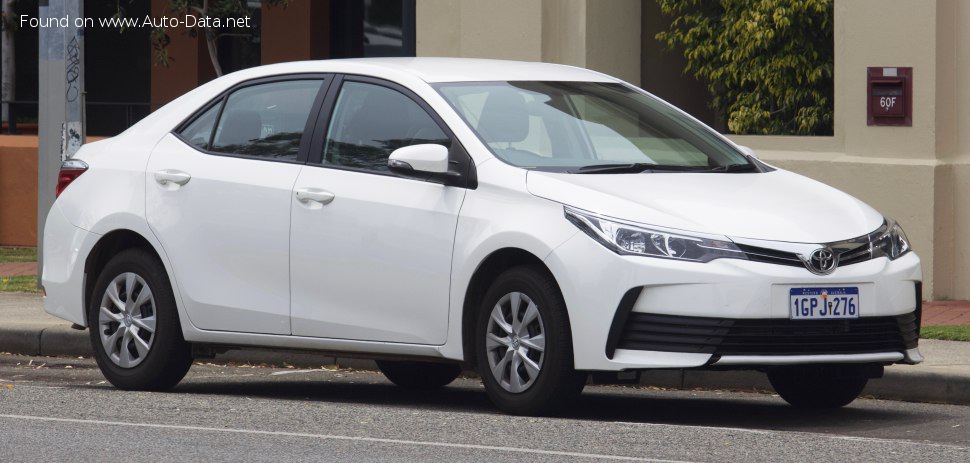
Introduction to the Toyota Corolla XI (E170, facelift 2016) 1.6 Valvematic
The Toyota Corolla stands as one of the most iconic and best-selling automotive nameplates in history, renowned globally for its unwavering reliability, practicality, and value. The eleventh generation, designated E170, continued this illustrious legacy, building upon decades of incremental refinement. Introduced in 2013, the E170 generation received a significant refresh in 2016, modernizing its aesthetics and enhancing its technological offerings. Among the various powertrain options available in different international markets, the Toyota Corolla XI (E170, facelift 2016) 1.6 Valvematic (132 Hp) variant represented a popular choice, particularly in European and Asian markets where its blend of efficiency and performance resonated with a broad customer base. While the North American market received a slightly different design and engine lineup for its E170 Corolla, this 1.6-liter Valvematic model exemplified Toyota’s commitment to delivering a robust, economical, and comfortable compact sedan for a diverse global audience.
This particular iteration of the Corolla sedan, produced from 2016 to 2018, embodied the core tenets of the Corolla brand: a dependable internal combustion engine architecture, a practical four-door, five-seat sedan body type, and a focus on everyday usability. The 2016 facelift brought a sharper, more contemporary exterior design and subtle interior upgrades, ensuring the Corolla remained competitive in the fiercely contested compact segment.
Engine and Performance: The 1.6-liter Valvematic Heart of the Toyota Corolla XI (E170, facelift 2016)
At the core of the Toyota Corolla XI (E170, facelift 2016) 1.6 Valvematic (132 Hp) lies Toyota’s well-regarded 1ZR-FAE engine. This naturally aspirated, inline four-cylinder gasoline (petrol) engine features a displacement of 1598 cubic centimeters (approximately 1.6 liters or 97.52 cubic inches). What sets this engine apart is Toyota’s innovative Valvematic system, an advanced variable valve lift technology that works in conjunction with variable valve timing (VVT-i) to precisely control the amount of air entering the cylinders. This sophisticated valvetrain, a DOHC (Double Overhead Camshaft) setup, allows for optimized engine breathing across the entire RPM range, contributing to both improved fuel efficiency and enhanced power delivery.
The 1ZR-FAE engine generates a respectable 132 horsepower at 6400 RPM, translating to a power-per-liter output of 82.6 horsepower. Torque peaks at 118.01 pound-feet (160 Nm) at 4400 RPM, providing ample thrust for daily driving scenarios. Mated to a standard six-speed manual transmission, this powertrain delivers power to the front wheels, offering an engaging driving experience for those who prefer manual control. The acceleration from 0 to 60 mph is achieved in a sprightly 9.5 seconds, while the vehicle can reach a maximum speed of 124.27 mph (200 km/h).
Fuel efficiency was a significant highlight for this model, reflecting Toyota’s engineering prowess. The combined fuel economy is rated at an impressive 39.2 US miles per gallon (6 liters per 100 km), with extra-urban driving yielding up to 48 US miles per gallon (4.9 liters per 100 km). Even in urban settings, the Corolla managed 29.4 US miles per gallon (8 liters per 100 km). These figures, combined with CO2 emissions of 139 g/km, allowed the vehicle to meet the stringent Euro 6 emission standards, underscoring its environmental consciousness for its era. The engine’s multi-port manifold injection system and a compression ratio of 10.7:1 further contributed to its efficient combustion.
Design and Features: Practicality Meets Modernity
The 2016 facelift of the Toyota Corolla XI (E170) introduced a more dynamic and refined aesthetic. The sedan body type, with its four doors and comfortable seating for five occupants, remained the cornerstone of its design, emphasizing practicality and family-friendliness. The exterior received a refreshed front fascia, including a redesigned grille, headlights with integrated LED daytime running lights, and a restyled bumper, lending it a sharper and more sophisticated presence on the road. The rear also saw updates to the taillights and bumper, creating a cohesive and modern look.
Dimensionally, the Corolla measured 181.89 inches (4620 mm) in length, 69.88 inches (1775 mm) in width, and 57.68 inches (1465 mm) in height, with a generous wheelbase of 106.3 inches (2700 mm). This substantial wheelbase contributed to a spacious interior, particularly for rear-seat passengers, a key selling point in the compact sedan segment. The vehicle’s aerodynamic profile was enhanced with a drag coefficient (Cd) of 0.27, aiding both fuel economy and reducing wind noise at higher speeds.
Inside, the Toyota Corolla XI (E170, facelift 2016) 1.6 Valvematic (132 Hp) offered a well-appointed and ergonomically designed cabin. While specific trim levels varied by market, typical features included a modern infotainment system (often with a touchscreen display), automatic climate control, and a multi-function steering wheel. Safety was a paramount concern for Toyota, and this Corolla came equipped with essential assisting systems like ABS (Anti-lock Braking System) as standard. Depending on the market and trim, it could also feature multiple airbags, electronic stability control, and traction control, providing a comprehensive safety package for occupants. The trunk offered a practical 15.96 cubic feet (452 liters) of cargo space, making it suitable for family trips or daily errands. The chassis featured an independent MacPherson strut front suspension and a semi-independent coil spring rear suspension, tuned to provide a comfortable ride while maintaining predictable handling characteristics. Ventilated disc brakes up front and solid discs at the rear ensured confident stopping power.
Technical Specifications
| Category | Specification |
|---|---|
| General Information | |
| Brand | Toyota |
| Model | Corolla |
| Generation | Corolla XI (E170, facelift 2016) |
| Type (Engine) | 1.6 Valvematic (132 Hp) |
| Start of Production | 2016 year |
| End of Production | 2018 year |
| Powertrain Architecture | Internal Combustion engine |
| Body Type | Sedan |
| Seats | 5 |
| Doors | 4 |
| Performance Specs | |
| Fuel Consumption (Economy) – Urban | 8 l/100 km (29.4 US mpg) |
| Fuel Consumption (Economy) – Extra Urban | 4.9 l/100 km (48 US mpg) |
| Fuel Consumption (Economy) – Combined | 6 l/100 km (39.2 US mpg) |
| CO2 Emissions | 139 g/km |
| Fuel Type | Petrol (Gasoline) |
| Acceleration 0 – 60 mph (Calculated) | 9.5 sec |
| Acceleration 0 – 100 km/h | 10 sec |
| Maximum Speed | 124.27 mph (200 km/h) |
| Emission Standard | Euro 6 w |
| Weight-to-Power Ratio | 8.5 kg/Hp, 117.9 Hp/tonne |
| Weight-to-Torque Ratio | 7 kg/Nm, 142.9 Nm/tonne |
| Engine Specs | |
| Power | 132 Hp @ 6400 rpm |
| Power per Liter | 82.6 Hp/l |
| Torque | 118.01 lb.-ft. (160 Nm) @ 4400 rpm |
| Engine Layout | Front, Transverse |
| Engine Model/Code | 1ZR-FAE |
| Engine Displacement | 1598 cm3 (97.52 cu. in.) |
| Number of Cylinders | 4 |
| Engine Configuration | Inline |
| Compression Ratio | 10.7:1 |
| Number of Valves per Cylinder | 4 |
| Fuel Injection System | Multi-port manifold injection |
| Engine Aspiration | Naturally aspirated engine |
| Valvetrain | DOHC – Valvematic |
| Engine Oil Capacity | 4.2 l (4.44 US qt) |
| Coolant Capacity | 5.6 l (5.92 US qt) |
| Space, Volume and Weights | |
| Kerb Weight | 2469.18 – 2733.73 lbs. (1120-1240 kg) |
| Max. Weight | 3913.21 lbs. (1775 kg) |
| Max Load | 1179.47 – 1444.03 lbs. (535-655 kg) |
| Trunk (Boot) Space – Minimum | 15.96 cu. ft. (452 l) |
| Fuel Tank Capacity | 14.53 US gal (55 l) |
| Permitted Trailer Load with Brakes (12%) | 2866.01 lbs. (1300 kg) |
| Permitted Trailer Load without Brakes | 992.08 lbs. (450 kg) |
| Permitted Towbar Download | 121.25 lbs. (55 kg) |
| Dimensions | |
| Length | 181.89 in. (4620 mm) |
| Width | 69.88 in. (1775 mm) |
| Height | 57.68 in. (1465 mm) |
| Wheelbase | 106.3 in. (2700 mm) |
| Front Track | 60.04 in. (1525 mm) |
| Rear (Back) Track | 59.84 in. (1520 mm) |
| Ride Height (Ground Clearance) | 4.92 in. (125 mm) |
| Drag Coefficient (Cd) | 0.27 |
| Minimum Turning Circle (Turning Diameter) | 35.43 ft. (10.8 m) |
| Drivetrain, Brakes and Suspension Specs | |
| Drivetrain Architecture | The Internal combustion engine (ICE) drives the front wheels of the vehicle. |
| Drive Wheel | Front wheel drive |
| Number of Gears and Type of Gearbox | 6 gears, manual transmission |
| Front Suspension | Independent, type McPherson with coil spring and anti-roll bar |
| Rear Suspension | Semi-independent, coil spring |
| Front Brakes | Ventilated discs |
| Rear Brakes | Disc |
| Assisting Systems | ABS (Anti-lock braking system) |
| Steering Type | Steering rack and pinion |
| Tires Size | 205/55 R16 |
| Wheel Rims Size | 6.5J x16 |
Legacy and Market Impact of the Toyota Corolla XI (E170, facelift 2016)
The Toyota Corolla, in all its generations and variants, has consistently set benchmarks for reliability, affordability, and widespread appeal. The Toyota Corolla XI (E170, facelift 2016) 1.6 Valvematic (132 Hp) was no exception, playing a crucial role in maintaining the Corolla’s dominance in various international markets. While the North American market primarily received a 1.8-liter engine for the E170, this 1.6-liter Valvematic variant was strategically important for regions like Europe, parts of Asia, and Australia, where its specific balance of displacement, power, and efficiency was highly valued due to different tax structures, fuel prices, and consumer preferences.
In these markets, the Corolla faced stiff competition from formidable rivals such as the Honda Civic, Volkswagen Jetta (known as Vento in some markets), Ford Focus, Hyundai Elantra, and Kia Forte (Cerato). Despite the intense rivalry, the Corolla consistently stood out due to its legendary reputation for trouble-free ownership and robust build quality. Owners often lauded its low running costs, excellent resale value, and comfortable, no-nonsense driving experience. The 2016 facelift helped it stay fresh against newer competitors, offering updated styling and technology without straying from its core values.
The 1.6 Valvematic engine, in particular, was praised for its smooth operation and impressive fuel economy, making it an ideal choice for both city commuting and longer highway journeys. Its Euro 6 compliance demonstrated Toyota’s commitment to reducing emissions, aligning with growing environmental concerns in European markets. The combination of a capable engine, a practical sedan body, and Toyota’s renowned manufacturing excellence ensured that this specific Corolla variant contributed significantly to the model’s continued global sales success during its production run from 2016 to 2018. It solidified the Corolla’s position not just as a car, but as a global transportation solution, embodying reliability and efficiency for millions of drivers worldwide. Its legacy is one of consistent performance and enduring trust, cementing its place as a true automotive icon.