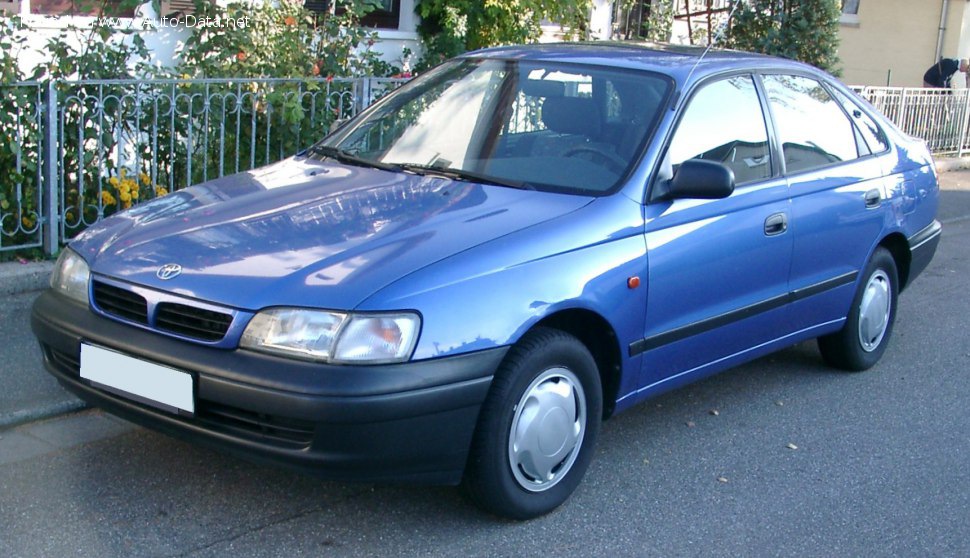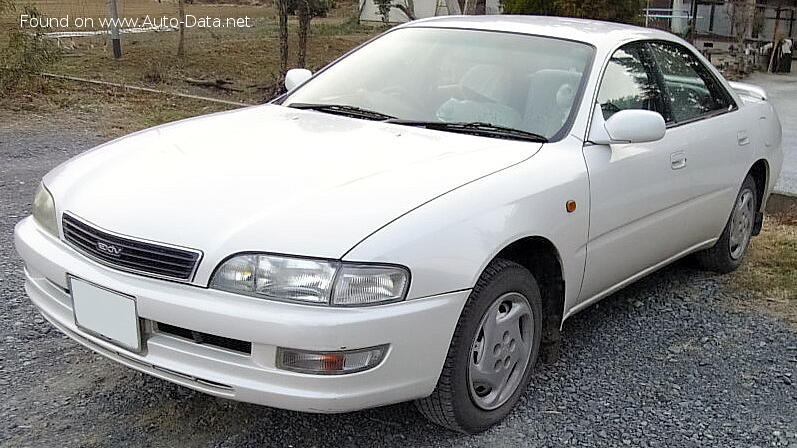
Introduction to the Toyota Corona EXiV 1.8i (125 Hp)
The Toyota Corona EXiV 1.8i (125 Hp) represents a fascinating chapter in Toyota’s history, particularly within the Japanese Domestic Market (JDM) of the 1990s. Produced from 1993 to 1998, the Corona EXiV was not merely another variant of the long-running Toyota Corona; it was a distinct, sportier, and more stylish interpretation aimed at a discerning clientele seeking a blend of practicality and panache. Positioned as a “personal luxury” or “hardtop” sedan, the EXiV (derived from “Extra Impressive View”) distinguished itself with a sleek, four-door coupe-like body devoid of traditional B-pillars (a design characteristic often referred to as a “pillarless hardtop” in Japan), offering an expansive, unobstructed view when all windows were lowered. This particular variant, equipped with the 1.8-liter 4S-FE engine delivering 125 horsepower, served as a highly efficient and capable entry point into the EXiV lineup, balancing performance with Toyota’s legendary reliability and fuel economy. While never officially imported into the United States, the Corona EXiV played a significant role in Toyota’s strategy to cater to diverse tastes in its home market, offering a more emotionally resonant alternative to the conventional sedan.
Engine and Performance: The Heart of the Toyota Corona EXiV
Under the hood of the Toyota Corona EXiV 1.8i lay the robust and well-regarded 4S-FE inline-four engine. This powerplant featured a 1.8-liter (specifically, 1794 cm³ or 109.48 cubic inches) displacement, meticulously engineered for a balance of smooth operation, respectable power output, and exceptional fuel efficiency. With a dual overhead camshaft (DOHC) valvetrain and four valves per cylinder, the 4S-FE was quite advanced for its time, ensuring efficient air intake and exhaust scavenging.
The engine produced a healthy 125 horsepower at 6000 rpm, a commendable figure for a naturally aspirated 1.8-liter unit in the mid-1990s. Torque delivery was equally impressive, peaking at 161 Nm (118.75 lb.-ft.) at a relatively accessible 4200 rpm. This torque characteristic, combined with the engine’s naturally aspirated nature, provided a linear and predictable power band, making the EXiV a pleasant car for daily driving as well as more spirited excursions. Fueling was managed by a multi-port manifold injection system, ensuring precise fuel delivery and optimal combustion efficiency.
Power was transmitted to the front wheels via a crisp and engaging 5-speed manual transmission, offering drivers a direct connection to the car’s mechanics. This drivetrain architecture, coupled with the engine’s transverse front-engine layout, contributed to efficient packaging and predictable handling dynamics. The EXiV demonstrated excellent fuel economy for its class, with an urban consumption rating of 8.1 liters per 100 km (approximately 29 US mpg) and an even more impressive extra-urban figure of 4.3 liters per 100 km (around 54.7 US mpg). These figures underscored Toyota’s commitment to efficiency without compromising on drivability. The car’s curb weight of 2557.36 lbs (1160 kg) resulted in a favorable weight-to-power ratio of 9.3 kg/Hp (107.8 Hp/tonne), indicating a lively performance despite its economical aspirations.
Design and Features of the Toyota Corona EXiV
The design of the Toyota Corona EXiV was its most distinguishing characteristic. Departing from the more conservative styling of the standard Corona sedan, the EXiV adopted a sleek