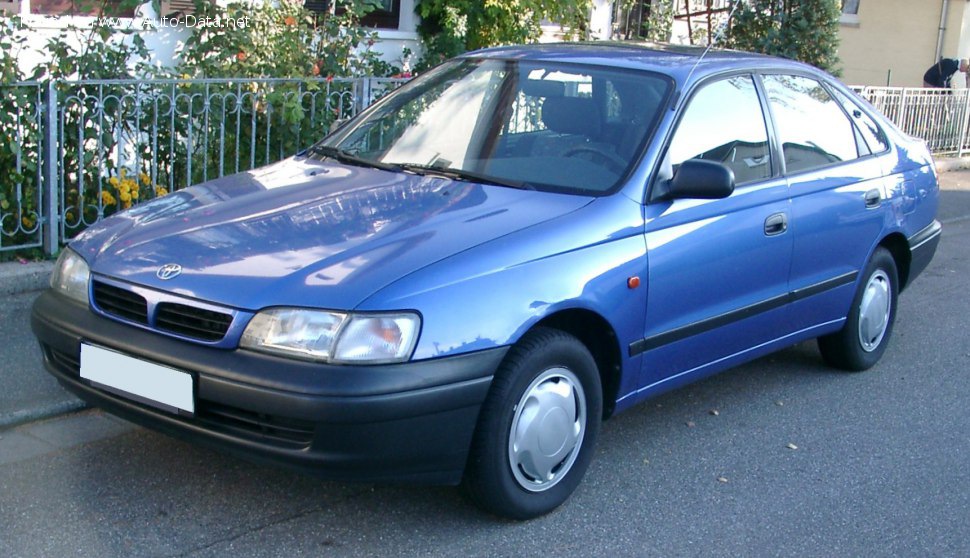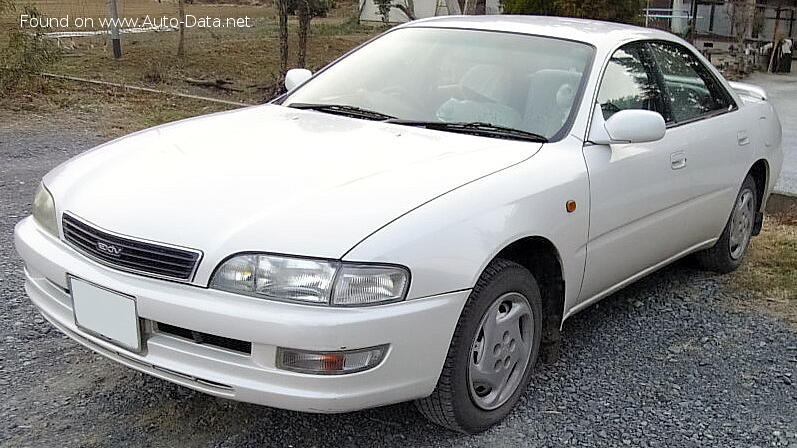
The Toyota Corona EXiV 2.0i (140 Hp): A Japanese Domestic Market Gem (1993-1998)
The Toyota Corona EXiV 2.0i (140 Hp), produced from 1993 to 1998, represents a distinctive chapter in Toyota’s extensive history, particularly within the Japanese Domestic Market (JDM). This four-door sedan was not merely another variant of the ubiquitous Corona; it was conceived as a more stylish, sportier, and “personal luxury” offering, designed to appeal to buyers seeking a blend of practicality and panache. Sharing its platform with the Toyota Carina ED and the sportier Celica, the Corona EXiV positioned itself as an elegant alternative to conventional sedans, characterized by its sleek, low-slung profile and often featuring frameless windows that gave it a coupe-like hardtop aesthetic.
The 1993-1998 generation of the Corona EXiV, often referred to as the second generation (ST200 series), continued to refine this formula. The 2.0i (140 Hp) variant, powered by the robust 3S-FE engine, was a popular choice, offering a compelling balance of performance, fuel efficiency, and Toyota’s renowned reliability. While never officially sold in the United States, the Corona EXiV played a significant role in Toyota’s diverse JDM lineup, showcasing the brand’s ability to cater to nuanced market segments with unique and appealing vehicles. It stood as a testament to the era’s automotive trends in Japan, where design individuality and refined driving dynamics were highly valued.
The Toyota Corona EXiV: A JDM Style Statement
Design Philosophy and Market Positioning for the Toyota Corona EXiV
The design philosophy behind the Toyota Corona EXiV was clear: to create a sedan that broke away from the traditional, somewhat conservative mold of its namesake, the Corona. This was a car for those who appreciated a sportier aesthetic without sacrificing the practicality of four doors. The EXiV’s distinctive silhouette featured a lower roofline, a wider stance, and a more aggressive front fascia compared to the standard Corona. A key design element that defined the EXiV, and many of its JDM contemporaries like the Carina ED and Nissan Presea, was the “pillarless hardtop” construction. While the B-pillar was structurally present, the frameless door windows created an illusion of an uninterrupted glass expanse when all windows were down, mimicking the elegance of a two-door coupe. This feature was a hallmark of Japanese personal luxury sedans of the late 1980s and 1990s, offering a sense of openness and sophistication.
In the highly competitive Japanese market, the Corona EXiV was strategically positioned. It was designed to capture the attention of younger, more style-conscious buyers, or those who desired a more executive-class feel in a compact-to-mid-size package. Its competitors included other JDM-exclusive models such as the Honda Ascot, Nissan Presea, and Mazda Lantis sedan, all vying for a slice of the “stylish sedan” pie. The EXiV offered a compelling proposition: the bulletproof reliability and build quality expected from Toyota, coupled with an undeniably attractive and distinctive design. Its compact dimensions, measuring 177.17 inches in length and 68.5 inches in width, made it maneuverable in Japan’s often-congested urban environments, while its interior was designed to comfortably accommodate five occupants, blending style with everyday usability.
Engine and Performance of the Toyota Corona EXiV 2.0i (140 Hp)
Powertrain Details: The 3S-FE Engine
At the heart of the Toyota Corona EXiV 2.0i (140 Hp) was the venerable Toyota 3S-FE engine. This 2.0-liter (1998 cubic centimeters or 121.93 cubic inches) inline-four engine was a workhorse for Toyota throughout the 1990s, renowned for its durability, smooth operation, and efficiency. It featured a naturally aspirated design with multi-port manifold fuel injection, ensuring precise fuel delivery and optimal combustion. The engine’s configuration included 16 valves (four per cylinder), which allowed for better breathing and contributed to its robust performance characteristics.
The 3S-FE in this EXiV variant produced a respectable 140 horsepower at 6000 rpm, providing ample power for spirited driving and confident highway cruising. Torque output was equally competitive for its class, delivering 137.19 lb-ft at 4400 rpm. This power and torque curve meant that the engine offered strong mid-range pull, making it responsive in daily driving scenarios. Coupled with a standard 5-speed manual transmission, the EXiV 2.0i offered an engaging driving experience, allowing drivers to fully exploit the engine’s capabilities. The front-wheel-drive architecture ensured predictable handling and good traction, especially in varying weather conditions.
Despite its performance credentials, the EXiV 2.0i also demonstrated commendable fuel efficiency for its time. Toyota quoted urban fuel consumption at approximately 29 US mpg (8.1 liters per 100 km) and an impressive extra-urban (highway) figure of 54.7 US mpg (4.3 liters per 100 km). These figures highlight Toyota’s commitment to engineering efficient powertrains even in their more style-focused models. With a curb weight of 2557.36 pounds (1160 kg), the power-to-weight ratio stood at 120.7 Hp per tonne, contributing to a lively feel on the road. The engine’s reliability and ease of maintenance further cemented its reputation as a smart choice for a daily driver in the Japanese market.
Chassis, Features, and Interior of the Toyota Corona EXiV
Driving Dynamics and Safety
The chassis of the Toyota Corona EXiV was engineered to provide a comfortable yet engaging driving experience. While specific suspension details are not provided, Toyota typically employed independent suspension setups for its vehicles in this class during the 1990s, often featuring MacPherson struts at the front and a multi-link or strut-based independent system at the rear. This configuration would have ensured a balanced ride, good handling characteristics, and effective absorption of road imperfections. The vehicle’s relatively compact wheelbase of 99.8 inches (2535 mm) contributed to its agility and a commendable minimum turning circle of 34.12 feet (10.4 meters), making it easy to maneuver in tight urban spaces.
Braking performance was handled by ventilated disc brakes at the front, offering strong and consistent stopping power, while drum brakes were utilized at the rear. A significant safety enhancement for the 1990s was the inclusion of ABS (Anti-lock Braking System) as an assisting system, which helped prevent wheel lock-up during hard braking, maintaining steering control and reducing stopping distances. The car rode on 185/70 R14 tires mounted on 6.0J x 14-inch wheel rims, a common setup for its class, providing a good balance between ride comfort and road grip.
Interior Appointments and Practicality
Inside, the Toyota Corona EXiV offered a well-appointed and ergonomically designed cabin for five occupants. Toyota was known for its high standards of interior quality, and the EXiV was no exception. Materials were durable, and fit and finish were excellent, contributing to a premium feel for its segment. While detailed feature lists are not available, a JDM sedan of this caliber from the mid-1990s would typically include amenities such as power windows, power door locks, a high-quality audio system, and potentially automatic climate control. The seats were designed for comfort on longer journeys, and the overall layout was driver-centric, with clear instrumentation and intuitive controls.
Practicality was also a strong suit, with a spacious trunk and various storage compartments throughout the cabin. The 60-liter (15.85 US gallon) fuel tank provided a generous driving range, especially considering the car’s efficient engine. Despite its stylish, low-slung exterior, the interior maintained a good level of headroom and legroom for both front and rear passengers, making it a viable option for families or those who frequently traveled with passengers. The blend of sophisticated design, reliable mechanics, and practical features made the Corona EXiV a compelling choice in its home market.
Technical Specifications: Toyota Corona EXiV 2.0i (140 Hp) (1993-1998)
| Category | Specification |
|---|---|
| Brand | Toyota |
| Model | Corona EXiV |
| Generation | Corona EXiV (ST200 Series) |
| Type (Engine) | 2.0i (140 Hp) |
| Start of Production | 1993 year |
| End of Production | 1998 year |
| Powertrain Architecture | Internal Combustion engine |
| Body Type | Sedan |
| Seats | 5 |
| Doors | 4 |
| Performance Specs | |
| Fuel Consumption (economy) – urban | 8.1 l/100 km (29 US mpg) |
| Fuel Consumption (economy) – extra urban | 4.3 l/100 km (54.7 US mpg) |
| Fuel Type | Petrol (Gasoline) |
| Weight-to-power ratio | 8.3 kg/Hp, 120.7 Hp/tonne |
| Weight-to-torque ratio | 6.2 kg/Nm, 160.3 Nm/tonne |
| Engine Specs | |
| Power | 140 Hp @ 6000 rpm |
| Power per liter | 70.1 Hp/l |
| Torque | 186 Nm @ 4400 rpm (137.19 lb-ft @ 4400 rpm) |
| Engine Layout | Front, Transverse |
| Engine Model/Code | 3S-FE |
| Engine Displacement | 1998 cm³ (2.0 liters / 121.93 cu. in.) |
| Number of Cylinders | 4 |
| Engine Configuration | Inline |
| Cylinder Bore | 86 mm (3.39 in) |
| Piston Stroke | 86 mm (3.39 in) |
| Compression Ratio | 9.5:1 |
| Number of Valves per Cylinder | 4 |
| Fuel Injection System | Multi-port manifold injection |
| Engine Aspiration | Naturally aspirated engine |
| Engine Oil Capacity | 3.9 l (4.12 US qt) |
| Coolant Capacity | 6.6 l (6.97 US qt) |
| Space, Volume and Weights | |
| Kerb Weight | 1160 kg (2557.36 lbs) |
| Fuel Tank Capacity | 60 l (15.85 US gal) |
| Dimensions | |
| Length | 4500 mm (177.17 in) |
| Width | 1740 mm (68.5 in) |
| Height | 1325 mm (52.17 in) |
| Wheelbase | 2535 mm (99.8 in) |
| Front Track | 1510 mm (59.45 in) |
| Rear (Back) Track | 1490 mm (58.66 in) |
| Minimum Turning Circle (turning diameter) | 10.4 m (34.12 ft) |
| Drivetrain, Brakes and Suspension Specs | |
| Drivetrain Architecture | The Internal combustion engine (ICE) drives the front wheels of the vehicle. |
| Drive Wheel | Front wheel drive |
| Number of Gears and Type of Gearbox | 5 gears, manual transmission |
| Front Brakes | Ventilated discs |
| Rear Brakes | Drum |
| Assisting Systems | ABS (Anti-lock braking system) |
| Tires Size | 185/70 R14 |
| Wheel Rims Size | 6.0J x 14 |
Legacy and Market Impact of the Toyota Corona EXiV
Reputation and Competitors
The Toyota Corona EXiV carved out a strong reputation in the Japanese Domestic Market during its production run. It was highly regarded for its exceptional build quality, characteristic of Toyota vehicles from that era, and its steadfast reliability. Owners appreciated its stylish design, which offered a refreshing departure from the more utilitarian sedans available, without compromising on the practicality that Japanese buyers expected. The 3S-FE engine, a staple in many Toyota models, further enhanced its reputation for longevity and low maintenance.
In its home market, the Corona EXiV faced stiff competition from other Japanese manufacturers who also offered stylish, sporty sedans. Key rivals included the Honda Integra (specifically its 4-door sedan variants), the Nissan Presea, and the Mazda Lantis sedan (known as the 323F/Protegé in some international markets). These vehicles all aimed to capture the same demographic: buyers seeking a car that blended the elegance of a coupe with the functionality of a sedan. The EXiV differentiated itself with its distinctive pillarless hardtop design and Toyota’s renowned engineering prowess, often seen as a slightly more upscale