Toyota Corona Hatch (T19) 2.0 i 16V (133 Hp)
The Toyota Corona Hatch (T19), specifically the 2.0 i 16V (133 Hp) variant, represents a significant chapter in Toyota’s history of producing reliable and practical family vehicles. Introduced in 1992 as part of the eighth-generation Corona lineage (T190 series), this model solidified Toyota’s reputation for engineering excellence in the compact to mid-size segment. While the Corona nameplate itself has a rich global history, the T19 generation, particularly in its hatchback form, was primarily targeted at European and Asian markets, where the versatility of a five-door configuration held strong appeal. It was not officially sold in the United States, where Toyota’s mid-size offerings were increasingly dominated by the Camry. This particular iteration, produced until 1997, offered a compelling blend of a robust powertrain, sensible design, and the legendary durability that Toyota became synonymous with worldwide.
Engine and Performance: The Heart of the Toyota Corona Hatch (T19)
Under the hood of the Toyota Corona Hatch (T19) 2.0 i 16V was the venerable 3S-FE engine, a powerplant well-regarded for its bulletproof reliability and smooth operation. This naturally aspirated 2.0-liter (1998 cm³) inline four-cylinder engine featured a Double Overhead Camshaft (DOHC) valvetrain with four valves per cylinder, a sophisticated setup for its time that optimized both intake and exhaust efficiency. With a compression ratio of 9.5:1 and a multi-port manifold injection system, the 3S-FE was capable of producing a respectable 133 horsepower at 5800 rpm. Torque output was equally impressive for a non-turbocharged engine of its displacement, peaking at 135 lb-ft at 4400 rpm, ensuring confident acceleration and sufficient passing power for everyday driving scenarios.
Power was delivered to the front wheels via a four-speed automatic transmission, a common and convenient choice for a family-oriented vehicle of this era. This drivetrain architecture, combined with the engine’s transverse layout, contributed to efficient packaging and a spacious cabin. In terms of outright performance, the Corona Hatch (T19) 2.0 i 16V could achieve a top speed of approximately 115 mph (185 km/h), making it perfectly adequate for highway cruising. Fuel economy was also a strong suit, with a combined rating of 36.2 US mpg (6.5 l/100 km), reflecting Toyota’s early commitment to efficiency even in its larger four-cylinder offerings. The engine’s reputation for longevity and minimal maintenance requirements further cemented its appeal among pragmatic buyers. Its well-balanced power-to-weight ratio of 9.2 kg/Hp (approximately 20.3 lbs/Hp) ensured a responsive driving experience without sacrificing the renowned Toyota smoothness.
Design and Features
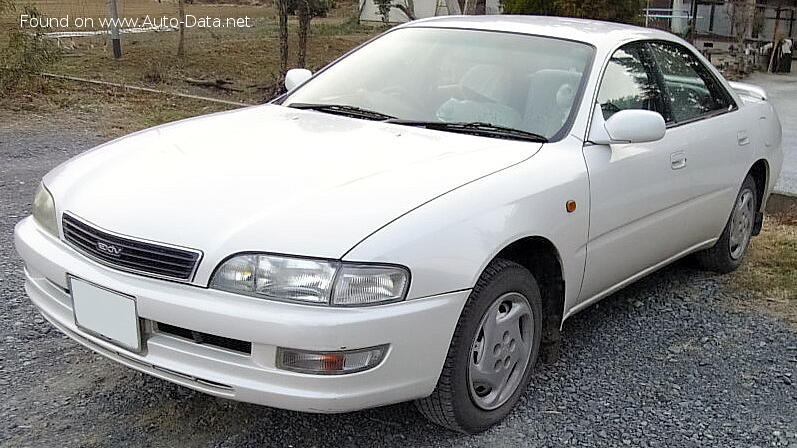
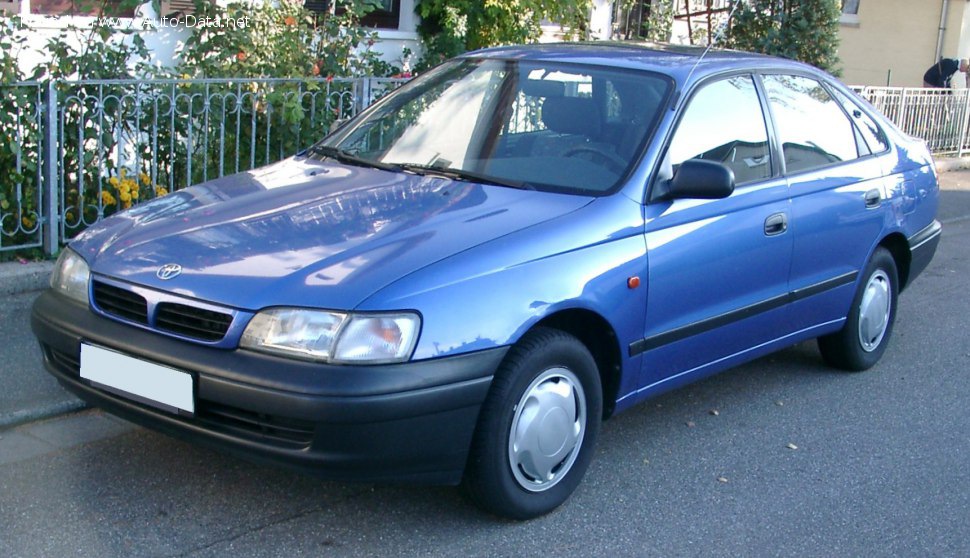
The Toyota Corona Hatch (T19) adopted a practical and understated design philosophy, characteristic of early 1990s Japanese automotive aesthetics. Its five-door hatchback body offered excellent versatility, making it a popular choice for families and individuals needing flexible cargo space. The exterior dimensions were well-proportioned for its segment, with a length of 177.95 inches, a width of 63.78 inches, and a height of 55.51 inches. A wheelbase of 101.57 inches contributed to a stable ride and a surprisingly roomy interior for five occupants. The styling was clean and aerodynamic, with smooth lines and a conservative profile that prioritized functionality over overt flair.
Inside, the Corona Hatch (T19) provided a comfortable and ergonomic cabin. The focus was on user-friendliness, with logically placed controls and clear instrumentation. While not luxurious, the materials were durable and built to withstand years of use, a testament to Toyota’s quality control. Seating for five was standard, with ample headroom and legroom for front and rear passengers, making long journeys more comfortable. Cargo capacity was a significant advantage of the hatchback body style, with the rear seats capable of folding down to create a large, flat load floor, ideal for carrying bulkier items.
In terms of features, the 1992-1997 Corona Hatch (T19) was equipped with technologies that were becoming standard or desirable in its class. A notable safety feature was the Anti-lock Braking System (ABS), which significantly enhanced braking performance and control, especially in adverse conditions. The steering system utilized a precise rack and pinion setup with hydraulic power steering, providing a good balance of road feel and ease of maneuverability in urban environments. The vehicle rode on 185/65 R14 S tires, offering a comfortable ride and predictable handling. Front suspension consisted of a wishbone design, while the rear featured coil springs, contributing to a compliant ride quality that absorbed road imperfections effectively. Braking duties were handled by ventilated discs at the front and reliable drum brakes at the rear, a common and effective setup for vehicles of its class during that period.
Technical Specifications: Toyota Corona Hatch (T19) 2.0 i 16V (133 Hp)
| Category | Specification | Value |
|---|---|---|
General Information |
||
| Brand | Toyota | |
| Model | Corona Hatch (T19) | |
| Type (Engine) | 2.0 i 16V (133 Hp) | |
| Production Start | 1992 | |
| Production End | 1997 | |
| Body type | Hatchback | 5 Doors, 5 Seats |
Engine Specifications |
||
| Engine Model/Code | 3S-FE | |
| Engine Layout | Front, Transverse | |
| Engine Displacement | 2.0 Liters (1998 cm³) | 121.93 cu. in. |
| Cylinders | 4, Inline | |
| Valvetrain | DOHC, 4 valves per cylinder | 16 Valves total |
| Bore x Stroke | 86 mm x 86 mm | 3.39 in. x 3.39 in. |
| Compression Ratio | 9.5:1 | |
| Aspiration | Naturally aspirated | |
| Fuel Injection System | Multi-port manifold injection | |
| Power | 133 Hp @ 5800 rpm | |
| Power per Liter | 66.6 Hp/l | |
| Torque | 135 lb-ft (183 Nm) @ 4400 rpm | |
| Engine Oil Capacity | 4.12 US qt (3.9 l) | |
| Coolant Capacity | 6.97 US qt (6.6 l) | |
Performance Specifications |
||
| Maximum Speed | 115 mph (185 km/h) | |
| Fuel Type | Petrol (Gasoline) | |
| Fuel Economy (Combined) | 36.2 US mpg (6.5 l/100 km) | |
| Weight-to-Power Ratio | 20.3 lbs/Hp (9.2 kg/Hp) | |
| Weight-to-Torque Ratio | 14.8 lbs/lb-ft (6.7 kg/Nm) | |
Dimensions, Weight & Capacity |
||
| Length | 177.95 in (4520 mm) | |
| Width | 63.78 in (1620 mm) | |
| Height | 55.51 in (1410 mm) | |
| Wheelbase | 101.57 in (2580 mm) | |
| Front Track | 57.68 in (1465 mm) | |
| Rear Track | 57.09 in (1450 mm) | |
| Curb Weight | 2689.64 lbs (1220 kg) | |
| Maximum Weight | 3295.91 lbs (1495 kg) | |
| Maximum Load | 606.27 lbs (275 kg) | |
| Fuel Tank Capacity | 15.85 US gal (60 l) | |
Drivetrain, Brakes & Suspension |
||
| Drivetrain Architecture | Front-wheel drive (FWD) | Internal Combustion Engine drives front wheels |
| Gearbox Type | 4-speed Automatic Transmission | |
| Front Suspension | Wishbone | |
| Rear Suspension | Coil spring | |
| Front Brakes | Ventilated discs | |
| Rear Brakes | Drum | |
| Assisting Systems | ABS (Anti-lock braking system) | |
| Steering Type | Steering rack and pinion | |
| Power Steering | Hydraulic Steering | |
| Tires Size | 185/65 R14 S | |
Legacy and Market Impact
The Toyota Corona Hatch (T19) 2.0 i 16V (133 Hp), despite not gracing American showrooms, carved out a significant niche in its primary markets of Europe and Asia. It was lauded for its exceptional build quality, unwavering reliability, and low running costs, attributes that resonated deeply with a broad spectrum of buyers. In an era where many manufacturers were still grappling with consistent quality, Toyota’s reputation for producing vehicles that simply “kept going” was a powerful selling point. The T19 Corona Hatch served as a dependable workhorse for families, commuters, and even small businesses, embodying the practical virtues of Japanese automotive engineering.
In Europe, the Corona Hatch (T19) competed in a fiercely contested segment against established rivals such as the Volkswagen Passat, Opel Vectra, Ford Mondeo, and other Japanese imports like the Honda Accord and Nissan Primera. While perhaps not as dynamically styled or overtly sporty as some European contenders, the Corona consistently offered a compelling package of comfort, space, and peace of mind, often at a competitive price point. Its robust powertrain and well-sorted chassis ensured a comfortable and predictable driving experience, further reinforcing its appeal as a sensible and long-term investment.
The T19 generation also marked a period of transition for the Corona nameplate. In some markets, it was eventually replaced by the Toyota Carina E, which itself was closely related, or saw its segment effectively absorbed by the ever-growing popularity of the Camry. However, the Corona Hatch (T19) left an indelible mark as a testament to Toyota’s global strategy: to offer a diverse range of reliable, efficient, and practical vehicles tailored to specific regional demands. Its legacy is one of quiet competence, proving that a car doesn’t need to be flashy or exotic to be profoundly impactful on the lives of its owners and to contribute significantly to a brand’s enduring reputation for quality and dependability. Even today, surviving examples are often praised for their remarkable resilience, a true testament to Toyota’s engineering prowess from that era.