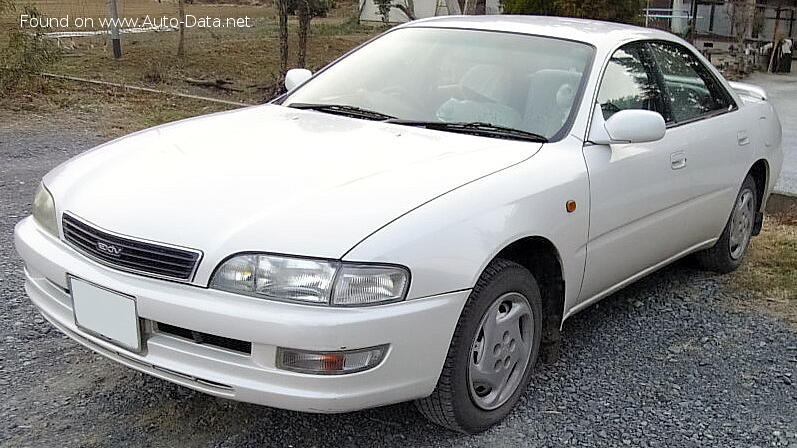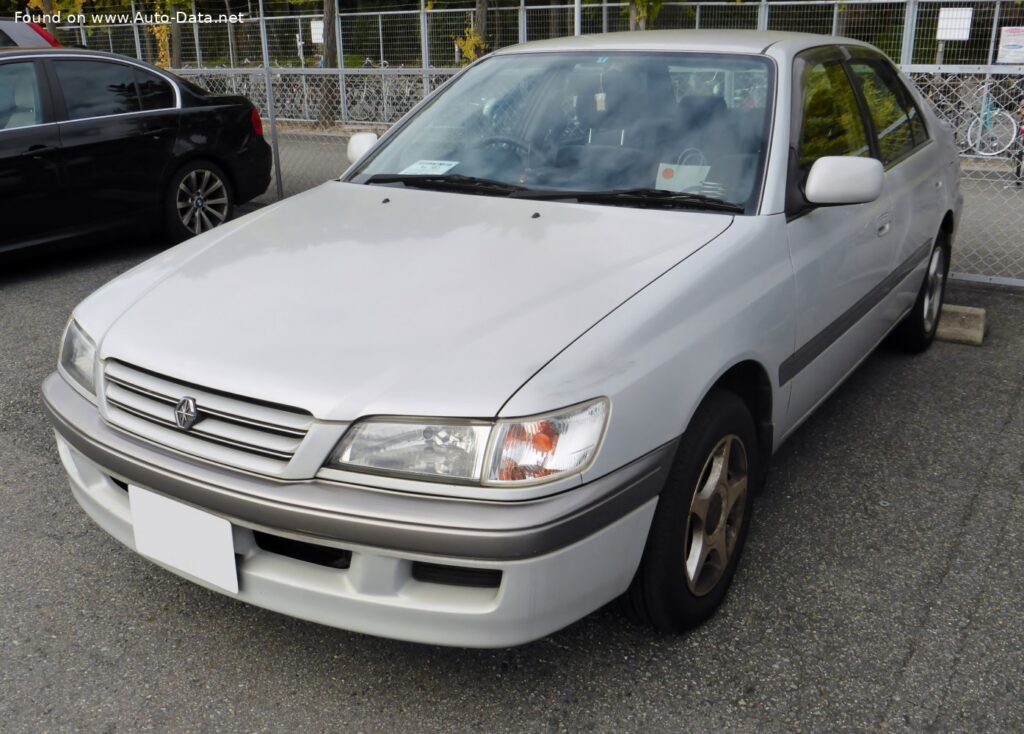
Toyota Corona Premio (T21) 1.8 i 16V (115 Hp): A Pillar of Practicality and Reliability
The Toyota Corona Premio (T21) represents a significant chapter in the long-standing and globally recognized Toyota Corona lineage. Produced from 1996 to 2001, the T21 generation was a compact to mid-size sedan primarily targeted at the Japanese domestic market (JDM) and various Asian and European regions. Unlike its more widely known sibling, the Camry, which served as Toyota’s primary mid-size offering in North America, the Corona Premio carved out its niche as a reliable, efficient, and well-appointed family sedan in markets where the Corona nameplate held considerable prestige. The 1.8 i 16V variant, with its 115 horsepower engine, was a popular choice, embodying the era’s focus on balanced performance, fuel economy, and Toyota’s renowned build quality.
This generation, often referred to as the seventh generation of the Corona Premio (a sub-badge introduced with the T210 series), showcased Toyota’s engineering philosophy of continuous refinement. It blended a comfortable ride with practical interior space and a powertrain designed for longevity and everyday usability. While not a performance leader, the Toyota Corona Premio (T21) was a workhorse, a dependable vehicle that commuters and families could rely on for years, cementing Toyota’s reputation for durability and low cost of ownership.
Engine and Performance of the Toyota Corona Premio (T21)
At the heart of the Toyota Corona Premio (T21) 1.8 i 16V lies the venerable 7A-FE engine, a naturally aspirated, inline four-cylinder gasoline (petrol) unit. This powerplant was a testament to Toyota’s mastery of efficient and reliable internal combustion engine design during the late 1990s. With a displacement of 1.762 liters (107.52 cubic inches), the 7A-FE was engineered for smooth operation and respectable power delivery for its class.
The engine featured a DOHC (Dual Overhead Camshaft) valvetrain with 16 valves (four per cylinder), optimizing airflow for better combustion efficiency. Fuel delivery was handled by a multi-port manifold injection system, a common and effective method for precise fuel metering at the time. This configuration allowed the 7A-FE to produce a healthy 115 horsepower at 5400 rpm. Torque output stood at 114.32 lb.-ft. (155 Nm) at a relatively low 2800 rpm, providing ample thrust for city driving and highway cruising without needing to constantly rev the engine high. This early torque delivery contributed significantly to the car’s pleasant drivability and fuel efficiency.
Power was channeled to the front wheels via a 4-speed automatic transmission, a common and convenient choice for a family sedan of this era. While not boasting cutting-edge performance figures, the powertrain offered a balanced driving experience. The vehicle’s kerb weight of 2535.32 lbs. (1150 kg) resulted in a weight-to-power ratio of approximately 10 kg/Hp (100 Hp/tonne) and a weight-to-torque ratio of 7.4 kg/Nm (134.8 Nm/tonne). These figures underscore the car’s practical orientation, prioritizing smooth acceleration and economical operation over outright speed. The 7A-FE engine, in particular, gained a reputation for its bulletproof reliability, often running for hundreds of thousands of miles with proper maintenance, a hallmark of Toyota engineering.
Design and Features of the Corona Premio (T21)
The design philosophy of the Toyota Corona Premio (T21) was one of understated elegance and functional practicality. As a 4-door sedan with seating for five, its exterior lines were clean, conservative, and aerodynamic for its time, eschewing flamboyant styling in favor of timeless appeal. The dimensions—a length of 181.1 inches, a width of 66.73 inches, and a height of 55.51 inches—placed it firmly in the compact to mid-size segment, offering a manageable footprint for urban environments while still providing a spacious interior.
The interior of the Corona Premio (T21) was designed with comfort and ergonomics in mind. High-quality, durable materials were used throughout, reflecting Toyota’s commitment to longevity. While specific luxury features varied by market and trim level, the focus was on providing a comfortable and intuitive cabin environment. The 101.57-inch wheelbase contributed to a stable ride and generous legroom for rear passengers, a crucial aspect for family-oriented buyers. With a trunk capacity of 17.3 cubic feet (490 liters), the Corona Premio offered ample cargo space, making it suitable for grocery runs, family trips, or business commutes.
Underneath, the T21 featured a robust chassis designed for comfort and predictable handling. The front suspension utilized a wishbone setup, known for its ability to provide a smooth ride and good wheel control. The rear suspension employed coil springs, further enhancing passenger comfort. Braking duties were handled by ventilated discs at the front, offering superior heat dissipation and stopping power, complemented by reliable drum brakes at the rear. An Anti-lock Braking System (ABS) was a significant safety feature for the era, providing enhanced control during emergency braking maneuvers. The hydraulic rack and pinion steering system delivered a direct and communicative feel, making the car easy to maneuver in various driving conditions. Standard tire size was 175/70 R14 S, a practical choice balancing ride comfort and grip.
Technical Specifications
| Category | Specification |
|---|---|
| Brand | Toyota |
| Model | Corona Premio (T21) |
| Type (Engine) | 1.8 i 16V (115 Hp) |
| Start of Production | 1996 |
| End of Production | 2001 |
| Powertrain Architecture | Internal Combustion Engine |
| Body Type | Sedan |
| Seats | 5 |
| Doors | 4 |
| Performance Specs | |
| Fuel Type | Petrol (Gasoline) |
| Weight-to-Power Ratio | 10 kg/Hp (100 Hp/tonne) |
| Weight-to-Torque Ratio | 7.4 kg/Nm (134.8 Nm/tonne) |
| Engine Specs | |
| Power | 115 Hp @ 5400 rpm |
| Power per Liter | 65.3 Hp/l |
| Torque | 114.32 lb.-ft. (155 Nm) @ 2800 rpm |
| Engine Layout | Front, Transverse |
| Engine Model/Code | 7A-FE |
| Engine Displacement | 1.762 liters (1762 cm3 / 107.52 cu. in.) |
| Number of Cylinders | 4 |
| Engine Configuration | Inline |
| Cylinder Bore | 3.19 in. (81 mm) |
| Piston Stroke | 3.37 in. (85.5 mm) |
| Compression Ratio | 9.5:1 |
| Valves per Cylinder | 4 |
| Fuel Injection System | Multi-port manifold injection |
| Engine Aspiration | Naturally aspirated |
| Valvetrain | DOHC |
| Engine Oil Capacity | 3.91 US qt (3.7 l) |
| Coolant Capacity | 5.81 US qt (5.5 l) |
| Space, Volume, and Weights | |
| Kerb Weight | 2535.32 lbs. (1150 kg) |
| Max. Weight | 3141.59 lbs. (1425 kg) |
| Max Load | 606.27 lbs. (275 kg) |
| Trunk (Boot) Space – Minimum | 17.3 cu. ft. (490 l) |
| Fuel Tank Capacity | 15.85 US gal (60 l) |
| Dimensions | |
| Length | 181.1 in. (4600 mm) |
| Width | 66.73 in. (1695 mm) |
| Height | 55.51 in. (1410 mm) |
| Wheelbase | 101.57 in. (2580 mm) |
| Front Track | 57.68 in. (1465 mm) |
| Rear (Back) Track | 57.09 in. (1450 mm) |
| Drivetrain, Brakes, and Suspension Specs | |
| Drivetrain Architecture | Front-wheel drive, Internal Combustion Engine |
| Drive Wheel | Front wheel drive |
| Number of Gears and Type | 4 gears, automatic transmission |
| Front Suspension | Wishbone |
| Rear Suspension | Coil spring |
| Front Brakes | Ventilated discs |
| Rear Brakes | Drum |
| Assisting Systems | ABS (Anti-lock braking system) |
| Steering Type | Steering rack and pinion |
| Power Steering | Hydraulic Steering |
| Tire Size | 175/70 R14 S |
Legacy and Market Impact of the Toyota Corona Premio (T21)
The Toyota Corona Premio (T21) played a crucial role in maintaining Toyota’s dominance in the compact and mid-size sedan segments in its primary markets throughout the late 1990s. While the Corona nameplate had been phased out in the United States by this point, with the Camry filling the mid-size segment and the Corolla handling the compact end, the Corona Premio continued the tradition of offering a compelling package of reliability, efficiency, and comfort in Japan, Asia, and parts of Europe.
Its reputation was built on Toyota’s legendary quality, which translated into minimal maintenance costs and exceptional longevity. Owners of the Corona Premio often praised its fuss-free operation, comfortable ride, and practical interior. It was a car that didn’t demand attention but consistently delivered dependable transportation, making it a popular choice for families and fleet operators alike. This focus on reliability and value for money ensured strong resale values and a loyal customer base, further solidifying Toyota’s image as a manufacturer of durable vehicles.
In its competitive landscape, the Corona Premio (T21) faced formidable rivals such as the Nissan Primera, Honda Accord (smaller-engine variants in non-US markets), Mitsubishi Lancer, and Mazda Capella (known as the 626 internationally). Against these competitors, the Corona Premio often distinguished itself through its slightly more conservative styling, exceptional build quality, and the sheer dependability of its 7A-FE engine. While some rivals might have offered sportier handling or more avant-garde designs, the Premio consistently appealed to buyers prioritizing peace of mind and long-term ownership satisfaction.
The T21 generation, and the Corona Premio line as a whole, represented the culmination of decades of refinement for the Corona badge. It embodied the Japanese automotive industry’s strength in producing highly practical, efficient, and robust vehicles that catered to the everyday needs of a vast global market. Although the Corona name was eventually replaced by the Allion and Premio in Japan, and other models internationally, the legacy of the Toyota Corona Premio (T21) endures as a testament to an era when simplicity, durability, and efficiency were paramount, contributing significantly to Toyota’s global reputation for manufacturing cars that simply “work” and last.