The Toyota Corona (RX,RT) 1.8 (TT1) (86 Hp): A Pillar of Mid-Century Reliability
The Toyota Corona, particularly the RX/RT generation produced between 1977 and 1979, stands as a testament to Toyota’s burgeoning global influence and its unwavering commitment to reliability and practicality. As a cornerstone of the brand’s international lineup, the Corona occupied a vital segment, offering a sensible, well-engineered sedan that appealed to a broad spectrum of buyers worldwide. The Toyota Corona (RX,RT) 1.8 (TT1) (86 Hp) variant, with its robust 1.8-liter engine, exemplified the dependable and efficient motoring that Toyota became renowned for during this era. This generation of Corona, while perhaps not revolutionary in design or performance, was instrumental in solidifying Toyota’s reputation for building durable and economical vehicles, paving the way for its future dominance in the automotive industry.
Positioned as a compact-to-mid-size sedan, the Corona (RX,RT) bridged the gap between smaller, entry-level models and larger, more executive offerings. It was a car designed for the everyday, a workhorse for families and commuters alike, built to withstand varied climates and road conditions. Its conservative styling and straightforward mechanicals resonated with consumers seeking value and longevity, qualities that were becoming increasingly important in the late 1970s automotive landscape. The 1.8 (TT1) version, specifically, represented a popular choice within the Corona lineup, balancing adequate power with commendable fuel efficiency for its time.
Engine and Performance: The Heart of the Toyota Corona (RX,RT)
At the core of the Toyota Corona (RX,RT) 1.8 (TT1) (86 Hp) was the venerable 3T engine. This 1.8-liter (1770 cc) four-cylinder gasoline engine was a naturally aspirated unit, characterized by its simplicity, durability, and ease of maintenance. Producing a modest but entirely adequate 86 horsepower, the 3T engine was engineered for smooth, predictable power delivery rather than outright speed. In the context of the late 1970s, 86 horsepower was a competitive output for a vehicle in this class, providing sufficient acceleration for city driving and comfortable cruising on highways.
Toyota’s engineering philosophy at the time heavily emphasized longevity and fuel efficiency, and the 3T engine in the Corona was a prime example. Its naturally aspirated design meant fewer complex components, contributing to its legendary reliability. The engine was designed to run on standard petrol (gasoline), making it an economical choice for consumers globally. With an engine oil capacity of 3.7 liters (3.91 US quarts) and a coolant capacity of 8 liters (8.45 US quarts), the 3T was designed for straightforward servicing, further reducing the cost of ownership and enhancing its appeal as a practical family car.
The powertrain architecture of the Corona (RX,RT) was a conventional internal combustion engine setup, typically driving the rear wheels, which was common for vehicles of its era. This traditional layout contributed to its robust and predictable driving dynamics. While not a performance car, the Corona offered a comfortable and stable ride, absorbing road imperfections with competence. Its mechanical simplicity also meant that repairs were generally straightforward, making it a favorite among mechanics and owners who valued ease of upkeep.
Design and Features: Functional Elegance of the 1970s
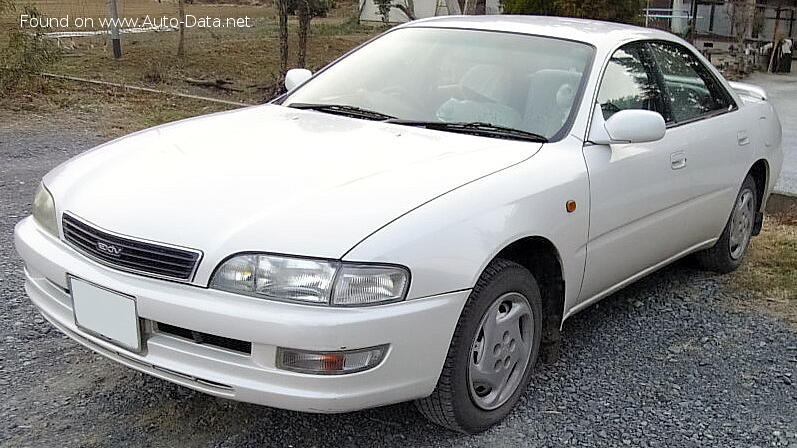
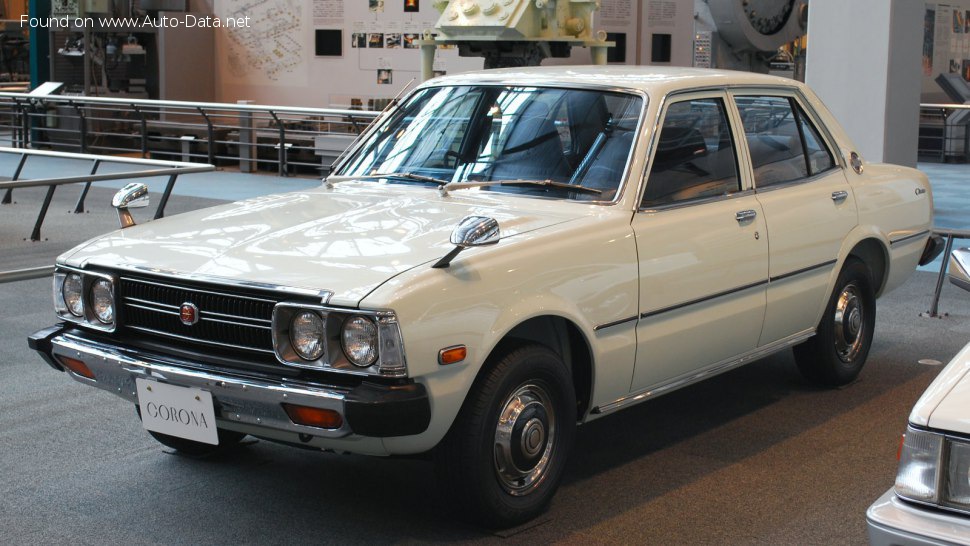
The Toyota Corona (RX,RT) was offered predominantly as a 4-door sedan, a body type that perfectly encapsulated its role as a practical family vehicle. Its design aesthetic was distinctly late 1970s: clean, functional, and somewhat boxy, yet not without a certain understated elegance. The lines were straightforward, prioritizing interior space and visibility over flamboyant styling cues. Large glass areas ensured excellent outward visibility, a key safety and convenience feature for drivers of the era.
Inside, the Corona (RX,RT) continued its theme of practicality and durability. The cabin was designed to be spacious and comfortable for four adults, with robust fabric or vinyl upholstery built to withstand years of use. Dashboards were typically uncluttered, featuring clear analog gauges for speed, fuel, and temperature. Controls for heating, ventilation, and the radio were intuitively placed and easy to operate. While luxury features were scarce by modern standards, the Corona often included amenities like an AM/FM radio, basic climate control, and comfortable seating, all contributing to a pleasant driving experience for its time.
Safety features for the 1977-1979 period were less sophisticated than today, but the Corona incorporated the prevailing standards. These typically included three-point seatbelts for front occupants, lap belts for rear passengers, and a robust body structure designed to offer protection in the event of a collision. The car’s solid build quality, a hallmark of Toyota, also contributed to a sense of security and durability, reinforcing its reputation as a dependable choice for families.
Technical Specifications
| Category | Specification |
|---|---|
| Brand | Toyota |
| Model | Corona |
| Generation | Corona (RX,RT) |
| Type (Engine) | 1.8 (TT1) (86 Hp) |
| Start of Production | 1977 year |
| End of Production | 1979 year |
| Powertrain Architecture | Internal Combustion engine |
| Body Type | Sedan |
| Doors | 4 |
| Fuel Type | Petrol (Gasoline) |
| Power | 86 Hp |
| Engine Model/Code | 3T |
| Engine Aspiration | Naturally aspirated engine |
| Engine Oil Capacity | 3.7 l (3.91 US qt) |
| Coolant Capacity | 8 l (8.45 US qt) |
Legacy and Market Impact of the Toyota Corona (RX,RT)
The Toyota Corona (RX,RT) 1.8 (TT1) (86 Hp), much like its preceding and succeeding generations, played a pivotal role in establishing Toyota’s global reputation for quality, durability, and value. While not a car that garnered headlines for its performance or cutting-edge technology, its consistent reliability and cost-effectiveness made it a sales success across numerous international markets, including North America, Europe, Asia, and Australia.
In the highly competitive automotive landscape of the late 1970s, the Corona faced formidable rivals. In the North American market, it competed with other Japanese imports like the Datsun (Nissan) 510/810 and the Honda Accord, as well as domestic offerings such as the Ford Fairmont and Chevrolet Nova. In Europe, it contended with popular models like the Ford Cortina, Opel Ascona, and Vauxhall Cavalier. Despite this fierce competition, the Corona carved out a significant niche, largely due to its bulletproof mechanicals and low cost of ownership.
The Corona’s legacy is firmly rooted in its unwavering dependability. It was the kind of car that people bought, drove for many years with minimal fuss, and then passed down to family members. This reputation for longevity was crucial for Toyota, helping to build trust and brand loyalty among a generation of car buyers. It proved that Japanese manufacturers could produce vehicles that were not only economical but also incredibly robust, challenging the long-held dominance of American and European automakers.
Furthermore, the Corona (RX,RT) represented a period of refinement for Toyota, where they incrementally improved their engineering and manufacturing processes. Each generation built upon the strengths of the last, leading to a continuous upward trajectory in quality and market acceptance. The 1.8 (TT1) variant, with its efficient 3T engine, embodied this ethos, offering a balanced package that met the demands of the era without unnecessary complexity.
Today, while many examples of the RX/RT Corona may be a rare sight on modern roads, its impact continues to resonate. It paved the way for future Toyota successes, including the Camry, which eventually superseded the Corona in many markets. Its contribution to Toyota’s global expansion and its role in cementing the brand’s image as a producer of reliable, value-driven automobiles are undeniable. The Toyota Corona (RX,RT) 1.8 (TT1) (86 Hp) remains a significant chapter in the history of a company that would go on to become one of the world’s largest and most respected automakers.