The Toyota Corona (T19): A Study in Global Practicality
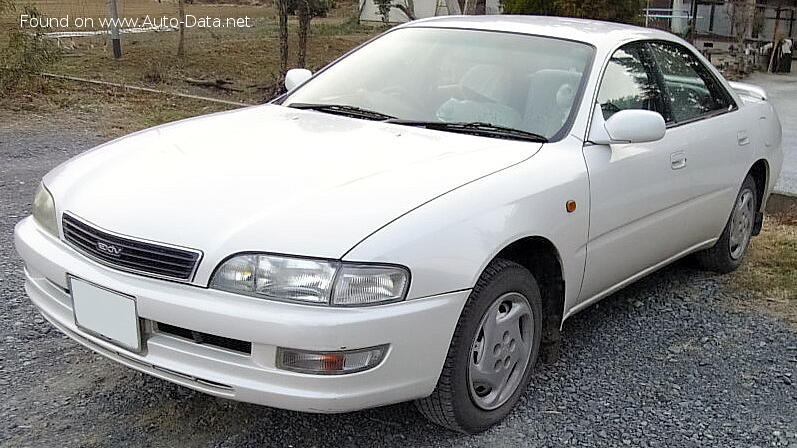
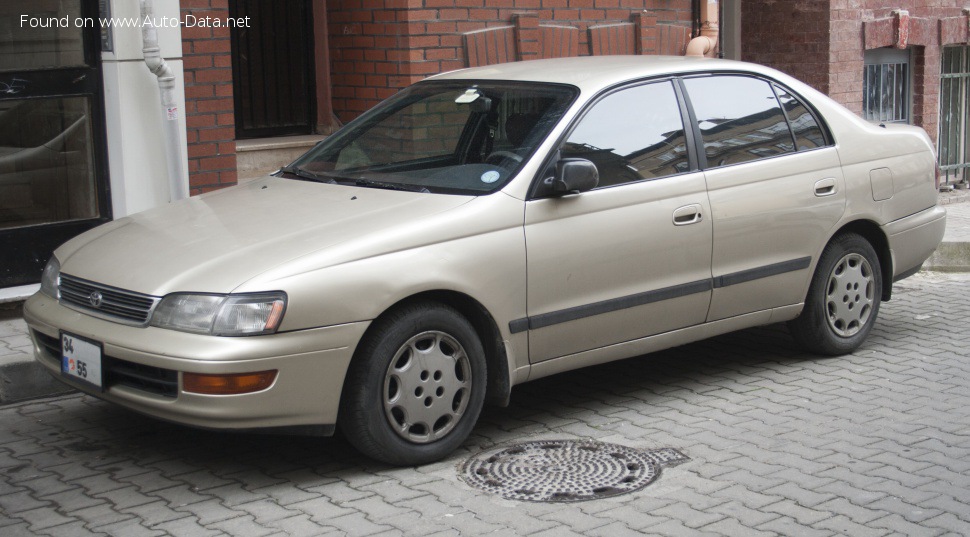
The Toyota Corona, a name synonymous with reliability and practicality for decades, saw its T19 generation introduced in 1992. This iteration continued the Corona’s legacy as a robust and dependable mid-size sedan, primarily targeting family buyers and fleet operators in markets outside North America. The specific variant, the Toyota Corona (T19) 2.0 D (73 Hp) Automatic, represented a particularly strong offering in regions where diesel powertrains were highly valued for their fuel efficiency and durability, such as Europe and parts of Asia. Positioned as a direct competitor to other mainstream sedans of its era, the T19 Corona maintained Toyota’s reputation for quality engineering and a no-nonsense approach to automotive design. While never officially sold in the United States with this diesel powertrain, understanding its role provides insight into Toyota’s global strategy and the diverse needs of international markets.
Engine and Performance of the Toyota Corona (T19) 2.0 D
At the heart of the Toyota Corona (T19) 2.0 D (73 Hp) Automatic was Toyota’s venerable 2C diesel engine. This naturally aspirated, inline four-cylinder unit was designed for longevity and economy rather than outright speed. With an engine displacement of 1,974 cubic centimeters (approximately 120.46 cubic inches or 2.0 liters), it produced a modest 73 horsepower at 4,600 revolutions per minute. Torque figures were more characteristic of a diesel, peaking at 97.36 lb-ft (132 Nm) at a relatively low 2,800 rpm, which contributed to its tractable and relaxed driving demeanor, especially in urban environments.
The engine featured an overhead camshaft (OHC) valvetrain with two valves per cylinder, a common and reliable configuration for diesel engines of its time. Fuel delivery was handled by a precombustion chamber injection system, known for its smoother operation and reduced noise compared to direct injection systems of the era, though less fuel-efficient than later technologies. The high compression ratio of 23:1 was typical for a naturally aspirated diesel, ensuring efficient combustion.
Power was sent to the front wheels via a 4-speed automatic transmission. This gearbox choice further underscored the vehicle’s focus on comfort and ease of use, particularly in congested city traffic. While the 73 horsepower might seem modest by modern standards, it was adequate for the Corona’s intended purpose as a practical family sedan. The car achieved a top speed of 99.42 miles per hour (160 km/h), allowing for comfortable cruising on highways, though acceleration was leisurely. Its curb weight of 2,535.32 pounds (1,150 kg) contributed to a weight-to-power ratio of 15.8 kg/Hp, indicating its utilitarian rather than performance-oriented nature. The focus was squarely on reliability, fuel economy, and a smooth, unpretentious driving experience.
Design and Features
The T19 generation of the Toyota Corona retained the classic sedan body type, a popular choice for families and business users. Its design was conservative yet functional, prioritizing interior space, outward visibility, and ease of access. The four-door, five-seat configuration made it a practical choice for daily commuting and longer journeys. Measuring 177.95 inches (4,520 mm) in length, 66.73 inches (1,695 mm) in width, and 55.51 inches (1,410 mm) in height, with a wheelbase of 101.57 inches (2,580 mm), the Corona offered a comfortable cabin and a decent trunk capacity for its class.
Inside, the T19 Corona was characterized by a straightforward and ergonomic dashboard layout. Materials were durable and designed to withstand years of use, reflecting Toyota’s commitment to quality. While specific luxury features varied by market and trim level, common amenities for the era included air conditioning, power windows, and a basic audio system. Safety features were also advancing during this period, and the T19 Corona incorporated an Anti-lock Braking System (ABS) as a significant enhancement for vehicle control during emergency stops.
The suspension system, featuring wishbones at both the front and rear, aimed to strike a balance between ride comfort and stable handling. The hydraulic power steering system, employing a rack-and-pinion setup, provided predictable and light steering effort, making the Corona easy to maneuver in urban settings. Braking was handled by ventilated discs at the front for effective heat dissipation and drum brakes at the rear, a common and cost-effective setup for cars in this segment at the time. The 14-inch wheels fitted with 175/70 R14 tires completed the package, offering a comfortable ride and adequate grip for everyday driving conditions.
Technical Specifications: Toyota Corona (T19) 2.0 D (73 Hp) Automatic (1992-1994)
| Category | Specification | US Equivalent / Notes |
|---|---|---|
| General Information | ||
| Brand | Toyota | |
| Model | Corona | |
| Generation | Corona (T19) | |
| Type (Engine) | 2.0 D (73 Hp) Automatic | |
| Start of production | 1992 year | |
| End of production | 1994 year | |
| Powertrain Architecture | Internal Combustion engine | |
| Body type | Sedan | |
| Seats | 5 | |
| Doors | 4 | |
| Performance Specs | ||
| Fuel Type | Diesel | |
| Maximum speed | 160 km/h | 99.42 mph |
| Weight-to-power ratio | 15.8 kg/Hp | 63.5 Hp/tonne |
| Weight-to-torque ratio | 8.7 kg/Nm | 114.8 Nm/tonne |
| Engine Specs | ||
| Power | 73 Hp @ 4600 rpm. | |
| Power per liter | 37 Hp/l | |
| Torque | 132 Nm @ 2800 rpm. | 97.36 lb.-ft. @ 2800 rpm. |
| Engine layout | Front, Transverse | |
| Engine Model/Code | 2C | |
| Engine displacement | 1974 cm3 | 120.46 cu. in. (2.0 Liters) |
| Number of cylinders | 4 | |
| Engine configuration | Inline | |
| Cylinder Bore | 86 mm | 3.39 in. |
| Piston Stroke | 85 mm | 3.35 in. |
| Compression ratio | 23:1 | |
| Number of valves per cylinder | 2 | |
| Fuel injection system | Precombustion chamber injection | |
| Engine aspiration | Naturally aspirated engine | |
| Valvetrain | OHC | |
| Engine oil capacity | 4.3 l | 4.54 US qt |
| Coolant | 7 l | 7.4 US qt |
| Space, Volume and Weights | ||
| Kerb Weight | 1150 kg | 2535.32 lbs. |
| Max. weight | 1425 kg | 3141.59 lbs. |
| Max load | 275 kg | 606.27 lbs. |
| Fuel tank capacity | 60 l | 15.85 US gal |
| Dimensions | ||
| Length | 4520 mm | 177.95 in. |
| Width | 1695 mm | 66.73 in. |
| Height | 1410 mm | 55.51 in. |
| Wheelbase | 2580 mm | 101.57 in. |
| Front track | 1465 mm | 57.68 in. |
| Rear (Back) track | 1450 mm | 57.09 in. |
| Drivetrain, Brakes and Suspension Specs | ||
| Drivetrain Architecture | The Internal combustion engine (ICE) drives the front wheels of the vehicle. | Front-wheel drive |
| Drive wheel | Front wheel drive | |
| Number of gears and type of gearbox | 4 gears, automatic transmission | |
| Front suspension | Wishbone | |
| Rear suspension | Wishbone | |
| Front brakes | Ventilated discs | |
| Rear brakes | Drum | |
| Assisting systems | ABS (Anti-lock braking system) | |
| Steering type | Steering rack and pinion | |
| Power steering | Hydraulic Steering | |
| Tires size | 175/70 R14 | |
| Wheel rims size | 14 | |
Legacy and Market Impact of the Toyota Corona (T19)
The Toyota Corona (T19), particularly its diesel variants like the 2.0 D Automatic, played a crucial role in Toyota’s global market strategy during the early to mid-1990s. While the Corona nameplate had been largely replaced by the Camry in the American market by this time, the Corona continued to be a strong seller in other parts of the world. In markets such as Europe, Australia, and various Asian countries, the Corona was a popular choice for its reputation for bulletproof reliability, low running costs, and strong resale value.
The 2.0 D variant specifically catered to European and Asian consumers who valued fuel economy and the longevity of a diesel engine, often driven by higher fuel prices and different tax structures compared to the U.S. It competed against a host of well-established European and Japanese rivals in the compact to mid-size segment. Competitors would have included vehicles like the Opel Vectra, Ford Mondeo (Contour in North America), Volkswagen Passat, Nissan Primera, and Honda Accord. The Corona typically distinguished itself through its legendary reliability and lower maintenance burden, often outperforming its rivals in long-term ownership costs.
The T19 Corona, and especially its diesel versions, solidified Toyota’s image as a manufacturer of dependable, no-frills transportation. It wasn’t designed to be a driver’s car or a luxury statement, but rather a faithful workhorse that could withstand demanding conditions and provide consistent service. Its simple, robust mechanicals, including the 2C diesel engine and the proven 4-speed automatic transmission, contributed to its reputation for being exceptionally durable. This focus on durability and efficiency ensured its success in its target markets, allowing Toyota to maintain a strong foothold in the fiercely competitive global automotive landscape.
Although the Corona name eventually faded from most markets, largely succeeded by the Carina E (which shared platforms with the T19) and the ubiquitous Camry, the T19 generation remains a testament to Toyota’s engineering philosophy of building cars that simply work, day in and day out. It represents an era when automotive design prioritized function and longevity, leaving a lasting legacy as a reliable and economical choice for drivers worldwide.