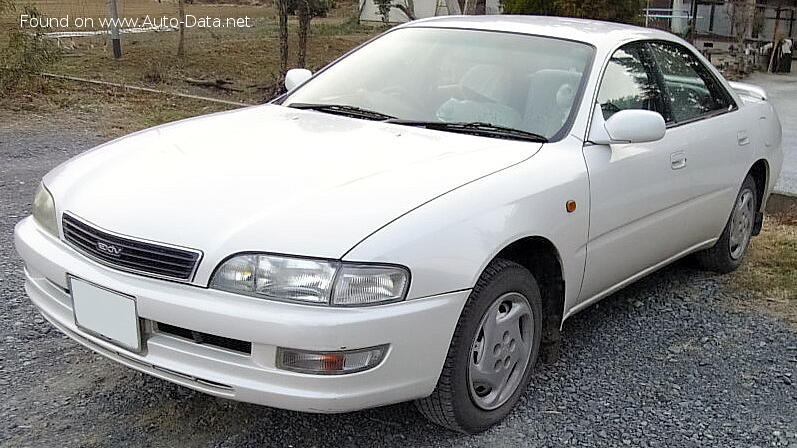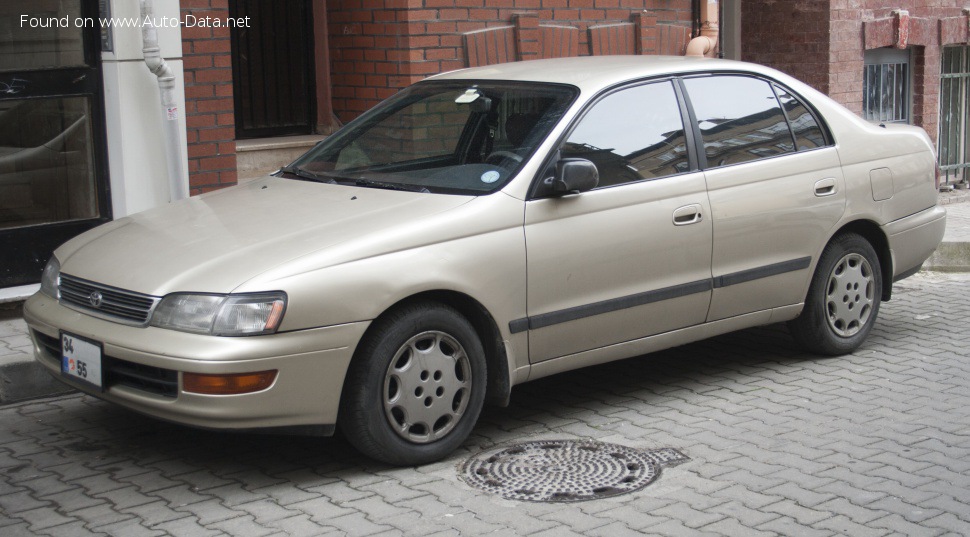
The Toyota Corona (T19) 2.0i 16V EX (128 Hp) 4WD: A Paragon of Early 90s Japanese Engineering
The Toyota Corona stands as one of Toyota’s longest-running and most globally significant nameplates, a testament to the brand’s commitment to reliability and practical engineering. Spanning multiple generations and nearly half a century of production, the Corona served as a foundational model in many international markets, often preceding or running concurrently with the rise of the Camry. The T19 generation, produced from 1992 to 1996, represented a modern evolution of this venerable sedan, embodying the quality and thoughtful design Toyota was renowned for in the early 1990s. This particular variant, the Toyota Corona (T19) 2.0i 16V EX (128 Hp) 4WD, was a sophisticated offering, blending a capable powertrain with an advanced all-wheel-drive system, primarily targeting markets outside North America where such a combination in a compact sedan held significant appeal, particularly in regions with varied climates and challenging road conditions. While the Corona nameplate itself had a presence in the U.S. market in earlier forms, this specific T19 4WD model was tailored for the demands of Asian, European, and other international consumers, showcasing Toyota’s global engineering prowess.
Engine and Performance of the Toyota Corona (T19)
At the heart of the Toyota Corona (T19) 2.0i 16V EX (128 Hp) 4WD was the highly regarded Toyota 3S-FE engine. This 2.0-liter (1998 cm3, or 121.93 cubic inches) inline-four engine was a workhorse for Toyota during this era, known for its robust construction, smooth operation, and excellent longevity. Featuring a dual overhead camshaft (DOHC) valvetrain with four valves per cylinder, the 3S-FE was designed for efficient combustion and a broad powerband. It utilized a multi-port manifold injection system and was naturally aspirated, delivering a respectable 128 horsepower at 5600 rpm. Torque output stood at a solid 132.02 lb-ft (179 Nm) peaking at 4400 rpm, providing ample thrust for daily driving and highway cruising.
The engine’s power-per-liter ratio of 64.1 Hp/l was competitive for its time, reflecting Toyota’s commitment to engineering efficiency. Mated to a precise 5-speed manual transmission, this powertrain offered a direct and engaging driving experience. However, what truly set this particular Corona variant apart was its full-time All-Wheel Drive (4WD) system. While common in SUVs and performance cars, a 4WD system in a mainstream compact sedan like the Corona was a notable feature, providing enhanced traction and stability, especially in adverse weather conditions or on unpaved roads. This system contributed to a kerb weight of 2755.78 lbs (1250 kg), resulting in a weight-to-power ratio of 9.8 kg/Hp, or 102.4 Hp per tonne. The vehicle could reach a maximum speed of 114.95 mph (185 km/h), a respectable figure for a family sedan with an emphasis on all-weather capability rather than outright speed. Fuel economy was also a strong point, with a combined rating of 36.8 US mpg (6.4 l/100 km), demonstrating Toyota’s early focus on efficiency even with a more complex drivetrain.
Design and Features
The T19 generation of the Toyota Corona adhered to the design language prevalent in Japanese sedans of the early 1990s: clean lines, understated elegance, and a focus on practicality and aerodynamics. The body type was a conventional 4-door sedan, designed to comfortably seat five occupants. Its dimensions were well-proportioned for its segment, with a length of 177.95 inches (4520 mm), a width of 66.73 inches (1695 mm), and a height of 56.1 inches (1425 mm). The wheelbase measured 101.57 inches (2580 mm), contributing to a stable ride and a spacious cabin.
Inside, the Corona (T19) offered a functional and ergonomically sound environment. Toyota’s reputation for high-quality materials and meticulous assembly was evident, ensuring durability and a pleasant ownership experience. While specific interior features for the “EX” trim are not fully detailed, the “EX” designation typically implied a higher level of standard equipment and finishes, including comfortable seating, comprehensive instrumentation, and potentially advanced audio systems for the era. Safety features for the time included an Anti-lock Braking System (ABS) as a crucial assisting system, enhancing driver control during emergency braking maneuvers. The suspension setup, featuring wishbones at both the front and rear, provided a good balance of ride comfort and predictable handling, a characteristic highly valued in a family sedan. The steering system utilized a hydraulic rack and pinion setup, offering direct feedback and ease of maneuverability. The car rode on 185/65 R14 tires, a common size for compact sedans of the period, chosen for a blend of comfort, grip, and cost-effectiveness.
Technical Specifications
| Category | Specification |
|---|---|
| General Information | |
| Brand | Toyota |
| Model | Corona |
| Generation | Corona (T19) |
| Type (Engine) | 2.0i 16V EX (128 Hp) 4WD |
| Production Start | 1992 year |
| Production End | 1996 year |
| Powertrain Architecture | Internal Combustion engine |
| Body Type | Sedan |
| Seats | 5 |
| Doors | 4 |
| Performance Specs | |
| Fuel Consumption (Combined) | 36.8 US mpg (6.4 l/100 km) |
| Fuel Type | Petrol (Gasoline) |
| Maximum Speed | 114.95 mph (185 km/h) |
| Weight-to-Power Ratio | 9.8 kg/Hp (102.4 Hp/tonne) |
| Weight-to-Torque Ratio | 7 kg/Nm (143.2 Nm/tonne) |
| Engine Specs | |
| Power | 128 Hp @ 5600 rpm |
| Power per Liter | 64.1 Hp/l |
| Torque | 132.02 lb-ft @ 4400 rpm (179 Nm) |
| Engine Layout | Front, Transverse |
| Engine Model/Code | 3S-FE |
| Engine Displacement | 2.0 liters (1998 cm3, 121.93 cu. in.) |
| Number of Cylinders | 4 |
| Engine Configuration | Inline |
| Cylinder Bore | 3.39 in (86 mm) |
| Piston Stroke | 3.39 in (86 mm) |
| Compression Ratio | 9.8:1 |
| Valves per Cylinder | 4 |
| Fuel Injection System | Multi-port manifold injection |
| Engine Aspiration | Naturally aspirated |
| Valvetrain | DOHC |
| Engine Oil Capacity | 4.12 US qt (3.9 l) |
| Coolant Capacity | 6.97 US qt (6.6 l) |
| Space, Volume and Weights | |
| Kerb Weight | 2755.78 lbs (1250 kg) |
| Max. Weight | 3362.05 lbs (1525 kg) |
| Max Load | 606.27 lbs (275 kg) |
| Fuel Tank Capacity | 15.85 US gal (60 l) |
| Dimensions | |
| Length | 177.95 in (4520 mm) |
| Width | 66.73 in (1695 mm) |
| Height | 56.1 in (1425 mm) |
| Wheelbase | 101.57 in (2580 mm) |
| Front Track | 57.68 in (1465 mm) |
| Rear Track | 56.5 in (1435 mm) |
| Drivetrain, Brakes and Suspension | |
| Drive Wheel | All-Wheel Drive (4×4) |
| Gearbox Type | 5-speed manual transmission |
| Front Suspension | Wishbone |
| Rear Suspension | Wishbone |
| Front Brakes | Ventilated discs |
| Rear Brakes | Disc |
| Assisting Systems | ABS (Anti-lock Braking System) |
| Steering Type | Steering rack and pinion |
| Power Steering | Hydraulic Steering |
| Tire Size | 185/65 R14 |
Legacy and Market Impact of the Toyota Corona (T19)
The Toyota Corona (T19) 2.0i 16V EX (128 Hp) 4WD, while not a direct competitor in the North American market in this specific configuration, played a crucial role in solidifying Toyota’s reputation for dependable and well-engineered vehicles across Asia, Europe, and other global markets. The Corona nameplate itself had a long and storied history, often serving as Toyota’s entry into the compact or mid-size segment, a precursor to the global dominance of the Camry. The T19 generation, in particular, upheld the Corona’s legacy of reliability, fuel efficiency, and practical design.
In its primary markets, the Toyota Corona (T19) faced stiff competition from rivals such as the Honda Accord (specifically the Japanese market versions), Nissan Primera (P10), Mitsubishi Galant, and Mazda 626. What set this particular 4WD variant apart was its unique combination of a mainstream sedan body with an advanced all-wheel-drive system. This offered a distinct advantage for customers in regions prone to snow, ice, or unpaved roads, providing enhanced safety and usability without sacrificing the comfort and economy of a sedan. This was a sophisticated feature for a non-luxury compact car in the early 1990s, showcasing Toyota’s willingness to integrate advanced engineering into its mass-market offerings.
The T19 Corona was lauded for its robust build quality and the legendary durability of its 3S-FE engine, which contributed to low running costs and a strong resale value. Its modest yet capable performance, combined with impressive fuel economy for a 4WD vehicle, made it an attractive option for families and business users alike. The inclusion of ABS as a standard or optional safety feature in this era further underscored its modern appeal. While the Corona name eventually faded from many markets, superseded by models like the Avensis in Europe and the ever-expanding Camry globally, the T19 generation represents a significant chapter in Toyota’s history of global vehicle development. It was a car that quietly excelled in its intended purpose, embodying the core values of the Toyota brand: quality, reliability, and value, delivering a practical and capable driving experience that resonated with a diverse international audience. The Toyota Corona (T19) 2.0i 16V EX (128 Hp) 4WD remains a testament to Toyota’s engineering foresight in offering advanced features in accessible packages.