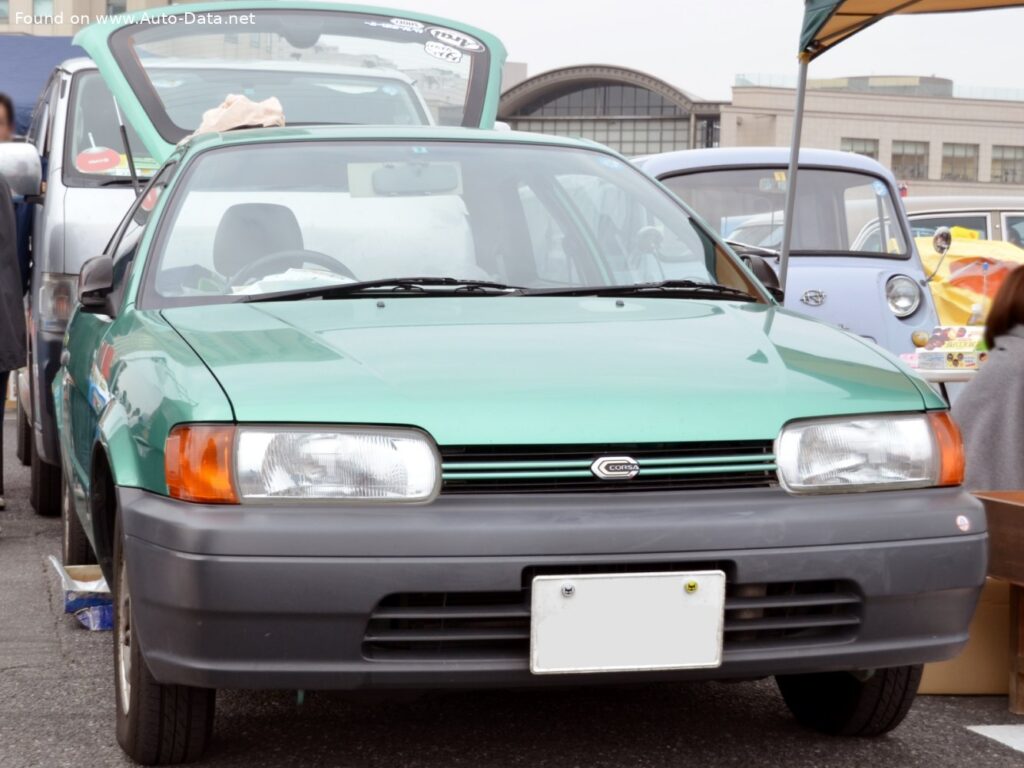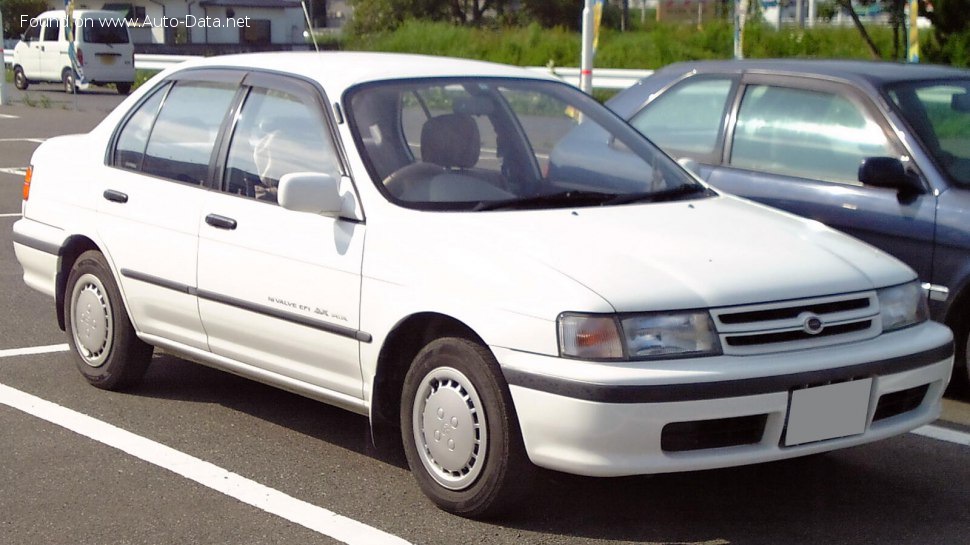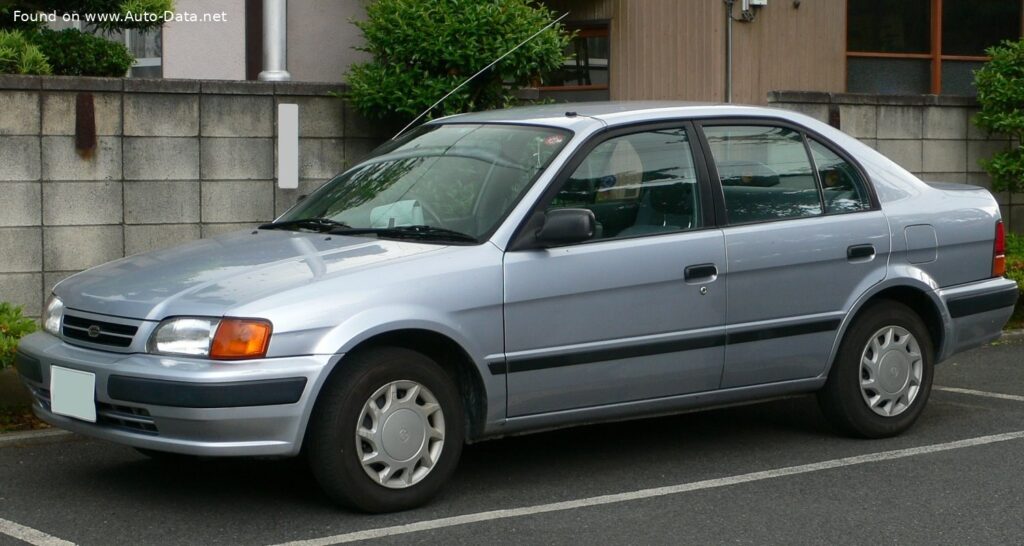
The Toyota Corsa Hatchback (L40) 1.3 i (88 Hp): A Quintessential Japanese Subcompact of the Early 1990s
The Toyota Corsa, particularly its fourth-generation L40 series, represents a significant chapter in Toyota’s history of producing reliable and economical subcompact vehicles for the Japanese domestic market (JDM) and select international regions. Manufactured from 1990 to 1994, the Toyota Corsa Hatchback (L40) 1.3 i (88 Hp) was a prime example of Toyota’s engineering prowess in creating practical, urban-friendly cars. While the Corsa nameplate might be unfamiliar to American consumers, it played a crucial role alongside its platform siblings, the Toyota Tercel (known as Corolla II in Japan), in providing dependable personal transportation during a period of rapid economic growth and evolving automotive tastes in Japan and other Asian markets. This particular iteration, featuring the 1.3-liter multi-point injected engine, balanced efficiency with sufficient power for its lightweight chassis, making it a popular choice among those seeking an affordable and durable daily driver.
Engine and Performance: The Heart of the Toyota Corsa Hatchback (L40)
At the core of the Toyota Corsa Hatchback (L40) 1.3 i (88 Hp) lies the renowned Toyota 4E-FE engine. This 1.3-liter (1299 cm³ or 79.27 cu. in.) inline four-cylinder engine was a testament to Toyota’s commitment to efficiency and longevity. Featuring a Double Overhead Camshaft (DOHC) valvetrain with four valves per cylinder, the 4E-FE was advanced for its time, ensuring optimal airflow and combustion. Its multi-port manifold injection system provided precise fuel delivery, contributing to both its respectable power output and commendable fuel economy.
The engine produced a healthy 88 horsepower at 6000 revolutions per minute (rpm), translating to a power-per-liter ratio of 67.7 Hp/l—a strong figure for a naturally aspirated engine of this displacement in the early 1990s. Torque output stood at 123 Newton-meters (90.72 lb-ft) at a relatively low 4400 rpm, ensuring accessible pulling power for urban driving and highway cruising. With a compression ratio of 10.5:1 and a bore of 75 mm (2.95 in) paired with a stroke of 73.5 mm (2.89 in), the engine was designed for smooth operation and durability.
The powertrain architecture featured a front, transverse engine layout driving the front wheels, a common and efficient setup for subcompacts. This configuration maximized interior space and contributed to the car’s agile handling. The lightweight nature of the Corsa, with a curb weight of just 1851.88 lbs (840 kg), meant that the 88 horsepower engine provided a sprightly performance. The weight-to-power ratio was an impressive 9.5 kg/Hp (104.8 Hp/tonne), allowing for nimble acceleration and good responsiveness. Fuel efficiency was a key selling point: urban driving yielded approximately 31.4 US mpg (7.5 l/100 km), while extra-urban driving could achieve an excellent 56 US mpg (4.2 l/100 km), making it an economical choice for daily commutes.
Design and Features: Practicality Meets Compact Form
The Toyota Corsa Hatchback (L40) adopted a pragmatic and unassuming design, reflecting its role as a functional and affordable vehicle. The 3-door hatchback body style offered a blend of compact dimensions for easy maneuverability in crowded city streets and surprising interior versatility. Measuring 154.13 inches (3915 mm) in length, 65.35 inches (1660 mm) in width, and 53.94 inches (1370 mm) in height, the Corsa was perfectly sized for its primary markets. Its relatively short wheelbase of 93.7 inches (2380 mm) contributed to a tight turning circle of just 29.53 feet (9 meters), making parking and navigating narrow alleys a breeze.
Despite its compact footprint, the Corsa L40 was designed to comfortably accommodate five occupants, offering a practical solution for small families or groups. The interior, though utilitarian, was well-appointed for its class, emphasizing durability and ease of use. The dashboard layout was straightforward, with clear instrumentation and accessible controls. While features like power windows and air conditioning might have been optional or higher trim level amenities, the focus was on core functionality.
In terms of chassis and safety, the Corsa L40 utilized a robust unibody construction. It featured disc brakes at the front and drum brakes at the rear, a common setup for cost-effective subcompacts of the era. Notably, the inclusion of ABS (Anti-lock Braking System) as an assisting system was a significant safety feature for a car in this segment during the early 1990s, enhancing braking stability and control in adverse conditions. The vehicle rode on 155/80 SR13 tires, providing a comfortable ride and adequate grip for its intended use.
Technical Specifications
| Category | Specification | US Equivalent |
|---|---|---|
| General Information | ||
| Brand | Toyota | |
| Model | Corsa | |
| Generation | Corsa Hatchback (L40) | |
| Engine Type | 1.3 i (88 Hp) | |
| Production Start | 1990 year | |
| Production End | 1994 year | |
| Architecture | Internal Combustion Engine | |
| Body Type | Hatchback | |
| Seats | 5 | |
| Doors | 3 | |
| Performance Specs | ||
| Fuel Consumption (Urban) | 7.5 l/100 km | 31.4 US mpg |
| Fuel Consumption (Extra Urban) | 4.2 l/100 km | 56 US mpg |
| Fuel Type | Petrol (Gasoline) | |
| Weight-to-Power Ratio | 9.5 kg/Hp | 104.8 Hp/tonne |
| Weight-to-Torque Ratio | 6.8 kg/Nm | 146.4 Nm/tonne |
| Engine Specs | ||
| Power | 88 Hp @ 6000 rpm | |
| Power per Liter | 67.7 Hp/l | |
| Torque | 123 Nm @ 4400 rpm | 90.72 lb-ft @ 4400 rpm |
| Engine Layout | Front, Transverse | |
| Engine Model/Code | 4E-FE | |
| Engine Displacement | 1299 cm³ | 1.3 Liters / 79.27 cu. in. |
| Number of Cylinders | 4 | |
| Engine Configuration | Inline | |
| Cylinder Bore | 75 mm | 2.95 in. |
| Piston Stroke | 73.5 mm | 2.89 in. |
| Compression Ratio | 10.5:1 | |
| Valves per Cylinder | 4 | |
| Fuel Injection System | Multi-port manifold injection | |
| Engine Aspiration | Naturally aspirated | |
| Valvetrain | DOHC | |
| Engine Oil Capacity | 3.2 l | 3.38 US qt |
| Space, Volume and Weights | ||
| Kerb Weight | 840 kg | 1851.88 lbs |
| Dimensions | ||
| Length | 3915 mm | 154.13 in. |
| Width | 1660 mm | 65.35 in. |
| Height | 1370 mm | 53.94 in. |
| Wheelbase | 2380 mm | 93.7 in. |
| Front Track | 1400 mm | 55.12 in. |
| Rear Track | 1430 mm | 56.3 in. |
| Minimum Turning Circle | 9 m | 29.53 ft. |
| Drivetrain, Brakes and Suspension | ||
| Drivetrain Architecture | ICE drives front wheels | |
| Drive Wheel | Front wheel drive | |
| Front Brakes | Disc | |
| Rear Brakes | Drum | |
| Assisting Systems | ABS (Anti-lock braking system) | |
| Tires Size | 155/80 SR13 |
Legacy and Market Impact
The Toyota Corsa (L40) series, including the 1.3 i (88 Hp) hatchback, solidified Toyota’s reputation for building durable, efficient, and cost-effective vehicles in its primary markets, predominantly Japan and parts of Asia. While it was not officially sold in the United States, its platform siblings like the Toyota Tercel were familiar sights, sharing the underlying engineering philosophy.
In Japan, the Corsa competed in a fiercely contested subcompact segment against rivals such as the Nissan March (Micra), Honda Logo, and Suzuki Cultus (Swift). What set the Corsa apart was its unwavering reliability, a hallmark of Toyota engineering. Owners frequently praised its low running costs, excellent fuel economy, and the longevity of its 4E-FE engine. This made it an ideal choice for first-time car buyers, small families, and urban commuters who prioritized practicality and dependability over flashy styling or high performance.
The Corsa L40 contributed significantly to Toyota’s dominant market share in Japan during the early 1990s. Its success demonstrated Toyota’s ability to cater to diverse customer needs, offering a spectrum of vehicles from luxury sedans to economical subcompacts. The Corsa’s understated design and robust mechanicals ensured a long service life, and many examples continued to ply the roads of Japan and other export markets for decades after their production ceased. Its legacy is one of quiet competence, a testament to Toyota’s engineering philosophy of building cars that simply work, day in and day out, without fuss.
Today, the Toyota Corsa Hatchback (L40) 1.3 i (88 Hp) remains a sought-after used vehicle in regions where it was originally sold, cherished by enthusiasts for its simplicity, ease of maintenance, and the legendary reliability of its powertrain. It stands as a classic example of a “no-frills” automotive solution that perfectly met the demands of its era and cemented Toyota’s global standing as a manufacturer of quality, dependable vehicles.