The Toyota Corsa Hatchback (L40): A Global Subcompact Player
The Toyota Corsa, particularly its L40 generation produced from 1990 to 1994, represented a cornerstone in Toyota’s extensive lineup of reliable and economical subcompact vehicles. While the Corsa nameplate was not officially marketed in the United States, where its platform twin was known as the Toyota Tercel, the Corsa held significant standing in its primary markets, most notably Japan and parts of Asia. Positioned as an accessible and practical hatchback, the L40 Corsa built upon Toyota’s reputation for durability, efficiency, and a no-nonsense approach to daily transportation. This particular variant, the 1.5 i with 105 horsepower, offered a compelling blend of spirited performance for its class and commendable fuel economy, making it a popular choice for urban commuters and small families.
The L40 generation marked an evolutionary step for the Corsa, introducing a more rounded and aerodynamically refined design compared to its predecessors. It continued the tradition of front-engine, front-wheel-drive architecture, optimizing interior space and driving dynamics for its compact footprint. The 1.5-liter engine variant discussed here was a testament to Toyota’s engineering prowess, delivering a respectable power output from a relatively small displacement, characteristic of the brand’s focus on efficient and reliable powertrains during this era.
Powertrain and Performance Dynamics of the Toyota Corsa Hatchback (L40)
At the heart of the 1990-1994 Toyota Corsa Hatchback (L40) 1.5 i was the highly regarded 5E-FE engine. This naturally aspirated, 1.5-liter (1497 cm³ or 91.35 cubic inches) inline-four engine was a prime example of Toyota’s commitment to robust and efficient powerplants. Featuring a Double Overhead Camshaft (DOHC) valvetrain with four valves per cylinder, the 5E-FE was engineered for smooth operation and responsive power delivery.
The engine produced a healthy 105 horsepower at 6400 rpm, a substantial output for a subcompact vehicle of its time. This power translated to a power-per-liter ratio of 70.1 horsepower per liter, indicating efficient engine design. Torque figures were equally impressive for the segment, peaking at 93.67 lb-ft (127 Nm) at a relatively low 3200 rpm. This broad torque band ensured good drivability in urban environments and made the car feel more agile than its modest engine size might suggest. The engine’s compression ratio stood at 9.4:1, and it utilized a multi-port manifold injection system for precise fuel delivery.
The Corsa’s performance was further enhanced by its remarkably light curb weight of just 1851.88 pounds (840 kg). This featherlight construction resulted in an excellent weight-to-power ratio of approximately 17.6 pounds per horsepower, or 125 horsepower per tonne. This favorable ratio contributed to a lively driving experience, particularly when navigating city streets or winding country roads. The engine oil capacity was 3.38 US quarts (3.2 liters), and its front, transverse layout, coupled with front-wheel drive, was the standard efficient setup for compact cars, maximizing interior space and simplifying the drivetrain.
Fuel economy was a significant selling point for the Toyota Corsa. The 1.5 i variant achieved an urban fuel consumption rate of 31.4 US mpg (7.5 l/100 km) and an outstanding extra-urban (highway) figure of 56 US mpg (4.2 l/100 km). These figures underscored the Corsa’s economical nature, making it an attractive option for budget-conscious buyers seeking reliable and inexpensive transportation.
Design Philosophy and Interior Comfort
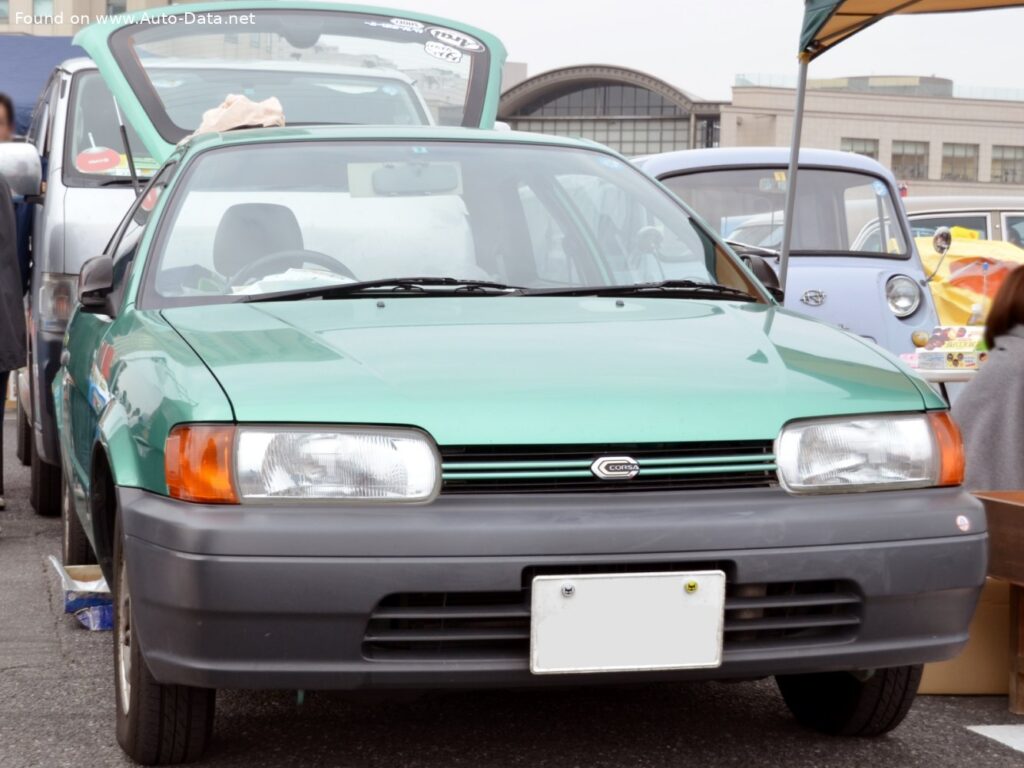
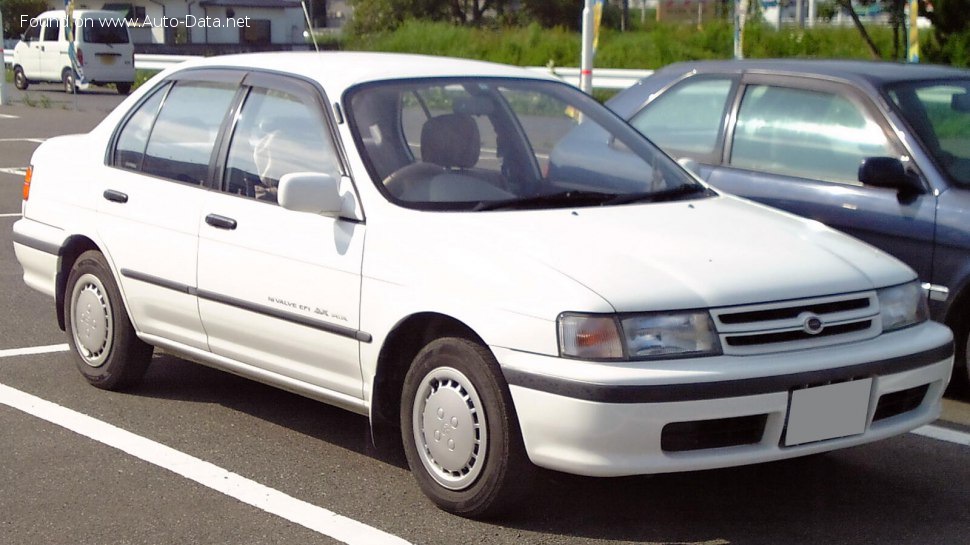
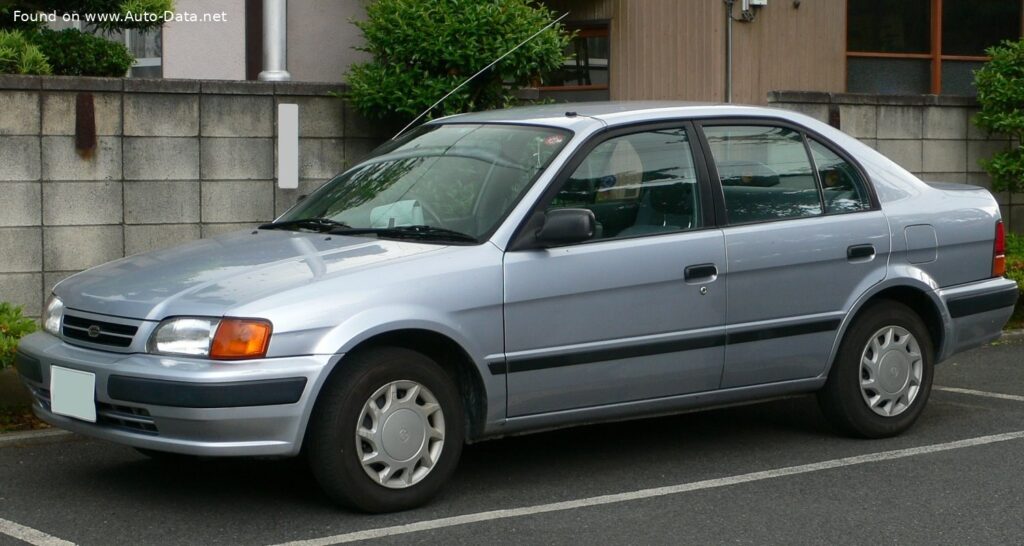
The L40 generation Toyota Corsa Hatchback featured a contemporary design for the early 1990s, moving away from the boxier aesthetics of previous generations towards a more rounded, aerodynamic profile. This 3-door hatchback body style offered a blend of sporty appeal and practical utility, making it suitable for a diverse range of buyers. Its compact dimensions – a length of 154.72 inches (3930 mm), a width of 64.76 inches (1645 mm), and a height of 53.74 inches (1365 mm) – made it exceptionally maneuverable in tight urban spaces, further aided by a minimum turning circle of just 29.53 feet (9 meters).
Despite its compact exterior, the Corsa L40 was designed to comfortably accommodate five occupants, thanks to its efficient packaging and a wheelbase of 93.7 inches (2380 mm). The interior, while not luxurious, was characterized by Toyota’s hallmark dedication to ergonomics and durability. Controls were intuitively placed, and materials were chosen for their hard-wearing nature, reflecting the car’s role as a dependable daily driver. Storage solutions were practical, and the hatchback configuration provided versatile cargo space, allowing for easy loading and unloading of groceries or luggage.
In terms of chassis and safety, the Corsa L40 utilized a conventional setup for its class. It featured disc brakes at the front and drum brakes at the rear, a common and effective combination for a lightweight subcompact. Notably, the inclusion of an Anti-lock Braking System (ABS) as an assisting system was a significant safety enhancement for a vehicle in this segment during the early 1990s, offering improved control during emergency braking. The car rode on 155/80 SR13 tires, providing a balance of comfort and grip for everyday driving conditions.
Technical Specifications of the Toyota Corsa Hatchback (L40)
| Category | Specification |
|---|---|
| General Information | |
| Brand | Toyota |
| Model | Corsa |
| Generation | Corsa Hatchback (L40) |
| Type (Engine) | 1.5 i (105 Hp) |
| Start of Production | 1990 year |
| End of Production | 1994 year |
| Powertrain Architecture | Internal Combustion engine |
| Body Type | Hatchback |
| Seats | 5 |
| Doors | 3 |
| Performance Specs | |
| Fuel Consumption (Urban) | 31.4 US mpg (7.5 l/100 km) |
| Fuel Consumption (Extra Urban) | 56 US mpg (4.2 l/100 km) |
| Fuel Type | Petrol (Gasoline) |
| Weight-to-Power Ratio | 8 kg/Hp (17.64 lbs/Hp), 125 Hp/tonne |
| Weight-to-Torque Ratio | 6.6 kg/Nm (14.55 lbs/Nm), 151.2 Nm/tonne |
| Engine Specs | |
| Power | 105 Hp @ 6400 rpm |
| Power per Liter | 70.1 Hp/l |
| Torque | 93.67 lb-ft (127 Nm) @ 3200 rpm |
| Engine Layout | Front, Transverse |
| Engine Model/Code | 5E-FE |
| Engine Displacement | 1.5 liters (1497 cm³ / 91.35 cu. in.) |
| Number of Cylinders | 4 |
| Engine Configuration | Inline |
| Cylinder Bore | 2.91 in. (74 mm) |
| Piston Stroke | 3.43 in. (87 mm) |
| Compression Ratio | 9.4:1 |
| Number of Valves per Cylinder | 4 |
| Fuel Injection System | Multi-port manifold injection |
| Engine Aspiration | Naturally aspirated engine |
| Valvetrain | DOHC |
| Engine Oil Capacity | 3.38 US qt (3.2 l) |
| Space, Volume and Weights | |
| Kerb Weight | 1851.88 lbs (840 kg) |
| Dimensions | |
| Length | 154.72 in. (3930 mm) |
| Width | 64.76 in. (1645 mm) |
| Height | 53.74 in. (1365 mm) |
| Wheelbase | 93.7 in. (2380 mm) |
| Front Track | 55.12 in. (1400 mm) |
| Rear (Back) Track | 56.3 in. (1430 mm) |
| Minimum Turning Circle (Turning Diameter) | 29.53 ft (9 m) |
| Drivetrain, Brakes and Suspension Specs | |
| Drivetrain Architecture | The Internal combustion engine (ICE) drives the front wheels of the vehicle. |
| Drive Wheel | Front wheel drive |
| Front Brakes | Disc |
| Rear Brakes | Drum |
| Assisting Systems | ABS (Anti-lock braking system) |
| Tires Size | 155/80 SR13 |
Legacy and Market Footprint
The Toyota Corsa Hatchback (L40) 1.5 i, despite its absence from the North American market under its original name, played a vital role in Toyota’s global strategy, particularly in Japan and other Asian markets. It cemented Toyota’s reputation for building small, dependable, and economical cars that catered to a wide range of consumers. Its primary appeal lay in its unwavering reliability, low running costs, and practical design, attributes that are universally valued in the subcompact segment.
In its home market, the Corsa competed fiercely with other Japanese subcompacts such as the Honda Civic (in its smaller variants), Nissan March (Micra), Mazda 121 (Demio), and Suzuki Swift. In regions where it overlapped with European markets, it would have faced off against popular models like the Ford Fiesta, Volkswagen Polo, Opel Corsa (Vauxhall Nova), and Renault Clio. The Toyota Corsa distinguished itself through its consistent quality and the inherent trust consumers placed in the Toyota brand, often outshining rivals in long-term ownership surveys.
The L40 generation, with its more refined aesthetics and improved engineering, represented the evolution of compact car design in the early 1990s. The robust 5E-FE engine, in particular, became a cornerstone of Toyota’s small-engine family, known for its longevity and tuneability, and found its way into several other Toyota models. The inclusion of safety features like ABS, though optional, highlighted Toyota’s commitment to advancing automotive safety even in its entry-level offerings.
Ultimately, the Toyota Corsa Hatchback (L40) is remembered as a quintessential example of Toyota’s engineering philosophy: building practical, efficient, and exceptionally reliable vehicles that served their owners faithfully for many years. It contributed significantly to Toyota’s global dominance and cemented the brand’s image as a leader in producing high-quality, value-for-money automobiles, leaving a lasting legacy of dependability in the subcompact segment.