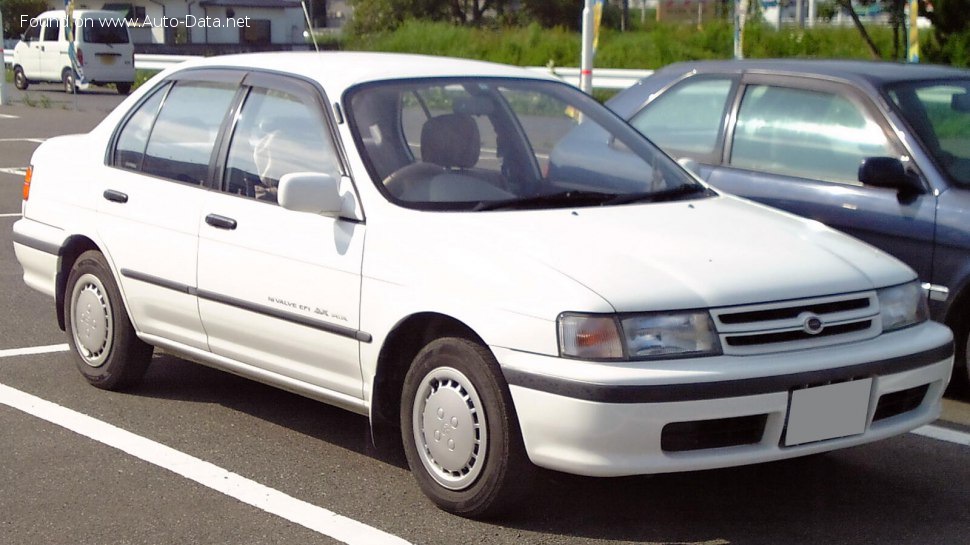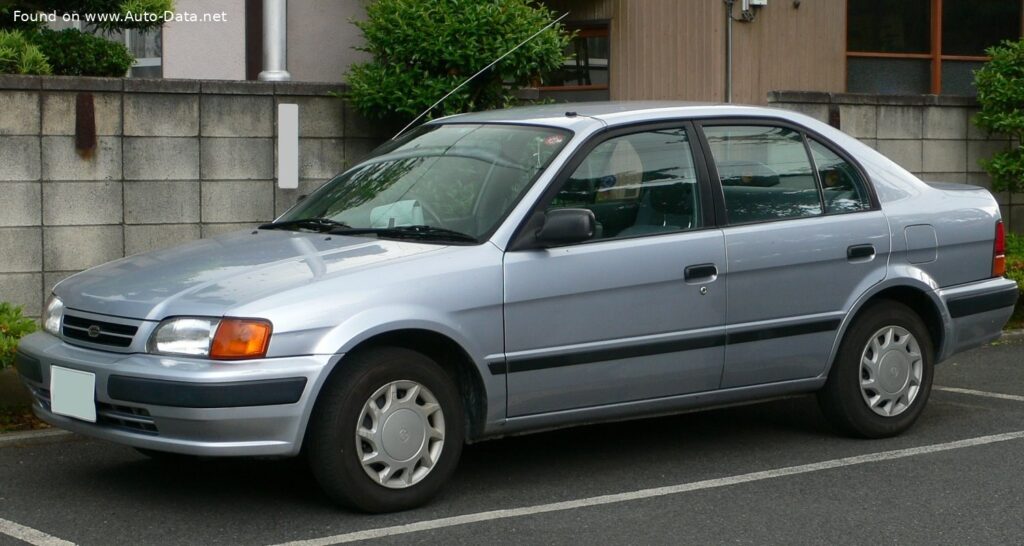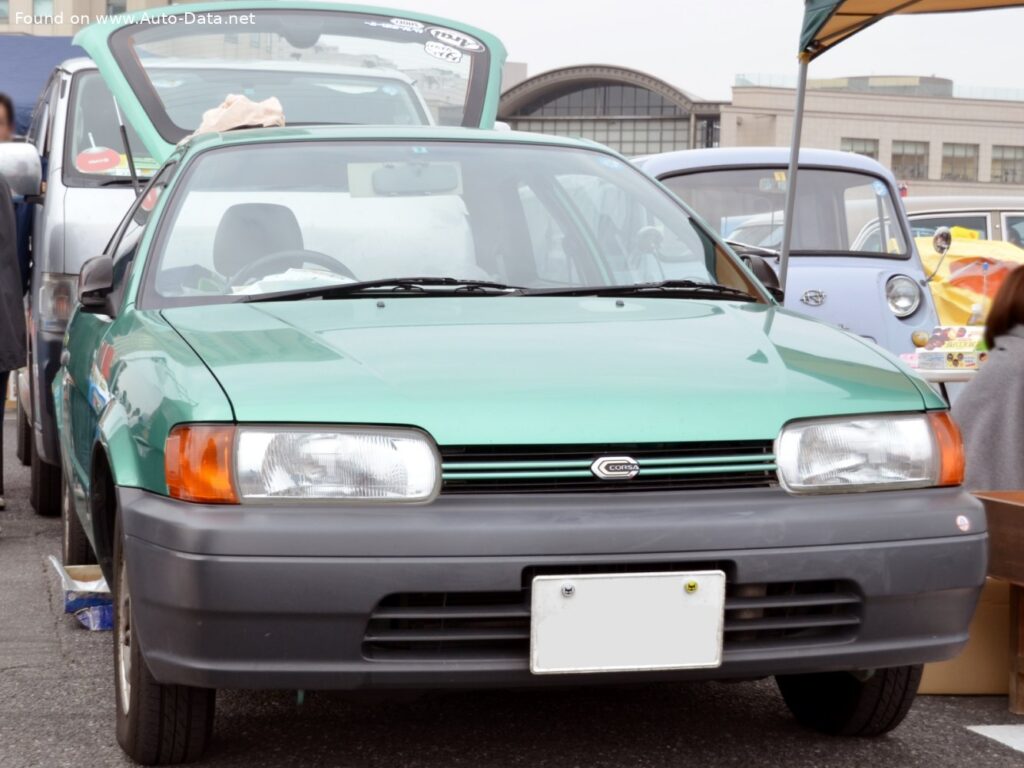
The Toyota Corsa Hatchback (L50) 1.5 i (94 Hp): A Pillar of Practicality and Economy
The Toyota Corsa, particularly its fifth-generation L50 series produced between 1994 and 1998, represents a quintessential example of Toyota’s engineering philosophy: reliability, efficiency, and unpretentious practicality. While the Corsa nameplate itself was primarily marketed in Japan and certain international markets, its mechanical underpinnings and design ethos were closely related to the Toyota Tercel, a model familiar to American consumers. The Toyota Corsa Hatchback (L50) 1.5 i (94 Hp) variant stood out as a highly competent and economical choice within the fiercely competitive compact car segment during the mid-1990s, particularly in its home market of Japan. This 3-door hatchback offered a compelling blend of urban maneuverability, surprising interior space for its class, and the legendary durability that Toyota had cultivated globally.
Launched in 1994, the L50 generation arrived during a period of significant advancements in automotive technology, even for entry-level vehicles. Toyota engineered the Corsa to meet the evolving demands for fuel efficiency and reduced emissions, without compromising on the fundamental aspects of daily usability. The 1.5-liter engine, coupled with a lightweight chassis, positioned the Corsa as an ideal vehicle for young drivers, urban commuters, or anyone seeking a dependable and cost-effective mode of transportation. Its design, while conservative, was functionally driven, optimizing interior volume and ease of access, characteristics highly valued in markets where space and efficiency were paramount.
Engine & Performance: The Heart of the Toyota Corsa Hatchback (L50)
At the core of the Toyota Corsa Hatchback (L50) 1.5 i (94 Hp) was the venerable 5E-FE engine, a 1.5-liter (1496 cm3 or 91.29 cu. in.) inline-four gasoline unit. This engine was a hallmark of Toyota’s commitment to robust and efficient powertrains. Featuring a Double Overhead Camshaft (DOHC) valvetrain with four valves per cylinder, the 5E-FE was designed for optimal breathing and combustion efficiency. Its multi-port manifold injection system ensured precise fuel delivery, contributing to both its respectable power output and excellent fuel economy. As a naturally aspirated engine, it delivered a linear and predictable power band, making it easy and comfortable to drive in varied conditions.
The engine produced a peak power of 94 horsepower at 5400 rpm, a commendable figure for a compact car of its era and displacement. Torque was rated at 97.36 lb.-ft. (132 Nm) at 4400 rpm, providing sufficient low-end grunt for urban driving and maintaining momentum on highways. These figures, combined with the vehicle’s remarkably low curb weight of just 1851.88 lbs. (840 kg), resulted in an impressive weight-to-power ratio of 8.9 kg/Hp (111.9 Hp/tonne) and a weight-to-torque ratio of 6.4 kg/Nm (157.1 Nm/tonne). This lightweight construction was a key factor in the Corsa’s agility and fuel efficiency.
Fuel economy was a major selling point for the Corsa. In urban driving conditions, it achieved an estimated 31.4 US mpg (7.5 l/100 km), while on the open road, it could reach an outstanding 56 US mpg (4.2 l/100 km). These figures underscored the Corsa’s role as an economical commuter. The engine’s layout was front, transverse, driving the front wheels, a standard and efficient configuration for compact cars that maximized interior space and simplified the drivetrain. The 5E-FE engine was also known for its longevity and low maintenance requirements, further cementing the Corsa’s reputation as a smart, practical choice.
Design & Features: Form Follows Function
The Toyota Corsa Hatchback (L50) adopted a clean, unpretentious design that prioritized function and practicality. As a 3-door hatchback, it offered a sporty yet utilitarian appeal, especially popular among younger buyers and those in need of flexible cargo space. Its compact dimensions, measuring 154.13 inches (3915 mm) in length, 65.35 inches (1660 mm) in width, and 53.94 inches (1370 mm) in height, made it exceptionally maneuverable in tight city streets and easy to park. The short wheelbase of 93.7 inches (2380 mm) contributed to its nimble handling and a remarkably tight minimum turning circle of just 29.53 feet (9 meters), an invaluable asset in congested urban environments.
Despite its compact exterior, the Corsa L50 provided seating for five occupants, a testament to Toyota’s efficient packaging. While the rear seating might have been snug for three adults on longer journeys, it was perfectly adequate for children or shorter trips. The hatchback body style naturally offered a versatile cargo area, easily expandable by folding down the rear seats, making it suitable for hauling groceries, luggage, or even small furniture. The interior, though basic by modern standards, was ergonomically designed with straightforward controls and durable materials, reflecting its focus on reliability and ease of use rather than luxury.
In terms of safety, the Corsa L50 generation began to incorporate more advanced features for its time. Crucially, it included an Anti-lock Braking System (ABS) as an assisting system, a significant enhancement for vehicle control during emergency braking, especially on slippery surfaces. The front brakes were discs, providing effective stopping power, while the rear utilized drum brakes, a common and cost-effective solution for compact cars of the era. The vehicle rode on 155/80 SR13 tires, a size that balanced comfort, grip, and fuel efficiency, further complementing its economical character.
Technical Specifications: Toyota Corsa Hatchback (L50) 1.5 i (94 Hp)
| General Information | |
|---|---|
| Brand | Toyota |
| Model | Corsa |
| Generation | Corsa Hatchback (L50) |
| Type (Engine) | 1.5 i (94 Hp) |
| Start of Production | 1994 year |
| End of Production | 1998 year |
| Powertrain Architecture | Internal Combustion engine |
| Body type | Hatchback |
| Seats | 5 |
| Doors | 3 |
| Performance Specifications | |
| Fuel consumption (economy) – urban | 31.4 US mpg (7.5 l/100 km) |
| Fuel consumption (economy) – extra urban | 56 US mpg (4.2 l/100 km) |
| Fuel Type | Petrol (Gasoline) |
| Weight-to-power ratio | 8.9 kg/Hp, 111.9 Hp/tonne |
| Weight-to-torque ratio | 6.4 kg/Nm, 157.1 Nm/tonne |
| Engine Specifications | |
| Power | 94 Hp @ 5400 rpm |
| Power per liter | 62.8 Hp/l |
| Torque | 97.36 lb.-ft. (132 Nm) @ 4400 rpm |
| Engine layout | Front, Transverse |
| Engine Model/Code | 5E-FE |
| Engine displacement | 1496 cm3 (91.29 cu. in.) |
| Number of cylinders | 4 |
| Engine configuration | Inline |
| Cylinder Bore | 2.91 in. (74 mm) |
| Piston Stroke | 3.43 in. (87 mm) |
| Compression ratio | 9.8:1 |
| Number of valves per cylinder | 4 |
| Fuel injection system | Multi-port manifold injection |
| Engine aspiration | Naturally aspirated engine |
| Valvetrain | DOHC |
| Engine oil capacity | 2.96 US qt (2.8 l) |
| Coolant capacity | 5.18 US qt (4.9 l) |
| Space, Volume and Weights | |
| Kerb Weight | 1851.88 lbs. (840 kg) |
| Dimensions | |
| Length | 154.13 in. (3915 mm) |
| Width | 65.35 in. (1660 mm) |
| Height | 53.94 in. (1370 mm) |
| Wheelbase | 93.7 in. (2380 mm) |
| Front track | 55.12 in. (1400 mm) |
| Rear (Back) track | 56.3 in. (1430 mm) |
| Minimum turning circle (turning diameter) | 29.53 ft. (9 m) |
| Drivetrain, Brakes and Suspension Specifications | |
| Drivetrain Architecture | The Internal combustion engine (ICE) drives the front wheels of the vehicle. |
| Drive wheel | Front wheel drive |
| Front brakes | Disc |
| Rear brakes | Drum |
| Assisting systems | ABS (Anti-lock braking system) |
| Tires size | 155/80 SR13 |
Legacy & Market Impact of the Toyota Corsa Hatchback (L50)
The Toyota Corsa, particularly the L50 generation, carved out a significant niche in its primary markets, most notably Japan. It was a direct competitor to other compact stalwarts of the era, such as the Honda Civic, Nissan Sunny (Pulsar in some markets), and Mazda Familia (323 globally). What set the Corsa apart, and indeed most Toyotas of the period, was its unwavering reputation for reliability and low running costs. These attributes made it an incredibly popular choice among first-time car buyers, small families, and anyone prioritizing peace of mind and economical ownership.
While the Corsa nameplate was not directly used in the United States, its mechanical twin, the Toyota Tercel, enjoyed considerable success there. The Tercel shared many of the Corsa’s core characteristics, including its efficient 5E-FE engine and front-wheel-drive platform. This commonality underscores Toyota’s global strategy of developing robust, modular platforms that could be adapted to various regional markets under different names. The Corsa’s impact in Japan was profound; it consistently ranked high in sales figures, solidifying Toyota’s dominance in the compact car segment. Its success was not built on flashy features or cutting-edge design, but on a foundation of solid engineering, exceptional fuel economy, and the brand trust that Toyota had meticulously cultivated over decades.
The L50 series Corsa, with its 1.5 i (94 Hp) engine, represented a practical evolution in compact car design. It demonstrated that a car could be affordable, efficient, and enjoyable without being overly complex. Its legacy is one of quiet competence and enduring value. Even today, many examples of this generation of Corsa (and its Tercel counterpart) can still be found on roads, a testament to their inherent durability and the quality of their construction. It was a vehicle that delivered precisely what it promised: reliable, economical transportation, perfectly suited to the demands of its era and its target demographic. The Corsa L50, in its unassuming way, played a crucial role in maintaining Toyota’s reputation as a leader in dependable and accessible automotive engineering.