The Toyota Corsa (L40) 1.3 i (97 Hp): A Japanese Subcompact Stalwart
The Toyota Corsa (L40) 1.3 i (97 Hp) represents a significant chapter in Toyota’s history of crafting reliable and economical subcompact vehicles. Introduced in 1990 as the fourth generation of the Corsa nameplate, the L40 series continued Toyota’s tradition of offering practical and efficient transportation, primarily for the Japanese domestic market and select Asian regions. While not officially sold in the United States, the Corsa shared its platform and many mechanical components with the more globally recognized Toyota Tercel, providing a fascinating insight into Toyota’s diversified product strategy during the early 1990s. This particular variant, powered by a 1.3-liter inline-four engine producing 97 horsepower, struck a commendable balance between performance and fuel efficiency, making it a popular choice for urban commuters and small families.
The L40 generation of the Toyota Corsa was produced from 1990 to 1994, embodying the design and engineering philosophies prevalent in Japanese automotive manufacturing of that era. It was positioned as an entry-level compact sedan, emphasizing durability, low running costs, and ease of use. Despite its absence from American showrooms, understanding the Toyota Corsa (L40) 1.3 i (97 Hp) is crucial for appreciating Toyota’s global engineering prowess and its ability to tailor vehicles to specific market demands, even within the highly competitive subcompact segment.
Engineering and Performance of the Toyota Corsa (L40) 1.3 i (97 Hp)
At the heart of the Toyota Corsa (L40) 1.3 i (97 Hp) lies the robust and efficient 4E-FE engine, a testament to Toyota’s engineering philosophy of reliability and refinement. This powerplant is a naturally aspirated, 1.3-liter (specifically, 1331 cubic centimeters or 81.22 cubic inches) inline-four engine, featuring a Double Overhead Camshaft (DOHC) valvetrain with four valves per cylinder. This 16-valve configuration, combined with multi-port manifold fuel injection, allowed for efficient combustion and a respectable power output for its displacement.
The 4E-FE engine delivered a maximum of 97 horsepower at a relatively high 6400 revolutions per minute (rpm), showcasing its free-revving nature. Torque figures stood at 83.34 pound-feet (113 Nm) at 5200 rpm. These figures, while modest by today’s standards, were quite competitive for a subcompact car in the early 1990s. The engine’s front, transverse layout, coupled with front-wheel drive, was the standard architecture for maximizing interior space and manufacturing efficiency in this class.
Performance was geared towards economy and practicality rather than outright speed. The vehicle’s lightweight kerb weight of 1851.88 pounds (840 kg) contributed to a favorable weight-to-power ratio of 115.5 horsepower per ton, allowing for sprightly acceleration in urban environments. Fuel efficiency was a strong suit, with the Corsa 1.3 i achieving an estimated 31.4 US miles per gallon (mpg) in urban driving conditions and an impressive 56 US mpg on the extra-urban cycle. This made it an incredibly economical choice for daily commuting, aligning perfectly with the needs of its target market.
The drivetrain architecture, with the internal combustion engine driving the front wheels, provided predictable handling and good traction in various conditions. Braking was handled by disc brakes at the front and drum brakes at the rear, a common setup for economical vehicles of the era. An Anti-lock Braking System (ABS) was an available assisting system, enhancing safety – a progressively more common feature even in smaller cars during the early 90s. The combination of its responsive engine and efficient powertrain made the Toyota Corsa (L40) 1.3 i (97 Hp) a practical and enjoyable car for its intended purpose.
Design Philosophy and Interior Features
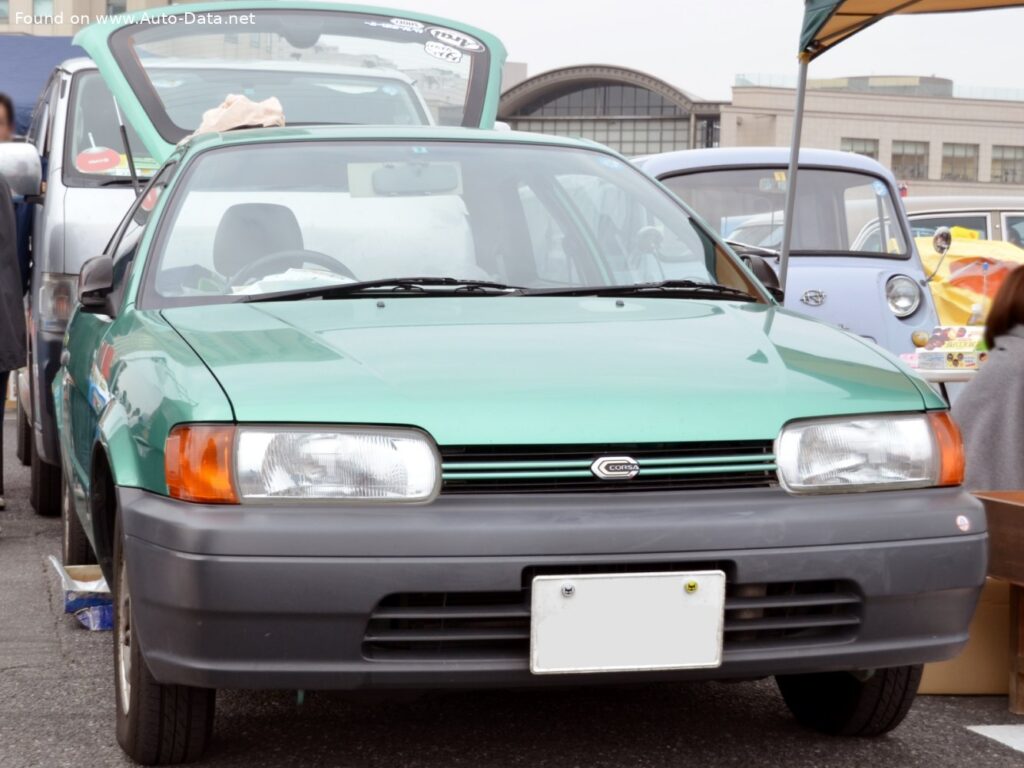
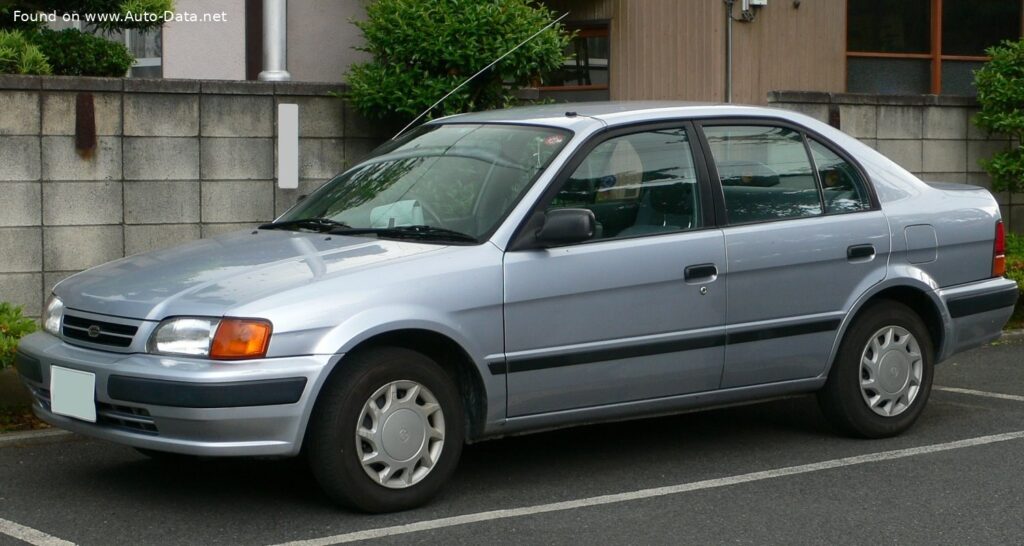
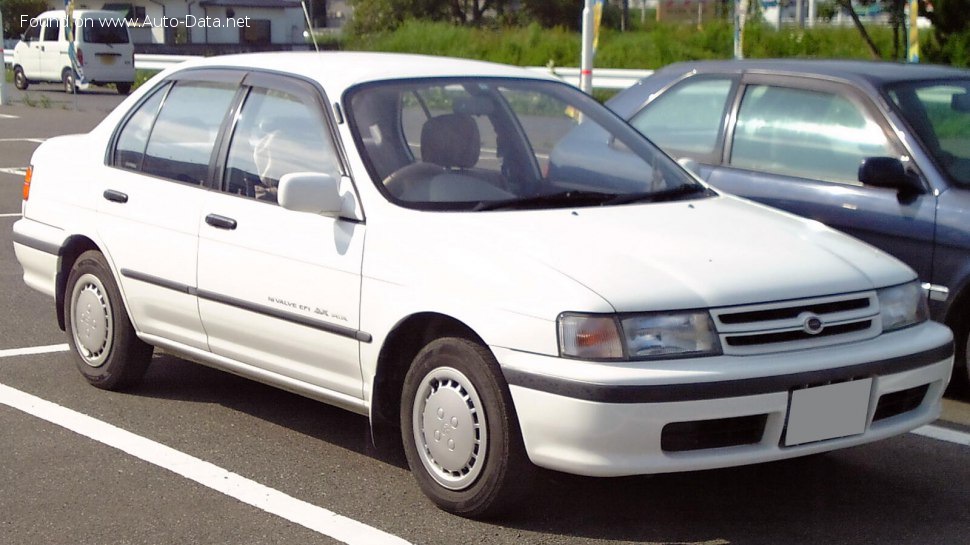
The design of the Toyota Corsa (L40) 1.3 i (97 Hp) adhered to the functional and understated aesthetic prevalent in Japanese compact cars of its time. As a 4-door sedan, it prioritized practicality, offering comfortable seating for five occupants. Its exterior dimensions – a length of 162.01 inches, a width of 65.35 inches, and a height of 53.94 inches – made it compact enough for navigating congested city streets while providing adequate interior room. The wheelbase of 93.7 inches contributed to a tight turning circle of 29.53 feet, further enhancing its maneuverability in urban settings.
Visually, the L40 Corsa featured clean lines and a simple, aerodynamic profile, eschewing flamboyant styling in favor of timeless utility. The design was conservative but not without purpose, aiming for minimal drag and a broad appeal. The vehicle rode on 155/80 SR13 tires, a standard size for economical subcompacts, balancing grip with rolling resistance for optimal fuel economy.
Inside, the Corsa’s cabin was designed with ergonomics and durability in mind. While luxury appointments were minimal, the focus was on straightforward controls, clear instrumentation, and hard-wearing materials built to withstand years of daily use. Storage compartments were thoughtfully integrated, and the overall layout was intuitive, reflecting Toyota’s commitment to user-friendliness. The five-seat configuration ensured that the Corsa could serve as a versatile family car, capable of handling school runs, grocery trips, and weekend outings with ease. Features like power windows, air conditioning, and a basic audio system would have been available, either as standard or optional, depending on the specific trim level in its home market.
Technical Specifications of the Toyota Corsa (L40) 1.3 i (97 Hp)
| Category | Specification |
|---|---|
| General Information | |
| Brand | Toyota |
| Model | Corsa |
| Generation | Corsa (L40) |
| Type (Engine) | 1.3 i (97 Hp) |
| Start of Production | 1990 year |
| End of Production | 1994 year |
| Powertrain Architecture | Internal Combustion engine |
| Body type | Sedan |
| Seats | 5 |
| Doors | 4 |
| Performance Specs | |
| Fuel consumption (urban) | 31.4 US mpg |
| Fuel consumption (extra urban) | 56 US mpg |
| Fuel Type | Petrol (Gasoline) |
| Weight-to-power ratio | 8.7 kg/Hp, 115.5 Hp/tonne |
| Weight-to-torque ratio | 7.4 kg/Nm, 134.5 Nm/tonne |
| Engine Specs | |
| Power | 97 Hp @ 6400 rpm |
| Power per liter | 72.9 Hp/l |
| Torque | 83.34 lb.-ft. @ 5200 rpm |
| Engine layout | Front, Transverse |
| Engine Model/Code | 4E-FE |
| Engine displacement | 1.331 liters (81.22 cu. in.) |
| Number of cylinders | 4 |
| Engine configuration | Inline |
| Cylinder Bore | 2.91 in. (74 mm) |
| Piston Stroke | 3.05 in. (77.4 mm) |
| Compression ratio | 9.6:1 |
| Number of valves per cylinder | 4 |
| Fuel injection system | Multi-port manifold injection |
| Engine aspiration | Naturally aspirated engine |
| Valvetrain | DOHC |
| Engine oil capacity | 3.38 US qt (3.2 l) |
| Space, Volume and Weights | |
| Kerb Weight | 1851.88 lbs. (840 kg) |
| Fuel tank capacity | 11.89 US gal (45 l) |
| Dimensions | |
| Length | 162.01 in. (4115 mm) |
| Width | 65.35 in. (1660 mm) |
| Height | 53.94 in. (1370 mm) |
| Wheelbase | 93.7 in. (2380 mm) |
| Front track | 55.12 in. (1400 mm) |
| Rear (Back) track | 56.3 in. (1430 mm) |
| Minimum turning circle | 29.53 ft. (9 m) |
| Drivetrain, Brakes and Suspension | |
| Drivetrain Architecture | The Internal combustion engine (ICE) drives the front wheels of the vehicle. |
| Drive wheel | Front wheel drive |
| Front brakes | Disc |
| Rear brakes | Drum |
| Assisting systems | ABS (Anti-lock braking system) |
| Tires size | 155/80 SR13 |
Legacy and Market Impact of the Toyota Corsa (L40)
The Toyota Corsa (L40) 1.3 i (97 Hp), like its predecessors and successors, solidified Toyota’s reputation for producing exceptionally reliable, economical, and low-maintenance vehicles. In its primary markets, particularly Japan, the Corsa was highly regarded for its practicality and sensible approach to personal transportation. Its robust 4E-FE engine, shared with other Toyota models, was known for its longevity and efficiency, contributing to the Corsa’s strong resale value and enduring popularity.
In the fiercely competitive Japanese subcompact segment of the early 1990s, the Corsa faced rivals such as the Honda Civic (in its smaller engine variants), the Nissan Sunny (known as the Sentra in North America), the Mazda Familia (the 323 globally), and the Mitsubishi Lancer. The Corsa distinguished itself through Toyota’s renowned build quality and a slightly more conventional, practical design approach compared to some of its more stylistically adventurous competitors. It often served as a slightly more upscale or sportier twin to the Toyota Corolla II and the more utilitarian Toyota Tercel, offering consumers a subtle variety within Toyota’s extensive subcompact lineup.
The Corsa’s historical significance lies in its role as a key component of Toyota’s multi-pronged strategy to dominate various niches within the compact and subcompact car markets globally. While the Tercel was the designated export model for many markets, including North America, the Corsa allowed Toyota to fine-tune its offerings for specific regional preferences and distribution channels within Japan. Its enduring mechanical robustness and fuel efficiency also contributed to Toyota’s overall image as a leader in dependable, environmentally conscious automotive engineering, a reputation that continues to resonate today.
Though never officially imported to the United States, the Toyota Corsa (L40) 1.3 i (97 Hp) embodies the core values that made Toyota a global automotive powerhouse. It was a no-nonsense, dependable vehicle that efficiently met the daily transportation needs of millions, contributing significantly to the brand’s legacy of quality, durability, and reliability. Its continued presence on the roads of Japan and other Asian countries long after its production ceased is a testament to its fundamental design and engineering excellence.