Toyota Cressida (X6) 2.0 GLi-6 (109 Hp)
The Toyota Cressida (X6) 2.0 GLi-6 (109 Hp) represents a significant chapter in Toyota’s history, embodying the company’s aspirations in the executive sedan segment during the early 1980s. Launched in 1982, the X6 generation of the Cressida, known as the Mark II in Japan and certain other markets, served as Toyota’s flagship sedan globally before the advent of the Lexus brand. This particular variant, the 2.0 GLi-6, was a key offering in markets where smaller displacement engines were favored due to taxation or fuel economy concerns, such as Europe and parts of Asia, distinguishing it from the larger-engined versions typically sold in the North American market. The Cressida X6 was lauded for its blend of traditional rear-wheel-drive architecture, refined inline-six engine, and a reputation for bulletproof reliability, cementing its position as a comfortable and dependable family or executive transport. Produced until 1984, it carved out a niche for itself as a practical yet sophisticated sedan, bridging the gap between mainstream Toyota models and the emerging premium segment.
Engine & Performance: The Inline-Six Heart of the Cressida (X6)
At the core of the Toyota Cressida (X6) 2.0 GLi-6 lies the 1G-E engine, a naturally aspirated, 2.0-liter (1988 cc) inline-six gasoline powerplant. This engine was a hallmark of Toyota’s engineering prowess, known for its inherent balance and smoothness, characteristics that greatly contributed to the Cressida’s refined driving experience. With an output of 109 horsepower (Hp), the 1G-E was not designed for blistering acceleration but rather for effortless cruising and reliable day-to-day performance. Its naturally aspirated design ensured predictable power delivery across the rev range, making it a comfortable companion for both city driving and longer highway journeys.
The inline-six configuration, a premium choice often associated with more luxurious European marques, provided a distinct advantage in terms of vibration suppression compared to four-cylinder alternatives. This smoothness was a key selling point, enhancing the vehicle’s executive appeal. The engine’s robust construction and straightforward design also contributed to Toyota’s legendary reputation for durability and low maintenance requirements. Fueling the 1G-E was standard petrol (gasoline), and its 4.3-liter (4.54 US quarts) engine oil capacity ensured adequate lubrication for longevity. While specific torque figures are not available, the 109 Hp output, combined with the engine’s inherent characteristics, made the 2.0 GLi-6 a competent performer within its class, prioritizing comfort and reliability over outright speed.
Design & Features: Early 80s Executive Sedan Aesthetics
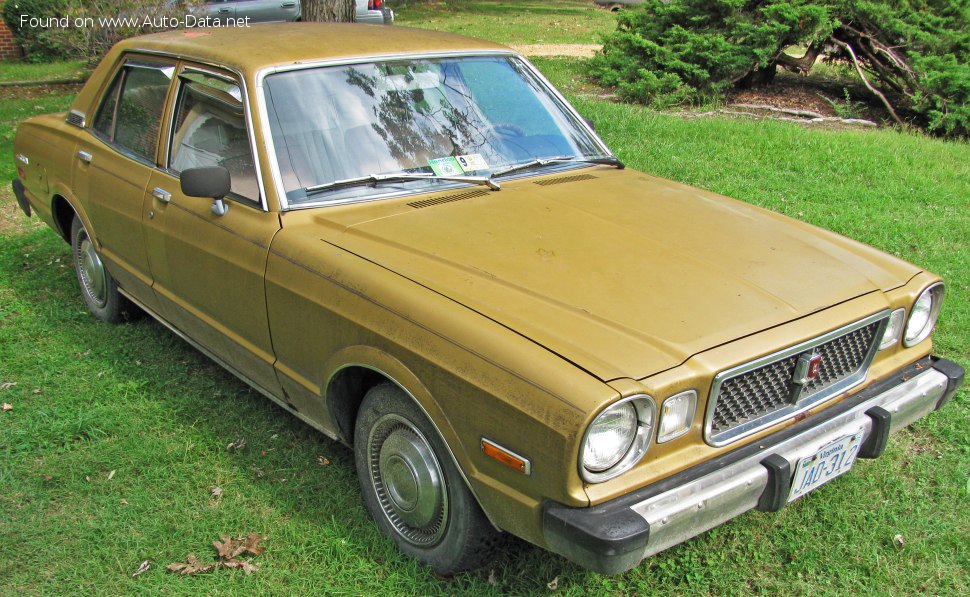
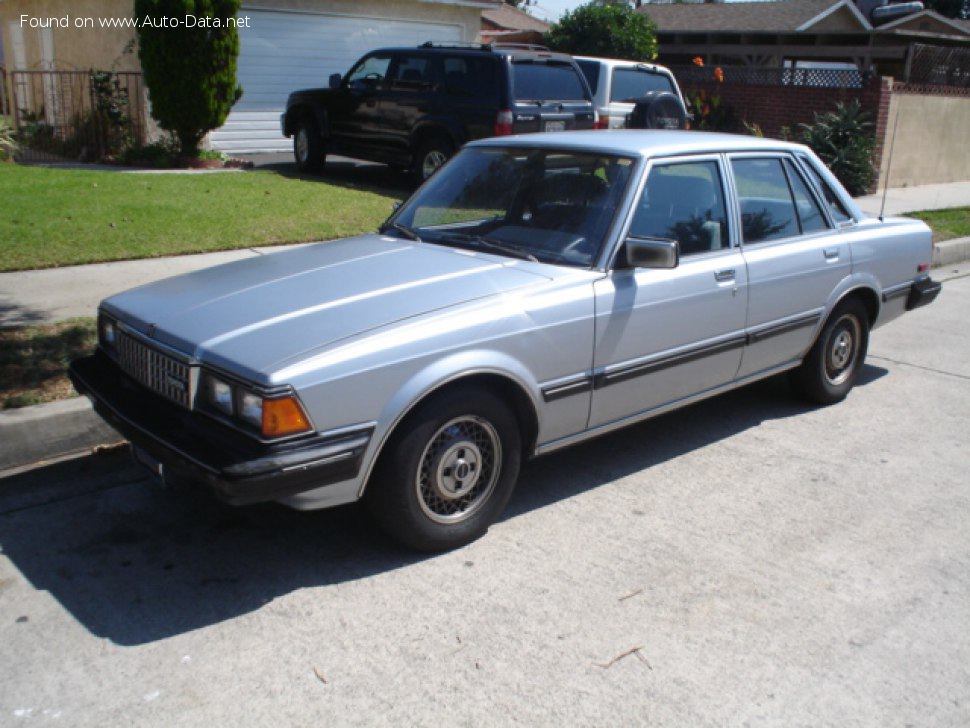
The X6 generation of the Toyota Cressida (X6) marked a stylistic evolution for the model, transitioning from the softer lines of its predecessor to a more angular, contemporary aesthetic that defined automotive design in the early to mid-1980s. The 2.0 GLi-6 variant, with its classic sedan body type, presented a dignified and understated appearance. It featured a crisp, three-box silhouette with clear, defined edges, a departure from the more rounded designs that would emerge later in the decade. The four-door configuration provided easy access for all occupants, while the spacious cabin comfortably accommodated five passengers, reflecting its role as a practical family or executive vehicle.
For its era, the GLi-6 trim level typically signified a well-appointed interior, offering a comfortable and feature-rich environment. While specific amenities for this exact variant are not detailed, Cressidas of this vintage often included conveniences such as power windows, air conditioning, a quality audio system, and comfortable cloth or optional velour upholstery. The dashboard design was functional and driver-oriented, with clear instrumentation. Emphasis was placed on ride comfort, achieved through a well-tuned suspension setup that soaked up road imperfections, contributing to a serene cabin experience. The X6 Cressida’s design ethos was one of sensible luxury, combining practical utility with an air of quiet sophistication, aiming to appeal to buyers who valued reliability and comfort in equal measure.
Technical Specifications
| Category | Specification |
|---|---|
| Brand | Toyota |
| Model | Cressida |
| Generation | Cressida (X6) |
| Engine Type | 2.0 GLi-6 (109 Hp) |
| Start of Production | 1982 year |
| End of Production | 1984 year |
| Powertrain Architecture | Internal Combustion engine |
| Body Type | Sedan |
| Seats | 5 |
| Doors | 4 |
| Fuel Type | Petrol (Gasoline) |
| Power | 109 Hp |
| Engine Model/Code | 1G-E |
| Engine Aspiration | Naturally aspirated engine |
| Engine Oil Capacity | 4.3 l (4.54 US qt) |
| Fuel Tank Capacity | 65 l (17.17 US gal) |
Legacy & Market Impact of the Toyota Cressida (X6)
The Toyota Cressida (X6) played a crucial role in Toyota’s global strategy, particularly in solidifying its reputation for building reliable, well-engineered vehicles that offered a compelling alternative to established European and American executive sedans. While the 2.0 GLi-6 variant was specifically targeted at markets valuing smaller engines, the Cressida line as a whole was a global success. In North America, the Cressida was a stepping stone for many buyers towards a more premium Japanese experience, paving the way for the later introduction of the Lexus brand. Its main competitors varied by market, but generally included vehicles like the Nissan Laurel/Gloria, Mazda 929, and entry-level executive sedans from European manufacturers such as the BMW 3 Series or Mercedes-Benz 190E, though the Cressida often undercut them on price while matching or exceeding them in reliability.
The X6 generation, with its durable 1G-E engine and robust rear-wheel-drive platform, quickly earned a reputation for longevity. Many examples of this generation continued to serve their owners well into the 1990s and beyond, a testament to Toyota’s build quality. This enduring reliability contributed significantly to Toyota’s brand image worldwide. In enthusiast circles, the Cressida X6, particularly its rear-wheel-drive chassis, has garnered a cult following. Its robust mechanicals and adaptable platform made it a popular choice for customization, especially in drifting and performance modification, long after its production ceased.
Historically, the Cressida line represents Toyota’s persistent efforts to climb the automotive ladder, proving that Japanese manufacturers could produce sophisticated and comfortable vehicles capable of competing in higher segments. The 2.0 GLi-6 model, while perhaps less powerful than its larger-displacement siblings, perfectly encapsulated this philosophy for its target markets: a car that offered smooth, dependable transport with a touch of executive class. The Cressida’s legacy is ultimately one of quiet competence, unwavering reliability, and its pivotal role in establishing Toyota as a global force in both mainstream and aspirational automotive segments. It remains a classic example of early 1980s Japanese engineering, appreciated today for its heritage and enduring mechanical integrity.