The Toyota Harrier I (XU10): A Pioneer of the Modern Crossover
The Toyota Harrier I (XU10), produced from 1997 to 2000, stands as a foundational vehicle in the evolution of the modern crossover SUV. While primarily targeted at the Japanese domestic market and other Asian regions, the Harrier gained international recognition, particularly in North America where it was rebadged and sold as the luxury-oriented Lexus RX. This first-generation Harrier, specifically the 2.2i 16V (140 Hp) Automatic variant, was instrumental in defining the burgeoning segment of car-based utility vehicles, blending the spaciousness and elevated driving position of an SUV with the ride comfort and handling characteristics of a passenger car. Its innovative approach to design and engineering set a new benchmark for what consumers could expect from a family-friendly vehicle that offered both versatility and refinement.
Before its debut, the automotive landscape was largely divided between rugged, body-on-frame SUVs and traditional sedans or wagons. The Toyota Harrier I (XU10) broke this mold by adopting a unibody construction derived from the Toyota Camry platform, a move that prioritized on-road driving dynamics and fuel efficiency over extreme off-road capability. This strategic design choice resonated with a growing demographic of buyers who desired the utility of an SUV without the associated compromises in comfort and maneuverability. The 2.2i 16V model, equipped with a reliable inline-four engine and an automatic transmission, offered a practical and accessible entry into this new class of vehicles, cementing the Harrier’s legacy as a true trailblazer.
Engine and Performance of the Toyota Harrier I (XU10) 2.2i 16V (140 Hp) Automatic
At the heart of the Toyota Harrier I (XU10) 2.2i 16V (140 Hp) Automatic lies the venerable 5S-FE engine, a 2.2-liter (2166 cm³ or 132.18 cu. in.) inline-four powerplant that was a staple across various Toyota models of the era. This naturally aspirated engine, featuring a DOHC (Double Overhead Camshaft) valvetrain with four valves per cylinder, was engineered for smooth operation and dependable performance, characteristics highly valued in a family-oriented crossover. It delivered a respectable 140 horsepower at 5600 rpm and 143.82 lb.-ft. (195 Nm) of torque at 4400 rpm. While not designed for blistering acceleration, this output was more than adequate for daily driving, highway cruising, and urban environments, ensuring a comfortable and confident driving experience.
Power was efficiently transmitted to the front wheels via a 4-speed automatic transmission. This drivetrain architecture, focusing on front-wheel drive, further underscored the Harrier’s car-like intentions, emphasizing efficiency and ease of use over rugged all-wheel-drive systems, though AWD variants were also available in the lineup. The vehicle’s weight-to-power ratio of 11.4 kg/Hp (88.1 Hp/tonne) and weight-to-torque ratio of 8.2 kg/Nm (122.6 Nm/tonne) contributed to its composed road manners. In terms of fuel economy, the 2.2i 16V model achieved an urban consumption rating of approximately 10.5 liters per 100 kilometers, translating to about 22.4 US miles per gallon, a competitive figure for a vehicle of its size and class during the late 1990s. The engine’s multi-port manifold injection system ensured precise fuel delivery, contributing to both efficiency and reduced emissions. With an engine oil capacity of 3.6 liters and a coolant capacity of 8.3 liters, maintenance was straightforward, aligning with Toyota’s reputation for reliability and user-friendly vehicle ownership.
Design and Features
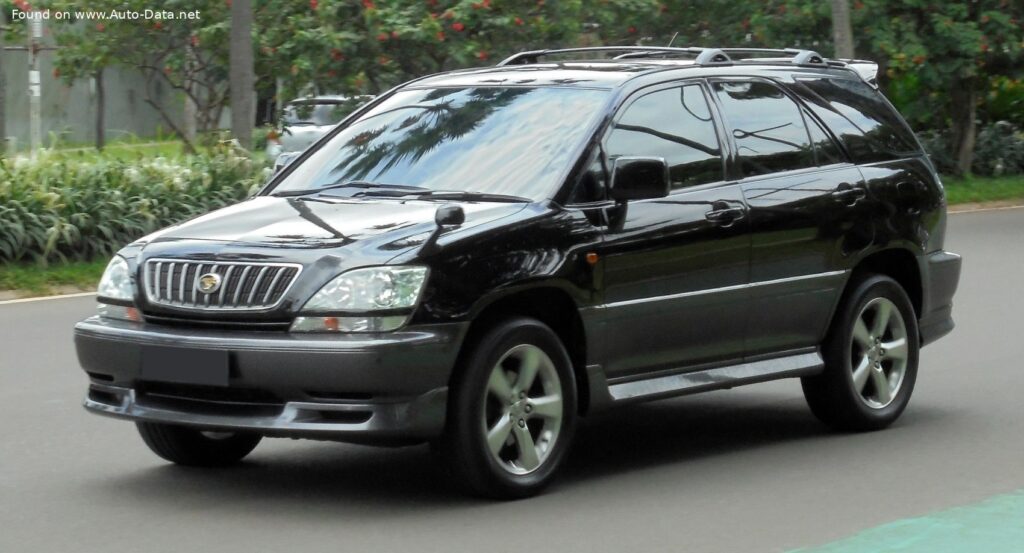
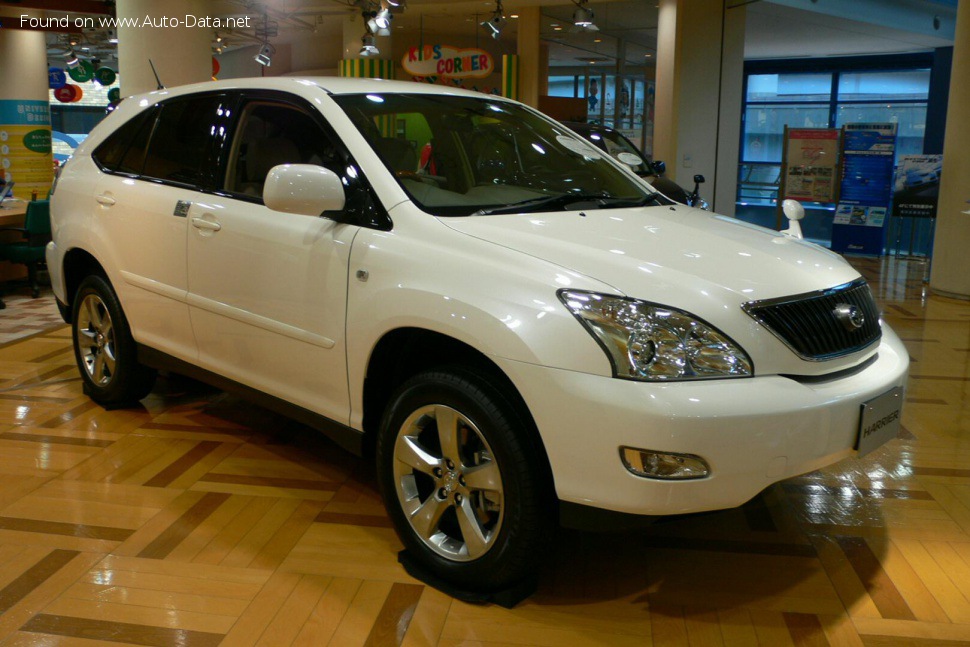
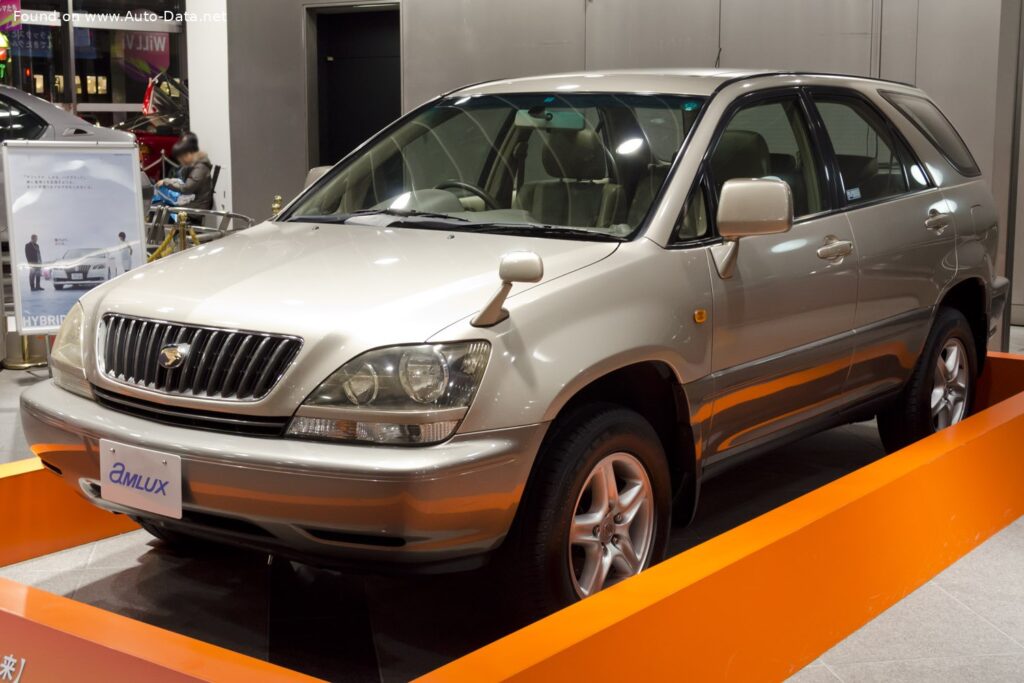
The design of the Toyota Harrier I (XU10) was revolutionary for its time, successfully blending the robust presence of an SUV with the sleek lines and aerodynamic efficiency of a sedan. Its unibody construction, a departure from traditional ladder-frame SUVs, allowed for a lower center of gravity and improved handling. The body type was classified as an SUV/Crossover, featuring five doors and seating for five occupants, making it highly practical for families. The exterior dimensions of 180.12 inches (4575 mm) in length, 71.46 inches (1815 mm) in width, and 65.55 inches (1665 mm) in height, coupled with a 102.95-inch (2615 mm) wheelbase, provided a substantial road presence without being overly cumbersome for urban driving. The ground clearance of 7.28 inches (185 mm) offered enough elevation for light off-road excursions or navigating rougher terrain, while maintaining easy ingress and egress.
Inside, the Harrier offered a spacious and comfortable cabin, prioritizing ergonomics and passenger comfort. The elevated seating position provided excellent visibility, a characteristic that quickly became a hallmark of the crossover segment. Storage was ample, with a minimum trunk space of 30.37 cu. ft. (860 liters) that could expand to an impressive 75.22 cu. ft. (2130 liters) with the rear seats folded, demonstrating its versatility for cargo hauling.
Key features for the era included a standard Anti-lock Braking System (ABS), which significantly enhanced safety by preventing wheel lock-up during hard braking. The steering system utilized a rack and pinion setup with hydraulic power steering, providing a responsive yet comfortable steering feel. The suspension system consisted of a spring strut design for the front and a trailing arm setup for the rear, contributing to the Harrier’s smooth and controlled ride. Braking power was supplied by ventilated discs at the front and solid discs at the rear. The vehicle rode on 215/70 R16 99S tires mounted on 6.5J x 16 ET35 wheels, a combination that offered a good balance of grip, comfort, and durability. The overall design language of the Harrier I (XU10) was influential, setting the aesthetic direction for many crossovers that followed.
Technical Specifications: Toyota Harrier I (XU10) 2.2i 16V (140 Hp) Automatic
| Category | Specification |
|---|---|
| General Information | |
| Brand | Toyota |
| Model | Harrier |
| Generation | Harrier I (XU10) |
| Type (Engine) | 2.2i 16V (140 Hp) Automatic |
| Start of Production | 1997 year |
| End of Production | 2000 year |
| Powertrain Architecture | Internal Combustion engine |
| Body type | SUV, Crossover |
| Seats | 5 |
| Doors | 5 |
| Performance Specs | |
| Fuel Consumption (Urban) | 10.5 l/100 km (22.4 US mpg) |
| Fuel Type | Petrol (Gasoline) |
| Weight-to-Power Ratio | 11.4 kg/Hp (88.1 Hp/tonne) |
| Weight-to-Torque Ratio | 8.2 kg/Nm (122.6 Nm/tonne) |
| Engine Specs | |
| Power | 140 Hp @ 5600 rpm |
| Power per Liter | 64.6 Hp/l |
| Torque | 195 Nm @ 4400 rpm (143.82 lb.-ft. @ 4400 rpm) |
| Engine Layout | Front, Transverse |
| Engine Model/Code | 5S-FE |
| Engine Displacement | 2166 cm³ (2.2 liters / 132.18 cu. in.) |
| Number of Cylinders | 4 |
| Engine Configuration | Inline |
| Cylinder Bore | 87 mm (3.43 in.) |
| Piston Stroke | 91 mm (3.58 in.) |
| Compression Ratio | 9.8:1 |
| Number of Valves per Cylinder | 4 |
| Fuel Injection System | Multi-port manifold injection |
| Engine Aspiration | Naturally aspirated engine |
| Valvetrain | DOHC |
| Engine Oil Capacity | 3.6 l (3.8 US qt) |
| Coolant Capacity | 8.3 l (8.77 US qt) |
| Space, Volume and Weights | |
| Kerb Weight | 1590 kg (3505.35 lbs.) |
| Trunk (boot) Space – Minimum | 860 l (30.37 cu. ft.) |
| Trunk (boot) Space – Maximum | 2130 l (75.22 cu. ft.) |
| Fuel Tank Capacity | 65 l (17.17 US gal) |
| Dimensions | |
| Length | 4575 mm (180.12 in.) |
| Width | 1815 mm (71.46 in.) |
| Height | 1665 mm (65.55 in.) |
| Wheelbase | 2615 mm (102.95 in.) |
| Front Track | 1565 mm (61.61 in.) |
| Rear (Back) Track | 1550 mm (61.02 in.) |
| Ride Height (Ground Clearance) | 185 mm (7.28 in.) |
| Drivetrain, Brakes and Suspension Specs | |
| Drivetrain Architecture | Internal combustion engine (ICE) drives the front wheels. |
| Drive Wheel | Front wheel drive |
| Number of Gears and Type of Gearbox | 4 gears, automatic transmission |
| Front Suspension | Spring Strut |
| Rear Suspension | Trailing arm |
| Front Brakes | Ventilated discs |
| Rear Brakes | Disc |
| Assisting Systems | ABS (Anti-lock braking system) |
| Steering Type | Steering rack and pinion |
| Power Steering | Hydraulic Steering |
| Tires Size | 215/70 R16 99S |
| Wheel Rims Size | 6.5J x 16 ET35 |
Legacy and Market Impact of the Toyota Harrier I (XU10)
The Toyota Harrier I (XU10) holds a significant place in automotive history, particularly for its role in pioneering the luxury crossover segment. While sold as the Harrier in Japan and other Asian markets, its rebadged sibling, the Lexus RX, launched in North America in 1998, effectively created and dominated the premium crossover category. This strategy allowed Toyota to test the waters with the Harrier in its home market, refining the concept before introducing it to a global luxury audience under the Lexus brand. The Harrier’s success, and that of the RX, demonstrated a clear market demand for vehicles that combined the practicality of an SUV with the refined driving experience of a luxury sedan, without the rugged, truck-like characteristics of traditional SUVs.
In its primary markets, the Harrier I (XU10) faced competition from other early crossovers like the Honda CR-V and Subaru Forester, but it quickly distinguished itself with its more upscale aspirations and smoother, more car-like ride. It offered a compelling alternative to larger, less fuel-efficient body-on-frame SUVs, appealing to urban and suburban families who valued comfort, safety, and modern styling. The Harrier’s emphasis on a comfortable ride, quiet cabin, and reliable powertrain quickly earned it a strong reputation.
The historical significance of the Toyota Harrier I (XU10) cannot be overstated. It was one of the first vehicles to truly bridge the gap between sedans and SUVs, laying the groundwork for the explosion of the crossover market that we see today. Its unibody construction, car-derived platform, and focus on on-road dynamics became the blueprint for countless subsequent models from virtually every automotive manufacturer. The Harrier, particularly in its 2.2i 16V Automatic configuration, showcased Toyota’s engineering prowess in identifying and capitalizing on emerging market trends. Its legacy is evident in the ubiquitous nature of crossovers on roads worldwide, a segment it helped to define and popularize, solidifying its status as a true automotive innovator.