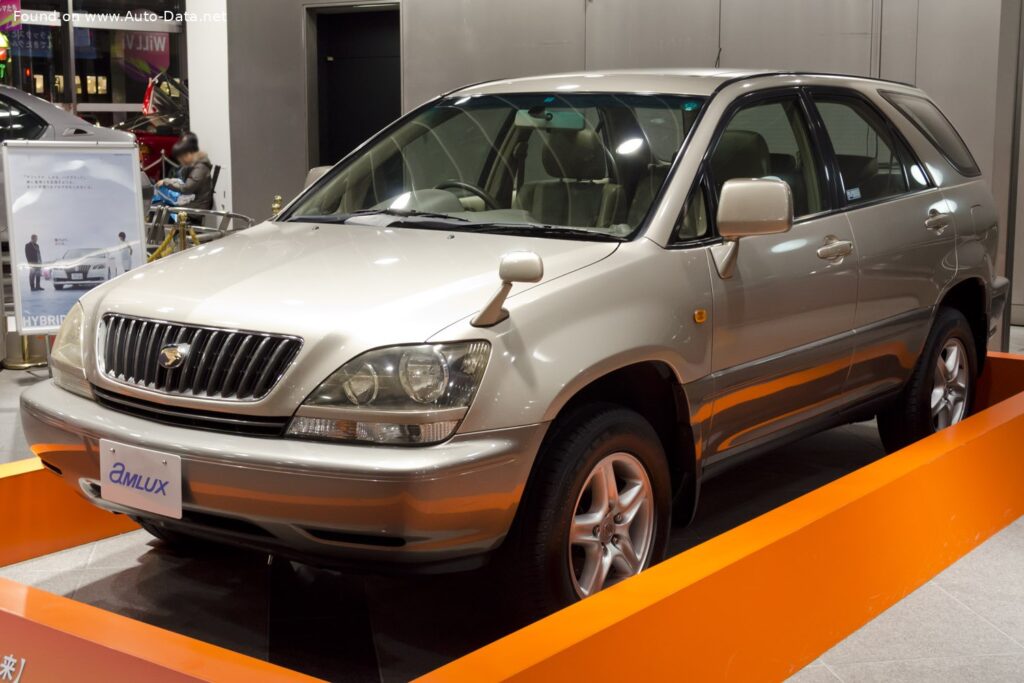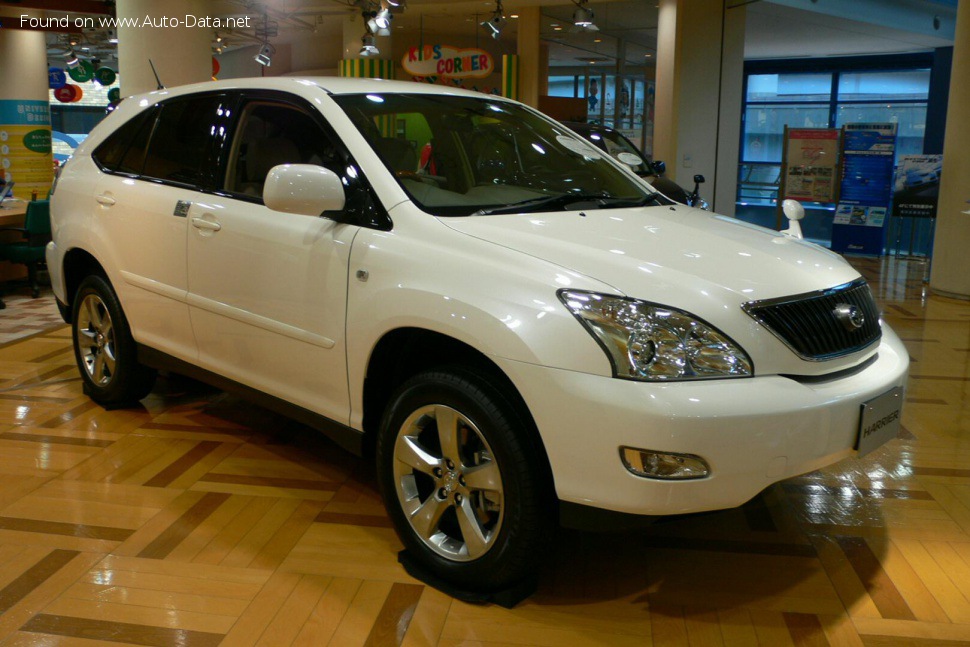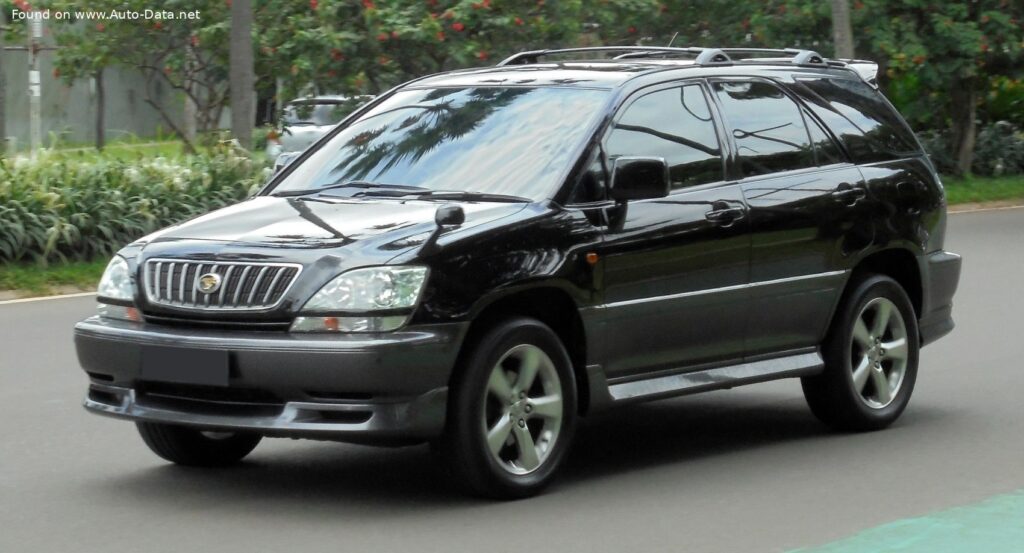
The Toyota Harrier I (XU10, facelift 2000): A Pioneer in Luxury Crossovers
The Toyota Harrier I (XU10, facelift 2000) represents a significant chapter in the evolution of the modern luxury crossover vehicle. Originally launched in Japan in 1997, the first-generation Harrier, codenamed XU10, was a groundbreaking model that effectively merged the comfort and driving dynamics of a luxury sedan with the practicality and elevated seating position of an SUV. This specific iteration, the facelifted model introduced in 2000, refined an already successful formula, cementing its reputation as a sophisticated and highly desirable vehicle in its primary markets of Japan and other Asian regions.
While the Harrier nameplate was not directly offered in the United States, this vehicle is intimately known to American consumers under a different badge: the Lexus RX. The original Lexus RX 300, which debuted in North America in 1998, was essentially a rebadged and slightly modified version of the Toyota Harrier. This strategy allowed Toyota to introduce the luxury crossover concept to the lucrative American market under its premium Lexus division, where it quickly became a runaway success. The Toyota Harrier I (XU10, facelift 2000), therefore, stands as the direct ancestor to one of the most popular and influential luxury SUVs in automotive history, showcasing Toyota’s foresight in identifying and capitalizing on emerging market trends.
Engine and Performance of the Toyota Harrier I (XU10, facelift 2000)
Powering the Toyota Harrier I (XU10, facelift 2000) was the venerable 3.0-liter 1MZ-FE V6 engine, a powerplant highly regarded for its smoothness, reliability, and robust performance. This naturally aspirated, multi-port manifold injection engine featured a Double Overhead Camshaft (DOHC) design with 24 valves (four per cylinder), contributing to its efficient combustion and strong output. For the facelifted model, this engine produced a healthy 220 horsepower at 5800 rpm, which was a substantial figure for a crossover in the early 2000s. Peak torque stood at 224.22 lb.-ft. (304 Nm) available at 4400 rpm, providing ample thrust for both city driving and highway cruising.
The 1MZ-FE engine, with its V6 configuration and front, longitudinal layout, delivered power primarily to the front wheels via a smooth-shifting 4-speed automatic transmission. This drivetrain architecture, while not providing the all-weather capability of an all-wheel-drive system (though AWD was available on other Harrier variants), was chosen to optimize fuel efficiency and on-road driving dynamics, aligning with the Harrier’s focus on comfort and car-like handling. The vehicle’s weight-to-power ratio of 7.4 kg/Hp (135 Hp/tonne) and a weight-to-torque ratio of 5.4 kg/Nm (186.5 Nm/tonne) indicated a well-balanced performance package for its class.
In terms of fuel economy, the Toyota Harrier I (XU10, facelift 2000) achieved a combined consumption figure of approximately 22.4 US mpg (10.5 l/100 km), which was competitive for a V6-powered vehicle of its size and era. This combination of respectable power, refined transmission, and reasonable efficiency made the Harrier an attractive option for buyers seeking a premium driving experience without excessive running costs.
Design and Features
The design of the Toyota Harrier I (XU10, facelift 2000) was instrumental in defining the luxury crossover aesthetic. It presented a sleek, aerodynamic profile that was a distinct departure from the more truck-like SUVs prevalent at the time. Classified as an SUV/Crossover with a 5-door, 5-seat body type, its exterior dimensions were thoughtfully proportioned: 180.12 inches in length, 71.46 inches in width, and 65.55 inches in height, with a wheelbase of 102.95 inches. These dimensions contributed to its stable stance and comfortable ride, while also allowing for nimble maneuverability in urban environments.
Inside, the Harrier offered a spacious and well-appointed cabin, emphasizing passenger comfort and convenience. The facelift brought subtle enhancements to the interior, maintaining its reputation for high-quality materials and ergonomic design. Cargo versatility was a key selling point, with a generous minimum trunk space of 30.37 cubic feet (860 liters), expandable to an impressive 75.22 cubic feet (2130 liters) with the rear seats folded down, making it highly practical for families and those with active lifestyles.
From a technological standpoint for its era, the Toyota Harrier I (XU10, facelift 2000) was equipped with features that underscored its luxury aspirations. Standard safety features included an Anti-lock Braking System (ABS), providing enhanced control during emergency stops. The steering system utilized a precise rack and pinion setup with hydraulic power steering, offering a comfortable and responsive driving feel. The suspension system, featuring Spring Struts at the front and Wishbones at the rear, was tuned to deliver a smooth and compliant ride, further blurring the lines between a traditional SUV and a luxury sedan. Braking performance was handled by ventilated discs at the front and solid discs at the rear, ensuring confident stopping power. The vehicle rode on 215/70 R16 99S tires mounted on 6.5J x 16 ET35 wheel rims, providing a balanced blend of comfort and grip.
Technical Specifications
| Category | Specification |
|---|---|
| Brand | Toyota |
| Model | Harrier |
| Generation | Harrier I (XU10, facelift 2000) |
| Type (Engine) | 3.0 V6 24V (220 Hp) Automatic |
| Start of Production | 2000 year |
| End of Production | 2002 year |
| Powertrain Architecture | Internal Combustion engine |
| Body type | SUV, Crossover |
| Seats | 5 |
| Doors | 5 |
| Performance Specs | |
| Fuel Consumption (combined) | 22.4 US mpg (10.5 l/100 km) |
| Fuel Type | Petrol (Gasoline) |
| Weight-to-power ratio | 7.4 kg/Hp, 135 Hp/tonne |
| Weight-to-torque ratio | 5.4 kg/Nm, 186.5 Nm/tonne |
| Engine Specs | |
| Power | 220 Hp @ 5800 rpm |
| Power per liter | 73.5 Hp/l |
| Torque | 224.22 lb.-ft. (304 Nm) @ 4400 rpm |
| Engine layout | Front, Longitudinal |
| Engine Model/Code | 1MZ-FE |
| Engine displacement | 3.0 Liters (2994 cm3 / 182.71 cu. in.) |
| Number of cylinders | 6 |
| Engine configuration | V-engine |
| Cylinder Bore | 3.44 in. (87.5 mm) |
| Piston Stroke | 3.27 in. (83 mm) |
| Compression ratio | 10.5:1 |
| Number of valves per cylinder | 4 |
| Fuel injection system | Multi-port manifold injection |
| Engine aspiration | Naturally aspirated engine |
| Valvetrain | DOHC |
| Engine oil capacity | 4.97 US qt (4.7 l) |
| Coolant capacity | 9.51 US qt (9 l) |
| Space, Volume and Weights | |
| Kerb Weight | 3593.53 lbs. (1630 kg) |
| Trunk (boot) space – minimum | 30.37 cu. ft. (860 l) |
| Trunk (boot) space – maximum | 75.22 cu. ft. (2130 l) |
| Fuel tank capacity | 19.81 US gal (75 l) |
| Dimensions | |
| Length | 180.12 in. (4575 mm) |
| Width | 71.46 in. (1815 mm) |
| Height | 65.55 in. (1665 mm) |
| Wheelbase | 102.95 in. (2615 mm) |
| Front track | 61.61 in. (1565 mm) |
| Rear (Back) track | 61.02 in. (1550 mm) |
| Ride height (ground clearance) | 7.28 in. (185 mm) |
| Drivetrain, Brakes and Suspension Specs | |
| Drivetrain Architecture | Internal combustion engine (ICE) drives the front wheels. |
| Drive wheel | Front wheel drive |
| Number of gears and type of gearbox | 4 gears, automatic transmission |
| Front suspension | Spring Strut |
| Rear suspension | Wishbone |
| Front brakes | Ventilated discs |
| Rear brakes | Disc |
| Assisting systems | ABS (Anti-lock braking system) |
| Steering type | Steering rack and pinion |
| Power steering | Hydraulic Steering |
| Tires size | 215/70 R16 99S |
| Wheel rims size | 6.5J x 16 ET35 |
Legacy and Market Impact
The Toyota Harrier I (XU10, facelift 2000), and indeed the entire first generation, holds a significant place in automotive history. It wasn’t just another SUV; it was a trailblazer that effectively created and popularized the luxury crossover segment. Before the Harrier, SUVs were largely utilitarian, body-on-frame vehicles designed for rugged off-road capability. Toyota’s vision with the Harrier was to offer a vehicle that combined the elevated driving position and spaciousness of an SUV with the refined ride, handling, and comfort of a luxury sedan, built on a car-based unibody platform.
In its primary markets, particularly Japan and parts of Asia, the Harrier quickly garnered a reputation for its sophisticated styling, plush interior, and legendary Toyota reliability. It appealed to a growing demographic of urban and suburban buyers who desired the utility of an SUV but were unwilling to compromise on driving comfort or fuel efficiency. Its direct competitor in these markets would have been a mix of traditional SUVs and emerging car-based utility vehicles, though none quite matched the Harrier’s blend of luxury and practicality initially.
Globally, its impact was magnified through its Lexus RX 300 counterpart in North America. The RX 300’s immense success proved the viability of the luxury crossover concept, prompting nearly every major luxury automaker to develop their own entries into the segment, including vehicles like the Acura MDX and later, European offerings such as the BMW X5. The Harrier’s influence is evident in the modern automotive landscape, where crossovers now dominate sales across various segments, from economy to ultra-luxury.
Even years after its production ceased in 2002, the first-generation Harrier remains a testament to Toyota’s engineering prowess and market insight. Its robust 1MZ-FE engine and well-engineered chassis contributed to its long-term durability, making used examples a popular choice in many regions. The Toyota Harrier I (XU10, facelift 2000) is remembered not just as a reliable and comfortable vehicle, but as a pivotal model that redefined consumer expectations for what a utility vehicle could be, paving the way for the ubiquitous luxury crossovers we see on roads today.